Don't miss the final full moon of 2025, when the "Cold Moon" takes to the autumn sky at sunset on Dec. 4. Here's how to watch the lunar spectacle unfold online from the comfort of your home thanks to some handy livestreams.
This month's full moon is often known as the "Cold Moon" to reflect the frigid temperatures that are common in the Northern Hemisphere this time of year and also as the "Moon Before Yule," as it is the last full moon before the Christmas period. The lunar milestone will take place as the moon passes within 90% of its closest point to Earth in its monthly orbit — a point known as perigee — giving rise to a beautiful "supermoon" that can be up to 30% brighter and appear 14% larger than the smallest moon of 2025.
December's full moon will also occur in the closing phase of a "Major Lunar Standstill," a recurring 18.6-year event that sees the moon's orbit tilted at its most extreme angle relative to Earth's orbit. As a result, the lunar disk rises at a more northerly point on the horizon and soars higher than usual in the autumn sky.
There's no need to worry If clouds or highrise buildings conspire to ruin your view of the final full moon of 2025. Instead, put your feet up on the couch and watch the lunar light show unfold in real time courtesy of the following livestreams from the Virtual Telescope Project and Los Angeles' Griffith Observatory.
Virtual Telescope Project Livestream
Tune in at 3 p.m. EST (2000 GMT) on Dec. 4 to see real-time telescopic views of the full "Cold Moon" captured from Manciano, Italy, courtesy of a livestream hosted by Gianluca Masi of The Virtual Telescope Project. "Also, I will show the best full moon images I collected over the years, particularly those with our satellite shining above the legendary monuments of Rome," Masi told Space.com in an email.
Griffith Observatory Livestream
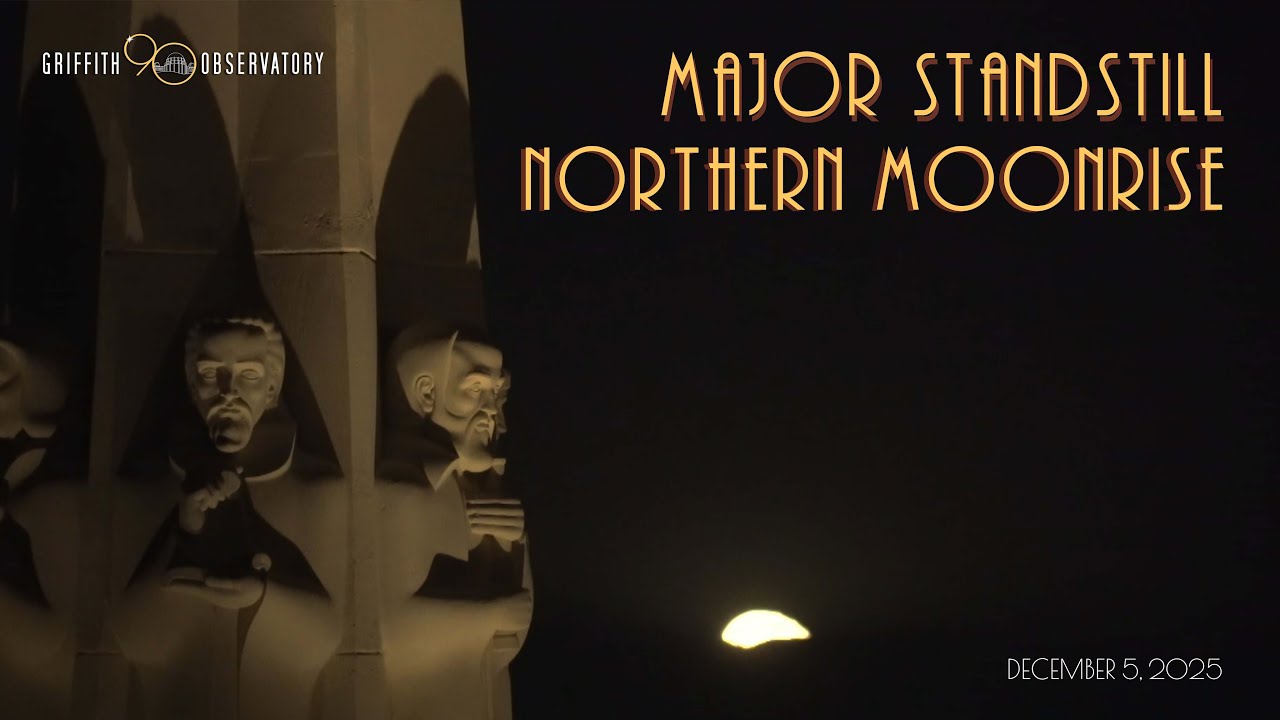
The Griffith Observatory will host its own YouTube livestream starting at 8:27 p.m. EST on Dec. 5 (0127 GMT on Dec. 6), capturing the lunar disk as it climbs above the eastern horizon at sunset from the site embedded on the slope of Mount Hollywood.
Want to explore the scarred face of Earth's natural satellite for yourself? Then why not peruse our roundups of the best binoculars and telescopes available in 2025. Hoping to immortalize your stargazing sessions? Then be sure to check out our picks of the best cameras and lenses for capturing the night sky.
Editor's Note: If you would like to share your lunar astrophotography with Space.com's readers, then please send your photo(s) and comments, along with your name and location to spacephotos@space.com.