


NASA hails Orion astronauts' return from moon

NASA's post-splashdown press briefing has ended and I think it's safe to say that the space agency is over the moon at the amazing success of its Artemis 2 moon mission. All four Artemis 2 astronauts are in good health and will return home to NASA's Johnson Space Center on Saturday, April 11, one day after their smooth splashdown in the Pacific Ocean.
"Welcome to our moonshot," Lori Glaze, NASA's Artemis program manager, told reporters during a triumphant televised press briefing at the Johnson Space Center in Houston.
Howard Hu, Orion spacecraft program manager, said the mission was "thousands of times better" than Star Wars, given its role as the vanguard of NASA's return to the moon.
During reentry, NASA lost contact with the Orion spacecraft for six minutes due to plasma interference around the spacecraft. It was an expected comms dropout, but still, nerves were high.
"Certainly, there's anxiety," Artemis 2 entry flight director Rick Henflig said. "If you didn't have anxiety bringing the spacecraft home, you probably didn't have a pulse."
But he and his team had extreme confidence in Orion's heat shield and performance, as did the rest of Mission Control and the astronauts themselves.
"And so while there's anxiety, there's a lot of confidence, because the team is there to do a job, and we've trained well and and we executed well. We all breathed a sigh of relief once the side hatch opened up," he added.
NASA Associate Administrator Amit Kshatriya said the success of Artemis 2 sets the stage for something greater, beyond Artemis 3, at the moon.
"The path to the lunar surface is open, but the work ahead is greater than the work behind us. It always will be," he said. "53 years ago, humanity left the moon. This time we return to stay."
"Let us finish what they started. Let us focus on what was left undone. Let us not go to plant flags and leave, but to stay with firmness in our purpose, with gratitude for the hands who built the machines, and with love for the ones that we carry with us. Welcome home, Integrity."
NASA chief Jared Isaacman greeted the four Artemis 2 astronauts with hugs and smiles after their return.
"Honestly, I'm still at a loss for words," Isaacman said from the deck of the USS John P. Muthra after splashdown. "The childhood Jared, right now, can't believe what I just saw. I mean almost been waiting my whole lifetime to see to see this, and then it's as NASA administrator, I just couldn't be more proud of the entire workforce, the years, the effort, the late nights, all the hard work from across the country that contributed to this incredible moment right now."
With that, our live blog for Artemis 2 is at its end. Thank you, Space Fans, for coming along with us on this mission over the last few months (and years, if you were following on the site).
The entire Space.com team worked together to bring you our coverage. So a huge shout out to Brett Tingley, Mike Wall, Josh Dinner, Monisha Ravisetti and Daisy Dobrijevic for the mission updates on this page, to Steve Spaleta (who brought you all the video), Vanessa Jewell on our Socials and our Content Manager Chelsea Gohd for awesome images. And to the rest of our team, Ian Stokes, Anthony Wood, Rob Lea, Jase Parnell-Brookes and Harry Bennett for their amazing stories.
Now our eyes turn to Artemis 3, and hopefully a moon landing in 2028 with Artemis 4. We'll see you then, Space Fans!
Keep looking up.

Artemis 2 splashdown success: NASA briefing at 10:30 pm ET

It has now been just over 2 hours since the successful splashdown of NASA's Artemis 2 astronauts at 8:07 p.m. EDT and all four astronauts are safely aboard the USS John P. Murtha recovery ship and undergoing medical checks.
NASA's live webcast has ended, but a press conference will begin at 10:30 p.m. EDT (0230 GMT), so in a few minutes. You'll be able to watch it here.
Artemis 2 astronauts get warm welcome on recovery ship

The four Artemis 2 astronauts are getting a warm welcome aboard the USS John P. Murtha as they head to medical checks. NASA Chief Jared Isaacman met each crewmember, sharing hugs and congratulatory words with each.
"Welcome, Integrity," an announcement rang out.
Canadian Space Agency astronaut Jeremy Hansen was the first to walk from his helicopter to the medical bay, waving with a broad smile.
NASA mission specialist Christina Koch was next, waving excitedly and smiling.
Pilot Victor Glover, a Navy Captain, wore a ship's hat, waved and saluted as he walked across the flight deck.
Commander Reid Wiseman also waved and gave a thumbs up as we walked to the medical bay.
All four astronauts walked under their own power, though ship officials had prepared wheelchairs in case they were needed. They were not.
All Artemis 2 astronauts recovered by helicopters
As Artemis 2 commander Reid Wiseman was hoisted up to the final helicopter, all four Orion astronauts are now headed back to the USS John P. Murtha for recovery and medical checks.
They were recovered at about 9:55 p.m. EDT (6:55 p.m. PDT/0155 GMT), just under 2 hours after splashdown.
On the ship, a bell was rung and announcement rang out.
"Integrity, arriving."
Helicopters begin picking up Artemis 2 astronauts

Helicopters are now retrieving each of the four Artemis 2 crewmembers.
Each astronaut is wearing a special harness to be hoisted up to a helicopter along with a recovery specialist. Two astronauts have been recovred by different helicopters so far.
Artemis 2 astronauts exit Orion spacecraft after splashdown

All four Artemis 2 astronauts have exited their Orion spacecraft, their home to the moon and back for the last 10 days after today's successful splashdown.
Artemis 2 commander Reid Wiseman was the last crewmember to leave the Orion spacecraft Integrity.
They are sitting on a floating inflatable "front porch" and awaiting basket retrieval by helictoper. Two helicopters will recover two astroanuts each to transport them to the nearby USS John P. Murtha recovery ship.
Here's a video replay of splashdown if you missed it at 8:07 p.m. EDT.
All 4 Artemis 2 astronauts 'feeling great'

NASA's Megan Cruz reports that the undersea medical officer inside the Orion spacecraft has completed initial health checks of the four Artemis 2 astronauts.
"All four Artemis 2 crewmembers are feeling great" Cruz said.
The recovery divers are inflating a stabilization collar around the base of the Orion capsule. Strong ocean currents have slowed their efforts, but progress is being made.
The recovery tean has clearly inflated a large "front porch" platform and will soon attach it to the front of Orion.
Side hatch of Orion capsule opened by recovery team

Recovery teams have reached the Orion spacecraft and the side hatch is open, NASA reports.
Four recovery teammembers will enter Orion to check the status of the four Artemis 2 astronauts. A total of 40 people are in boats around Orion to aid in recovery efforts. One group is attaching a "front porch" inflatable platform to extract the crew onto.
Two helicopters will then come to carry the cre back to the USS John P. Murtha recovery ship. Two crewmembers will fly on each helicopter.
Orion spacecraft Integrity powered down after splashdown

Good night, Integrity and thank you.
Artemis 2 commander Reid Wiseman reports the vehicle is now fully powered down.
NASA and U.S. Navy recovery teams are en route to the Artemis 2 Orion spacecraft Integrity. They will attach an inflatable "front porch" to the capsule near the hatch, where the crew will be extracted to so they can be ferried to the waiting USS John P. Murtha recovery ship for medical checks.
Orion will be towed to the ship's well deck for recovery.
NASA has also issued a new exact splashdown time of 8:07:27 p.m. EDT (0007:27 GMT), for a total mission elapsed time of 9 days, 1 hour, 32 minutes and 15 seconds.
NASA Administrator Isaacman offers remarks from recovery ship

HOUSTON — NASA Administrator Jared Isaacman, aboard Orion's recovery ship, gave remarks after the crew's splashdown.
"Honestly, I'm still at a loss for words," he said. "The childhood, Jared, right now, can't believe what I just saw. I've almost been waiting my whole lifetime to see this, and then, as NASA administrator, I just couldn't be more proud of the entire workforce — the years, the effort, the late nights, all the hard work from across the country that contributed to this incredible moment right now."

Splashdown confirmed!
HOUSTON — Splashdown!
Orion officially splashed down on April 10, at 8:07:47 p.m. EDT (0007:47 GMT, April 11), in the Pacific Ocean, off the coast of San Diego.

Main chutes delpoyed!

HOUSTON — Orion has successfully deployed its main parachutes.
Orion successfully deploys drogue parachutes
Drogues deployed!
HOUSTON — Orion has successfully deployed its first set of parachutes, the drogues, designed to slow the spacecraft in preparation for the main parachutes.
In one minute, Orion will deploy its main parachutes.
NASA reestablishes contact with Orion

Hello again, Orion!
HOUSTON — NASA has reestablished communications with Orion, after a 6-minute blackout as the spacecraft made its way through Earth's upper atmosphere.
Now in free fall, Orion's speed will continue to slow, leading up to the deployment of the capsules drogue parachutes, and then its main chutes, which will ultimately slow the vehicle to its splashdown velocity.
The two drogue parachutes will deploy at 8:03 p.m. EDT (0003 GMT, April 11), at an altitude of about 22,000 feet (6,705 m), and slow Orion to about 300 mph (482 kph).
The main chutes will deploy a minute later, at 8:04 p.m. EDT (0004 GMT, April 11)k, at about 6,000 feet (1,828 m).
Orion has officially encountered Earth's atmosphere, enters comms blackout
Things are moving fast now — even though Orion is slowing down.
HOUSTON — Orion has hit the atmosphere! The Artemis 2 crew officially entered the Earth's atmosphere at 7:53 p.m. EDT (2353 GMT). Now, as the spacecraft rapidly slows from a breakneck 24,661 mph (39688 kph) — Mach 33 — the capsule will be engulfed in a sheet of plasma.
Successful separation from Orion's European Service Module

Farewell, European Service Module!
HOUSTON — Orion has officially shed its service module. The European Space Agency- built spacecraft stage has powered and supplied the Integrity capsule since launch, providing propellant, water, air and solar arrays used to power Orion during its trip to the moon. Separation occurred at 7:33 p.m. EDT (2333 GMT).
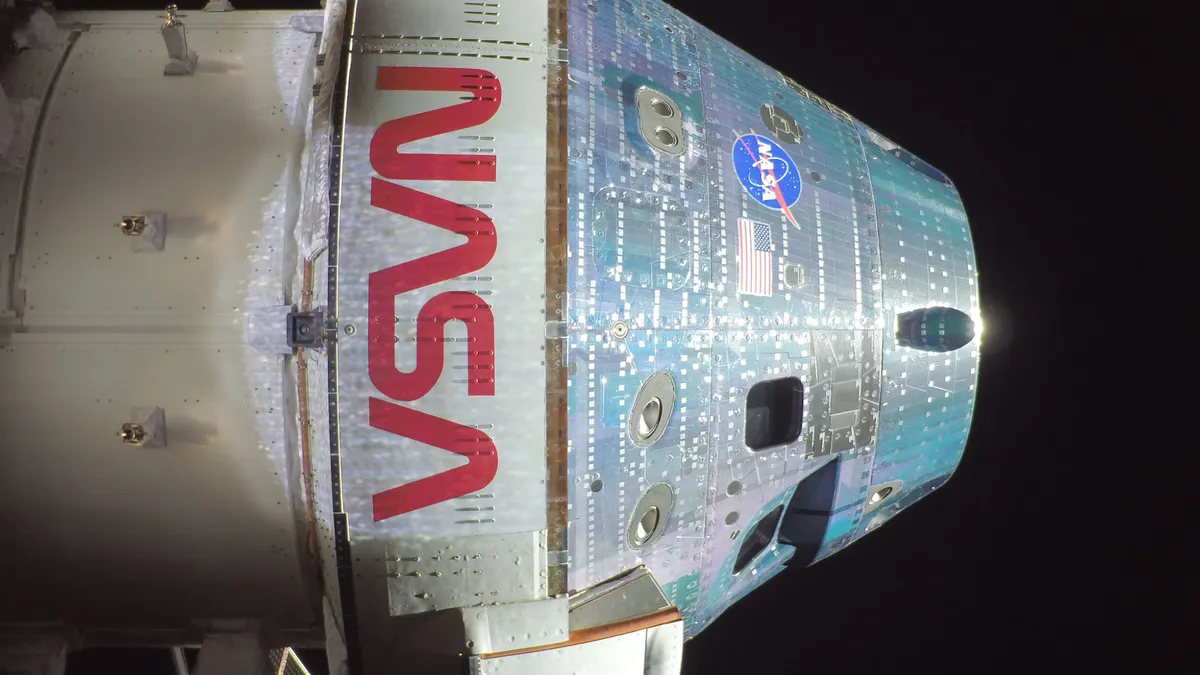
"Houston we got a great view of the European Service module out the window with the sun hitting the side and the solar arrays and the NASA worm right there. It's a beautiful looking machine," NASA astronaut Reid Wiseman said.
After separating from the service module, Orion will perform a "Crew Module Raise Burn." to put some distance between the two spacecraft sections. The service module will then begin its own plunge toward Earth, and is expected to burn up in the atmosphere.
Orion will officially hit Earth's atmosphere at approximately 7:53 p.m. EDT (2353 GMT), at which point the spacecraft will enter a 6-minute communications blackout, expected to last until 7:59 p.m. EDT (2359 GMT).
Orion switches communications off Deep Space Network, weather is "go"
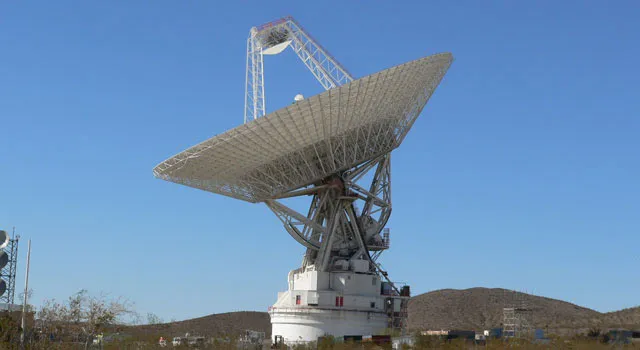
They are officially close to home.
HOUSTON — As Orion continues to close the gap between the spacecraft and Earth, NASA has switched its comms source from the Deep Space Network to the Telemetry and Data Relay Satellite System, or TDRSS, in Earth orbit to maintain communications.
The weather forecast has been given a "go" from the Spaceflight Meteorology group at NASA's Johnson Space Center.
At 7:33 p.m. EDT (2333 GMT), Orion will separate from its service module, which has maintained the majority of the spacecraft's systems over the past nine days.
NASA's live coverage of Orion's return begins

The astronauts are putting on their spacesuits and orienting Orion for return
HOUSTON — The Artemis 2 astronauts are putting on their spacesuits and are gearing up for for return to Earth. Currently, they are going through their pre-entry checklist, and making sure everything is buttoned down before the hit the atmosphere.
As they prepare, the Earth in NASA's livestream is quickly growing larger as Orion brings the Artemis 2 astronauts closer to home.
NASA's landing coverage will officially begin at 6:30 p.m. EDT (2230 GMT), and will be carried on Space.com's homepage, this live updates pages and on our homepage and our VideoFromSpace YouTube channel.
Splashdown Day: Artemis 2 astronauts complete Orion's final trajectory correction burn
Earth is getting bigger outside Orion's window.
HOUSTON — It's a busy day here at NASA's Johnson Space Center, with all eyes on Orion as it approaches reentry.
Orion recently completed its third and final trajectory correction burn, which has put them on course for a precise splashdown in the Pacific Ocean, about 60 miles (100 kilometers) off the coast of San Diego.
Continued below...
Now, the crew continues their preparations for return, soon donning their spacesuits to strap in for atmospheric reentry. We'll be tracking as Orion continues on its approach, which you can watch live on Space.com starting at 6:30 p.m. EDT (2230 GMT).
Splashdown Day: Artemis 2 astronauts start running to the water
It's the final day of the Artemis 2 astronauts' epic space mission to the moon and back, otherwise known as "splash down" day because the crew will be landing on Earth in the ocean off the coast of San Diego.
Very fitting was the team's wakeup song today: "Run to the Water" by Live.
Here are some of the lyrics:
In a moment we lost our minds here
And lay our spirit down
Today we lived a thousand years
All we have is now
Run to the water
And find me there
Burnt to the core but not broken
We'll cut through the madness
Of these streets below the moon
These streets below the moon
And, as a sort of bonus song this morning, the crew also got to hear a snippet of "Free" by Zac Brown Band. This one was technically not a wakeup song per se, as it was the start of the typical message that follows these songs: This time from Zac Brown Band itself.
As for crew activities today, it's all about a safe splashdown. "Can't wait to see you run to the water, see you soon," Mission Control said to the astronauts after they woke up.
You can see a full list of the crew's wakeup songs here and, if you want to relive the experience even after the mission is over, here's out Spotify playlist of the tracks.

SPLASHDOWN DAY: Less than 70,000 miles to go!

NASA's Artemis 2 crew is now within 70,000 miles of Earth as Orion continues its journey home ahead of tonight's splashdown.
As Orion makes its approach, Earth appears as a crescent, a bright curve of blue and white that almost looks like a smile welcoming them home.
The astronauts will wake up at 11:35 a.m. EDT (1535 GMT) before carrying out a final trajectory correction burn at 2:53 p.m. EDT (1853) to fine-tune their path back to Earth.
After 10 days around the moon and back, the final approach is well underway.

SPLASHDOWN DAY: Where will Artemis 2 land today?

As NASA's Orion spacecraft makes its way back to Earth, all eyes are on the Pacific Ocean, off the coast of California, where splashdown is expected tonight.
But why this location? How is it chosen?
You can read our full breakdown here: Where will NASA's Artemis 2 mission land today?
We'll be following the final approach and splashdown live right here, so stay tuned for updates as the crew closes in on home! You can also watch all the action in our livestream starting at 6:30 p.m. EDT (2230 GMT).
Artemis 2 continues journey back to Earth

Racing home at over 4,500 mph and currently about 80,000 miles from Earth, NASA's Artemis 2 crew is steadily closing the gap after their historic journey around the moon
The image above shows the current view of our planet from the Orion capsule — what a view!
SPLASHDOWN DAY: What time is Artemis 2 landing today? Key splashdown times

Looking for key timings today? Here's what you need to know.
NASA's Artemis 2 astronauts are set to return to Earth later today (April 10), with live coverage and splashdown both happening this evening.
- 6:30 p.m. EDT (2230 GMT): Livestream begins
- 8:07 p.m. EDT (0007 GMT April 11): Splashdown expected
Want the full timeline for landing day? Check out our full landing schedule for everything you need to know.
We'll be following all the action live right here, so stay tuned!
SPLASHDOWN DAY: Artemis 2 returns to Earth TODAY!

Happy landing day! Who's excited?!
Today (April 10), NASA's Artemis 2 astronauts will return to Earth, wrapping up their historic 10-day journey to the moon and back.
What a journey it has been!
Live coverage of the splashdown begins at 6:30 p.m. EDT (2230 GMT) here on Space.com, with splashdown currently expected for approximately 8:07 p.m. EDT (0007 GMT).
If you've been glued to the mission livestreams and our live blog over the past 10 days as we have, you might be wondering what to do with all that free time once it's over... but we're not quite there yet. There is still a full day of Artemis 2 action ahead.
We'll be updating the live blog throughout the day with the latest developments, so stick with us as we follow every moment of Artemis 2's return to Earth.
Flight Day 9: Artemis 2 astronauts are halfway home
They've hit the midway point between Earth and the moon

The Artemis 2 astronauts have hit the midway point in their journey back to Earth from the moon, according to NASA.
The quartet — NASA's Reid Wiseman, Victor Glover Christina Koch and the Canadian Space Agency's Jeremy Hansen — remain on track arrive at their home planet on Friday evening (April 10). If all goes according to plan, they'll hit Earth's atmosphere over the open Pacific Ocean at 7:53 p.m. EDT (2353 GMT) and splash down off the coast of San Diego 14 minutes later.
You can watch their homecoming live, and get other updates about their historic mission, here at Space.com.

Flight Day 9: NASA gearing up for Artemis 2 astronauts' return
"The crew has done their part. Now we have to do ours."

HOUSTON — As Orion picks ups speed on its journey back from the moon, NASA officials say its time for the work of mission engineers and technicians to be put on full display.
"To every engineer, every technician that's touched this machine tomorrow belongs to you," said NASA Associate Administrator Amit Kshatriya, during a mission update briefing today (April 9). "The crew has done their part. Now we have to do ours."
The Artemis 2 astronauts return to Earth tomorrow, and face one of the most risky parts of their mission.
Orion's return trajectory plan for Artemis 2 was altered after the heat shield on Artemis 1 experienced unexpected char and material losses during atmospheric reentry. Now, rather than hitting the atmosphere head-one, Orion will perform what's called a "lofted" reentry, dipping down into the atmosphere briefly, before delving back down for its final descent — similar to a stone skipping once across a pond before sinking beneath the water.
The flight path is designed to reduce heat stress on Orion's heatshield, decelerating the spacecraft in separate increments to better distribute its building energy, but the risk isn't entirely mitigated.
"Let's not beat around the bush," said Artemis 2 lead flight director Jeff Radigan during Thursday's briefing. "We have to hit that angle correctly, otherwise we're not going to have a successful entry,"
Orion will begin its plunge through the atmosphere on Friday (April 10) at around 7:53 p.m. EDT (2353 GMT), entering a 6-minute communications blackout. The spacecraft's two parachute groups, its drogues and the main chutes, will deploy around 8:03 p.m. EDT (0003 GMT, April 11) and 8:04 p.m. EDT (0004 GMT, April 11), respectively, with splashdown expected at 8:07 p.m. EDT (0007 GMT, April 11).
Flight Day 9: Artemis 2 astronauts wake up to 'Lonesome Drifter'
The Artemis 2 astronauts were woken up on Thursday (April 9) morning to the song "Lonesome Drifter" by Charley Crockett — though the world would argue these adventurers are anything but.
With just one day to go before they splash down just off the coast of San Diego, these space explorers have captured hearts all across the world. They've made heart signs with their hands on NASA's livestream of the inside of the Orion spacecraft and they've watched Nutella float around alongside their toy moon named "Rise" that holds the names of everyone on Earth who signed up to have their presence brought to lunar tides.
They even named a crater after commander Reid Wiseman's late wife who passed away from cancer in 2020.
Today's activities, according to Mission Control, mostly surround preparing for splashdown tomorrow.
And, of course, if you're interested in the rest of the crew's wakeup songs — and are curious what they'll be listening to during reentry — you can have a look at our Spotify playlist here.
Flight Day 9: Artemis 2 Astronauts enter their final full day in space
Today is all about packing for the final leg home.

HOUSTON — Good morning from NASA's Johnson Space Center, and the final full day of the Artemis 2 mission. Flight Day 9 of the astronauts' mission aboard Orion will primarily focus on packing and stowing everything aboard their spacecraft in preparation for their return to Earth.
Yesterday, the Artemis 2 crew had the opportunity to speak with Canadian Prime Minister Mark Carney, and took some time last night to answer some questions from the media, though Space.com was, unfortunately, not called on to pose a query of our own. BUT THAT'S OK! I held a miniature interview of my own, and was still able to take a little time to ask a few short questions...

Crew wakeup is scheduled today (April 9) at 11:35 a.m. EDT (1535 GMT).
They do have a few more demonstration tests to carry out today, practicing various procedures for a few off-nominal scenarios. They’ll also be donning and fitting compression clothes designed to help their bodies readjust to gravity after landing, which they also spent some time yesterday doing.
Those are called orthostatic intolerant garments, and help to counteract symptoms like dizziness and lightheadedness after time spent in zero-g.
By the end of today, the couches in Orion will be secured back in place, and the Artemis 2 crew will be fully ready for their return home, with the final leg of their mission just ahead.
Tomorrow will bring an end to their mission, with a splashdown scheduled for tomorrow (April 10), at 8:07 p.m. EDT (0007 GMT, April 11).
Flight Day 8: Artemis 2 astronauts answer questions on the way home to Earth
The quartet talked about the highlights of their mission so far
The Artemis 2 astronauts took some time out of their busy moon mission tonight (April 8) to answer a few questions from reporters.
Those questions were pretty diverse. For example, Artemis 2 commander Reid Wiseman was asked how he felt when his crewmates proposed naming a moon crater after his late wife Carroll.
"For me personally, that was kind of the pinnacle moment of the mission," Wiseman responded. "That was, I think, where the four of us were the most forged, the most bonded, and we came out of that really focused on that day ahead."
Artemis 2 pilot Victor Glover cited witnessing a total solar eclipse from beyond the moon as one of his mission highlights. And mission specialist Christina Koch relayed what it's like to live inside the Orion capsule.
"We have loved living in Orion, and in fact, we've all said that sometimes you can forget where you really are, because we're in this small space that just gives us everything we need," she said.
But, even though the capsule feels bigger in microgravity, "we are bumping into each other 100% of the time," she added. "A phrase that you often hear in the cabin is, 'Don't move your foot. I'm just going to reach for something right under it.'"
Artemis 2 is in the home stretch of its 10-day mission; Orion will come back to Earth on Friday evening (April 10), splashing down in the Pacific Ocean off the coast of San Diego.
Flight Day 8: Artemis 2 won't break Apollo's speed record after all
But everything remains on track for a safe return on April 10

Everything remains on track for Artemis 2's safe return to Earth on Friday evening (April 10). But there is a twist: It looks like the mission won't break the human spaceflight speed record after all.
That mark is held by the Apollo 10 moon mission, which reached a maximum speed of 36,397 feet per second — 24,816 mph, or 39,938 kph — when it returned to Earth on May 26, 1969. We'd been told that Artemis 2 will top that mark, but the latest calculations have it coming up a bit short during its own reentry.
"Our prediction for Artemis 2 — we're going to reach a max velocity of 34,965 feet per second," Artemis 2 Flight Director Rick Henfling said during a press conference this afternoon (April 8). That works out to 23,840 mph, or 38,367 kph.
If all goes to plan, Artemis 2's Orion capsule will hit Earth's atmosphere at 7:53 p.m. EDT (2353 GMT) on Friday, then splash down 14 minutes later. It will come down in the Pacific Ocean off the San Diego coast; the four astronauts will then be recovered and brought ashore for medical evaluations.
Flight Day 8: Astronauts begin stowing their gear for return
Artemis 2 astronauts have begun preparations for their return to Earth

HOUSTON — The Artemis 2 astronauts aboard Orion are continuing their flight back from the moon, and have started wrapping up aspects of the mission to prepare for their plunge through Earth's atmosphere.
NASA astronaut and Artemis 2 commander Reid Wiseman began his scheduled exercise routine today (April 8) at 3 p.m. EDT (1900 GMT) — an activity each crew member has partaken in daily to stave off the effects of microgravity on their muscles and bones.
Before his workout, however, Reid called down to mission control to confirm that this would be his last exercise routine before the crew's return April 10.
"Can you confirm this is my final exercise of the mission," Wiseman said to Mission Control. "It'll just help me with stowage management."
The crew's final exercise is one of the milestones marking the final leg of their journey — and stowing everything aboard Orion, including the crew's flywheel exercise machine, is important. Loose gear can be dangerous during reentry.
Artemis 2 is scheduled to splash down on April 10, at 8:07 p.m. EDT (0007 GMT, April 11). Before they do, though, Orion will break another spaceflight record when it hits Earth's atmosphere at 25,000 mph (40,230 kph), and that can be a bumpy ride. Any free-flying equipment aboard the spacecraft will become a hazard during that phase of flight, and securing heavy gear like exercise equipment is crucial.
Later today, the astronauts will hold a live event with the Canadian Space Agency , practice radiation-shielding procedures and hold a short press conference at 9:45 p.m. EDT (0145 GMT on April 9).
Tonight, the astronauts will perform maneuverability tests with Orion, switching between the spacecraft's two modes of attitude control.
Flight Day 8: Artemis 2 astronauts wake up to "Under Pressure"
They also got a nice message from Canadian Space Agency employees
Flight Day 8 of the Artemis 2 mission around the moon kicked off today (April 8) at 11:35 a.m. EDT (1335 GMT) with a great wakeup song — "Under Pressure" by David Bowie and Queen. (There was some drama when the first notes of that famous bassline hit, however: Were we hearing that classic or "Ice Ice Baby?")
After shutting off the song, Mission Control beamed up a nice message from the Canadian Space Agency (CSA). "Good morning, Artemis 2!" a crowd of CSA workers hollered at the four astronauts.
Then, a single voice delivered these words: "Your friends and colleagues at the Canadian Space Agency wish you another great day on your voyage. Canadians everywhere are inspired by your journey, and we're with you every step of the way. Let's go!"
The CSA has an astronaut on Artemis 2, of course — mission specialist Jeremy Hansen. He's flying with four NASA astronauts: Reid Wiseman, Victor Glover and Christina Koch.
Flight Day 8 will be a rather sedate one for the quartet, at least compared to the action-packed Flight Day 6, when they made their record-breaking flyby of the moon. The astronauts will hold a live CSA downlink event at 7:20 p.m. EDT (2320 GMT), conduct a radiation-shielding experiment an hour later, and talk to reporters at 9:45 p.m. EDT (0145 GMT on April 9). Then, at 10:59 p.m. EDT (0259 GMT), they'll do some manual flying with their Orion capsule to further test its capabilities.
Artemis 2 launched on April 1 and is now in the home stretch of its historic journey. The mission will return to Earth on Friday evening (April 10), splashing down in the Pacific Ocean off the coast of San Diego.
Flight Day 8: Astronauts cruise toward Earth during Flight Day 8
Radiation and thruster control tests lie ahead
HOUSTON — Good morning, all, and welcome to flight day 8 of the Artemis 2 mission!
As they make their way back from the moon, the astronauts have a full day ahead of them. After their wakeup call, the Artemis 2 astronauts will practice in-flight procedures for dealing with incoming radiation, as well as tests on Orion's attitude control system modes.
Radiation is a constant presence in space and can pose risks to both biology and technology. In the event of a major radiation event, like a solar flare, the astronauts take shelter inside Orion, barricading themselves between the spacecraft's heat shield and stacks of supplies that can absorb the brunt of the incoming particles.
They'll also test out Orion's two attitude control system modes. The spacecraft has two thruster modes: six-degree-of-freedom and three-degree-of-freedom attitude controls. The six-degree configuration ensures Orion's course isn't altered as the spacecraft makes attitude adjustments, auto-correcting any deviation caused by the slight movements. In the three-degree configuration, Orion uses less fuel and requires less complex calculations, but requires course corrections due to inevitable drift.
Flight Day 7: Artemis 2's space toilet is working OK — but there's still a problem
The astronauts can't vent their urine properly
Another day, another toilet update. On Tuesday (April 7), a day after Artemis 2's epic flyby of the moon, NASA officials gave us some more news about the mission's famous space toilet.
The loo has had its issues during the mission, but we learned on Tuesday that it's actually working well now. There's still a problem, however: The Artemis 2 astronauts cannot vent their urine into space properly. And an ice blockage of the venting nozzle, as previously hypothesized, is likely not to blame: The new theory is a chemical reaction generating debris that's blocking a filter. Read our latest Artemis 2 toilet story to learn more.
Flight Day 7: Artemis 2 astronauts set for deep space burn
HOUSTON -- Hey, Space Fans, as the Artemis 2 crew continues their rest day, they are gearing up for one critical event today: an engine burn to fine tune their return to Earth.
Called the Return Trajectory Correction 1 burn, it is scheduled for 9:30 p.m. EDT (0130 April 8 GMT).
Artemis 2 flight director Rick Henfling said the burn will last about 15 seconds and use the reaction control thrusters on Orion spacecraft. It should accelerate the ship by about 1.3 feet per second.
Josh Dinner and I are going to follow the Artemis 2 crew's example and take a break ourselves. We're off to dinner and will see you after the burn. Thanks!
Flight Day 7: Astronauts enjoy rare off-duty break after moon flyby

HOUSTON -- The four astronauts of NASA's Artemis 2 mission are officially on break.
At 3;30 p.m. EDT (1930 GMT) today, the crew went off-duty to take a hard-earned break after a marathon observing session as they flew around the moon.
Just after their ship-to-ship call with the International Space Station, the astronauts spent at least a half-hour speaking with Artemis 2 science lead Kelsey Young to share their thoughts and observations from yesterday's moon flyby.
That discussion ranged from the obvious - what the astronauts actually saw of the moon - to the process itself, including details like how the reflection of Earthshine off the windows and the Orion spacecraft, or even the brightness of orange Kapton tape in the ship, affected their science collection process.
At 4:30 p.m. EDT (2030 GMT), NASA will hold a press conference to update the public about the mission. We expect NASA chief Jared Isaacman to participate in that briefing.
Flight Day 7: Artemis 2 astronauts talk to the ISS crew
Artemis 2 and ISS astronauts discuss their spaceflight experiences
The Artemis 2 astronauts chopped it up today (April 7) with some of their counterparts on the International Space Station (ISS), who had a lot of questions about deep-space travel. After all, no humans had been beyond low Earth orbit, where the ISS resides, since 1972.
For example, NASA astronaut Jessica Meir, who arrived at the orbiting lab in February on SpaceX's Crew-12 mission, asked Artemis 2's Christina Koch what the views are like on the moon mission.
"I found myself noticing not only the beauty of the Earth, but how much blackness there was around it, and how it just made it even more special," responded Koch, who has also looked down on Earth from the ISS. (She lived aboard the station from March 2019 to February 2020.) "It truly emphasized how alike we are."
All four Artemis 2 astronauts took part on the call. Joining Meir on the ISS side were fellow NASA astronauts Chris Williams and Jack Hathaway and Sophie Adenot of the European Space Agency. The three cosmonauts currently living on the ISS, Sergey Kud-Sverchkov, Sergei Mikaev and Andrey Fedyaev, did not participate.
Flight Day 7: Artemis 2 crew leaves moon behind for trip home

HOUSTON - Right now, the Artemis 2 astronauts have the moon in their rear view mirror and — in just a few minutes, at 1:28 p.m. EDT (1728 GMT) — will officially leave the lunar sphere of influence. That means the Earth's gravity will be dominant on them and they are officially headed home.
Whether or not the crew marks the milestone, we have had a lot of developments since the flyby last night. As you can see above, NASA is sharing some of the amazing first images from the Artemis 2 moon flyby. We'll have a story for you on that shortly.
President Donald Trump called to congratulate the astronauts late Monday. Yes, there was an awkward silence, but there was a lot of celebratory talk as well.
We also got the first stunning photos of the solar eclipse seen by Artemis 2. Those images are fantastic, so check them out.
And finally, the astronauts are meeting with scientists about what they saw today. Space.com's Monisha Ravisetti caught up with several lunar scientists to discuss what comes next. Check it out.
FLIGHT DAY 7: ASTRONAUTS WAKE UP TO GLASS ANIMALS
The Artemis 2 astronauts have officially been woken up for their seventh day of flight activities. Today's wake-up song was "Tokyo Drifting" by Glass Animals, and unfortunately it appears the team did not get to hear the chorus this time, either.
When Chappell Roan's "Pink Pony Club" played on Flight Day 4 for just a little while, the crew complained: "We were all eagerly awaiting the chorus." Hopefully the astronauts have their own headphones onboard the Orion spacecraft to listen to songs from start to finish for some relief.
You can have a look at our Spotify playlist of the Artemis 2 wake-up songs here, and we'll be updating this story with each song as the days go by.
As for today's agenda, Mission Control said: "Activities today are focused on a ship-to-ship call when the Expedition 74 crew aboard the International Space Station speaks to the Artemis 2 crew aboard the Orion spacecraft."
The team will also be assessing and conducting a potential return trajectory correction burn one and begin the day with a conference about yesterday's spectacular moon flyby.
Flight Day 7: Astronauts to rest up after epic moon flyby

HOUSTON -- Good morning, Space Fans, and a happy post moon flyby day from the Artemis 2 astronauts.
Today is Flight Day 7 of NASA's 10-day Artemis 2 mission and it should be a bit of a quieter today for the astronaut crew after yesterday's stunning first moon flyby by humans in over 50 years. The astronauts are still sleeping, currently. Their wake up time today is at 11:35 a.m. EDT (1535 GMT).
Today is a science downlink day. They astronauts will meet and have conferences with the Artemis 2 Lunar Science Team to discuss and download all of their observations of yesterday's flyby. It should be excited to see. By the way, check out some of the early images - like the view of Earthset above. Absolutely epic.
The astronauts will also get some time off today to rest after a packed mission. We'll be back for wakeup call today, and maybe some breakfast! See you then!
Moon Flyby: President Trump congratulates Artemis 2 astronauts
HOUSTON — At the conclusion of Artemis 2's closest approach to the moon, President Trump called the astronauts for a word of congratulations.
The Artemis 2 astronauts aboard Orion spent the majority of their day performing observations of the moon as their spacecraft carried them on their closest approach — about 4,000 miles (6,440 kilometers) above the lunar surface. Before they passed behind the lunar far side, the quartet broke the distance record set by Apollo 13, and later in the day reached a maximum distance and new record of 252,756 miles (406,771 km) from Earth.
NASA Administrator Isaacman began the call after the crew's flyby, and introduced President Trump, who provided congratulatory remarks.
"There's nothing like what you're doing," Trump said, "circling around the moon for the first time in more than a half century and breaking the all time record for the farthest distance from Planet Earth."
"You really are modern day pioneers," Trump told the astronauts.
Moon Flyby: Solar eclipse on the far side of the moon comes to an end
HOUSTON — From perhaps the darkest vantage point possible, the Artemis 2 astronauts aboard Orion just witnessed a stunning solar eclipse from the far side of the moon.
Over the course of 53 minutes, as Orion dipped into the shadow of the moon and created a truly unique sight for the Artemis 2 crew. The event presented the astronauts a rare chance to study the sun's corona, which has otherwise been drowned out by the overwhelming glare of the sun throughout their mission.
"Afer all of the things we saw earlier, we just went sci-fi," Artemis 2 pilot Victor Glover said. "It just looks unreal … the Earthshine."

Moon Flyby: Artemis 2 astronauts' lunar observations end
HOUSTON — As the Artemis 2 astronauts enjoyed the end of a solar eclipse from the far side of the moon, their official lunar flyby observations have reached their conclusion.
During their travels today, the Artemis 2 crew got to view features on the moon never before seen with human eyes, and set a distance record for farthest mission from Earth every traveled by an astronaut crew — reaching approximately 252,756 miles (406,771 km) from our home planet.
As their day nears its end, the astronauts are still flying in the shadow of the moon, witnessing a rare solar eclipse from the lunar far side, which will wrap up at 9:32 p.m. EDT (0132 GMT, April 7).
Read more: Artemis 2 astronauts fly around the moon in record-breaking lunar loop by NASA

Moon Flyby: Orion enters solar eclipse period
HOUSTON — As the height of their lunar flyby nears its end, the Artemis 2 crew and Orion are entering a period of solar eclipse as the sun dips behind the moon.
As the star sets behind the disc of the moon, the astronauts will witness a total solar eclipse that lasts for nearly an hour — specifically, for 53 minutes.
Orion will enter the shadow of the moon at 8:35 p.m. EDT (0035 GMT, April 7), allowing the astronauts to see the sun's corona like no human on Earth ever could.

Moon Flyby: Artemis 2 signal acquired! Astronauts take lunar break
HOUSTON -- After 40 minutes out of contact with Earth, the four Artemis 2 astronauts aboard Orion successfully phoned home and answered Mission Control's call on time.
"Houston, we have you the same, and it is so great to hear from Earth again," Artemis 2 mission specialist Christina Koch said. "To Asia, Africa and Oceana, we are looking back at you. We hear you can look up and see the moon right now. We see you too.
"When we burned this bird towards the moon, I said that we do not leave Earth, we choose it, and that is true. We will explore. We will build ships. We will visit again, build science outposts. We will drive rovers. We will do radio astronomy. We will found companies. We will bolster industry. We will inspire, but ultimately, we will always choose Earth. We will always choose each other."
The Artemis 2 astronauts are taking an hour-long break from lunar observing duties and are preparing for their next major event, witnessing a solar eclipse from the far side of the moon.
Moon Flyby: Artemis 2 astronauts closest to moon, farthest from Earth

HOUSTON -- As we wait the Loss of Signal period to end, there are some things we do know are happening to the Artemis 2 crew.
At about 7:02 p.m. EDT (2302 GMT), they were do to make their closest approach to the moon, coming within 4,067 miles of the lunar surface.
A few minutes later at 7:07 p.m. EDT (2307 GMT), they will be the farthest from Earth of their mission, 252,756 miles from the Earth.
Despite that distance, Mission Control is not concerned of any issues cropping up while the Artemis 2 crew is out of contact.
"We've handed over between Deep Space Network sites the whole mission," Artemis 2 Flight Director Rick Henfling told me last night. "This is just like an extended handover. We know where the spacecraft is, we know where it'll be when we come out of LOS, and so we're not worried."
NASA should reacquire signal with Artemis 2 after 40 minutes, at about 7:24 p.m. EDT (2324 GMT).
Moon flyby: Artemis 2 astronauts fly behind moon, LOSS OF SIGNAL for 40 minutes

HOUSTON -- At 6:44 p.m. EDT (2244 GMT), the Artemis 2 Orion spacecraft flew behind the moon and out of range with Earth communications. This "loss of signal" was planned and expected, and will last 40 minutes since Orion is out of line of sight with Earth relay satellites.
Before going out of range, Victor Glover shared a poignant message with Earth as cameras on Orion showed the spacecraft, the moon and a crescent Earth in the same view. All of humanity in one photo.
"Thank you to all of you for allowing us the immense privilege to be on this journey together. It's quite amazing.
"And as we go on this journey, we're thinking about the NASA mission, to explore the unknown in air and space, to innovate for the benefit of humanity and to inspire the world through discovery. And as you've gone along on this journey with us, hopefully we're doing just those things.
"And as we get close to the nearest point to the moon and farthest point from Earth, as we continue to unlock the mysteries of the cosmos, I would like to remind you of one of the most important mysteries there on Earth, and that's love.
"Christ said, in response to what was the greatest command, that it was to love God with all that you are. And he also, being a great teacher, said the second is equal to it, and that is to love your neighbor as love yourself.
"And so as we prepare to go out of radio communication, we feel your love from Earth. And to all of you down there on Earth and around Earth, we love you from the moon."
Moon Flyby: Hear Artemis 2 astronauts be 'moved' by their moon views (video)
HOUSTON -- As we approach loss of signal, the Artemis 2 astronauts have been trying to describe the visceral experience of observingthe moon up close with their own eyes.
In the video above, you'll see the Orion capsule's view of the moon and hear Artemis 2 astronauts Christina Koch and Victor Glover as they try to convey the awe they felt while observing the moon with their unaided eye and cameras.
Moon Flyby: New Artemis 2 closest moon approach, Earth distance stats!
HOUSTON -- We have new numbers for you, Space Fans, on the closest approach to the moon and farthest distance from Earth by the Artemis 2 moon mission.
NASA Capcom Jenni Gibbons, a backup crewmember for Artemis 2, just radioed the Orion crew to share the new stats.
At about 7:02 p.m. EDT (2302 GMT), at their closest to the moon, the astronauts will be 4,067 miles above the lunar surface.
At about 7:07 p.m. EDT (2307 GMT), they'll be at their farthest from the Earth, which will now be 252,756 miles.
"The crew really wants to ask for that in kilometers and in parsecs but thanks for that," Artemis 2 pilot Victor Glover radioed back with a laugh.
Artemis 2 astronauts Reid Wiseman and Jeremy Hansen are now due to have their launch and the crew is once again switching places.
"On the lunch menu today for Reid Wiseman and Jeremy Hansen, we have vegetarian chili, salmon croquettes, chicken with peanut sauce, sweet and savory kale, pickled beets, chocolate pudding, barbecued beef brisket, spaghetti and meat sauce, Italian vegetables, butternut squash, candy coated chocolates and maybe even a little bit of coffee," a NASA commentator said.
Here's a look at what the Artemis 2 astronauts are eating at the moon.
A few milestones are coming up next:
- 6:44 p.m. EDT (2244 GMT): LOSS OF SIGNAL - this is an expected 40-minute comm blackout as Artemis 2 flies behind far side of the moon.
- 6:49 p.m. EDT (2249 GMT): Earth will set behind the moon as seen by the Artemis 2 crew.
- 7:02 p.m. EDT (2302 GMT): Closest approach to the moon
- 7:07 p.m. EDT (2307 GMT): Farthest distance from Earth
- 7:27 p.m. EDT (2327 GMT): Reacquisition of signal.
Moon Flyby: Artemis 2 astronaut views have NASA scientists updating plans

HOUSTON -- We're just under 3 hours into today's 7-hour lunar flyby and the Artemis 2 astronauts have swapped places once again. Christina Koch and Victor Glover have turned over the windows of Orion to Reid Wiseman and Jeremy Hansen. The latter astronauts are wrapping up observations of Glushko Crater, a relatively young crater on the moon.
NASA says the Lunar Science Team is updating its plans based on the observations coming down from the Artemis 2 crew.
The Orion spacecraft is 5,818 miles from the moon and about 252,050 miles from Earth.
Koch said the experience was moving.
"It was an incredible experience," At one point towards the end of the images of my time in window three, I just had an overwhelming sense of being moved by looking at the moon."
"It lasted just a second or two, and I actually couldn't even make it happen again, but something just drew me in suddenly to the lunar landscape, and it became real. And the truth is, the moon really is its own body in the universe."
"It's not just a poster in the sky that goes by. It is a real place. And when we have that perspective, and we compare it to our home of the Earth, it just reminds us how much we have in common. Everything we need, the Earth provides, and that, in and of itself, is somewhat of a miracle, and one that you can't truly know until you've had the perspective of the other."
Glover agreed.
"It was very moving to look out the windows," he said, adding that looking through the zoom lens made it feel like he was on the surface. "It was hard to speak looking through the zoom. I was walking around there on the surface, climbing it. Off-roading on the terrain."
Glover and Koch are due to have their lunch right now.
Moon Flyby: Artemis 2 astronauts swap places for lunar observations

HOUSTON -- The four Artemis 2 astronauts have swapped places for a new round of moon observations as they hit the 2.5-hour mark of their 7-hour lunar science plan.
Artemis 2 pilot Victor Glover and mission specialist Christina Koch have now taken positions at their Orion spacecraft's windows, while commander Reid Wiseman and mission specialist Jeremy Hansen float back to support them and perform other tasks.
Even while on support, the astronauts can share observations.
Earlier, Victor Glover radioed to Science Officer Kelsey Young in Mission Control that he could see rays of illuminated peaks jutting up from the darkness of the unilluminated side of the moon.
"There look to be islands out beyond the terminator," Glover said as he described moutain peaks reaching so high, they still caught light despite being on the other side of the terminator, or border between day and night on the moon. "It's very, very interesting to see."
"Those types of observations are things that humans are uniquely able to contribute and you just brought us right along, thanks," Young said.
And in case you're just joining us, just as the crew broke the record for the farthest humans have flown from Earth, they proposed naming two unnamed craters for their mission.
One name was Integrity, named after their Orion spacecraft. The other crater they asked to name Carroll in honor of Carroll Wiseman, the late wife of Artemis 2 commander Reid Wiseman who died of cancer in 2020.
You can see a replay of that event here.
Moon Flyby: Artemis 2 astronauts describe views of moon from above

HOUSTON -- The four Artemis 2 astronauts are describing what appear to be stunning views of the moon as they continue to close in on the Earth's neighbor.
"The more I look at the moon, the browner and browner it looks," Artemis 2 mission specialist Christina Koch radioed to Mission Control.
Pilot Victor Glover reported some challenges in physically observing the moon, swithcing from the dark of the Orion cabin, to his dim tablet screens for planning and the bright view of the moon through zoom lenses.

We are noe about 2 hours into the 7-hour moon observation period. The astronauts are observing the moon in pairs over a primary 5-hour observing campaign. While two astronauts observe the moon, the other two are doing other activies aboard Orion.
The crew has reached a "crew swap" point, with Reid Wiseman and Jeremy Hansen serving as primary window observers, with Glover and Koch supporting them. They wil swap places in about 30 minutes.
Moon Flyby: Artemis 2 astronauts name crater for lost loved one

HOUSTON -- As they flew past the Apollo 13 distance record, mission specialist Jeremy Hansen took the mic to dedicate a one of the moon's craters in honor of "a lost loved one."
"Her name was Carroll, the spouse of Reid, the mother of Katie and Ellie," Hansen said as the astronauts aboard began wiping their eyes. Artemis 2 commaner Reid Wiseman tragically lost his wife to cancer in 2020. The shared a group hug as a crew, then got back to work.
The newly dedicated Carroll crater can be found near Glushko crater, "just to the northwest of that, at the same latitude as home," Hansen said, adding "it's a bright spot on the moon," that can be seen from Earth. Wiseman's daughters and family were reportedly in the Mission Control gallery during the flyby, NASA said.
Earlier, they suggested that another unnamed crater be named for their Orion ship Integrity.
Moon Flyby: Artemis 2 astronauts break record for farthest humans from Earth
HOUSTON -- The four Artemis 2 astronauts have officially begun their moon observations for today's historic flyby and at 1:56 pm ET they broke the record for the farthest humans from Earth.
"From the cabin of Integrity here, as we surpass the furthest distance humans have ever traveled from planet Earth, we do so in honoring the extraordinary efforts and feats of our predecessors in human space exploration," Artemis 2 commander Reid Wiseman said. "We will continue our journey even further into space before Mother Earth succeeds in pulling us back to everything that we hold dear, but we most importantly, choose This moment to challenge this generation and the next to make sure this record is not long lived."
Moon Flyby: Artemis 2 moon flyby NASA livestream underway

HOUSTON -- Here we go, Space Fans, the Artemis 2 moon flyby is nearly underway.
NASA's livestream officialy started at 1 p.m. EDT (1700 GMT) and the four astronauts are setting up their cameras for the start of science operations at about 1:30 p.m. EDT (1730 GMT).
Here is that timeline of the Artemis 2 moon flyby.
Flight Day 6: Orion astronauts gets special moon message from Apollo 8 legend

HOUSTON -- The Artemis 2 astronauts are awake for moon flyby day and they just got a special recorded message from legendary astronaut Jim Lovell, who sadly died last year.
Lovell was the pilot of the Apollo 8 mission in 1968, the first flight of astronauts around the moon, and he commanded the Apollo 13 mission that flew the last free return trajectory around the moon in 1970. It was Apollo 13, NASA's near disaster mission, that set the distance record from Earth that Artemis 2 will break today.
"Hello, Artemis 2, this is Apollo astronaut Jim Lovell. Welcome to my old neighborhood," Lovell said in the message, which was recorded months before his death in August.. "When Frank Borman and Bill Anders and I orbited the moon on Apollo 8, we got humanity's first up close look the moon, and got a view of the home planet that inspired and united people around the world.
"I'm proud to pass that torch on to you as you swing around the moon and play the groundwork for missions to Mars for the benefit of all," Lovell added. "It's a historic day, and I know how busy you'll be, but don't forget to enjoy the view. So, Reid, Victor and Christina and Jeremy, and all the great teams supporting you, good luck and Godspeed from all of us here on the good Earth."
"That was an awesome message from Jim Lovell," Artemis 2 commander Reid Wiseman radioed to Mission Control. "Very cool to hear him. welcome us to the neighborhood. It's gonna be a great day."
Flight Day 6: Artemis 2 flyby day is here

HOUSTON -- Good morning, Space Fans! Moon flyby day is here at last.
Hello from NASA's Johnson Space Center in Houston where I and Spaceflight Writer Josh Dinner are reporting to you live from the home of Mission Control as the Artemis 2 astronauts prepare for their historic flyby of the moon. Josh just left to visit the White Flight Control Room, where the Mission Control team is overseeing the flight.
The Artemis 2 crew -- Reid Wiseman, Victor Glover, Christina Koch and Jeremy Hansen -- are currently sleeping. They are due to wake up at 10:50 a.m. EDT (1450 GMT) when NASA will play them a wakeup song to get them prepped for the day.
NASA's official livestream will begin at 1 p.m. EDT (1700 GMT), with the seven-hour moon flyby observation period set to begin at 1:30 p.m. EDT (1730 GMT).
You can see a timeline of the Artemis 2 moon flyby here.
We are showing live views of the Artemis 2 mission and the flyby at the top o fthis page.
Flight Day 6: Artemis 2 nears Apollo distance record
Welcome to lunar flyby day!
The Artemis 2 astronauts have arrived in the moon's sphere of influence, and are now preparing for a very full day of lunar observations.
They crossed the celestial threshold early Monday morning (April 6), becoming the first people to do so since the crew of Apollo 17, in 1972.
The pull of the moon's gravity on the Artemis 2 Orion capsule officially became stronger than Earth's influence on the spcecraft at 12:37 a.m. EDT (0437 GMT), as Orion flew 39,000 miles (62,764 kilometers) above the moon and 232,000 miles (373,368 km) from Earth.
Today, they will break the distance record set by Apollo 13, which flew 248,655 miles (400,171 kilometers) from Earth. Artemis 2 reach that, and then some, but between breaking the record and setting their own, they will have hours of lunar observations to conduct as Orion makes its closest approach to the moon.
Here's a full breakdown of what to expect today (all times in EDT):
1 p.m.: NASA lunar flyby coverage begins.
1:56 p.m.: Apollo 13 distance record broken
2:10 p.m.: Crew remarks about record
2:15 p.m.: Crew configures Orion for flyby
2:45 p.m.: Lunar observation period begins
6:47 p.m.: Loss of communications (estimated 40-min.)
7:02 p.m.: Closest approach to the moon
7:05 p.m.: Maximum distance from Earth
8:35 p.m.: Orion enters solar eclipse period
9:20 p.m.: Lunar observation period ends
9:32 p.m.: Solar eclipse period concludes
Flight Day 5: Artemis 2 arrives in lunar space
Artemis 2 is now in the moon's "sphere of influence"
The Artemis 2 astronauts arrived in lunar space early Monday morning (April 6), becoming the first people to do so since the Apollo 17 crew in December 1972.
Artemis 2's Orion capsule entered the moon's "sphere of influence" — the region where lunar gravity is stronger than that of Earth — at 12:37 a.m. EDT (0437 GMT) on Monday. At the time, the capsule was about 39,000 miles (62,764 kilometers) from the moon and 232,000 miles (373,368 km) from Earth.
Orion will get much closer to the lunar surface: It will zoom about 4,000 miles (6,400 km) miles above the gray dirt on Monday evening, during a flyby that will serve to slingshot them back toward Earth. Follow Space.com for updates about the flyby, which will peak at around 7 p.m. EDT (2300 GMT).
Flight Day 5: Artemis 2 astronauts ready for historic moon flyby
HOUSTON -- Well, this is it Space Fans. We're T-1 day until the first flyby of the moon by astronauts in over half a century.
Here at the Johnson Space Center, the NASA scientists I've spoken with are -- in their words -- "jazzed" about the flyby. After last night's moon observing session by the Artemis 2 mission crew, the scientists are fully confident these four astronauts-turned-lunar-scientists will ace their moon observing tasks.
You can read all about last night's moon sesh by the Artemis 2 crew in my latest story here:
When the moon hits your eye from your Orion ship up high, that's a 'mare'
Artemis 2 lunar science lead Kelsey Young said NASA has 10 science objectives and 35 different targets for the Artemis 2 crew to aim for. They'll work in shifts over the duration of the 7-hour flyby to record as many detailed observatoins as they can.
"We've got a jam-packed plan for them tomorrow and it ultimately all traces down to our objectives," Young said.
Other science team members are also looking forward to the crew's moon observations, especially after how well the Artemis 2 astronauts did late Saturday.
"They crushed it," Artemis 2 science team theme lede Jennifer Hellmann told me today. "We were excited for the flyby before, don't get me wrong. But we are, like, super, super excited now because they're so good! They're so well trained, they know what they're talking about."
Tomorrow's Artemis 2 moon flyby will begin at 1:30 p.m. EDT(1730 GMT), with NASA's livestream to begin at 1 pm ET (1700 GMT). We'll have live coverage for you here for the entire 7-hour flyby.
Speaking of the flyby, I have to finish a preview so you'll all know what to expect. So I'll get cracking on that, Space Fans, and I'll see you tomorrow.
Flight day 5: Artemis 2 crew checks spacesuits before moon flyby, solar eclipse

HOUSTON -- The Artemis 2 astronauts have spent the bulk of their morning hours aboard Orion setting up the inside of their spacecraft for a series of spacesuit tests today. They will put their bright orange Orion Crew Survival Suit design in zero gravity.
Two of the astronauts will try to put their suits on rapidly while the other two will put them on slowly as usual. They will also pressurize the suits and test how they perform in weightlessness, as well as how some new features - like a food and drink port, medication pill port and such, work in space.
The crew has also set up the seats they sat in for launch, and will take their positions there while in the suits.
Meanwhile, the astronauts are preparing for a rare site: a solar eclipse from beyond the moon.
My colleague Mike Wall has the full story here:
Flight Day 5: Artemis 2 astronauts get to Easter 'Work' near moon
HOUSTON -- Flight Day 5 is officially underway for the Artemis 2 astronauts as they close in on the moon.
Since it's Flight Day 5, we are now at the midpoint of the Artemis 2 crew's 10-day journey.
One of the standouts so far, aside from how smooth the mission has gone, has been the public interest in the Orion space toilet drama unfolding on the flight.
Here's my take on the Orion space toilet interest that's been going on here at NASA.
Mission Control woke the crew at 11:50 a.m. EDT (1650 GMT) today with the song "Working Class Heroes (Work)" by CeeLo Green.
There was also a bit of a surprise. After the song, NASA included a recorded message from Apollo astronaut Charlie Duke.
"Hello, Reid, Victor, Christina and Jeremy. This is Apollo 16 astronaut Charlie Duke," Duke said in the message. "John Young and I landed on the moon in 1972 in the lunar module we named Orion. I'm glad to see a different kind of Orion helping return humans to the moon as America charts the course to the lunar surface. Below you on the moon is a photo of my family. I pray it reminds you that we in America, and all of the world, are cheering you on. Thanks to you and the whole team on the ground for building on our Apollo legacy with Artemis. Godspeed and safe travels home."
Duke, Young and Ken Mattingly, Apollo 16 command module pilot, launched to the moon on April 16, 1972, with Duke and Young landing on April 20 at a site called Descartes in the lunar highlands. They returned to Earth on April 27.
Duke's message feels like a fitting handover of the Orion torch between two generations of moon astronauts, as NASA aims to return astronauts to the lunar surface by 2028 under the Artemis program.
Flight Day 5: What did Artemis 2 astronauts do yesterday?
HOUSTON -- The Artemis 2 astronauts are about an hour away from their wakeup call today, and while I've done my best to keep everyone updated on the crew's work, I know you may want some video to go along with it.
Above, you can see exactly what the crew got up to on Flight Day 4 (April 4-5), where they observed the moon, took a space selfie with Orion, and more. Check it out!
Also, I did say earlier today the crew spoke to Canadian kids in a media event. You can now watch that full event here:
Here in Houston, I'm looking forward to speaking with some moon scientists later today to learn about the targets the crew will be observing in their lunar flyby tomorrow. I'm looking forward to that.
NASA will hold an Artemis 2 mission update at 3:30 p.m. EDT (1930 GMT), so keep an eye out for that today!
One last thing. The Easter Bunny paid a visit to the NASA Johnson Space Center press site here in Houston.
Artemis 2: The Easter bunny has come to @NASA_Johnson's Artemis 2 press site today... #artemis2 #easter @NASAArtemis @spacedotcom pic.twitter.com/Erg2biovOPApril 5, 2026
Flight Day 5: Easter means spacesuit tests for Artemis 2 crew
HOUSTON -- Good morning, Space Fans, and Happy Easter!
Today will be Flight Day 5 for the Artemis 2 crew as the four astronauts close in on the moon.
Artemis 2 pilot Victor Glover shared a heartfelt message for Easter yesterday. You can see video of it and read about it here from Space.com Spaceflight Editor Mike Wall.
Artemis 2 astronaut Victor Glover delivers inspiring Easter message on the way to the moon (video)
"This is an opportunity for us to remember where we are, who we are, and that we are the same thing, and that we've gotta get through this together," Glover said.
Late last night, the astronauts spent some time observing the moon in preparation for their lunar flyby tomorrow (April 6).
"I'm not picking up any color yet, just with the human eye," Artemis 2 commander Reid Wiseman radioed to Mission Control. "Definitely see all of the relief and Orientale, Aristarchus and Copernicus easily, all in view. This is so awesome."
"We do apparently have a full moon, we can't detect any terminator at all. it looks like full limb all the way around," mission specialist Christina Koch said. But later she spotted the terminator, the border between day and night on the moon. "It do think we have a terminator...you can see the topography all along the terminator and it is awesome."

In addition to the photo session with the moon, astronauts Christina Koch and Jeremy Hansen also took turns piloting their Orion spacecraft manually. On Flight Day 1, only pilot Victor Glover flew the ship. He and Wiseman will take the contorls on Flight Day 8 (April 9).
"For 41 minutes, the pair tested two different thruster modes, six degrees of freedom and three degrees of freedom, to provide engineers with more data about the spacecraft’s piloting capabilities," NASA said of Koch and Hansen.

The astronauts also spoke with children and students from Canada in a live media event.
Right now, the crew is still sleeping and will wake up to begin their Flight Day 5 operations in earnest at 11:50 a.m. EDT (1550 GMT).
They are scheduled to test our their Orion Crew Survival Suits, the orange spacesuits they wore at launch and will wear during splashdown and landing.
The OCSS, or "Ox" as it's pronounced, is a new spacesuit for astronauts that is designed to allow astronauts to survive in the suit for up to 6 days if needed. It has a helmet port for food and water (think protein smoothies), connections for air and ways for the crew to go to the bathroom.
It also has new safety features, like clips in the boots, smaller helmet neck ring and reinforcements under the helmet along the chest where the seat straps go to safely secure an astronaut in place during launch and landing.
Here's a some video of early Orion suit testing on Earth.
Flight Day 4: Artemis 2 astronauts to fly Orion, urine vent update

HOUSTON -- Hey, Space Fans! I've got a quick update on the Artemis 2 Orion urine vent issue we mentioned earlier. It turns out, that NASA's fix for the urine vent blockage - basically to heat it up to try and clear any ice blockage - only partially worked.
Before we get started, though, the crew did meet the press with NBC and CBS News. Here's a video to see how they're feeling so far:
Flight controllers were able to empty half of the the urine tank on Orion before stopping for the day, so the Artemis 2 crew has still been advised to use their contingency bags, Artemis 2 flight director Judd Frieling told reporters here today in a press conference.
"We directed the crew to continue to use their contingency collapsible urinal devices," Frieling said. "We'll continue to troubleshoot that."
Each crewmember has two contingency bags to use for the mission, but they are able to empty them into the Orion urine tank for venting when it is available.
Mission Control gave the crew the go-ahead to use a backup venting line for most of the rest of today, so they may be able to use the toilet urinal when available.
By the way, NASA astronaut Don Pettit, who is not on the Artemis 2 mission, shared some photos of what that collapsible urinal device looks like. Check it out:
The Collapsable Contingency Urinal (CCU) now being used on Artemis 2 after a toilet malfunction. Essentially an open container (reusable, sealable, and drainable) that controls the urine-air interface using capillary forces like my Space Cup does coffee. When you are in cislunar… pic.twitter.com/LsQLYYxXcKApril 4, 2026
If you're watching our live NASA feed of the Artemis 2 mission, here are some things to look out for in the hours ahead.
- 9:10 p.m EDT: The crew are scheduled to perform manual flight test of Orion's thruster system. All four Artemis 2 astronauts will get to fly the ship. Earlier in the flight, only pilot Victor Glover took the helm.
- 9:40 p.m. EDT: The crew will each spend an hour reviewing their moon photography targets for their lunar flyby.
- 12:25 a.m. EDT April 5: Artemis 2 astronauts wll answer questions from Canadian press.
- 3:20 a.m. EDT April 5: Flight Day 4 ends as the crew goes to sleep.
If something big breaks later this evening, I'll be back to share the details. But for now, well it's dinner time in Houston, Space Fans, so I'll go get a bit and get back to it. Good night!
Flight Day 4: Artemis 2 Orion capsule urine vent issue fixed
HOUSTON -- What a relief!
NASA's Orion spacecraft can finally vent wastewater, including urine from its astronaut crew, overboard again, allowing the four astronaut Artemis 2 crew to stop using contingency bags when they have to pee.
Mission Control asked the crew to start using the contingency bags late Friday when the vent nozzle to dump Orion's wastewater developed a blockage. Flight controllers suspected it was from ice buildup and spent hours today facing the port toward the sun and using heaters to melt any buildup.
That work was apparently a success, and Orion successully performed its first wastewater dump since yesterday.
Flight Day 4: Artemis 2 astronauts wake up to 'Pink Pony Girl'

HOUSTON -- Flight Day 4 has officially begun for the four astronauts of NASA's Artemis 2 mission, with Mission Control waking the crew to the tune of "Pink Pony Girl" by Chappell Roan. Mission Control cut the song off just before the first chorus to greet the crew. The wakeup call came at about 12:35 p.m. EDT (1635 GMT).
"We were all eagerly awaiting the chorus," Artemis 2 commander Reid Wiseman radioed to Mission Control.

The crew is starting the day to a different schedule than planned. Mission Control has called off another deep space maneuver by the Orion spacecraft to refine its trajectory for the moon.
Instead, the astronauts will perform some manual flying to position the urine vent nozzle toward the sun in order to test a heating fix for the wastewater dump system. Apparently, flight contollers were unable to perform a wastewater dump last night, and hope that by heating the nozzle by facing it toward the sun and with its own heaters will fix the issue.
Flight Day 4: Artemis 2 astronauts report burning smell from Orion toilet
HOUSTON -- Good morning, Space Fans!
Late last night, the Artemis 2 crew reported a burning smell from their Orion spacecraft's toilet.
"Regarding the smell, I just wanted to make sure you all were tracking the EGS notes of the kind of burning heater smell that was coming from toilet several times," Artemis 2 mission specialist Christina Koch radioed to Mission Control. "It was never identified as the source, what it exactly was, but it was identified as an unknown smell."

Flight controllers in Mission Control initially suspected that the smell may be originating from orange insulation on the toilet's hygiene bay door, and weren't concerned about it.
"Overall, we don't have any major concerns," Mission Control radioed the crew.
The astronauts radioed back that it didn't seem to be the source, but smelled similar to starting up an old electric heater that's been not used in awhile. Mission Control will continue to evaluate it, but the crew did receive clearance to continue using the toilet.
It is Saturday morning here at the home of NASA's Mission Control for the Artemis 2 mission to the moon. The four astronauts on the mission are due to wake up at 12:35 p.m. EDT (1635 GMT) to begin their day, which will be filled with some final studying to prepare for the moon targets they will try to photograph and observe during their lunar flyby on Monday, April 6.
Flight Day 3: Artemis 2 now closer to the moon than it is to Earth
The four Artemis 2 astronauts keep leaving Earth in the rear-view

The four astronauts of NASA's Artemis 2 mission just notched a major milestone: They're closer to the moon than they are to Earth.
Jacki Mahaffey, a Capsule Communicator (CAPCOM) at Johnson Space Center in Houston, radioed the news to the quartet around midnight EDT (0400 GMT) on Saturday morning (April 4).
"Wow! Jacki, thank you for sharing that with us," responded Artemis 2 mission specialist Christina Koch.
"We all kind of had a collective, I guess, expression of joy at that," Koch added. "We can see the moon out of the docking hatch right now. It is a beautiful sight. We're seeing more and more of the far side, and it's just a thrill to be here."
The Artemis 2 astronauts — Koch and fellow NASA astronauts Reid Wiseman and Victor Glover, and the Canadian Space Agency's Jeremy Hansen — launched aboard an Orion capsule on Wednesday (April 1). On Monday (April 6), they will loop around the far side of the moon, getting farther from Earth than any humans ever have. They'll then head back to their home planet, arriving on April 10.
The quartet spent this evening setting up the equipment they'll need for the April 6 flyby. Hansen and Glover got a workout in, and all four spent some time looking out Orion's window, taking in the amazing views.
Flight Day 3: Artemis 2 astronauts will break Apollo 13 distance record at moon

HOUSTON -- Well, Space Fans, it is official.
NASA Artemis 2 flight director Judd Frieling confirmed today that the Artemis 2 astronauts will become the farthest humans from Earth when they fly around the moon on Monday, April 6. Our spaceflight editor Mike Wall has our full story on the Artemis 2 astronauts upcoming distance record.
At their farthest point during the moon flyby, the Artemis 2 crew will be 252,757 miles (406,773 kilometers) from Earth. That's farther than the 248,655 miles (400,171 km) from Earth reached by the Apollo 13 crew in 1970.
Meanwhile, you may be wondering what astronauts on the International Space Station were doing when NASA's Artemis 2 moon mission launched. Well, they did what you'd expect.
Our astronomy editor Monisha Ravisetti has the story here on how the ISS crew watched the Artemis 2 moon launch into space.

The Artemis 2 astronauts are currently having lunch inside the Orion spacecraft. Here's a look at what the Artemis 2 astronauts are eating on the way to the moon.
They are nearing the midpoint of their trip to the moon, which they'll hit later today.
"Crazy that we're seeing 105,000 miles and it's still going up pretty quick," Artemis 2 commander Reid Wiseman said.
Flight Day 3: Orion is SO on target for Artemis 2 moon flyby

HOUSTON -- Hey, Space Fans! Hello from NASA's Johnson Space Center here as we continue our coverage of the Artemis 2 mission to the moon.
Today has been a slower pace day here as the astronauts settle into their cruise to the moon. (I have a whole story about it, check it out!)
This morning, while the crew was sleeping, I had the chance to go inside Mission Control's White Flight Control Room, where the Artemis 2 flight controllers are overseeing the flight. Check it out!
As you saw at the top of this post, the astronauts are already taking amazing photos of Earth from space. As of 2:30 pm ET today, they were about 100,000 miles from Earth and 150,000 miles from the moon, and remain on track for a lunar flyby on Monday, April 6.
Speaking of remaining on track, the Artemis 2 Orion spaceccraft's translunar injection burn yesterday was so precise, flight controllers decided to skip a planned maneuver today to fine-tune Orion's path toward the moon. If they need to make more changes, they'll do it tomorrow, NASA said in a press conference today.
Howard Hu, Orion program manager for NASA, said the Orion capsule service module did experience a helium pressurization system glitch in its propulsion system, but they switched to a backup and there is no threat to the mission at this time.
There are a few milestones we're expecting today:
CPR demonstration: The crew is expected to test CPR procedures in Orion
Public Affairs Event: The astronauts are expected to speak with reporters later today.
Canadian Event: Canadian Space Agency Artemis 2 astronaut Jeremy Hansen will speak with officials from Canada later today.
FLIGHT DAY 3: Artemis 2 astronauts wake up on the way to the moon
Artemis 2 astronauts wake up, get ready for another busy day
The Artemis 2 astronauts are awake and ready to tackle another busy day in the final frontier.
Artemis 2 Commander Reid Wiseman touched base with Mission Control today (April 1) at about 1 p.m. EDT (1700 GMT), letting everyone know that the crew was up — even before the day's designated wakeup song began playing.
"We can do some post-wakeup music," Wiseman said. Mission Control obliged, hitting "play" on "In a Daydream," a 1993 song by the Freddy Jones Band.
Wiseman and his crewmates — NASA's Victor Glover and Christina Koch and the Canadian Space Agency's Jeremy Hansen — are on their way to the moon. Their Orion capsule left Earth orbit yesterday (April 2) after acing a key engine burn. The quartet will loop around the moon on Monday (April 6) and then head back home to Earth, splashing down off the coast of San Diego a few days later.
But the Artemis 2 crew is doubtless focused on today, which will be quite full.
"Activities today are focused on a CPR demonstration [and] space adaptation," a commentator at Mission Control said during NASA's Artemis 2 livestream just after wakeup. "We'll have a couple of public affairs events as well as checkouts of medical devices, to name a few."
Flight Day 3: Artemis 2 commander takes breathtaking photos of Earth from Orion
Artemis 2 commander Reid Wiseman has shared breathtaking photos of Earth as seen from the window of the mission's Orion spacecraft.
"Pause for a moment with the crew of Artemis II as they look back at our home planet, seen through the window of the Orion capsule. That's us, together, looking back at the astronauts journeying to the moon, for all of humanity," NASA wrote in a post sharing the photos on their Instagram account.
A second photo shows Earth just peeking through the spacecraft's window in a stark reminder of just how far Artemis 2 is traveling away from our planet.


Flight Day 3: NASA's Artemis 2 astronauts are now cruising to the moon

The four astronauts of NASA's historic Artemis 2 mission are now officially on their way to the moon.
The mission's Orion spacecraft successfully performed a critical engine burn Thursday evening (April 2) called a translunar injection that put them on a course to fly a looping trajectory around the moon's far side before lunar gravity sends them flying back towards Earth. Artemis 2 will be the first time that astronauts have flown so far from our planet since Apollo 17 in 1972.
Today, the crew has tested their exercise equipment and will practice performing CPR in zero gravity and demoing some of the spacecraft's onboard medical equipment. The astronauts will also spend time practicing moon photography and lunar observations ahead of their big flyby on April 6.
Read more: NASA's Artemis 2 astronauts are cruising to the moon. So why are they doing CPR tests today?
Flight day 2: Artemis 2 astronauts 'doing great' on the way to the moon
Artemis 2 astronauts in good health, good spirits
The Artemis 2 astronauts are in good health and good spirits as they journey toward the moon, according to mission team members.
"As far as the crewmembers, they're doing great," Judd Frieling, Artemis 2 ascent flight director, said during a press briefing on Thursday evening (April 2). "There's no indication that they're having any problems at all."
The briefing occurred just after Artemis 2's Orion capsule performed a crucial translunar injection burn, which took the spacecraft out of Earth orbit and sent it on its way to the moon. Everything went well with the maneuver, which lasted just under six minutes, and Orion is set to loop around Earth's nearest neighbor on Day 6 of the 10-day Artemis 2 mission.
Flight Day 2: Artemis 2 Orion headed to moon after TLI burn!

HOUSTON -- It was a success!
NASA's Artemis 2 Orion spacecraft successfully performed its translunar injection burn, or TLI, ina 5 minute, 55 second maneuver that sent the probe beyond Earth orbit -- the first time astronauts have done so since Apollo 17 in 1972.
The burn began on time at 7:49 p.m. EDT (2349 GMT), 1 day, 1 hour and 14 minutes into the mission.
"Integrity, looks like a good burn," Mission Control Capcom Chris Birch radioed to the crew.
The Orion spacecraft came within 115 miles of the Earth's surface, but is swiftly departing.
The burn places Orion on an free return trajectory that will carry it on a loop around the moon, then back to Earth for a splashdown off the coast of Sand Diego, California.
Flight Day 2: IGNITION! Artemis 2 begins translunar injection burn
HOUSTON -- It has begun!
The Artemis 2 Orion spacecraft has ignited its main engine to begin a nearly 6-minute translunar injection burn that will send its four-astronaut crew to the moon and back.
The burn will last 5 minutes, 55 seconds -- a bit longer than previously stated -- and accelerate the Orion spacecraft Integrity by 1,274 feet per second.
Orion was just under 115 miles above Earth at the time.
If you strapped Orion's engine to a car and performed the burn, the car would go from 0 to 60 mph in 2.7 seconds.
Flight Day 2: Artemis 2 crew ready for critical burn for moon
HOUSTON -- NASA Artemis 2 flight controllers in Mission Control here at the Johnson Space Center just held the final poll to say Go or No Go for the trans-lunar injection burn to head to the moon.
All systems are GO. The manuever is set for 7:49 p.m. EDT (2349 GMT).
"When the engine ignites, you embark on humanity's lunar homecoming arc and set the course to return integrity and her crew safely home," NASA astronaut Chris Birch, the Capsule Communicator in Mission Controld, radioed to Artemis 2 crew. "Houston is go for TLI."
The Artemis 2 crew is ready, too.
"Integrity copies," Koch replied. "Your integrity crew is go for TLI. With this burn for the moon, we do not leave Earth. We choose it."
NASA Administrator Jared Isaacman is now in Mission Control to observe the burn.
This is the first time in over 53 years astronauts are leaving Earth for a trip to the moon.
Flight Day 2: 1 hour until Artemis 2 trans-lunar injection burn

HOUSTON -- It's almost time! We're now just under 1 hour away from the critical trans-lunar injection burn to head for the moon. That maneuver is scheduled for 7:49 p.m. EDT (2349 GMT) to send the Artemis 2 mission to the moon.
The burn will last about 5 minutes and 49 seconds and use the orbital manuevering engine on the Orion's European Service Module. The engine is a repurposed space shuttle Orbital Manuevering System engine that flew to space on 19 missions aboard three different space shuttles earlier in its life.
The main engine on Orion is one of three propulsion systems onthe vehicle. The capsule has eight smaller auxiliary engines on its service modules, as well as a set of maneuvering thrusters on the Orion capsule itself.
Orion is now less than 10,000 miles from Earth and closing as they prepare to whip around Earth.
Flight Day 2: Artemis 2 astronauts set up new exercise device

HOUSTON -- With NASA's Artemis 2 moon mission now committed for a trip around the moon, the four astronauts aboard are settling into what will be a 10-day trip.
Artemis 2 commander Reid Wiseman and Victor Glover are setting up a new exercise flywheel device, which you can see above, that will be their primary exercise tool for the flight. As part of a demonstration of the device on this mission, the astronauts will trade off working out on it for 30 minutes a day. It works like a zero-gravity rowing machine, with the astronauts strapping their feet into stirrups while pulling on the flywheel handle.
Mission specialists Christina Koch and Jeremy Hansen are filling up bags with water as part of a precaution after the crew tacked a water valve issue earlier on the flight.
Flight Day 2: NASA is 'GO' to send Artemis 2 to the moon

HOUSTON -- NASA is "GO" for the moon!
Hey, Space Fans, NASA just told the Artemis 2 astronauts aboard the Orion spacecraft Integrity that they can press ahead with a major engine burn today called the Trans-Lunar Injection maneuver. That burn, which is expected at 7:49 p.m. EDT (2330 GMT), will last 5 minutes and 49 seconds, raise the Orion ship's speed by about 1,274 feet per second. That's fast enough to fling the crew on a figure-eight path around the moon known as a free-return trajectory.
NASA Mission Control here at the Johnson Space Center radioed the good news to Artemis 2 crew just now following a decision by the Artemis 2 Mission Management Team (MMT) overseeing the flight.
"We are go for TLI after the MMT concluded their deliverations a few minutes ago and we're going to proceed down that path and get ready for the burn here," Mission Control radioed the crew.
"We love those words and we're loving the view," Artemis 2 commander Reid Wiseman radioed back. "We're falling back to Earth real fast and we're looking forward to accelerating and heading back to the moon."
With the TLI burn, the Artemis 2 astronauts will become the first astronauts to leave Earth orbit in over 53 years. The last time it happened was in December 1972 during NASA's Apollo 17 mission.
The Artemis 2 Orion spacecraft Integrity is currently about 25,500 miles from Earth and closing, traveling at about 6,000 mph and accelerating as it falls back to Earth.
It is more than 243,293 miles away from the moon.
Artemis 2 flight day 2 officially begins as crew prepares for critical engine burn

The second day of the Artemis 2 mission officially began just minutes ago.
Mission controllers at NASA's Johnson Space Center in Houston beamed up the day's wake-up song, "Green Light" by John Legend featuring André 3000 to end the crew's planned sleep period. The song was accompanied by recorded messages from NASA personnel and centers wishing the crew good luck.
The next several hours will be one of the critical moments of the mission as the crew of four begin preparing for a planed translunar injection burn (TLI) that will put them on the course to fly around the lunar far side and be flung back to Earth by the moon's gravity. If mission teams poll "go," the TLI will take place just after 7:30 p.m. ET (2230 GMT).
Follow along here for more live updates throughout the mission, all the way through splashdown. Space.com will host a livestream of the entire mission, courtesy of NASA.
Artemis 2 aces another maneuver, prepares to head for the moon

Artemis 2's Orion capsule conducts perigee-raising engine burn
Artemis 2's Orion capsule conducted another engine burn in Earth orbit this morning (April 2), successfully raising its perigee, or closest point to our planet. The burn lasted 43 seconds and helped set Orion up for a bigger and more important operation later today — the translunar injection (TLI) burn, which will send the spacecraft and its four astronauts on a figure-eight path around the moon and back to Earth.
The TLI will occur at around 8:12 p.m. EDT (0012 GMT on April 3) and last about six minutes, if all goes according to plan.
This morning's maneuver was the second perigee-raising burn Orion has performed since launching yesterday (April 1). The capsule has also conducted one burn that raised its apogee, or farthest point from Earth.
Relive Artemis 2's launch in stunning photos

While the Artemis 2 crew gets some rest aboard Orion, it's a great time to look back at the moment that started it all.
From the fiery plume at launch to crowds gathering across the Space Coast, these incredible images capture the scale and power of this historic mission.
Read more: Relive NASA's historic Artemis 2 launch to the moon in these stunning photos

Artemis 2 astronauts prepare for sleep: 'Goodnight, Earth'

The four astronauts of NASA's historic Artemis 2 mission have said goodnight after the first day of their journey towards the moon.
The Artemis 2 crew — NASA's Reid Wiseman, Victor Glover and Christina Koch, and the Canadian Space Agency's Jeremy Hansen — just wrapped up communications with mission controllers in Houston before entering their second sleep period of the mission.
"All right, Reid, that's all we have. Y'all have a great night," mission control in Houston beamed up to the Artemis 2 commander.
"You as well. Goodnight, Earth," Wiseman replied.
Prior to saying goodnight, the Artemis 2 crew completed an engine burn to raise their perigee during their second orbit of our planet. The burn will prepare them for their crucial translunar injection burn (TLI) later today, which will set them on their historic course for the moon.
They will now start their second sleep period, resting for about four hours before starting TLI procedures. Stay tuned here for round-the-clock updates of NASA's historic mission.
Read more: NASA just launched Artemis 2. What happens today could make or break the moon mission
After launch success, Artemis 2 faces make-or-break moment today
NASA's Artemis 2 mission is officially underway.
After a successful launch on April 1 (and a slight toilet issue), the four-person crew is now in Earth orbit aboard the Orion spacecraft, settling in for their first night of sleep as ground teams continue to check the vehicle's systems.
Today marks a critical moment in the Artemis 2 mission.
The astronauts are not yet on their way to the moon. Instead, mission teams are preparing for a crucial maneuver later today — the translunar injection burn — which will send Orion out of Earth orbit and toward the moon.
It's a major commitment point for the mission. If all systems are go, Artemis 2 will become the first crewed flight to travel beyond low Earth orbit since the Apollo era.
Read more: NASA just launched Artemis 2. What happens today could make or break the moon mission
Stay with us as we follow every step of this pivotal day for Artemis 2.
11:37 p.m. EDT | Orion capsule backs away from upper stage
Artemis 2 astronauts manually fly Orion, tackle toilet trouble
CAPE CANAVERAL, Fla. -- Well, Space Fans, it has been a long day here at the Kennedy Space Center, and even more so for the Artemis 2 astronauts now headed to the moon.
Artemis 2 pilot Victor Glover spent about an hour manually flying the Orion spacecraft around the upper stage of the Space Launch System rocket that launched him and his crew into orbit. Glover reported what seemed like a smooth handling by the Orion spacecraft.
"It does seem to move a little bit more, but it is very responsive on the corrections, and I was able to stop it on the center," Glover said at one point as he flew within 15 meters (50 feet) of the rocket stage.
Then Glover flew around the side of the rocket stage, which was emblazoned with an American flag.
"I can see the side docking target. That is a good-looking American flag," he said.
"Overall, guys, this flies very nicely," Glover said. "Very precise."
Now that those proximity flight tests are complete, Orion has pulled away from the rocket stage as the two craft part ways. The crew is arranging Orion for flight and preparing to end their day.
Mission specialist Christina Koch is working with flight controllers on Earth to fix Orion's space toilet, which seems to have a fan issue.
Artemis 2 Orion spacecraft separates from upper stage, begins flying on its own

The Artemis 2 Orion spacecraft is now flying on its own.
Close to three and a half hours into the Artemis 2 mission, pilot Victor Glover took control of Orion after the capsule separated from the Space Launch System rocket's Interim Cryogenic Propulsion Stage, or ICPS. Glover will now manually pilot Orion around ICPS, carrying out a series of maneuvers designed to test the spacecraft's propulsion systems and ability to operate in close proximity to another object in space.
"I see it. Look at that, woohoo! I see the ICPS and the moon in the field of view," Glover said during NASA's live broadcast of the mission.
These tests, known as proximity operations or "prox ops," are a key part of this test flight and will evaluate Orion's ability to fly near and interface with future Artemis program hardware such as the lunar lander that will eventually be chosen for NASA's planned moon landings.
"It's quite nice and very responsive," Glover said, referencing the spacecraft's Digital Autopilot (DAP) system.
9:05 p.m. EDT | Artemis 2 Orion aces another key engine burn
Artemis 2's Orion capsule conducts apogee-raising engine burn
Artemis 2's Orion spacecraft has aced its second key maneuver of the day, an 18-minute-long burn that raised its apogee, or farthest point from Earth, to 43,730 miles (69.797 kilometers). That burn came about an hour after Orion performed a much shorter burn, which raised its perigee, or closest point to Earth.
These moves help set Orion up for its trans-lunar injection (TLI) burn, which will send the capsule and its four astronauts out of Earth orbit and toward the moon. The TLI maneuver will take place on Thursday evening (April 2), if all goes to plan.
8:05 p.m. EDT | NASA holding Artemis 2 postlaunch briefing
Artemis 2 postlaunch press conference expected to start at 8:05 p.m. ET
NASA will hold a press conference today (April 1) at 8:05 p.m. EDT (0005 GMT on April 2) to discuss the launch of its Artemis 2 moon mission. The four-astronaut Artemis 2 lifted off today at 6:35 p.m. EDT (2235 GMT). You can watch it live here at Space.com.
7:26 p.m. EDT | Orion capsule aces perigee raise burn
Artemis 2 Orion spacecraft raises orbit above Earth
CAPE CANAVERAL, Fla. -- The Artemis 2 Orion is headed for a high orbit.
NASA's Orion spacecraft has successfully performed a perigee raise burn to raise its orbit into a wide swinging path around Earth that takes it on a loop that comes with 115 miles of Earth at its closest point and 1,381 miles at its farthest.
The burn is one of several maneuvers Orion and its ICPS upper stage will perform before separating for rendevous operations later tonight.
NASA will also hold a press conference for post-launch at 8 p.m. EDT (0000 April 2 GMT) tonight. We'll have that live on this channel.
7:13 p.m. EDT | Artemis 2 Orion solar wings deploy
Orion spacecraft deploys its four solar wings

Now in the vacuum of space, the Orion spacecraft has successfully unfurled its four solar arrays, which will power the spacecraft through the rest of the Artemis 2 mission. Orion's solar arrays provide more than 11 kilowatts of energy to the spacecraft — about the equivalent needed to provide electricity for two houses.
"We see four SAWs deployed and latched," Orion commander Reid Wiseman radioed to mission control as it occurred.
The crew is now preparing for a perigee raise burn to reach a higher orbit.
The solar array wings are on the European Service Module on Orion, which is provided by the European Space Agency. It powers the Orion spacecraft for the duration of its mission, with four panels arranged in an X-wing like configuration.
Booster separation
The two solid rocket boosters powering SLS's ascent have separated and safely propelled themselves away from the rocket's care stage. At liftoff, the rocket's solid rockets provide more than 75% of the vehicle's power, which, combined with SLS' four RS-25 engines, create more than 8 million pounds of thrust.
Orion's launch abort system will separate about a minute after solid rocket booster separation, exposing the spacecraft to the vacuum of space for the first time. Next, SLS' main stage will separate, and the rocket's Interim Cryogenic Propulsion Stage will then carry Artemis 2 the rest of the way to orbit.
Booster separation
The two solid rocket boosters powering SLS's ascent have separated and safely propelled themselves away from the rocket's care stage. At liftoff, the rocket's solid rockets provide more than 75% of the vehicle's power, which, combined with SLS' four RS-25 engines, create more than 8 million pounds of thrust.
Orion's launch abort system will separate about a minute after solid rocket booster separation, exposing the spacecraft to the vacuum of space for the first time. Next, SLS' main stage will separate, and the rocket's Interim Cryogenic Propulsion Stage will then carry Artemis 2 the rest of the way to orbit.
Liftoff! NASA launches historic Artemis 2 mission to the moon

Go SLS! Go Orion! Go Artemis 2!
NASA's Artemis 2 rocket has cleared the tower! SLS is climbing into the atmosphere, carrying the Orion spacecraft and its four crew members to space. In the coming minutes, the rocket will pass through Max Q, the point of maximum dynamic pressure on the launch vehicle, and then begin shedding its stages as Orion and the astronauts fly closer to Earth orbit.
6:01 pm EDT | T-23 minutes to Artemis 2 launch
Artemis 2 team closes out issue with launch-abort system battery
The Artemis 2 team has determined that an unexpectedly high temperature reading for one of the two batteries for the Orion capsule's launch-abort system was an instrumentation issue, which will not affect today's planned launch. And there's another piece of good news as we enter the final 20 minutes before liftoff.
"The weather continues to cooperate and has now been upgraded to 90% go for launch," NASA officials wrote in an update.
5:33 pm EDT | T-49 minutes to Artemis 2 launch
NASA eyes Launch Abort System battery issue, weather improves
CAPE CANAVERAL, Fla -- NASA is working a battery temperature issue on the Launch Abort System of the Artemis 2 rocket, with less than 1 hour remaining for today's historic astronaut lanuch to the moon.
NASA commentator Derrol Nail said the issue just popped up as the weather forecast imporived to a promising 90% "go" for launch.
"A temperature for one of the two LAS batteries is out of range. Although it's not a constraint for launch right now, it would be if that temperature is checked inside of 6 minutes," Nail said. "Right now, the team is working some troubleshooting on this issue."
There was a loud groan throughout the NASA Press Site here at the Kennedy Space Center as Nail announced the issue.
Meanwhile, the closeout crew at the launch pad has pulled the White Room gantry clear of the Orion spacecraft as they complete prelaunch checks before launch.
4:34 p.m. EDT | T-1 hour, 50 minutes to Artemis 2 launch
Eastern Range working issue with Artemis 2 flight termination system
There still aren't any problems with Artemis 2's Space Launch System (SLS) rocket or Orion capsule in the leadup to today's planned launch, but something has cropped up: NASA just announced that the Eastern Range, the Atlantic range managed by the U.S. Space Force, is currently working a flight termination system (FTS) issue.
The FTS is a safety system designed to destroy a rocket if it veers off course during launch. All rockets have them. (Orion has its own emergency-escape system, which would jet the capsule and its crew to safety in the case of such an eventuality.) The Eastern Range is apparently investigating an issue that could affect the sending of an FTS signal to the SLS in an emergency scenario and has asked for assistance from the Artemis 2 launch team, according to NASA.
4:24 p.m. EDT | T-1 hour, 59 minutes to Artemis 2 launch
What will Artemis 2 will teach us about the moon?
CAPE CANAVERAL, Fla -- With the Artemis 2 astronauts strapped inside their Orion spacecraft seats and the close out crew shutting the hatch, NASA's big moon launch is starting to feel real.
Here at the Kennedy Space Center, the moon feels positive thoughout the press site and NASA has not reported any serious issues with the SLS rocket, Orion capsule or crew.
That means Artemis 2 mission scientists are getting super excited. Their experiments are a step closer to reaching the moon. Here's a look at all the science experiments flying to the moon on Artemis 2.
The mission will test a space radiation shelter to protect astroanuts from solar storms in deep space. Each astronaut has an AVATAR tissue-on-a-chip twin to see how their DNA reacts to deep space travel. They'll also test exercise gear for trips to the moon, not to mention all the imagery and photographs the crew will take of the moon themselves.
3:10 p.m. EDT | T-3 hours 13 minutes to Artemis 2 launch
All Artemis 2 astronauts are inside their spacecraft
At this point, the entire crew of the Artemis 2 moon mission is inside the Orion spacecraft and buckled in.
Mission commander Reid Wiseman, pilot Victor Glover, mission specialist Christina Koch and Jeremy Hansen of the Canadian Space Agency are now communicating with mission control to go through final tests necessary before launch, such as comms checks and control panel configurations.
So far, preparations appear to be unfolding without issue.

2:47 p.m. EDT | T-3 hours 36 minutes to Artemis 2 launch
Artemis 2 astronauts entering Orion spacecraft
CAPE CANAVERAL, Fla. -- Things are really moving fast here at NASA's Kennedy Space Center for today's Artemis 2 launch to the moon.
The four Artemis 2 astronauts are now entering their Orion spacecraft, where they'll be strapped in, then undergo communication and final suit checks for launch.
Mission commander Reid Wiseman was first inside the vehicle, with pilot Victor Glover following soon after. Mission specialist Christina Koch is next and will be followed by Jeremy Hansen of the Canadian Space Agency.
The Artemis 2 astronauts named their Orion spacecraft Integrity, continuing a tradition of naming moon ships set by NASA's Apollo astronauts of yesteryear.
2:30 pm EDT | T-3 hours, 54 minutes to Artemis 2 launch
1972 to 2026: Here's what was hot the last time astronauts launched to the moon
CAPE CANAVERAL, Fla. -- As we wait for the Artemis 2 astronauts to board their Orion spacecraft, here's a blast from the past.
We took a look at what was hot the last time astronauts launched to the moon in 1972 on NASA's Apollo 17 moon landing flight.
Check it out! You can find it at our Instagram page here.
2:13 pm EDT | T-4 hours, 11 min to Artemis 2 launch
Artemis 2 astronauts arrive at the launch pad

The Artemis 2 astronauts are now at Kennedy Space Center's Launch Pad 39B, arriving in their "Astrovan" today (April 1) around 2:13 p.m. EDT (1813 GMT). They will soon board their Orion capsule, which is scheduled to launch atop a Space Launch System rocket at 6:24 p.m. EDT (2224 GMT). Everything continues to go smoothly.
1:55 pm EDT | T-4 hours, 39 minutes to Artemis 2 launch
Artemis 2 astronauts walk out ahead of launch
The Artemis 2 astronauts have emerged from the Astronaut Crew Quarters of the Neil A. Armstrong Operations and Checkout Building at Kennedy Space Center (KSC) in Florida, another key milestone in the leadup to launch. Walkout occurred at 1:49 p.m. EDT (1749 GMT).
"It's a great day for us, a great day for this team," Artemis 2 Commander Reid Wiseman said to a round of applause. The four astronauts will now take a ride to Launch Complex 39B, which will take about 15 minutes.
1:34 pm EDT | T-4 hours, 50 minutes to Artemis 2 launch
Artemis 2 astronauts conduct spacesuit leak checks

Technicians are performing leak checks on the Artemis 2 astronauts' spacesuits, and making sure that their air and power systems are functioning normally.
"The bright orange spacesuits are designed to protect them on their journey and feature many improvements from head to toe to the suits worn on the space shuttle," NASA officials wrote in an update today (April 1). NASA reengineered many elements to improve safety and range of motion for Artemis astronauts, and instead of the small, medium, and large sizes from the shuttle era, they are custom fit for each crew member."
Everything is still looking good for an ontime liftoff today at 6:24 p.m. EDT (2224 GMT); the Artemis 2 team is not working any technical issues at the moment, and the weather is likely to cooperate.
12:47 pm EDT | T-5 hours, 37 min to Artemis 2 launch
Artemis 2 crew's final weather briefing now complete
The four Artemis 2 astronauts have received their final weather briefing, and everything still looks good: Officials with NASA and the U.S. Space Force say there's an 80% chance that Mother Nature will cooperate for today's planned launch at 6:24 p.m. EDT (2224 GMT).
Artemis 2 team members have also completed the "fast fill" of liquid oxygen in the Space Launch System rocket's upper stage and have moved on to the "topping" process. That's another key milestone that keeps everything on track for an on-time liftoff.
12:26 pm EDT | T-5 hours, 57 min to Artemis 2 launch
Artemis 2 upper stage fast fill fueling underway
CAPE CANAVERAL, Fla. -- The upper stage of NASA's Artemis 2 rocket is now in the fast-fill phase for liquid oxygen after being fully loaded with liquid hydrogen earlier today. The core stage of the Space Launch System is fully fueled and being topped off periodically, which NASA calls replenish mode.
So far, the fueling process appears to have gone extremely smoothly. No glitches or hiccups to report so far, which is a good sign. NASA has been mired with liquid hydrogen leaks in the past, but the last fueling test for Artemis 2 indicated that those issues were fixed.
Launch remains on track for 6:24 p.m. EDT (2224 GMT).
The weather here remains 80% go, and it is a stunning day so far. NASA's weather offer did warn we could see some showers in about 2 hours, but no cause for concern at this time.
11:47 am EDT / T-6:36 hrs to Artemis 2 launch
The Artemis 2 Space Launch System rocket first stage is now fully fueled with the liquid hydrogen and liquid oxygen needed for launch today. It is in replenish mode currently. The upper stage is fueled with liquid hyydrogen, with liquid oxygen loading about 30% complete and rising.
So far, fueling has continues extremely smoothly for today's Artemis 2 astronaut launch to the moon. Liftoff is set for 6:24 p.m. EDT (2224 GMT).
NASA's SLS moon rocket is a towering rocket, the space agency's largest since the Saturn V moon rocket of the Apollo program. It stands 322 feet tall, reaches higher than the Statue of Liberty, and requires 750,000 gallons of propellant to fly.
Here's some of the next key milestones to watch for:
- T-4H10M: Artemis 2 crew heads to launch pad
- T-4H: Artemis 2 crew boards Orion
- T-3H10M: Crew module hatch closure
- T-17M – Launch director polls “go” for launch
- T-0 Booster ignition, umbilical separation, and liftoff
11:19 a.m. EDT / T-7:04 hrs to Artemis 2 launch
Artemis 2 moon rocket fully fueled with liquid hydrogen

NASA's towering Artemis 2 mission rocket has been fully loaded with the liquid hydrogen propellant it will need for liftoff.
The fueling process, which NASA calls tanking, is continuing with the liquid oxygen needed for liftoff. The core stage of the Space Launch System rocket is nearly fully loaded, while liquid oxygen has not yet been loaded onto the upper stage, called the interim cryogenic propulsion stage, or ICPS for short.
Above is a graphic showing where things are currently for today's Artemis 2 astronaut launch to the moon.
Liftoff remains on track for 6:24 p.m. EDT (2224 GMT).
10:52 am EDT /T-7:31 to Artemis 2 launch
Artemis 2 flight path: Where will NASA's historic Artemis 2 mission fly after it launches today?

The first phase of the mission will see the crew's Orion spacecraft enter Earth orbit. Once there, Orion will separate from the Space Launch System rocket's upper stage (known as the ICPS) before performing a series of maneuvers in close proximity to the ICPS. These are designed to test Orion's ability to fly close to other spacecraft and hardware such as lunar landers, as future crews will have to do on later Artemis program missions.
From there, Orion will perform a series of engine burns that will place it on a trajectory that loops around the moon, using gravity to send the capsule heading back to Earth. Orion will send the four Artemis 2 astronauts farther from Earth than any humans have ever flown before. On the mission's sixth day, the crew will fly around the far side of the moon at an altitude of 4,000-6,000 miles (6,440-9,650 kilometers) above the lunar surface.
On day 10, Orion will reenter Earth's atmosphere traveling at about 25,000 miles per hour (40,000 km/h). The four astronauts will splash down under parachutes in the Pacific Ocean off the coast of San Francisco, where a U.S. Navy ship will recover them.
Want an in-depth breakdown of each day of the flight? Here's what the Artemis 2 astronauts will be doing on each day of NASA's historic moon mission.
10:30 am ET / T-7:56 to launch: Google Doodle marks Artemis 2 launch day

Even Google is joining the celebration.
Today's Google Doodle is dedicated to Artemis 2, highlighting the first crewed mission to circle the moon in over 50 years!
The artwork features a space-themed design centered on the moon, reflecting the mission's journey beyond Earth orbit.
10:14 am EDT / T-8 hours to Artemis 2 launch
Artemis 2 crew get 'GO' for wakeup, fueling continues
The four Artemis 2 astronuats received a "go" to wake up in this hour, with NASA now just about 8 hours away from the Artemis 2 launch to the moon today at 6:24 p.m. EDT (2224 GMT).
Fast fill of the liquid oxygen and liquid hydrogen propellant for Artemis 2's massive Space Launch System rocket is underway.
Liquid oxygen fueling has begun on the ICPS upper stage as well.
Below is a list of some key milestones to look forward to in today's countdown over the next 8 hours.
- L-7H55M – terminal count: Core stage LH2 replenish
- L-7H05M – terminal count: ICPS LH2 replenish
- L-6H – Flight crew weather brief
- L-6H10M: – Closeout crew assemble
- T-4H10M: Artemis 2 walkout to pad
- T-4H: Artemis 2 crew board Orion
- T-3H40M – L-3H10M: Crew module hatch preps and closure
- T-50M – L-40M: Closeout crew departs pad
- T-40M – Built in 30-minute countdown hold begins
- T-17M – Launch director polls “go” for launch
- T-15M – Flight crew visors down
- T-6M – Orion set to internal power
- T-1M30S – Core stage switches to internal power
- T-10S – GLS sends the command for core stage engine start
- T-0 Booster ignition, umbilical separation, and liftoff
NASA in fast-fill for Artemis 2 moon rocket core stage
NASA just reported that the fast-filling process of the core stage for Artemis 2's Space Launch System is now underway. That fast-fill phase allows flight controllers to load the super-chilled liquid oxygen and liquid hydrogen swiftly because there is a lot to load: over 750,000 gallons of propellant overall.
Liquid hydrogen does flow at a faster rate than liquid oxygen, which allows NASA's launch control team to reduce overall fueling time
NASA begins liquid oxygen 'fast-fill' on Artemis 2 moon rocket
NASA has begun the "fast-fill" of liquid oxygen into the core stage tanks on the Space Launch System rocket for Artemis 2's launch. Slow-fill is still underway for liquid hydrogen propellant.
The SLS rocket is powered by over 750,000 gallons of super-cold liquid hydrogen and liquid oxygen to reach space.
Fueling begins for Artemis 2 moon rocket
NASA has officially begun fueling the massive Artemis 2 rocket for its launch to the moon later today at 6:24 p.m. EDT (2224 GMT).
Launch controllers began the "slow-fill" stage of fueling for the core stage of the 322-foot Space Launch System rocket. That means super-cold liquid oxygen and liquid hydrogen propellant is flowing into tanks in the massive orange first stage of the booster.
As the process continues, NASA will shift into a fast-fill stagef to complete fueling.
NASA 'GO' to fuel Artemis 2 moon rocket

CAPE CANAVERAL, Fla. -- Hello from NASA's Kennedy Space Center in Florida, Space Fans! NASA has officially given the "go" to proceed with fueling operations for the Artemis 2 moon rocket, with launch director Charlie Blackwell-Thompson making the call at 7:33 a.m. EDT (1133 GMT). A few minutes later, NASA began the chilldown process for the first stage liquid hydrogen and liquid oxygen propellant on the 322-foot Space Launch System rocket launching Artemis 2.
It will take several hours to fuel the SLS rocket with the more than 750,000 gallons of propellant needed for launch. The four Artemis 2 astronauts are scheduled to awake at about midday to prepare for their 6:24 p.m. EDT (2224 GMT) launch.
We just had a spectacular sunrise over Launch Pad 39B here at KSC. You can see what it was like in this photo by Space.com's Josh Dinner.
Kennedy Space Center visitor complex is sold out ahead of Artemis 2 launch

Space.com Editor-in-Chief Tariq Malik is up bright and early and en route to the Kennedy Space Center for the Artemis 2 launch later today.
"The sun is rising. It is launch day, my friends."
And it looks like he's not the only one getting ready for the big day.
"The visitor complex is sold out for Artemis 2 launch," Malik reported.
Stay tuned for live updates throughout the day.
Today is the day! Artemis 2 mission is set to launch at 6:24 p.m. EDT

Who's excited?!
Artemis 2 is set to launch today at 6:24 p.m. EDT from Kennedy Space Center in Florida, sending four astronauts on the first crewed journey toward the moon since 1972.
The 10-day mission will loop around the moon before returning to Earth, marking a major step toward NASA's long-term lunar ambitions.
You can watch the historic liftoff live here on Space.com with coverage beginning at 12:50 EDT.
Want to get a sneak preview of what the astronauts will be up to? Here's a day-by-day breakdown of each stage of the mission.
We will, of course, be bringing you live updates here throughout the launch and the 10-day mission, so buckle up!
April Fools' Day is NASA's best chance to launch Artemis 2
All systems are go for tomorrow's Artemis 2 launch!
NASA just wrapped up its L-1 briefing this afternoon, and is still moving toward a launch of the Space Launch System (SLS) rocket with four astronauts aboard the Orion spacecraft tomorrow (April 1).
The two-hour launch window opens at 6:24 p.m. EDT (2324 GMT), with a predicted 20% chance of weather violation.
If the launch gets delayed, opportunities exist for launch through April 6.
NASA powering up Artemis 2 moon rocket

CAPE CANAVERAL, Fla. -- Hey Space fans! With NASA just one day away from the Artemis 2 moon launch, flight controllers are waking up the great beast that is the Space Launch System megarocket and its Orion spacecraft.
Overnight, the Orion spacecraft, SLS core stage and upper stage were all scheduled to be powered on for final preparations ahead of liftoff.
Launch remains on track for Wednesday, April 1, at 6:24 p.m. EDT (2224 GMT), with backup days available through April 6 and on April 30. The weather forecast remains 80% favorable for the 2-hour launch window.
NASA will host a press conference today at 1 p.m. EDT (1700 GMT) to give one last status update on the mission before tomorrow's launch.
T-1 day to NASA's Artemis 2 launch: But why isn't it landing on the moon?

We're not just one day away from NASA launching Artemis 2 to the moon! And the countdown has officially begun!
The four astronauts will fly a 10-day mission looping around the moon and back to Earth. Artemis 2 is a crucial test flight, designed to prove that the Orion spacecraft and its life support systems can safely carry humans to the moon. It's all part of a step-by-step approach before committing to landing astronauts on the lunar surface.
Read more: Why won't NASA's Artemis 2 astronauts land on the moon when they get there?
NASA 'GO' for Artemis 2 launch, countdown begins

It's official, the countdown to NASA's Artemis 2 launch is officially underway.
The countdown clock for Artemis 2 began ticking down toward an April 1 liftoff today, March 30, at 4:44 p.m. EDT (2044 GMT) as NASA flight controllers begin final checks of flight and ground systems for launch. Liftoff remains set for April 1 at 6:24 p.m. EDT (2224 GMT).
NASA launch director Charlie Blackwell-Thompson told reporters today that the run up to the countdown start has gone extremely smooth, with only a few extremely minor ground equipment issues to deal with.
The four Artemis 2 astronauts visited the launch pad today and are spending the evening with their families at NASA's famed astronaut beach house. They'll also go over emergency escape procedures with launch flight controllers in case of a pad emergency, NASA officials said.
After today's 5 p.m. EDT press conference, a fabulous double rainbow appeared over the launch site.
Perhaps it's a sign for Artemis 2's launch? Well have to find out on April 1.

NASA press conference beginning at 5pm EDT
NASA will hold an Artemis 2 L-2 press conference on Monday at 5 p.m. EDT (2200 GMT). The briefing will follow a key mission meeting to assess the mission's readiness for an April 1 launch attempt. NASA officials attending the press conference include Associate Administrator Amit Kshatriya, John Honeycutt, chair of NASA's mission management team, Artemis Launch Director Charlie Blackwell-Thompson and Chief Flight Director Emily Nelson.
The briefing will begin about 15 minutes after NASA's initial call to stations and the official start of the Artemis 2 countdown clock, scheduled to begin at 4:44 p.m. EDT (2144 GMT) this afternoon.
What's on the menu for NASA's historic moon flight?

Who's hungry?
As NASA gears up to launch Artemis 2, there's one question you might not have thought about: what do you actually eat on the way to the moon?
With no fridge, no stove and no resupply missions, astronauts will rely on carefully planned, space-friendly meals that can be rehydrated, heated and eaten in microgravity without making a mess.
Read more: Moon menu: Here's what the Artemis 2 astronauts will eat during their historic mission (video)
Solar flare triggers radio blackout ahead of Artemis 2 launch
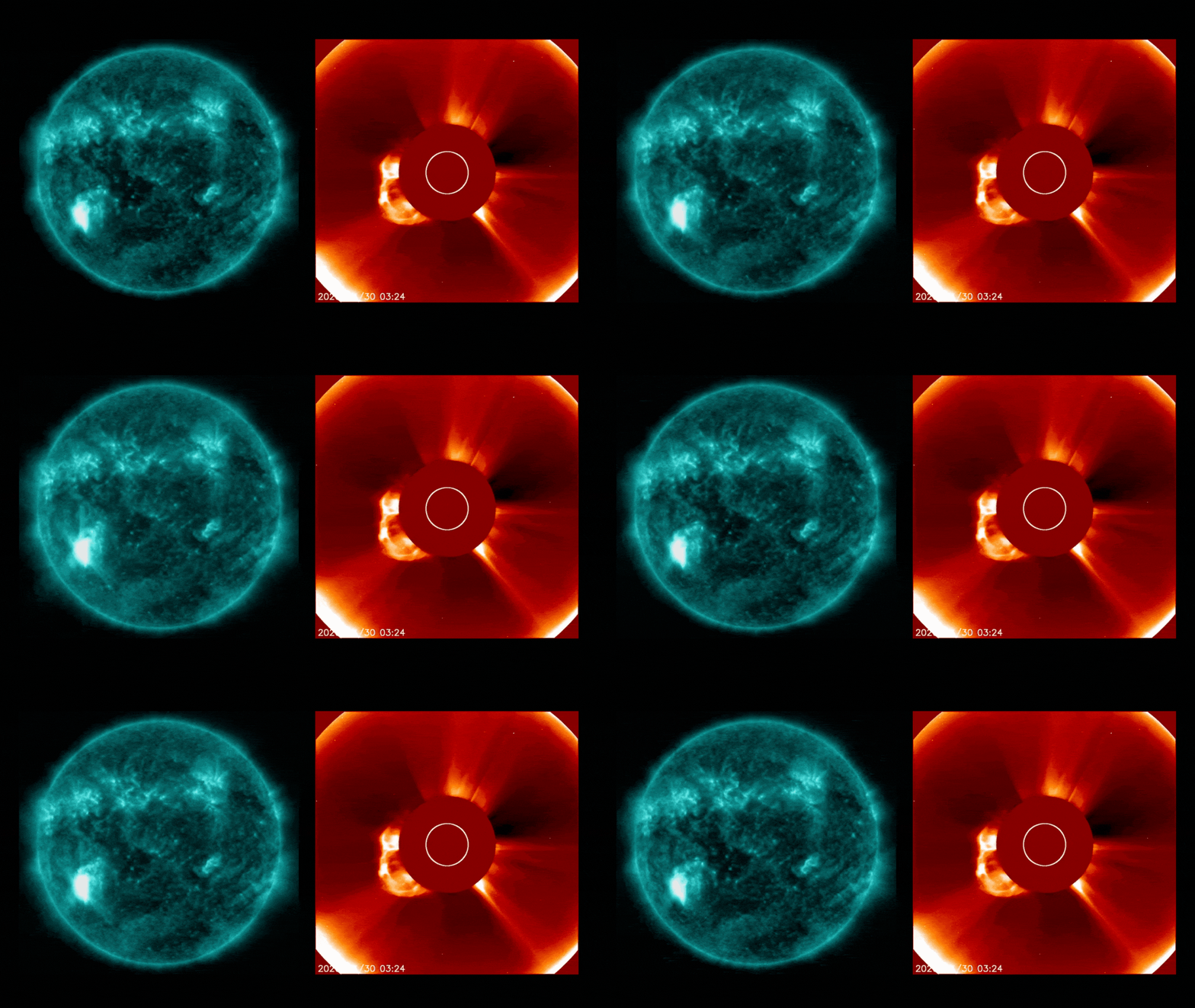
A powerful X1.4 solar flare erupted late on March 29, peaking at 11:19 p.m. EDT (0319 GMT on March 30) and triggering a strong (R3) radio blackout according to NOAA's Space Weather Prediction Center.
NASA will keep a close eye on space weather conditions, as disruptions like this could affect Artemis 2 preparations. Space weather can also pose a risk to astronauts, so forecasters and NASA teams are working closely together to monitor solar activity.
Read more: Could bad space weather endanger the Artemis 2 moon astronauts?
T-2 days to NASA's Artemis moon mission launch but how does it compare to Apollo?

Who's excited?
NASA is now just two days away from the launch of its Artemis 2 moon mission on April 1 — a mission that's set to push humans farther into space than ever before.
Sure, the Apollo program already took us to the moon. But Artemis 2 isn't a repeat.
This is the first crewed step toward a long-term human return to the moon and beyond. Instead of flags and footprints, the goal is something bigger: staying, exploring and preparing for future missions to Mars.
Read more: How will Artemis 2 be different from NASA's Apollo moon missions?
NASA's Artemis 2 astronaut moon mission is still on track to launch on April 1 at 6:24 p.m. EDT (2224 GMT).
NASA still eyeing April 1 for Artemis 2 launch

CAPE CANAVERAL, Fla. — During a press conference on Sunday (March 29), NASA officials shared a status update about launch preparations for its Artemis 2 mission to send astronauts around the moon and back.
It would appear teams are tracking zero technical issues leading up to the liftoff window, meaning the agency is still targeting liftoff on Wednesday (April 1).
T-3 days to NASA's Artemis 2 moon launch

NASA is now three days away from the launch of its Artemis 2 mission on April 1, and even though it's Sunday, there's a lot going on.
Today at 11:30 a.m. EDT (1530 GMT), the four Artemis 2 astronauts will speak with the media to answer questions, but it will be a "virtual" press conference. The astronauts are in quarantine currently at NASA's Kennedy Space Center in Cape Canaveral.
You'll be able to watch the Artemis 2 astronauts live on Space.com, so be sure to come back then.
At 2 p.m. EDT (1800 GMT) today, NASA will hold a press conference to give a status update on the mission. We'll have that live on the site as well.
NASA's Artemis 2 astronaut moon mission is still on track to launch on April 1 at 6:24 p.m. EDT (2224 GMT).
How to watch NASA's Artemis 2 mission
With the Artemis 2 astronauts at their launch site for NASA's first crewed moon mission in over 50 years, we're just days away from the historic liftoff. So you'll want to know how and when to tune in for the flight.
Luckily, we have you covered with our detailed overview:
What time is NASA's Artemis 2 mission to the moon?
And if you need more details, today's How to watch NASA's Artemis 2 moon mission launch on April? has a guide on livestreams.
The next major events will occur on Sunday, when the Artemis 2 astronauts will speak to the press one last time before liftoff. Then, NASA will hold a press conference in the afternoon. You can find the schedule for those events in our "what time is it" article as well.
Today, Space.com's Josh Dinner will be at the launch pad setting up remote cameras for our photo coverage of the launch. Wish him luck!
Watch Artemis 2 astronauts arriving in Florida

Artemis 2 astronauts will arrive at NASA's Kennedy Space Center (KSC) in Florida today, March 27, ahead of their mission to fly around the moon.
The crew have been in quarantine since March 20, when SLS was rolled from the Vehicle Assembly Building (VAB) to the pad at Launch Complex-39B (LC-39B), and will spend the days leading up to their mission continuing that quarantine at KSC.
The quartet are set to takeoff from NASA's Johnson Space Center and land around 2:30 p.m. EDT (1830 GMT) at KSC's Shuttle Landing Facility. NASA will broadcast their arrival live, with a remarks from agency administrator Jared Isaacman.
Artemis 2 launch less than 1 week away

It's official, space fans, NASA is less than one week away from the launch of Artemis 2.
The first astronaut mission to the moon since NASA's Apollo 17 in 1972 is on track for a launch on Wednesday, April 1, at 6:24 p.m. EDT (2224 GMT) from the Kennedy Space Center in Cape Canaveral, Florida. Our Spaceflight Editor Mike Wall has our latest update on what you need to know in or 1 week away from Artemis 2 story.
Also, we know that some of you out there have Artemis 2 on the brain (maybe even mor than Team Space.com!) and have been looking for Artemis 2 gear to sport during the mission. We have a new guide for the best Artemis 2 gifts for your aspiring astronauts in case you need some ideas.
Finally, as we close in on what appears to be a pretty solid launch target, we were wondering: Who is Artemis, the namesake of Artemis 2, really? You can see that in this story from writer Samantha Mathewson.

The Space.com team will be bringing you daily updates here through NASA's Artemis 2 launch, as well as throughout its 10-day trip around the moon and back home for an ocean splashdown.
We look forward to sharing the ride and feel free to see Artemis 2's journey to this date in our archives below.
SLS arrives at the pad
NASA's Artemis 2 Space Launch System rocket has completed its journey from the Vehicle Assembly Building to LC-39B, ending a roughly 10-hour overnight journey.
The rocket and mobile launch platform were carried the 4-mile (6.5 kilometers) by NASA's crawler-transporter 2 vehicle. First motion occurred early this morning inside the VAB, beginning the journey at 12:20 a.m. EDT (0420 GMT).
Now securely at Launch Complex-39B, ground teams will ready the rocket and pad systems for launch window that opens April 1.
Read the full story.
Artemis 2 rollout is underway
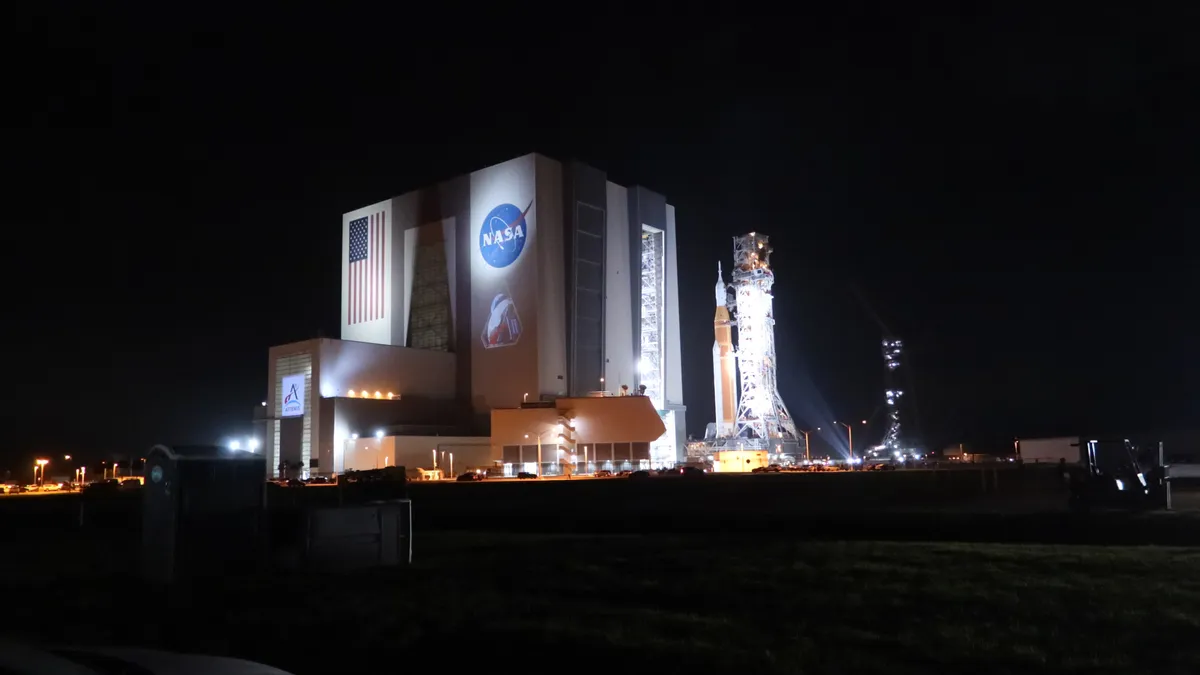
NASA has begun rolling its Artemis 2 moon rocket back to Launch Complex 39B at Kennedy Space Center (KSC) in Florida. The Artemis 2 stack — a Space Launch System rocket topped with an Orion crew capsule — began moving toward the pad from KSC's huge Vehicle Assembly Building (VAB) at 12:20 a.m. EDT (0420 GMT) on Friday (March 20). That was about 4.5 hours later than originally planned, a delay caused by high winds in the area.
The 4-mile (6.4 kilometers) trek from the VAB to Pad 39B is expected to take up to 12 hours. You can watch the whole journey here at Space.com, courtesy of NASA.
After it reaches the pad, Artemis 2 team members will begin prepping the rocket, crew capsule and ground systems for launch, which could happen as soon as April 1. The mission will send four astronauts on a roughly 10-day journey around the moon and back to Earth.
Rollout day has arrived

As of Thursday morning (March 19), NASA is still aiming for this evening to begin the rollout of SLS from the Vehicle Assembly Building, back to the launch pad.
Following the completion of some last minute work ahead of its departure, engineers are targeting 8 p.m. EDT (0000 GMT, March 20) for first motion of the SLS and mobile launch platform crawler-transporter 2 vehicle.
The journey from the VAB to Launch Complex-39B is expected to take about 12 hours. Watch the rollout live here on Space.com, courtesy of NASA, or directly on the space agency's YouTube channel.
Artemis 2 astronauts enter quarantine

The four Artemis 2 astronauts entered quarantine at Johnson Space Center in Houston on Wednesday (March 18) at 6 p.m. EDT (2200 GMT; 5 p.m. local time). The quartet "will limit their exposure to others for the next week in Houston, before flying to Kennedy approximately five days before launch, to continue their quarantine from the astronaut crew quarters there," NASA officials said in a statement on Wednesday evening.
"Kennedy" is Kennedy Space Center (KSC) in Florida, Artemis 2's launch site. If all goes to plan, the mission will launch on April 1 from KSC's Pad 39B, kicking off a 10-day mission around the moon.
Artemis 2 SLS rocket is rollout ready

SLS is ready to roll back!
NASA's Space Launch System rocket tasked with launching the Artemis 2 mission is ready for transportation from the Vehicle Assembly Building at the Kennedy Space Center, back to Launch Complex-39B.
NASA had targeted March 19 for the rollout, but pushed that to March 20 after additional maintenance on the rocket was required. Now, it seems that work was completed faster than expected, because NASA is once again targeting March 19.
First motion will take place tomorrow evening, around 8 p.m. ET (0000 GMT, March 20), with a roughly 12-hour journey across the 4 miles (6.5 kilometers) between the VAB and LC-39B.
First motion confirmed: SLS begins rollback to VAB
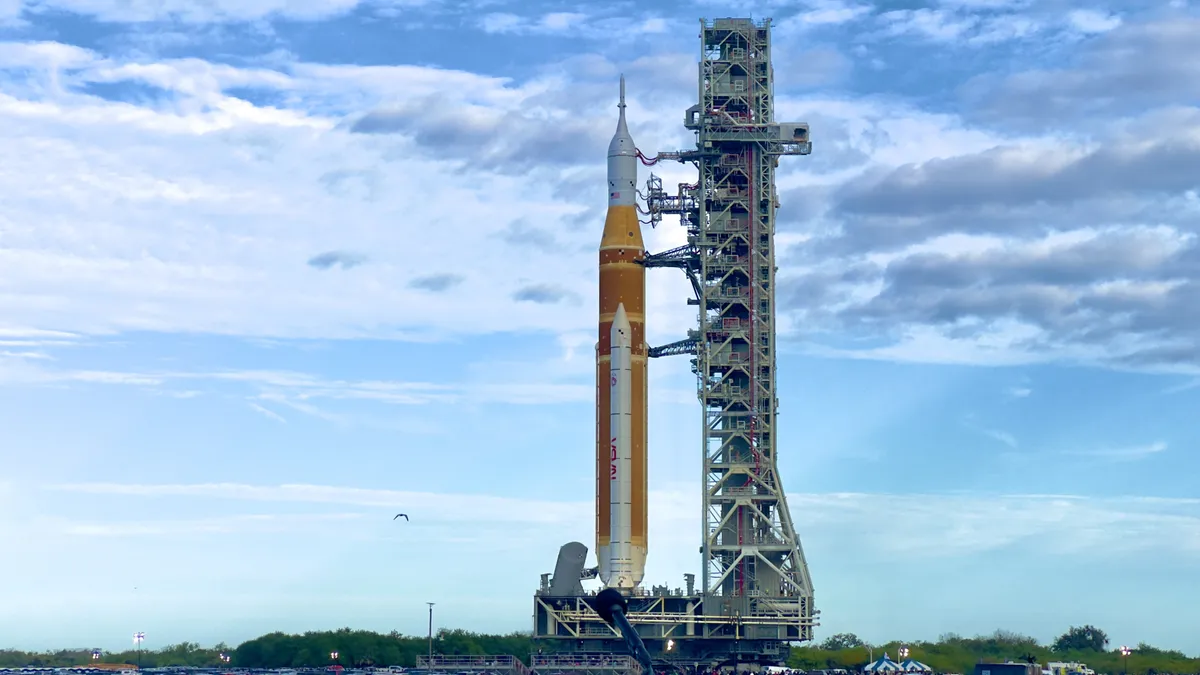
SLS is on the move!
The Artemis 2 launch director issued the "go" order for SLS to begin its journey from Launch Complex-39B to the Vehicle Assembly Building at NASA's Kennedy Space Center this morning (Feb. 25) at 9:38 a.m. EST (1438 GMT), with first motion confirmed about 10 minutes later, according to a NASA blog post Wednesday morning.
The rollback is expected to take about 12 hours, as SLS travels the four miles between the launchpad and VAB. Once back inside, technicians will lower platforms in the VAB's High Bay 3 to gain entry to SLS's upper stage access ports and begin their diagnosis and repair of helium issues discovered after the rocket's second wet dress rehearsal Feb. 19.
NASA Artemis 2 rocket begins return journey to hangar for repairs

The Artemis 2 Space Launch System (SLS) rocket, standing at Launch Complex-39B since its arrival Jan. 17, is about to begin the slow journey back to the Vehicle Assembly Building (VAB) at NASA's Kennedy Space Center (KSC) for repairs.
NASA had targeted a launch window beginning March 6 for the earliest opportunity to launch SLS with its Orion spacecraft carrying the astronauts of Artemis 2 on a 10-day mission around the moon, but a helium issue that arose after the rocket's most recent fueling test has prompted a rollback to the VAB and a push of the mission's launch window to April.
Artemis 2 ground teams are targeting 9 a.m. EST (1400 GMT) for first motion of SLS on its mobile launch platform, as it begins a 12-hour journey over the four miles between LC-39B and the VAB. Once safely back in the hangar, engineers will lower access platforms inside the massive building to gain access to SLS's Interim Cryogenic Propulsion Stage (ICPS), in order to address the issue.
Artemis 2 crew to attend State of the Union address as NASA prepares SLS rollback
Teams at NASA's Kennedy Space Center continue work at Launch Complex-39B to prepare the Artemis 2 Space Launch System (SLS) rocket and mobile launch platform (MLP) to roll the vehicle back to the Vehicle Assembly Building for repair, with first motion expected tomorrow morning (Feb. 25) at 9 a.m. EST (1400 GMT).
In the meantime, the Artemis 2 crew, assuredly not launching during their mission's March window, are released from their pre-launch quarantine and free to move about the world as their astronaut schedules permit. Tonight, that schedule will be taking them to the U.S. Capitol for President Trump's State of the Union address, according to an Axios report.
At the invitation of House Speaker Mike Johnson (R-La.), the Artemis 2 crew will be in the crowd this evening as the President updates the country on its current affairs. Johnson's state of Louisiana is home to NASA's Michoud Assembly Facility, in New Orleans, where much of SLS is constructed before being shipped to KSC for vehicle integration and launch.
The upcoming Artemis 2 mission to launch astronauts on a 10-day mission around the moon is lifting off on SLS, and the crew's attendance tonight at Johnson's invitation will no doubt serve as an excellent symbol of Louisiana's contributions to the national stage.
"It is my privilege to welcome these brave and courageous astronauts as my guests at the State of the Union Address," Johnson said in a statement to Axios.
Artemis 2 rollback targeted for 9 a.m. ET on Feb. 25

NASA has set a target time for the rollback of its Artemis 2 moon rocket — 9 a.m. EST (1400 GMT) on Wednesday (Feb. 25).
At around that time, Artemis 2's Space Launch System (SLS) rocket and Orion capsule will begin the 4-mile (6.4 kilometers) trek from Launch Pad 39B to the Vehicle Assembly Building (VAB) at Kennedy Space Center in Florida. The duo will make the journey, which could take up to 12 hours, atop NASA's massive Crawler Transporter-2 vehicle.
NASA is rolling Artemis 2 back to troubleshoot an issue with the SLS — an interruption in the flow of helium in the rocket's upper stage.
"Once back in the VAB, teams will immediately begin work to install platforms to access the area of the helium flow issue," NASA wrote in an update on Tuesday (Feb. 24). "Teams also will take advantage of the time in the VAB to replace batteries in the flight termination system and retest it, and replace additional batteries in the upper stage."
This work will ground the rocket until at least April 1, when the next Artemis 2 launch window opens.
NASA to roll Artemis 2 moon rocket off launch pad on Feb. 25

NASA plans to roll its Artemis 2 moon rocket off Kennedy Space Center's (KSC) Launch Pad 39B on Wednesday (Feb. 25). The agency had been eyeing Tuesday (Feb. 24) for the operation, but Mother Nature didn't cooperate.
"Cold temperatures and high winds are expected Tuesday, and rolling on Feb. 25 gives teams enough time to complete preparations at the launch pad that were limited today by high winds in the area," NASA officials wrote in an update on Monday evening (Feb. 23).
NASA is rolling the Artemis 2 stack back to KSC's Vehicle Assembly Building (VAB) to troubleshoot an issue with the Space Launch System rocket — specifically, a problem with helium flow in the vehicle's upper stage. It could take up to 12 hours for NASA's Crawler Transporter 2 vehicle, which will carry the Artemis 2 stack, to make the 4-mile (6.4 kilometers) trek from Pad 39B to the VAB.
The rollback takes the March launch window out of play for Artemis 2. The earliest the moon mission could now launch is April 1, though NASA has not said it is targeting that date.
NASA rollback of Artemis 2 rocket to VAB possible this week
NASA is now preparing to return its towering Artemis 2 moon rocket back to its hangar after more than a month at the launch pad due to a helium system issue on the rocket's upper stage.
The decision, which came yesterday (Feb. 22), means the Artemis 2 mission's launch of four astronauts to the moon will be delayed at least a month until April 1 at the earliest. It was previously set for March 6. You can read about the delay in detail in our full story by Space.com editor Mike Wall below:
On this page, we'll chronicle the move of the Artemis 2 rocket, called the Space Launch System, back into NASA's Vehicle Assembly Building for repairs. The move, called a "rollback," is scheduled to begin no earlier than Tuesday, Feb. 24, but only if the weather allows.
We'll have updates on this page as they are available.
"Teams are reviewing the exact time to begin the approximately 4 mile, multi-hour trek," NASA wrote on Sunday.
Artemis 2 arrives at launch pad for moon launch
🚀 Our moonbound Artemis II rocket is on its launch pad! The Space Launch System rocket and Orion spacecraft rolled out from @NASAKennedy’s Vehicle Assembly Building, reaching Launch Pad 39B at 6:42pm ET (2342 UTC). Read more: https://t.co/NdRCRBfQGA pic.twitter.com/1oATLb7sTDJanuary 18, 2026
After more than 11 hours, NASA's might Artemis 2 moon rocket has arrived at it new launch pad home for the first time.
The Space Launch System rocket that will launch NASA's Artemis 2 astronauts around the moon arrived at its pad at Launch Complex 36B at the Kennedy Space Center in Cape Canaveral, Florida at 6:42 p.m. EST (2342 GMT), more than 11 1/2 hours after leaving its Vehicle Assembly Building hangar.
"In the coming days, engineers and technicians will prepare the Artemis II rocket for the wet dress rehearsal, a test of fueling operations and countdown procedures," NASA officials said in an update. "At the end of January, the team will load the rocket with cryogenic, or super-cold, propellants, run through the countdown, and practice safely draining the propellants from the rocket – all essential steps before the first crewed Artemis mission."
That fueling test is actually scheduled for Feb. 2, just days ahead of theopening of NASA's first Artemis 2 launch window on Feb. 6.
"Additional wet dress rehearsals may be required to ensure the vehicle is completely checked out and ready for flight," NASA wrote. "If needed, NASA may rollback SLS and Orion to the Vehicle Assembly Building for additional work ahead of launch after the wet dress rehearsal."
With the Artemis 2 SLS at the launch pad, this will be our final post of the day.
Thanks for joining us for our live coverage of the SLS rollout and have a great weekend!
Artemis 2 rocket continues toward launch pad in hour five
The NASA team behind the scenes making Artemis II possible. Thank you. https://t.co/B699LjmWTLJanuary 17, 2026
NASA has now passed the five-hour mark of today's Artemis 2 moon rocket roll out to the launch pad. We should be just over halfway to the pad, or slightly more than halfway, depending on if NASA's progress is following its eight-hour schedule or 10-hour plan. Here's a wrap on how things havce gone so far:
NASA rolls Artemis 2 rocket to the pad ahead of historic moon launch
NASA said it could take between 8-10 hours for the Artemis 2 Space Launch System to reach the pad due to the slow and steady pace of its Crawler Transporter, which moves at a top speed of 1 mile per hour, but does go slower on the turn toward Launch Pad 39B, as well as on the incline up to the pad.
That slow pace is necessary to keep the massive 11 million pound load of the 322-foot-tall SLS rocket and its Mobile Launch Platform stable.
NASA Administrator Jared Isaacman has taken the time to thank the vast team supprting today's rollout for Artemis 2.
"Thanks to all those who have worked hard to get Artemis II to the pad! Just a few more hours to go," Isaacman wrote in a social media post.
"The NASA team behind the scenes making Artemis II possible. Thank you.," he added.
Artemis 2 rocket creeps along toward launch pad

NASA's Artemis 2 moon rocket, the second-ever Space Launch System booster, is slowly making progress along the 4-mile journey to its Florida pad at Launch Complex 39B at the Kennedy Space Center in Cape Canaveral, Florida.
It's a slow roll for the Artemis 2 SLS. NASA's giant Crawler Transporter 2 carrier vehicle is carrying the 11 million pound stack at about 1 mile an hour. That's it's top speed. The massive carrier vehicle was originally built to move NASA's Saturn V rockets in the Apollo era, and later moved space shuttles to the pad as well.
Here's a video of the 32-story rocket as it emerged from NASA's cavernous Vehicle Assembly Building earlier today.
Artemis 2 moon rocket emerges from giant hangar

As we near the 2-hour mark of NASA's up to 10-hour move of the Artemis 2 rocket to its Florida launch pad, the 322-foot-tall Space Launch System is fully visible and has exited its massive Vehicle Assembly Building hangar.
Above is an amazing image from Space.com's Josh Dinner at the Kennedy Space Center as he's monitoring the rollout to Pad 39B.
Here's a video update from Josh via the Space.com TikTok channel.
"The place is basically a rocket cathedral," Dinner says of the VAB.
First motion for Artemis 2 rollout!

NASA reports that the towering Artemis 2 Space Launch System rocket is officially on the move.
First motion for today's rollout occurred at 7:04 a.m. EST (1204 GMT) as the huge rocket began its daylong trip to the launch pad. It is about 4 miles to Pad 39B from NASA's 52-stroy Vehicle Assembly Building (VAB), where the SLS for Artemis 2 was stacked and assembled.
"It takes us a little while to get out of the building, but about an hour after we get that first motion, you'll begin to see this beautiful vehicle cross over the threshold of the VAB and come outside for the world to have a look," Artemis 2 Launch Director Charlie Blackwell-Thompson said Friday.
Here's a look at our report from Friday's Artemis 2 press conference:
Rollout day begins for NASA's Artemis 2
Good morning, Space Fans!
Rollout day is here for NASA's Artemis 2 moon rocket and the livestream for the giant moon rocket's move is underway. It could take up to 8 to 10 hours for NASA's Crawler Transporter 2 to haul the combined 11 million pound stack of the Artemis 2 Space Launch System rocket, mobile launch platform and Orion spacecraft to the pad.
Space.com's Josh Dinner is on the scene and shared a first update before dawn at NASA's Kennedy Space Center in Cape Canaveral, Florida.
How to watch NASA's Artemis 2 rocket rollout
With NASA's Artemis 2 moon rocket is ready to roll out to the launch pad, you may be wondering if you'll be able to watch it live online on Saturday, Jan. 17. Well, yes. Yes, you can.
NASA's livestream of the Artemis 2 roll out will begin at 7 a.m. EST (1100 GMT) and will be available in the window at the top of this page. You can also watch it directly from NASA via YouTube.
Here's our full guide from Spaceflight Editor Mike Wall:
Watch NASA roll huge Artemis 2 moon rocket out to the launch pad on Jan. 17
And here is a bit of a preview from our reporter on the seen, Josh Dinner:

Now that we're all set for rollout, this will be our final post of the day.
Thanks for joining us and we'll see you bright an early on Saturday for rollout.
Artemis 2 launch in February on a tight timeline
If you're looking for a deeper dive into NASA's Artemis 2 timeline for its potential February launch, we've got you covered.
Our Spaceflight Staff Writer Josh Dinner at NASA's Kennedy Space Center in Florida is there for tomorrow's planned rollout of the Artemis 2 rocket to the launch pad. He filed this report from today's press briefing and media events. Check it out:
NASA Artemis 2 rollout briefing ends
NASA's Artemis 2 moon rocket rollout preview press conference has ended.
You can see a replay in the window below.

Overall, it appears NASA is ready to move the 322-foot-tall Space Launch System rocket out to Pad 39B at the Kennedy Space Center in Florida on Saturday, Jan. 17, but time appears tight for the space agency's hope to launch the four Artemis 2 astronauts to the moon in February as planned.
Artemis 2 is NASA's first crewed Artemis mission and the first astronaut mission to the moon in over 50 years. As such, a series of tests on both the SLS rocket and Orion spacecraft for the mission must go well before it will be clear for astronauts to fly on then.
NASA has launched an SLS rocket and Orion spacecraft before, on the Artemis 1 mission in November 2022, but that was an uncrewed test flight. The Orion spacecraft on Artemis 2 is the first to include many life support systems to sustain astronuts on the 10-day mission.
NASA also wants to complete a fueling test on Feb. 2 that will help the space agency decide if it can proceed with a February launch. The February launch window is limited to a series of days between Feb. 6-10.
It took three attempts to launch Artemis 1, with fuel leaks contributing to two delays. NASA believe its has fixes in place, but needs to test them before Artemis 2 can launch.
If Artemis 2 is unable to launch in February, NASA can try again in March and April.
Artemis Launch Director Charlie Blackwell-Thompson said NASA has launch opportunities every month for Artemis 2, ranging from a few days to up to a week.
Artemis 2 rocket ready for rollout, fueling test set
NASA officials say the Artemis 2 moon rocket is ready to head out to its Florida launch pad early tomorrow, but it will be a slow trip.
The Artemis 2 Space Launch System will take between 8 to 10 hours to make the 4-mile trip from NASA's Vehicle Assembly Building to Launch Pad 39B. Once the the rocket makes it to the pad, NASA will then connect it to pad infrastructure for fueling atop its Mobile Launch Platform.
NASA's huge Crawler Carrier vehicle - originally built for the Apollo Saturn V missions (like the VAB) - will haul the rocket and launch platform out to the pad.
Artemis 2 Launch Director Charlie Blackwell-Thompson says NASA plans to conduct a fueling test, called a "wet dress rehearsal," on Feb. 2. Based on the rocket's performance during that test, NASA will decide if Artemis 2 will be ready for a Feb. 6 launch.
The February launch window runs from Feb. 6 to Feb. 10. In addition to the fueling tests, NASA will need to perform a series of SLS and Orion spacecraft checks, as well a run through with Artemis 2 astronaut crew.
NASA Artemis 2 rollout press conference begins
NASA's press conference on the Artemis 2 moon rocket has begun. You can watch it live on this page, as well as on NASA's YouTube here.
Speaking during the event are:
- John Honeycutt, Artemis II mission management team chair
- Charlie Blackwell-Thompson, Artemis launch director, Exploration Ground Systems
- Jeff Radigan, Artemis II lead flight director, Flight Operations Directorate
- Lili Villarreal, landing and recovery director, Exploration Ground Systems
- Jacob Bleacher, chief exploration scientist, Exploration Systems Development Mission Directorate
"I will say, it really doesn't get much better than this," Honeycutt says in opening remarks." This is making history."
NASA to hold press conference on Artemis 2 rollout
Hello, Space Fans! NASA is one day away from its historic rollout of the Artemis 2 rocket that will carry four astronauts to the moon for the first time in over 50 years.
The Artemis 2 rocket, NASA's second Space Launch System booster, is currently scheduled to head out to Launch Pad 39B at the Kennedy Space Center in Florida on Saturday, Jan. 17, at 7 a.m. EST (1200 GMT). It should take several hours for the towering 322-foot rocket to reach the launch pad.
Space.com's Josh Dinner is on the scene at Kennedy Space Center for the Artemis 2 rollout, and will share insights on what the view is like there.
But first, NASA will hold a press conference today at 12 p.m. EST (1700 GMT) to discuss the Artemis 2 rollout, plans for the Feb. 6 launch of the 10-day mission around the moon.
You can watch that press conference live in the window above.