Sorry, but we need to talk about Artemis 2's space toilet again.
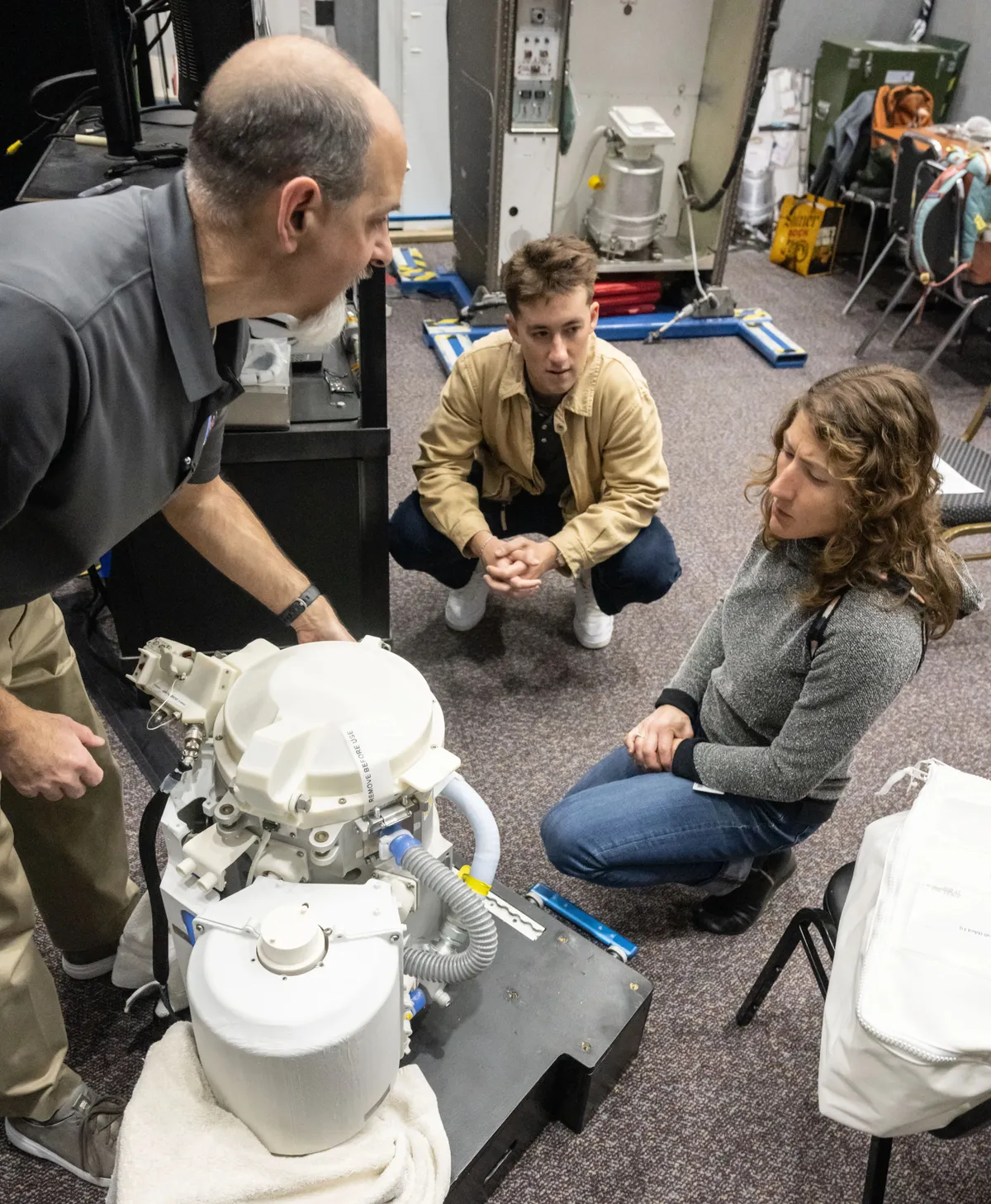
The loo on Artemis 2's Orion capsule has gotten a lot of attention since the moon mission launched on April 1, and not just because it's the first privy ever to fly beyond Earth orbit. (NASA's Apollo astronauts did their business into handheld bags.)
The Artemis 2 toilet has also been acting up — specifically, backing up, as the four astronauts have had trouble venting its stored urine out into space. In addition, the Orion crew has reported an odd burning smell coming from the toilet, which remains unexplained but does not trouble Mission Control much.
On Tuesday (April 7), the day after Artemis 2's historic flyby of the moon, NASA officials gave us another update about the loo, which is a more compact version of the one on the International Space Station.
Based on that update, some of us may owe the space toilet a bit of an apology.
"The toilet remains operational," Artemis 2 Flight Director Rick Henfling said during a press conference on Tuesday afternoon.
"The challenge that we're working through is evacuating the tank," he added. "The vent is a lot less than we were expecting, and so we're having to fall back to some other alternate means, other than the toilet."
The mission team had hypothesized that ice may be blocking the vent nozzle on Orion's exterior, Henfling explained. But that doesn't seem to be the case; the problem persists, even after heaters were engaged and Orion was tilted toward the sun to "bake away" the proposed ice.
So what's actually going on?
"The latest theory is related to some of the chemistry that goes into ensuring that the wastewater doesn't develop any biofilms," Henfling said. "And there may be something going on with a chemical reaction where there's some debris that's generated as part of that reaction, and it's getting clogged in a filter."
That theory needs to be checked out, however. The mission team likely won't get any concrete answers until they can examine Orion up close, Henfling and others stressed.
"As soon as we get this [spacecraft] down on the ground, we'll be able to get inside, and we will get to the root of that," Lori Glaze, acting associate administrator for NASA's Exploration Systems Development Mission Directorate, said during Tuesday's briefing.
They won't have to wait too long to conduct that examination. Orion and its four occupants — NASA astronauts Reid Wiseman, Victor Glover and Christina Koch, and the Canadian Space Agency's Jeremy Hansen — will return to Earth on Friday evening (April 10), splashing down off the coast of San Diego.
Their homecoming will wrap up a historic mission, for both the toilet and humanity: Artemis 2 is the first crewed flight beyond low Earth orbit since Apollo 17 in 1972.