Going to the moon? Been there, done that — right?
Some people might say that NASA's Artemis 2 mission, which is scheduled to launch no earlier than April 1, is a repeat of the past. After all, between 1968 and 1972, 24 American astronauts flying on nine Apollo missions journeyed to the moon. Even more so, three of those people flew twice, and six missions did more than just fly by or orbit the moon — they landed on the lunar surface. So what's the big deal with Artemis 2, and why is NASA describing the mission as "historic?"
"Artemis 2 will be a momentous step forward for human spaceflight. This historic mission will send humans farther from Earth than ever before and deliver the insights needed for us to return to the moon — all with America at the helm," NASA Administrator Jared Isaacman said in a statement.
Not your (grand)father's moon mission
To achieve President John F. Kennedy's goal of landing a man on the moon and returning him home safely by the end of the 1960s, NASA's mission planners came up with a set of steps needed to be achieved before the next step could be accomplished, all the way from Earth to the lunar surface.
These sequential missions were given alphabetical designations. For example, "Type A" flights like Apollo 4 and Apollo 6 tested the Apollo spacecraft without astronauts on board in Earth orbit. Apollo 7, which achieved the same but with a crew was "Type C," and Apollo 8, which did the same in lunar orbit, was "Type C-prime."
Apollo 11, which accomplished Kennedy's challenge to the nation, was "Type G."
The Apollo program did not include an uncrewed test of the command module in orbit around the moon. That flight profile did not occur until Artemis 1 in 2022. On that mission, not only was the Orion spacecraft put through its paces with everything but its life support systems installed, but it also tested out a new type of lunar orbit for a human-rated vehicle.
And that now leads up to Artemis 2, the first crewed flight of the Artemis program. By that one distinction — there will be astronauts aboard — a comparison could be made with Apollo 7 as the first crewed flight of the Apollo program. But Apollo 7 did not leave low Earth orbit (LEO); Artemis 2 will transfer from LEO to a highly elliptical Earth orbit, such that it reaches and then exceeds the distance that humans have ever traveled away from Earth.
That might lead to comparisons with Apollo 8 — the first mission to fly humans to the moon in 1968 — but Frank Borman, Jim Lovell and Bill Anders orbited the moon. Artemis 2 crewmates Reid Wiseman, Victor Glover, Christina Koch and Jeremy Hansen will fly by and out beyond the moon, but they will not go fully around it.

The four Artemis 2 crew members will follow a "free-return" trajectory that will use the moon's gravity to return them to Earth, rather than relying on the Orion service module's engine to do so. In that sense, they are like the replanned "Type H" Apollo 13 mission, which after an explosion tore through its service module became a mission of survival.
In fact, the Apollo 13 astronauts hold the record for the farthest that humans have ever traveled into deep space: 248,655 miles from Earth (216,075 nautical miles or 400,171 kilometers). Artemis 2 will break that mark, if all goes according to plan.
But Artemis 2 mission planners chose the free-return trajectory not because of an emergency but to enable the astronauts to perform proximity operations using the upper stage of the flight's Space Launch System rocket. Apollo 9 and Apollo 10 performed this type of demonstration using a lunar module.
Flags, footprints and footholds
There was no single Apollo mission that matched what Artemis 2 is going to do, but that's not the only difference between the moon missions of 50 years ago and today.
Apollo went to the moon to demonstrates the United States' — and democracy's — ability to accomplish more than the Soviet Union and the communists could do. It was the two countries' way of fighting a Cold War through "soft power." Once Apollo 11's Neil Armstrong and Buzz Aldrin planted the American flag at Tranquility Base and then splashed down (with Michael Collins) back on Earth, the primary goal of Apollo was met.
The five missions that followed Apollo 11 to the lunar surface accomplished a lot but were the result of the program winding down to a stop.
"We leave as we came and, god willing, as we shall return," said Gene Cernan, commander of Apollo 17, as he became the last person (to date) to step foot off the moon in December 1972.
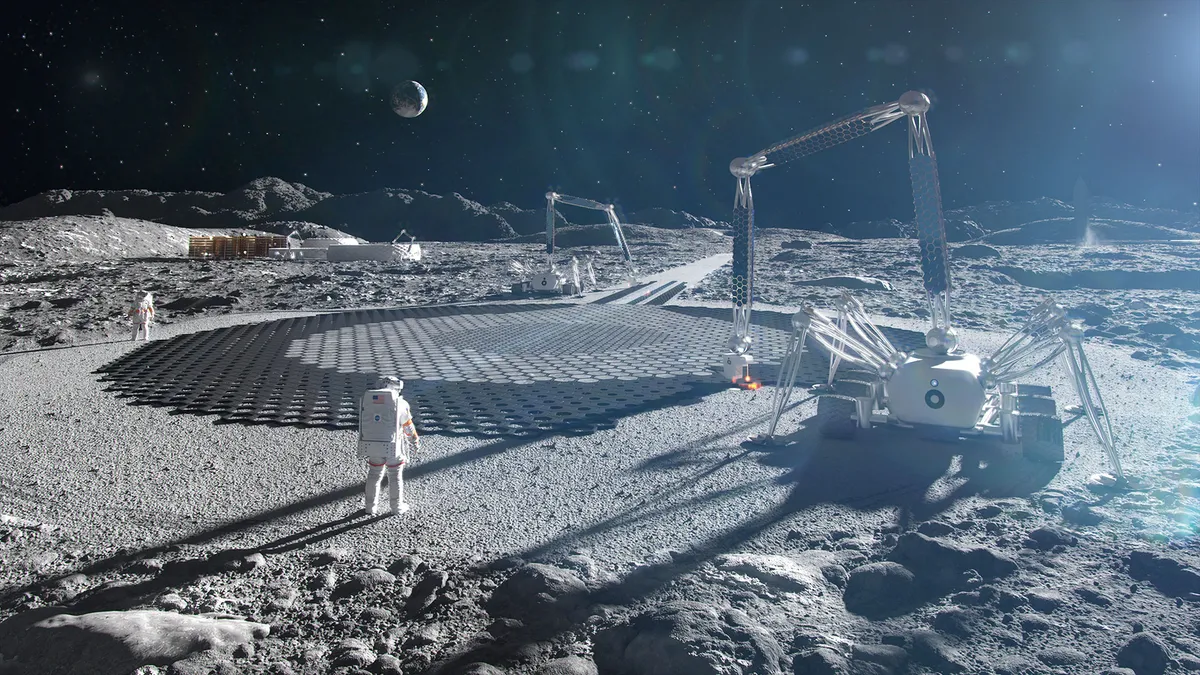
The Artemis program has the goal of establishing a sustainable human presence at the moon and using the resources found there to enable humanity's future exploration of Mars and other even more distant destinations. The aim is not just to send astronauts to visit the the moon but to set up a base near the south pole. This will involve mining the region for water ice, which can be used for life support and processed into rocket fuel.
Artemis 2 is the first step in that long climb.
"Success is boots on the moon in Artemis 3," said Koch (before NASA restructured the program; this milestone will actually now occur on Artemis 4). "Success is Artemis 100, whenever that is. And we really define everything off of that."