NASA finally has an official, permanent leader.
The U.S. Senate voted today (Dec. 17) 67-30 to confirm billionaire private astronaut Jared Isaacman as the new NASA administrator, ending more than a year of uncertainty as the space agency has followed marching orders from temporary chiefs
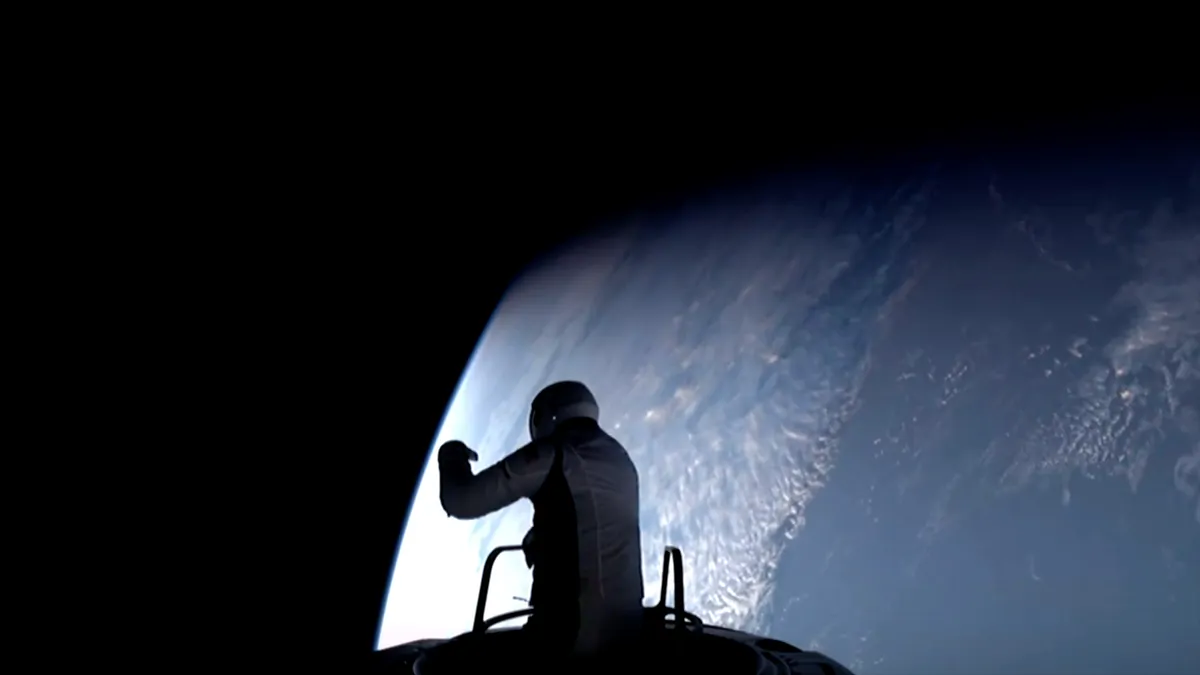
Isaacman, 42, is the billionaire founder of the payment-processing company Shift4. He's also an astronaut and sponsor of Polaris, a privately funded spaceflight program chartering SpaceX launches to orbit. Two of those missions have launched to date with Isaacman in the commander's seat, Inspiration4 and Polaris Dawn, which made history as the first private astronaut mission to Earth orbit and the first flight to feature a civilian spacewalk, respectively.
Though some members of Congress have expressed concerns about Isaacman's relationship with SpaceX founder and CEO Elon Musk, citing the potential for bias or favoritism, Isaacman's nomination has been favorably received by much of the space community.
Or nominations, rather, for there have been two of them. Donald Trump first tapped Isaacman for the top NASA job in December 2024, when he was still president-elect. Isaacman sat for a hearing before the U.S. Senate Committee on Commerce, Science and Transportation in April, which advanced his nomination to the full Senate, but lawmakers didn't get the chance to vote. Trump abruptly withdrew Isaacman's nomination in late May, halting the confirmation process and leaving NASA with an indefinite acting administrator.
At the time, that position was held by Kennedy Space Center Director Janet Petro. In July, however, with no prospects for a new NASA administrator nomination on the horizon, Trump handed the role to Department of Transportation Secretary Sean Duffy, who has remained in the acting administrator position ever since.
Trump's reversal on Isaacman came amidst a public falling out between the president and Musk, with Trump posting on his social media site Truth Social that he hadn't realized Isaacman was "a blue-blooded Democrat, who had never contributed to a Republican before."
Isaacman came back into the spotlight again in early November, when a Politico report exposed a 62-page document, known as "Project Athena," that outlines Isaacman's vision for NASA. After it was made public, Isaacman called the document a tentative list of "ideas, thoughts on the direction of the agency" and how it might operate in a leaner, more efficient way. Trump renominated Isaacman for NASA chief on Nov. 4 (a day after the Politico report published), which paved the way for his official appointment today.
President Trump's fiscal year 2026 budget proposal slashed NASA's budget by nearly 25% and cut the agency's science funding by 47%. When pressed during his two Senate nomination hearings this year, Isaacman voiced support for much of the administration's space agenda, including landing astronauts back on the moon before China does so and sending humans to Mars. Isaacman also indicated his commitment to spend NASA's funds as directed. It's still unclear what that budget will be; Congress aims to restore NASA funding to previous years' levels, though a final appropriations bill has yet to be passed.
"Mr. Isaacman emphasized the importance of developing a pipeline of future scientists, engineers, researchers, astronauts, to support the science and technology development and align with NASA's objectives," Sen. Maria Cantwell (D-Wash.) said before lawmakers began their roll call vote this afternoon, in a statement that announced her support for his confirmation. "I look forward to working with administrator Isaacman on the future STEM talent with both NASA and more broadly, with the aerospace and innovation sector."