December 18, 2015 (December 17 in the UK) will be a day long remembered. It was the day "The Force Awakens" first arrived in theaters, when "Star Wars" icons Han Solo, Leia Organa, and (eventually) Luke Skywalker made their long-awaited return to the big screen, and continued their fight against the dark side.
The Skywalker Saga's seventh instalment was a critical and commercial success, and made Disney's $4 billion purchase of Lucasfilm in 2012 look like a very smart piece of business.
Since then, there have been four more movies and the franchise's first-ever adventures in live-action TV, but — while it's undoubtedly been a lucrative endeavor — this new "Star Wars" era hasn't always been plain sailing.
We're celebrating the 10th anniversary of The Force Awakens with its own retrospective, but here we're casting the net wider, exploring the ups and downs of the first 10 years in Disney's version of a galaxy far, far away.
And to keep things fun, we're taking Disney back to school and giving each Star Wars project a letter grade. Starting with...
The Skywalker Saga

The "Star Wars" sequel trilogy was the holy grail of Disney's Lucasfilm purchase. Fans — and numerous spin-off novels — had been pondering what happened after "Return of the Jedi" for decades, and now they'd get to see it on the big screen. With Harrison Ford, Mark Hamill, and Carrie Fisher returning as the holy trinity of Han, Luke, and Leia.
Hiring a director who'd recently had success resurrecting the other major "Star" franchise proved a smart move. Lucas's weird, out-there story treatments (ultimately jettisoned by Disney) would have made for intriguing movies, but JJ Abrams' crowd-pleasing approach (co-scripted with "The Empire Strikes Back" writer Lawrence Kasdan) was what the franchise needed. Yes, "The Force Awakens"' plot was essentially a remix of "A New Hope" but it also told those gen-X fans who'd moaned about the prequels that Disney knew how to make their kind of "Star Wars". It remains the only film in the franchise to top $2 billion at the global box office.
While "The Force Awakens" played it safe, follow-up "The Last Jedi" (2017) took some big swings. The resulting film became the most divisive in the entire saga.

For some — this writer included — writer/director Rian Johnson's choices were wonderfully bold and unexpected: Luke's disillusionment with the Jedi, Rey's "nobody" parentage, and Snoke's shock death all delivered on the trailer's promise that "this is not going to go the way you think". Other sectors of the fanbase, however, saw these as negatives, along with the very slow starship chase, the detour to a gambling planet, and accusations of excessive wokeness. (The deeply unpleasant online abuse directed at members of the cast and crew, particularly Kelly Marie Tran, highlighted the dark side of fandom.)
Then came "The Rise of Skywalker" (2019)…
Mistakes were undoubtedly made in both "The Force Awakens" and "The Last Jedi" — most notably, passing up the opportunity to reunite Han, Luke and Leia on screen — but "The Rise of Skywalker" was a bona fide catalogue of errors.
With Leia reportedly set to take a leading role in "Episode IX", the sad passing of Carrie Fisher in December 2016 threw the filmmakers the most tragic of curveballs. But when original writer/director Colin Trevorrow ("Jurassic World") departed the project less than two years ahead of its planned release— "we have come to the conclusion that our visions for the project differ," said a Lucasfilm statement — returning director Abrams found himself in a race against time.

He wasn't helped by the Skywalker Saga's ad hoc approach to plotting, strangely reminiscent of Consequences, the old parlour game where players have to continue each other's unseen stories. It turned out there'd been little overarching grand plan for the new trilogy, as each creative team riffed on their predecessor's ideas.
While this narrative flexibility had arguably worked in Johnson's favor, Abrams and co-writer Chris Terrio made some really odd choices. They didn't shy away from those aforementioned big swings, but resurrecting the long- (and very) dead Emperor Palpatine — while revealing he'd been pulling the First Order's strings all along — made the "Star Wars" galaxy feel very, very small, undermining everything that had made "The Last Jedi" memorable.
The retcons — such as Rey being anything but nobody (hey everyone, she's Palpatine's granddaughter!) — were utterly nonsensical, as were the cheap, easily undone shock moments like Chewbacca's "death". Questions posed in "The Force Awakens" about the origins of the Knights of Ren and how Maz Kanata obtained Luke's lightsaber remained frustratingly unanswered. And then there was Carrie Fisher's posthumous appearance as Princess Leia, an unsatisfying blend of unused footage and CG recreation. In hindsight, it would have been better to have this beloved character die off-screen.
"The Rise of Skywalker" remains a very expensive ode to that old proverb that "those who fail to plan, plan to fail". It's still, by some distance, the worst film in the franchise, and ended (for now) the Skywalker Saga on a downer. It was also the fifth "Star Wars" movie released in the space of four years — it's telling there hasn't been another in the six years since.
Star Wars Project |
Grade |
|---|---|
The Force Awakens |
A- |
The Last Jedi |
A |
The Rise of Skywalker |
D- |
Standalone movies
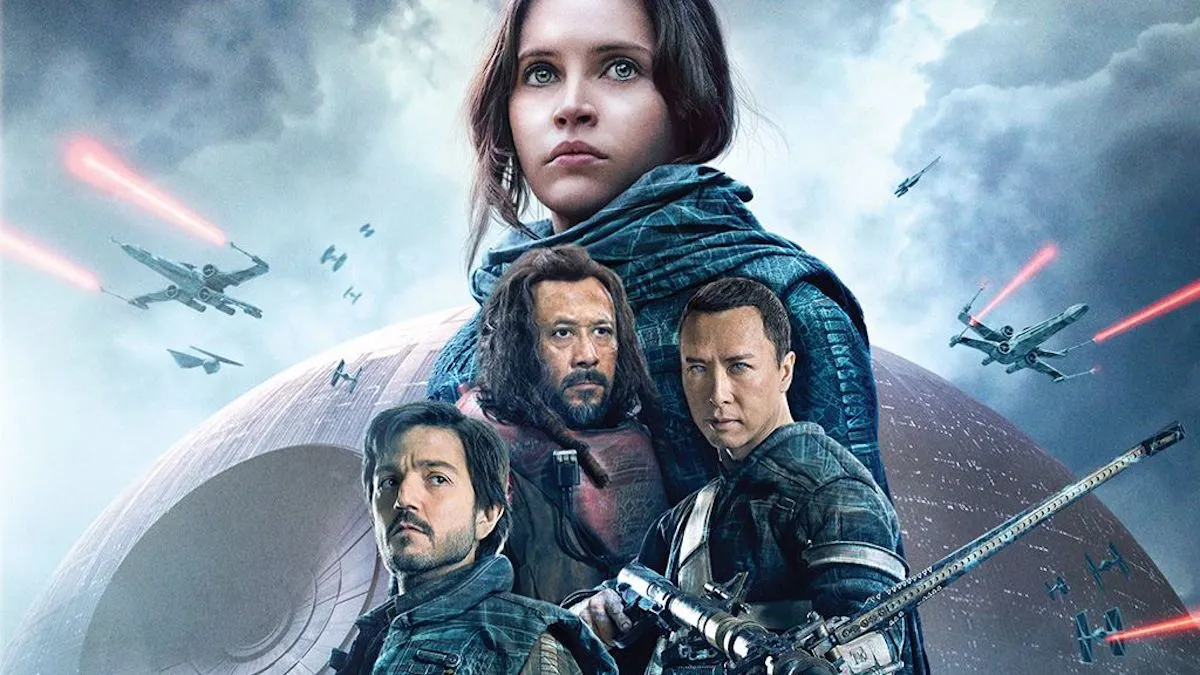
"Rogue One" (2016) shouldn't have worked. This was a standalone movie inspired by a couple of lines from "A New Hope"'s opening crawl (about the Rebels stealing some famous Death Star plans), featured an ensemble of unknown characters, and was the result of a famously troubled production, where "Michael Clayton" writer/director Tony Gilroy came on board to oversee extensive reshoots. The full extent of his involvement is still shrouded in secrecy.
And yet the film turned out to be one of the best in the entire franchise. It was a dark, gritty war movie, where themes about sacrifice (everybody dies!) sat side-by-side with the unashamed nostalgia of OG X-Wings and TIE Fighters dogfighting.
The second "Star Wars Story", "Solo", was less successful. Going back to the origins of everyone's favorite scoundrel, Han Solo, may have felt like a no-brainer — especially with Kasdan on board as co-writer — but the film never felt like an essential addition to the rapidly expanding canon.

As with "Rogue One" there was trouble behind the scenes, as original directors Phil Lord and Christopher Miller ("The Lego Movie") left the production — "different creative visions" were blamed for the departure once again. Ron Howard, owner of two of the safest hands in Hollywood, was hired to shepherd the production over the line.
But, whether or not you feel Alden Ehrenreich was up to filling Harrison Ford's boots, the film's biggest problem was its concept. "Solo" was less a story than a succession of answers to questions you never needed to ask, from recreating the Kessel Run to confirming the origins of the Solo name — he's travelling alone, geddit? Little did we know that this "fill in the canonical blanks" approach to storytelling would later become integral to the "Star Wars" galaxy….
Star Wars Project |
Grade |
|---|---|
Rogue One |
A |
Solo |
C |
Television

The launch of Disney+ in November 2019 gave "Star Wars" the chance to take its first step into a larger world. Sure, there had been plenty of animated series already (including the brilliant "The Clone Wars"), but nothing live-action, despite Lucas's best efforts on the abandoned "Star Wars: Underworld".
Jon Favreau's "The Mandalorian" (2019) was the right show at the right time, a welcome nod to the franchise's space-western roots in which a bounty hunting loner became surrogate dad to the cutest kid in the galaxy. It looked as good as a movie, but also made the most of its episodic structure. For the first time in its history, the most exciting place in the "Star Wars" galaxy could be found on TV.
Subsequent Disney+ shows have been more inconsistent. The galaxy's most infamous bounty hunter had come close to headlining his own movie in the 2010s, but ultimately became the lead in "The Mandalorian" spin-off, "The Book of Boba Fett" (2021). Fett's efforts to take control of the late Jabba the Hutt's crime empire lacked the crucial Grogu factor, however, and — somewhat ironically — the seven-part series' two best episodes were "The Mandalorian" outings in all but name.
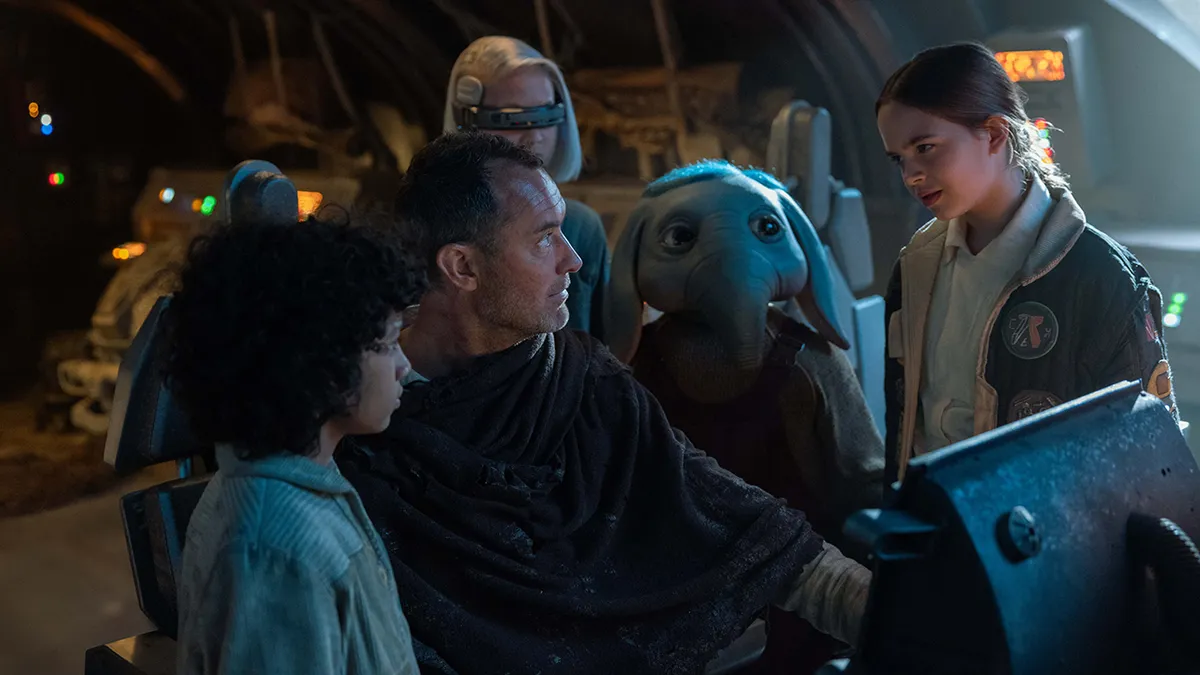
This post-"Return of the Jedi" period in the "Star Wars" timeline has proved particularly fertile ground for the franchise, with "Ahsoka" (2023) (which has been renewed for a second season) and "Skeleton Crew" (2024) (which has not).
Co-created by "Spider-Man: Homecoming" director Jon Watts, "Skeleton Crew" was a fun, refreshing effort to recreate "The Goonies" in outer space. "Ahsoka", meanwhile", gave former Lucasfilm animation overlord Dave Filoni (now Lucasfilm's chief creative officer) the chance to continue the stories of characters and storylines established in "The Clone Wars" and "Star Wars Rebels". It's as lore-heavy as anything in "Star Wars" — arguably too much so for casual viewers — and adheres closely to the "plug those gaps" formula established by "Solo".
Along with the functionally titled "Obi-Wan Kenobi" miniseries (2022), "Ahsoka" marked an important shift in the franchise's strategy. While the first batch of Disney-era movies went all-out to push the nostalgia buttons of older fans who'd grown up with Han, Luke, and Leia, Lucasfilm started to acknowledge that the kids who'd grown up on the prequels were now adults buying Disney+ subscriptions of their own. Anakin Skywalker (played by the returning Hayden Christensen) was their hero, while the Ewan McGregor incarnation of Obi-Wan was the Jedi Master they'd always known.
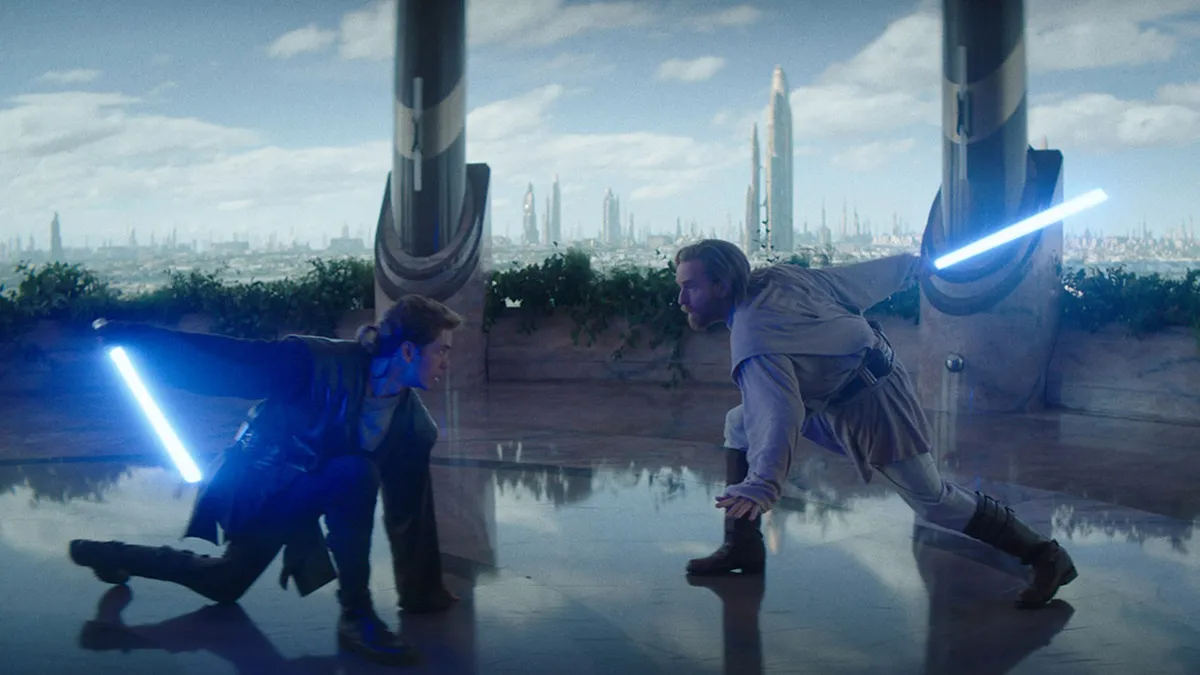
"The Acolyte" (2024) (the brainchild of "Russian Doll" creator Leslye Headland) became "Star Wars"' first screen outing set outside the Skywalker era. Unfortunately, the Jedi/Sith action of the High Republic era — roughly a century before the events of "The Phantom Menace" — didn't feel significantly different from what we'd seen before, and the show was axed after a single season.
As on the big screen, it's Lucasfilm's biggest TV swings that have been the most successful. From various Lego spin-offs to "The Bad Batch" (2021), there's been no shortage of "Star Wars" animation over the last decade, but "Star Wars: Visions" (2021) has been the most radical. While it's undeniably hit and miss, the anthology series has allowed animators around the world to put new and varied spins on a universe that's nearly half a century old.
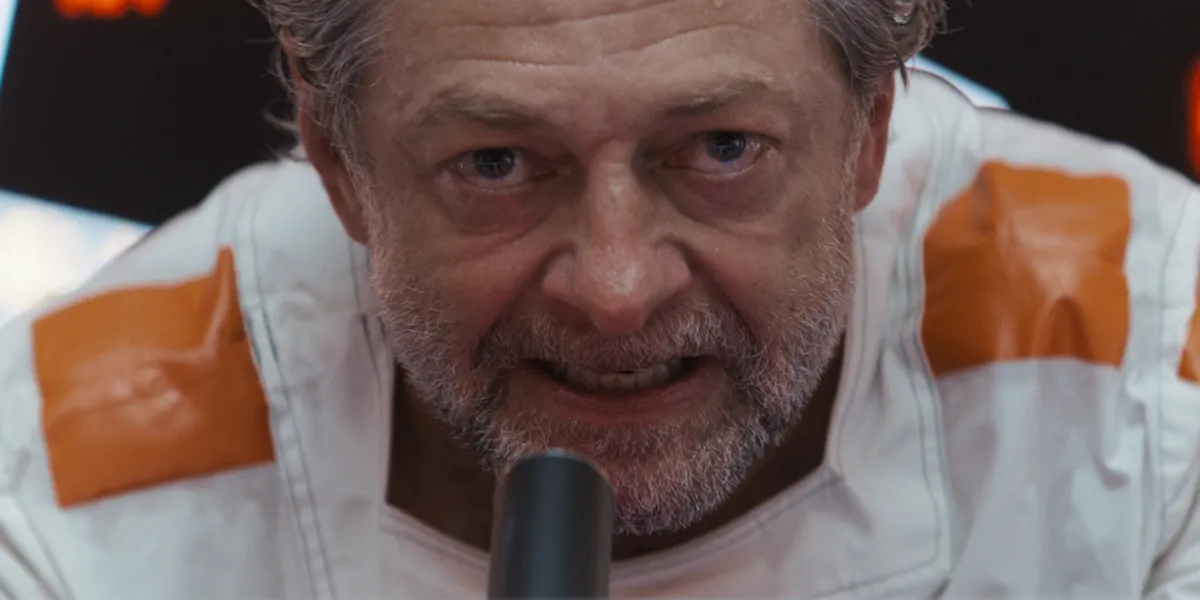
And, of course, there's "Andor" (2022), the "Rogue One" prequel that redefined what "Star Wars" can be. Without ever forgetting that it's set in a galaxy far, far away, Tony Gilroy's complex political thriller felt chillingly relevant, as a small band of Rebels risked everything to mobilize against crushing Imperial brutality. Forget Darth Vader and the Emperor, the Empire has never been scarier than it was here.
"Andor"'s two seasons are the standout of the Disney era, a reminder of "Star Wars"' impressive versatility. Of course, not everything has to be so dark and gritty, but — if the powers-that-be have been paying attention — they'll realise that any stories they want to tell could and should be on the (Sabacc) table. Even a "Lower Decks"-style comedy.
Star Wars Project |
Grade |
|---|---|
The Mandalorian |
A |
The Book of Boba Fett |
C |
Obi-Wan Kenobi |
B |
Ahsoka |
C+ |
Skeleton Crew |
B- |
The Acolyte |
C+ |
The Bad Batch |
B- |
Star Wars: Visions |
B+ |
Andor |
A+ |
The future

In 2018, following the disappointing box-office performance of "Solo", Disney CEO Bob Iger issued a mea culpa to the Hollywood Reporter. Referring to the breakneck pace of Disney's early "Star Wars" release schedule, he admitted, "I think the mistake that I made — I take the blame — was a little too much, too fast."
And over the last decade, it's been hard to escape the feeling that — to paraphrase Indiana Jones, Lucasfilm's other timeless movie icon— they're making this up as they go. "Star Wars" has certainly suffered in comparison to Disney stablemate Marvel, whose MCU — despite some recent stumbles — remains the gold standard for all shared universes.
Projects come and go at every major studio — and more eyes are on "Star Wars" than most — but the sheer number of movies and TV shows that have fallen by the wayside is mind-boggling.

Josh Trank's Boba Fett project, Patty Jenkins' "Rogue Squadron", a Lando Calrissian film, and potential big-screen projects from "Thor" director Taika Waititi, Marvel boss Kevin Feige, and "The Last Jedi"'s Johnson have all been discussed, but — for various reasons — never made it out of the development pipeline. "Rangers of the New Republic", another proposed "Mandalorian" spin-off, was also spiked. Stories teased by "Solo" (Maul’s new career as a crime lord) and "The Acolyte" (the arrival of Palpatine's master, Darth Plagueis) were frozen in carbonite, plot threads left hanging by shifting plans and cancellations.
But now, a decade on from "The Force Awakens, Disney may finally be finding some balance in the Force. Dave Filoni (a man steeped in "Star Wars" lore after serving as Lucas's Padawan on "The Clone Wars") feels like a wise appointment as chief creative officer, and hopefully, he'll be able to shape Lucasfilm's output as Feige has Marvel's. A much-needed slowdown in output should also give everyone — fans included — a chance to regroup.

The only major TV releases on the immediate horizon are "Ahsoka"'s second season (date TBC) and the animated "Maul: Shadow Lord" (2026). And, six years after "Star Wars" last graced movie theaters, the big screen is finally back on the agenda.
Upcoming Star Wars movie announcements about Rey's return in a post-"Rise of Skywalker" "New Jedi Order" film, and a Jedi origins tale from "Indiana Jones and the Dial of Destiny" director James Mangold, both got the internet buzzing. But it's the continuation of a TV show that'll be first out of the spaceport, as "The Mandalorian and Grogu" get ready to land in multiplexes in May 2026. At some point, we're also expecting a big-screen finale to the interweaving stories told in "The Mandalorian", "The Book of Boba Fett" and "Ahsoka".
And then there's "Starfighter" (2027), "Star Wars"'s first-ever attempt to sell a movie on established A-list talent, as "Deadpool & Wolverine"'s Shawn Levy directs Ryan Gosling. The Force could be very strong with this one…
You can find a galaxy of "Star Wars" movies and TV shows on Disney+.