Best premium skywatching gear you should consider in 2026

Skywatcher 200P 8-inch EQ5 telescope review photo
(Image credit: Josh Dury)

What happens when you throw money at the night sky? After you’ve mastered the art of naked-eye astronomy, close-ups of star clusters, nebulas and galaxies will be next on your celestial shopping list. But not all stargazing gear is created equal. Budget binoculars and entry-level telescopes will show you plenty, but spend a bit more and the experience changes completely. Stars stop shaking, nebulae you’ve only ever seen in astrophotos appear before your eyes and telescopes become a joy to use.

Of course, you need more than disposable income to be an amateur astronomer. Patience is everything — and a vehicle helps, too, in the search for dark skies — but only premium skywatching kit can take you to the next level. We’re talking about telescopes with more light-gathering power, automation and smart software. Image-stabilized binoculars that freeze the sky at high magnification, so you can immerse yourself at 18x magnification. GoTo rigs that earn their place by delivering big-aperture views to anyone who prefers glass and eyepieces over screens and sensors.

This guide focuses on high-end gear that adds something genuinely transformative to nights under the stars. From smart telescopes that can find and photograph a galaxy in a few taps to rock-steady binoculars for constellations, comets and eclipses, these picks aren’t cheap — but they’re the kind of investment that keeps you outside for a lifetime of looking up.

Image-stabilized and smart binoculars
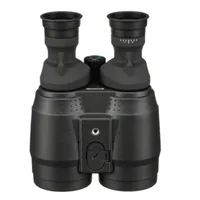
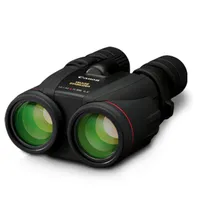
Canon 18x50 IS UD binoculars
1. Canon 18x50 IS UD binoculars
Canon 18x50 IS UD binoculars: $1,129 at Amazon

There are plenty of stargazers whose lives changed forever after purchasing a pair of Canon 18x50 IS UD binoculars. Expensive, heavy at 2.6 lbs (1.1 kg) and power-hungry they may be, but actuators inside the optics compensate for the motion in your body, effectively freezing objects for long enough to take a lingering look at everything from star clusters, the moon and comets. For the ultimate experience in binocular astronomy, point these 18x magnification, 50mm aperture binoculars at the solar corona during a total solar eclipse.

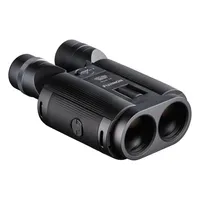
Fujifilm TS-L 16x40 binoculars
2. Fujifilm TS-L 16x40 binoculars
Fujifilm TS-L 16x40 binoculars: $1,400 at Amazon

A touch more portable than the Canon 18x50 IS UD are these rival image-stabilized binoculars. With a tad less magnification at 16x and 40mm aperture, the TS-L 16x40 is just as effective at transforming wobbly-looking stars into sharp points. They weigh 1.9 lbs (856 g).

Canon 10x42 L IS WP binoculars
3. Canon 10x42 L IS WP binoculars
Canon 10x42 L IS WP binoculars: was $1,699 now $1,559 at Amazon

Once you’ve tried binoculars like the Canon 10x42L IS WP, it’s hard to go back. Weighing 2.6 lbs (1.1 kg), these work in the same way as the Canon 18x50 IS UD, but add all-weather armor and superior optical-quality L-series glass. They also have a wider field of view for sweeping across the Milky Way.

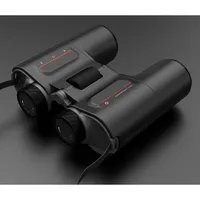
Unistellar Envision smart binoculars
4. Unistellar Envision smart binoculars
Unistellar Envision smart binoculars: at Unistellar US

What if a pair of binoculars could not only tell you what stars and constellations you’re looking at, but also help you share objects with the person next to you? Probably the hottest product out there, these soon-to-be-released smart 10x50 Porro binoculars have a subtle AR overlay that shows the names of constellations and dozens of binocular objects — such as star clusters, bright nebulae and some galaxies — and allows you to pin an object for the next person to locate using arrows.

Read more: 'It felt like something out of Star Trek.' I got a first look at the Unistellar Envision smart binoculars

Smart telescopes
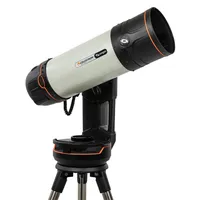
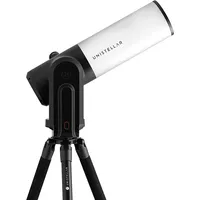
Unistellar eVscope 2 smart telescope
5. Unistellar eVscope 2 smart telescope
Unistellar eVscope 2 smart telescope: $4,999 at Unistellar US

At its core, a 4.5-inch (114mm) reflector, the trick with the Unistellar eVscope 2 is not only its built-in camera sensor, but its addition of a Nikon-made electronic eyepiece. So, as well as capturing 7.7MP images of nebulae and galaxies, you can share views as if it were an optical telescope. That moment when a galaxy appears on your phone despite heavy light pollution is hard to beat, but this one has an extra dimension in the form of organized citizen science campaigns.

Celestron Origin Mark II Intelligent Home Observatory smart telescope
6. Celestron Origin Mark II Intelligent Home Observatory smart telescope
Celestron Origin Mark II Intelligent Home Observatory smart telescope: $4,299 at Amazon

For a very smart telescope, look no further than the Celestron Origin Intelligent Home Observatory. Controlled entirely via a slick mobile app, it locates, tracks, stacks and processes images of nebulae and galaxies within minutes, with the Mark II's main upgrades being a higher resolution sensor, faster optics and improved AI processing. However, it is large, heavy and expensive — this is one to have permanently set up at home.

Vaonis Vespera Pro
7. Vaonis Vespera Pro smart telescope
Vaonis Vespera Pro: $2,990 at Amazon

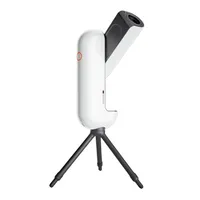
Weighing 5 kg/11 lbs, this sleek, compact and portable smart telescope is a cut above. Arriving on a small tripod, the Vaonis Vespera Pro smart telescope is controlled by the slick Singularity app, auto-aligning in seconds and stitching images to create panoramas well beyond its native field of view.

Unistellar Odyssey Pro smart telescope
8. Unistellar Odyssey Pro
Unistellar Odyssey Pro smart telescope: $4,499 at Unistellar US

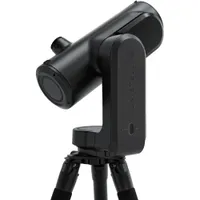
If you have a city apartment with a balcony, here’s a smart telescope designed for you. More compact than its other high-end models, the lovely-looking Unistellar Odyssey Pro is a 3.4-inch/85 mm reflector that automatically plate-solves the stars to self-align and starts live-stacking in minutes, turning faint fuzzies into colorful nebulae on your phone or tablet — even in the heaviest urban light pollution.

Smart mounts, trackers and GoTo telescopes
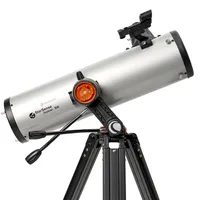
Celestron StarSense Explorer DX 130AZ telescope
9. Celestron StarSense Explorer DX 130AZ telescope
Celestron StarSense Explorer DX 130AZ telescope: was $500 now $429 at Amazon

StarSense is where optical astronomy meets smartphone-era convenience. With a smartphone running Celestron’s StarSense app in a dock with a mirror, the phone’s camera is used to plate-solve the reflections of stars to align the telescope. The app then uses arrows to guide the user to manually move the telescope precisely onto selected deep-sky targets. It’s a smart telescope for those who prefer optical astronomy.

Read more: Celestron StarSense Explorer DX 130AZ review

Celestron NexStar 8SE telescope
13. Celestron NexStar 8SE telescope
Celestron NexStar 8SE telescope: $1,699 at Amazon

Here’s an option for a seriously good step-up telescope. Ideal for those who want to get serious after spending a few years with a beginner’s scope, the NexStar 8SE — an 8-inch Schmidt-Cassegrain on a GoTo mount — can find thousands of deep sky objects at the touch of a button. Bolt a camera on, and it could also become a path into deep-sky astrophotography.

Sky-Watcher Star Adventurer GTi equatorial mount
10. Sky-Watcher Star Adventurer GTi equatorial mount
Sky-Watcher Star Adventurer GTi equatorial mount: $830 at Amazon

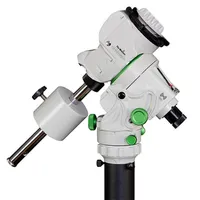
A grab-and-go GoTo mount that turns any small refractor into a smart deep-sky rig, the Star Adventurer GTi has built-in Wi-Fi and SynScan Pro app control, yet still looks and behaves like a regular equatorial mount. It’s ideal for precision tracking and astrophotography for DLSR or mirrorless cameras, or a compact astrograph telescope (payload capacity is 5 kg).

Benro Polaris Astro star-tracker
11. Benro Polaris Astro star-tracker
Benro Polaris Astro star-tracker: $999 at Amazon

At some point, someone was going to come up with a portable star tracker that was both advanced and a joy to use. Cue the Benro Polaris Astro, a robotic tripod head to pair with a DSLR or mirrorless camera. An all-in-one star tracker that also does panoramas and time-lapses, an app handles polar alignment, object tracking and complex shooting programs. Able to take a 7 kg/15 lbs payload, it’s a slick solution for astrophotographers.

Celestron AstroFi 130 telescope
12. Celestron AstroFi 130 telescope
Celestron AstroFi 130 telescope: was $600 now $539 at Amazon

Here’s Wi-Fi telescope aimed at anyone who wants GoTo without the old-fashioned hand controller. At its core, the AstroFi 130 is a 5.1-inch 130mm Newtonian telescope — a solid all-rounder for lunar, planetary and bright deep-sky objects. The mount creates its own network; you connect a phone or tablet, run the Celestron SkyPortal app and tap what you want to see.

Jamie Carter
Contributing Writer

Jamie is an experienced science and travel journalist, stargazer and eclipse chaser who writes about exploring the night sky, solar and lunar eclipses, the Northern Lights, moon-gazing, astro-travel, astronomy and space exploration. He is the editor of WhenIsTheNextEclipse.com, author of A Stargazing Program For Beginners, co-author of The Eclipse Effect, and a senior contributor at Forbes.

You must confirm your public display name before commenting

Please logout and then login again, you will then be prompted to enter your display name.