Best optics that you will use long after the total lunar eclipse

Person with a camera at the beach taking photos of the moon
(Image credit: Getty Images)

On March 3, 2026, the full Worm Moon will turn a deep copper-red for 58 minutes in the last total lunar eclipse visible from North America until 2029. While it’s a naked-eye event, the right optics will dramatically enhance the view — and continue to serve you for deep-sky stargazing long after the eclipse.

Through binoculars, you’ll see the curve of Earth’s shadow as it slowly swallows the full moon. During totality, a close-up will reveal the moon’s maria darken as the entire lunar surface takes on rusty, crimson and pinkish tones. A telescope goes further still, revealing mountain ranges, crater rims and ray systems that look flat to the unaided eye. To easily preserve the moment, modern smart telescopes and camera-friendly setups will capture the totally eclipsed moon in remarkable detail — and with minimal effort.

However, you’ll want to choose optics that won’t gather dust once the moon exits Earth’s shadow and the night sky returns to normal. The best binoculars, monoculars and telescopes for eclipse night will also be superb for planetary observing, deep-sky exploration, wildlife watching and travel. Invest wisely, and March 3 can become just the beginning — not the highlight — of years of rewarding stargazing.

Binoculars for the total lunar eclipse and beyond

A person looking at the night sky through binoculars with telescopes also set up.

Binoculars will give you a great close-up of the eclipsed moon — and are perfect for improving stargazing skills. (Image credit: Getty Images)

Ideal for travel and dark-sky trips, binoculars are the best first upgrade for beginner stargazers. They will dramatically enhance the total lunar eclipse, but also some planets, star clusters and more, all year — and they come without the learning curve of a telescope.
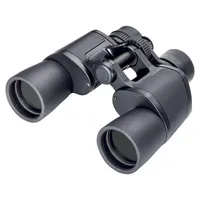
Opticron  Adventurer T WP 8x42 binoculars
Opticron Adventurer T WP 8x42 binoculars: $97 at Amazon

The Opticron Adventurer T WP 9x42 binoculars are lightweight and waterproof Porro-prism binoculars that use fully multi-coated BAK4 glass and 42mm objectives to deliver bright, contrast-rich views that will suit anyone after an affordable way to get a close-up of the “blood moon.” Their 8x magnification also means they’re light enough for holding steady during long sessions.

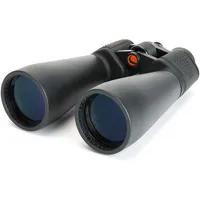
Celestron SkyMaster 15x70 binoculars
Celestron SkyMaster 15x70 binoculars: $89 at Amazon

For a dramatic eclipse upgrade, these 15x70 giants from Celestron pull the moon much closer. Their large 70mm objectives excel once the sky darkens, making them just as good for the Andromeda Galaxy, the Orion Nebula and the Pleiades — though a tripod is strongly recommended for steady views.

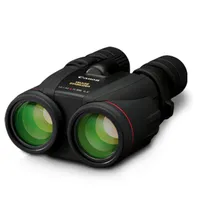
Canon 10x42L IS WP binoculars
Canon 10x42L IS WP binoculars: $1,699 at Amazon

These premium image-stabilized binoculars, Canon's 10x42 IS WP, use gyroscopic sensors and a vari-angle prism system to cancel handshake at the press of a button. The result is remarkably steady lunar detail without a tripod. They’re outstanding for astronomy year-round, from Jupiter’s moons to bright comets and deep-sky scanning. Expensive but highly impressive.

Monoculars for the total lunar eclipse and beyond

The author looking through the Opticron Explorer WA ED-R 8x42 monocular.

Monoculars are easy to carry about if you’re on the go. (Image credit: Matt Morris)

Even more compact than binoculars, pocket-sized monoculars are ideal for eclipse watchers who want to travel light or head outside quickly before dawn. They provide a meaningful boost in magnification over the naked eye while remaining simple, portable and versatile for daytime and night-sky use.
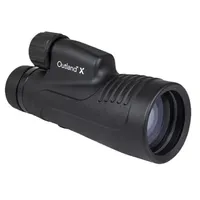
Celestron Outland X 10x50 monocular
Celestron Outland X 10x50 monocular: $95 at Amazon

With large 50mm objectives and BaK-4 multi-coated optics, this budget-friendly monocular performs surprisingly well for stargazing. It will bring the eclipsed moon into view and gather enough light for brighter deep-sky objects. Waterproof and nitrogen-purged, it’s rugged, so ideal for travel.

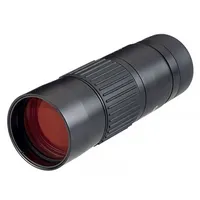
Opticron Explorer WA ED-R 8x42 monocular
Opticron Explorer WA ED-R 8x42 monocular: $189 at Amazon

This nitrogen-purged monocular uses step-up ED-R-coated glass and BAK-4 prisms for impressive clarity and color fidelity. Its wide field will make framing the moon easy during eclipse phases, though, as we found out in our review of the Explorer WA ED-R 8x42 monocular, its slightly stiff focus wheel may require two hands in colder pre-dawn conditions.

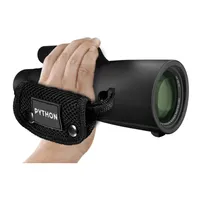
Python Rangemaster 12x52 monocular
Python Rangemaster 12x52 monocular: at space.com

Using German Schott HT glass, dielectric-coated prisms and fully broadband multi-coated lenses, this 12x52 monocular from Python delivers exceptional sharpness. It will pull out lunar surface texture during totality and help you spot brighter deep-sky objects. However, it’s heavy at 579 g, so a tripod may be required for steady views.

Telescopes for the total lunar eclipse and beyond

A telescope silhouetted against a purple sky with the moon in the background.

A telescope will get you a terrific close-up of the “blood moon” and much more. (Image credit: Getty Images)

If you want to turn the total lunar eclipse into a truly astronomical experience, a telescope will deliver detail that handheld optics won’t match. Beyond eclipse night, these instruments will immerse you in the night sky in close-up if you get planets, double stars and deep-sky objects in the crosshairs.
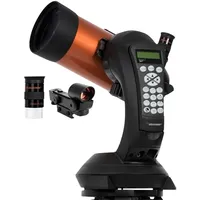
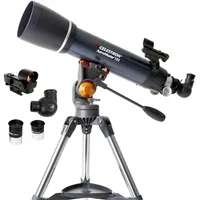
Celestron NexStar 4SE telescope
Celestron NexStar 4SE telescope: $749 at Amazon

This 102mm Maksutov-Cassegrain pairs sharp lunar and planetary optics with GoTo automation, using SkyAlign to find and track targets in minutes. During the eclipse, it will keep the moon centered effortlessly, so you can sit back and enjoy totality. Power-hungry motors, a narrow field and a lack of portability are drawbacks, but ease of use is superb for the Celestron NexStar 4SE.

Celestron AstroMaster 102AZ telescope
Celestron AstroMaster 102AZ telescope: $350 at Amazon

A 102mm refractor with fully coated optics, this beginner-friendly scope produces crisp, high-contrast lunar views straight out of the box. It’s quick to assemble and doubles as a terrestrial scope, though, as discovered when reviewing the AstroMaster 102AZ, its short tripod and clumsy mount limit stability.

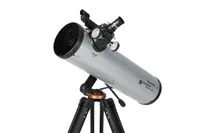
Celestron  StarSense Explorer DX 130AZ telescope
Celestron StarSense Explorer DX 130AZ telescope: was $500 now $429 at Amazon

This 130mm Newtonian reflector combines strong light-gathering power with smartphone-based StarSense plate-solving, making locating the moon — and later galaxies and nebulae — effortless. Two eyepieces included in the box provide 33x and 66x magnification, ideal for viewing the eclipse, bright planets and deep-sky objects.

Smart telescopes for the total lunar eclipse and beyond

Two women using a Unistellar telescope.

Smart telescopes swap eyepieces for image sensors, perfect for the moon and deep-sky (Image credit: Unistellar)

If you want to capture the “blood moon” with minimal setup and zero guesswork, a smart telescope does the hard work for you. Controlled from your phone or tablet, these fully automated systems find, track and image targets. Long after the eclipse, they’ll keep delivering stacked images of galaxies, nebulae and solar views at the tap of a screen — and they work so well in light-polluted cities and suburbs.
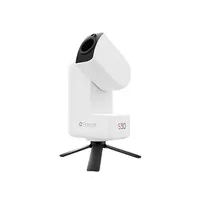
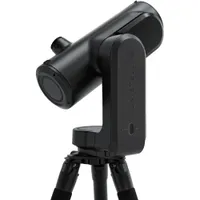
ZWO Seestar S30 smart telescope
ZWO Seestar S30 smart telescope: was $399 now $349 at BHPhoto

This ultra-portable 30mm f/5 refractor weighs just 1.65 kg and sets up in minutes via the Seestar app. The Seestar S30 automatically plate-solves, focuses and stacks exposures, making eclipse imaging effortless. The small aperture limits resolution, but for beginners wanting quick lunar, solar and deep-sky shots, it’s unbeatable value.

Unistellar Odyssey Pro smart telescope
Unistellar Odyssey Pro smart telescope: $4,599 at Unistellar US

With an 85mm mirror, 4.1MP sensor and fully automated focusing and collimation, the step-up Odyssey Pro delivers sharp views of nebulae and clusters, even under light pollution. A Nikon-developed digital eyepiece complements app control, while online citizen science projects will keep you hooked on spotting comets and even exoplanets.

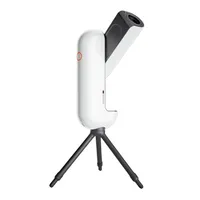
Vaonis Vespera Pro smart telescope
Vaonis Vespera Pro smart telescope: $2,990 at BHPhoto

A sleek 50mm quadruplet apochromatic refractor with a 12MP sensor, the premium-priced Vespera Pro produces high-resolution, wide-field images via its intuitive Singularity app. It excels at lunar and solar imaging (with the proper filter) as well as nebulae and galaxies. It’s one of the most polished smart scopes available.

Jamie Carter
Contributing Writer

Jamie is an experienced science and travel journalist, stargazer and eclipse chaser who writes about exploring the night sky, solar and lunar eclipses, the Northern Lights, moon-gazing, astro-travel, astronomy and space exploration. He is the editor of WhenIsTheNextEclipse.com, author of A Stargazing Program For Beginners, co-author of The Eclipse Effect, and a senior contributor at Forbes.

You must confirm your public display name before commenting

Please logout and then login again, you will then be prompted to enter your display name.