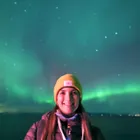
Unsettled geomagnetic activity could bring northern lights to parts of the U.S. tonight (June 19–20).
A coronal mass ejection (CME) released during a relatively small C5.5 solar flare on June 17 may deliver a glancing blow to Earth sometime tonight. This, combined with fast solar wind streaming from a large Earth-facing coronal hole, could fuel geomagnetic storm conditions overnight, according to NOAA’s Space Weather Prediction Center (SWPC).
Space weather forecasters at SWPC predict a chance of minor G1 geomagnetic storm conditions (Kp 5) between 2 a.m. and 5 a.m. EDT (0600–0900 GMT) on June 20. (Kp is a measurement of geomagnetic activity, with an index that ranges from 0 to 9; higher Kp indicates stronger auroral activity.) You can keep up with the latest forecasts and geomagnetic storm warnings with our aurora forecast live blog.
Where can I see the northern lights tonight?
In the U.S., Alaska has the highest chance of seeing the northern lights tonight. If predicted G1 storms are reached, auroras could be visible down to Michigan and Maine, and perhaps even further according to NOAA.

Below we have listed 9 states that appear either fully or in part above the possible view line for auroras tonight, according to NOAA's Space Weather Prediction Center. They are ordered most likely to least likely based on their proximity to the center of the auroral oval and how much of each state is within or near the view line.
States like Connecticut, Rhode Island, Nebraska, Iowa and Illinois are very close to the possible view line but would require stronger geomagnetic activity than forecast for visibility. That being said, geomagnetic storms have surprised us in the past, whereby forecasted G1 conditions jump to G2 or even G3. So it's worth keeping your eyes on the skies and those aurora alerts switched on.
Remember, auroras can be fickle. Sometimes they can appear much farther south than predicted, and other times they barely show up at all. There are many conditions that have to align for the perfect show. It is possible that many more states could witness auroras tonight, or perhaps far fewer will.
States that could see auroras tonight
- Alaska
- Montana
- North Dakota
- Minnesota
- Wisconsin
- Michigan (especially the Upper Peninsula)
- Maine
- Vermont
- New Hampshire
Northern Hemisphere aurora forecast courtesy of the Met Office
How can I see the northern lights from where I live?
If you live in one of the 9 states forecasted to have a chance of seeing the northern lights tonight, head to a north-facing vantage point as far away from light pollution as possible! The best time to look for auroras will be about 1 a.m. local time, as our window of darkness for observing the northern lights shrinks during summer months.
Use your mobile phone to scan the skies, as the camera is great at picking up faint auroras before your eyes spot them. This can help you pinpoint where in the sky you should be focusing your attention. But remember to keep an eye out elsewhere too as auroras can pop up in front, behind or even above you! Happy aurora hunting.
If you want to make sure you're all clued up on when to look for auroras, download a space weather app that provides forecasts based on your location. One option I use is "My Aurora Forecast & Alerts," available for both iOS and Android. However, any similar app should work well. I also use the "Space Weather Live" app, which is available on iOS and Android, to get a deeper understanding of whether the current space weather conditions are favorable for aurora sightings.