NASA network engineer and astrophotographer Jason Livingston has captured a colorful view of the Pelican Nebula shining 2,000 light-years from Earth in the constellation Cygnus. Remarkably, he photographed the scene from his light-polluted backyard in Henderson, Nevada, just 9 miles (14 kilometers) from the Las Vegas Strip.
Livingston's cosmic vista reveals a striking section of the Pelican Nebula — named for its visual similarity to the distinctive waterbird — in magnificent detail, as it shines from behind a dark veil of molecular cloud.
Radiation from young stars is actively reshaping the nebula, which serves as a stellar nursery where future generations of stars will form. The nebula itself is far too faint to see with the naked eye, though the two brightest blue-white stars captured in Livingston's image — 57 Cygni and 56 Cygni — can be spotted from a dark sky location, shining close to Deneb, Cygnus' brightest star.
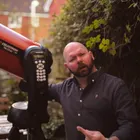
"By day, I'm a network engineer with NASA but by night my telescopes are usually working," Livingston told Space.com in an email. "I've been into astronomy since high school but only [in] the past few years [I] was able to take up the hobby again and produce images."
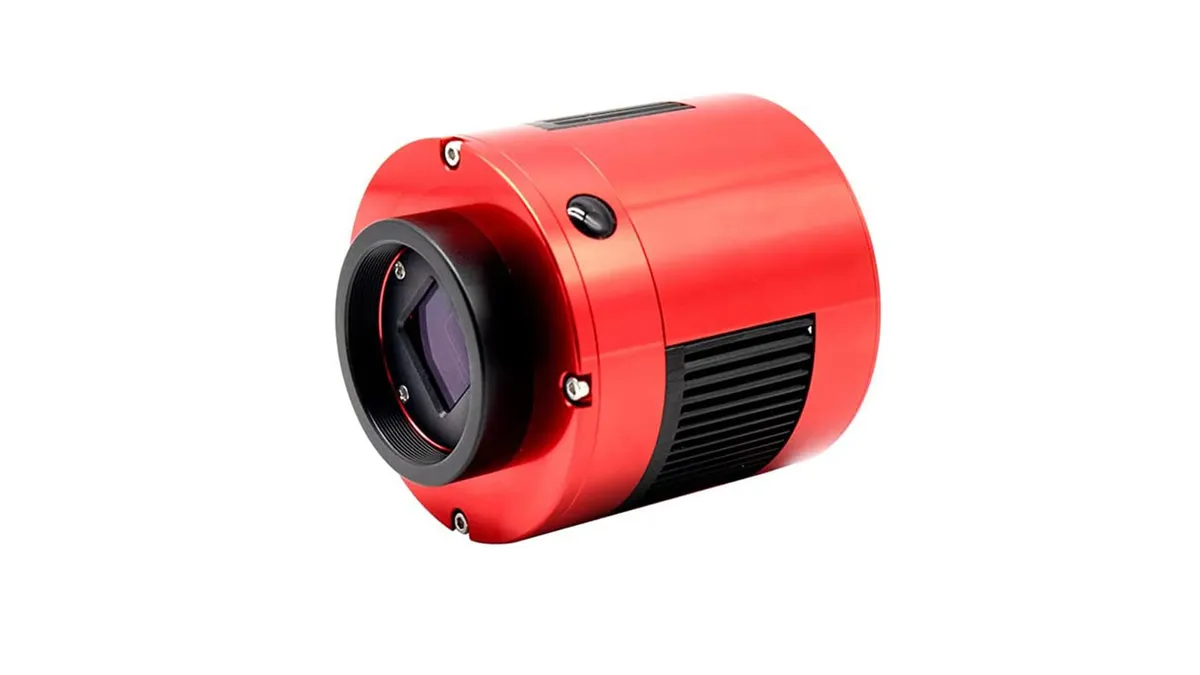
The ZWO ASI533MC Pro camera is the best dedicated astro camera out there, in our opinion. It features zero amp glow, 80% quantum efficiency and a 20FPS frame rate. It also features a 9MP sensor and you can check out our ZWO ASI533MC Pro review for a more in-depth look.
Livingston captured the nebula over the course of several nights in August 2025 using his Apertura CarbonStar 150 refractor telescope paired with a ZWO astronomy camera and a suite of supporting equipment.
He split his observing time across several narrowband filters, each designed to isolate specific wavelengths of light. These wavelengths are then assigned — or mapped — to visible light colors during the postprocessing stage. "I use narrowband imaging to reduce the effect of light pollution," Livingston explained. "While it gives some images a false color, the results can be striking. So, yes, light pollution does affect my imaging, but I work with what I have."
It took Livingston a grand total of 27 hours to image the Pelican Nebula as it hung in the heavily light-polluted skies close to the Las Vegas Strip. The end result is a magnificently detailed nebula vista that showcases the complex, twisting beauty of the star-forming matter threaded throughout our galaxy.
Want to take gorgeous pictures of the night sky for yourself? Then be sure to check out our roundups detailing the best telescopes, cameras and lenses for observing and capturing the post-sunset realm.
Editor's Note: If you would like to share your astrophotography with Space.com's readers, then please send your photo(s), comments, and your name and location to spacephotos@space.com.