Astrophotographer Greg Meyer has captured an evocative image of a shadowy nebula drifting through interstellar space, which conjures the image of a cosmic giraffe galloping through a sea of stars.
Meyer's photo reveals the smoke-like mass of LDN 1245 — a vast collection of interstellar dust known as a dark nebula. Dense, opaque knots of material inside these cold clouds absorb and scatter background starlight, blocking the glow of more distant stars in the Milky Way's spiral arms, causing them to appear as dramatic silhouettes hanging in deep space.
LDN 1245 is located in the constellation Cassiopeia. From our perspective on Earth, its tangled filaments resemble a long-necked giraffe at full sprint — an aspect which has seen it nicknamed the 'Giraffe Nebula' by some members of the astrophotography community. The cosmic herbivore has its head extended — as if in preparation to feed — towards a collection of blue-white stars visible to the upper left of Meyer's nebula vista.
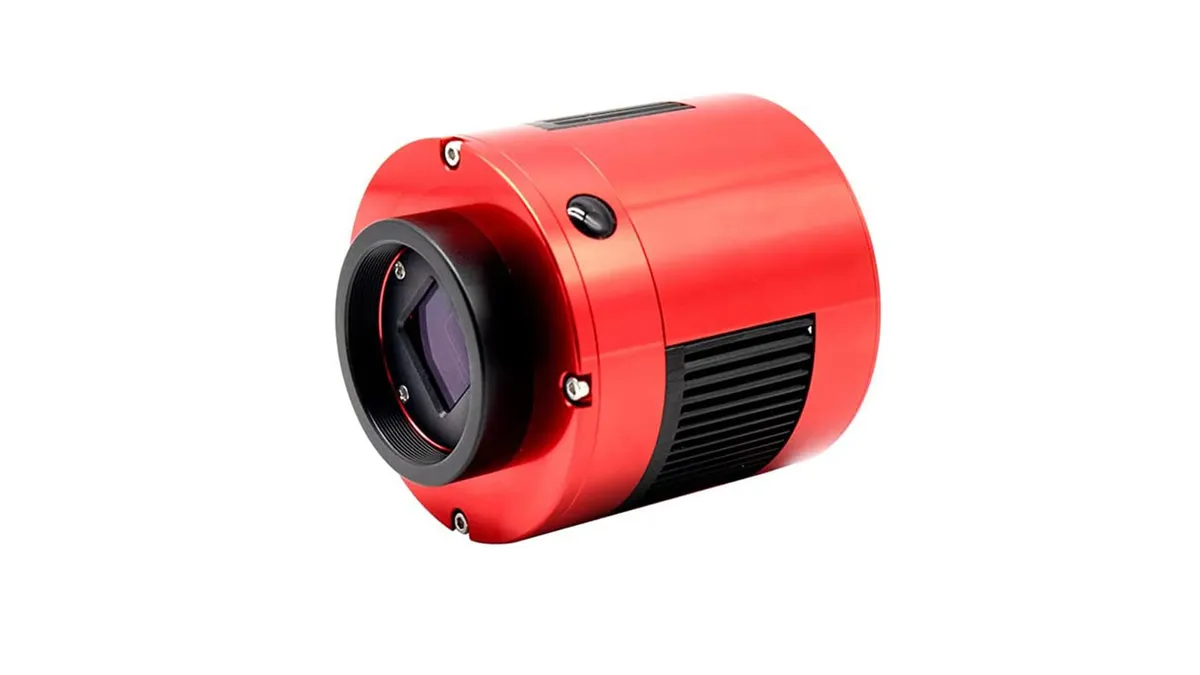
Want to capture a nebula shining thousands of light-years from Earth? The ZWO ASI533MC Pro camera is the best dedicated astro camera out there, in our opinion. Check out our ZWO ASI533MC Pro review for a more in-depth look.
Dark nebulas are notoriously challenging to capture because they emit little to no light of their own. Meyer imaged LDN 1245 as it lurked in the dark skies over the Starfront Observatory in Rockwood, Texas, gathering 25 hours of exposure time between October 2025 and January 2026.
Meyer captured the data using his Sky Watcher Esprit 120mm telescope and astronomy camera equipped with a series of red green and blue filters, before post-processing the data in PixInsight, Photoshop and Lightroom.
"Along the edges the scene shifts into faint reflection nebulosity," explained Meyer in a post on the astrophotography website Astrobin. "Here the dust becomes visible because it scatters light from nearby stars which often gives a gentle blue tone."
Want to try your hand at astrophotography? Why not check out our picks of the best cameras, lenses for imaging the majesty of the night sky, or read our roundup of the best telescopes available in 2026.
Editor's Note: If you would like to share your astrophotography with Space.com's readers, then please send your photo(s), comments, and your name and location to spacephotos@space.com.