Astrophotographer Osama Fathi captured a gorgeous view of a bright stellar triangle sparkling astride the glowing band of the Milky Way in the clear skies above the volcanic terrain of Egypt's Black Desert.
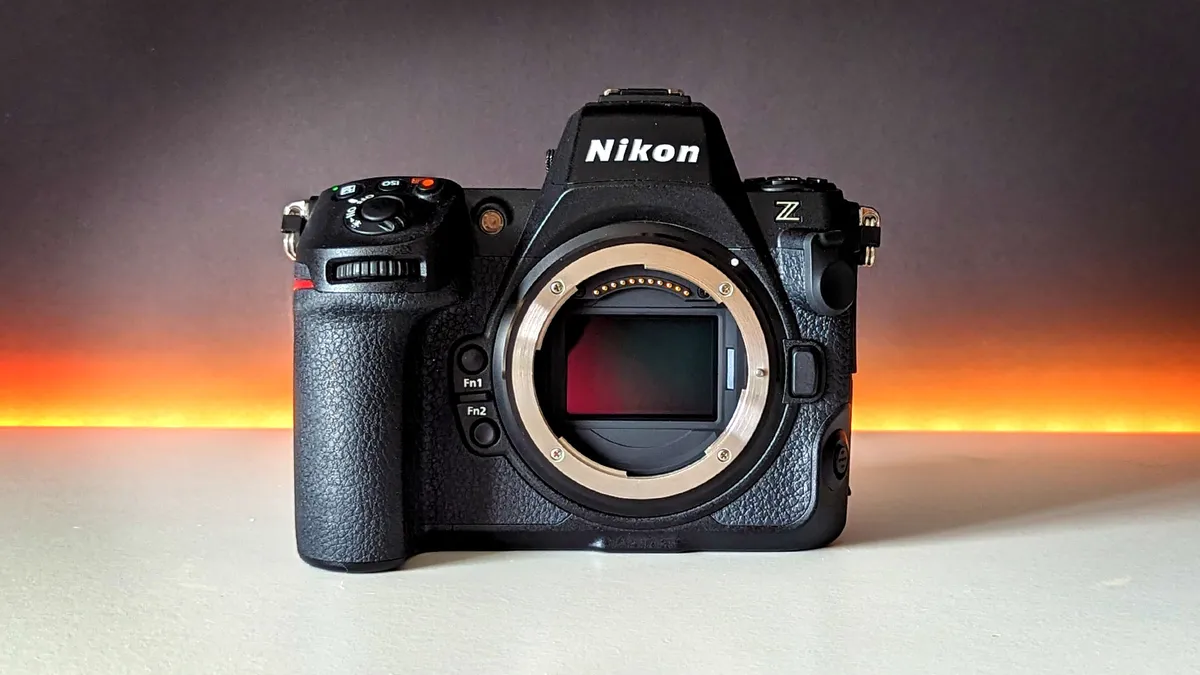
The Nikon Z8 excels in just about every department and we rate it as the best overall camera out there. It features a full-frame 45.7MP sensor, 8K video capabilities, excellent low-light performance, very high FPS burst speed and more. It is pricey, but you get a lot of bang for your buck. Check out our Nikon Z8 review for a more in-depth look.
Fathi's composite image was taken on the night of Dec. 20 2025, as the dense starfield and dark, dusty filaments of the Milky Way's galactic plane dominated the pristinely dark moonless sky. "The exceptionally low light pollution and dry atmospheric conditions of the desert allow for high contrast between the Milky Way's bright core regions and the surrounding stellar background," Fathi told Space.com in an email.
The bright star Deneb — which represents the tail of the great swan in the constellation Cygnus — is seen embedded in the ribbon of the Milky Way, with Vega, a past and future North Star, shining directly below, close to the horizon. Altair, the brightest star in the constellation Aquila, shines on the opposite side of our galaxy's glowing band, toward the left of Fathi's image.
Together, they form the Summer Triangle, one of the most recognizable stellar formations — or asterisms — in the night sky. As its name suggests, the asterism lurks relatively low on the horizon in the winter months for stargazers in the Northern Hemisphere, but rises high overhead during short summer nights.
Fathi captured the starry skyscape over the course of a 6-minute exposure using a modified Nikon Z6 camera with a Nikkor 14-24 mm lens. "Foreground features were recorded under natural starlight, preserving the desert's subtle textures without artificial illumination, emphasizing the connection between Earth's ancient geological formations and the vast structure of our galaxy," Fathi added.
Want to capture incredible photos of the night sky for yourself? Then be sure to check out our guide detailing how to photograph the Milky Way, along with our picks of the best cameras and lenses for astrophotography.
Editor's Note: If you want to share your astrophotography with Space.com's readers, then please send your photo(s), comments, and your name and location to spacephotos@space.com.