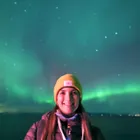
Nothing quite compares to seeing the northern lights — also known as the aurora borealis — shimmering across a star-filled sky. But where exactly should you go and when is the best time to see them?
Although we have now passed the peak of the sun's 11-year solar cycle of activity, the years immediately following solar maximum are often among the most exciting for aurora chasers. During the declining phase, the sun can still unleash turbulent space weather capable of supercharging aurora displays and pushing them into lower latitudes!
That makes 2026 an excellent time to plan a northern lights trip. Whether you're dreaming of auroras above Arctic fjords, frozen forests or even your own backyard, this guide breaks down the best places, seasons and conditions to help you maximize your chances of witnessing one of nature's most spectacular shows.
Northern lights at a glance (2026)
- Aurora season: Late September to late March
- Best time of night: 10 p.m. to 2 a.m. local time
- Best places: Northern Norway, Sweden, Finland, Iceland, Alaska and northern Canada
- Solar outlook: Post–solar maximum, with turbulent space weather still driving strong auroras
- How far south?: Occasionally visible across the northern U.S., U.K. and Europe during major geomagnetic storms
- What you need: Dark skies, clear weather, patience and luck
- Forecasts to follow: NOAA Space Weather Prediction Center, Spaceweather.com, Aurorasaurus
We asked Tom Kerss, astronomy, author and northern lights expert what three pieces of advice he would give to someone wanting to see the northern lights.

Tom Kerss is an astronomer and the author of numerous best-selling books about the night sky for both adults and children, including Northern Lights, Diamonds Everywhere and the Starry Stories Series.
What are your top tips for seeing the northern lights?
1. Unless you're lucky enough to have the lights come to you, seeing auroras is a matter of being in the right place at the right time. Fortunately, we can forecast where and when they are likely to become visible, so you can increase your odds. Being in Norway between late September and mid-March, during the darkest, moonless nights, and being mobile will greatly improve your chances.
2. It's important to persevere! The arctic nights can be extremely cold, but you'll need to push yourself and stay up late to make the most of the auroral zone. On good nights, the Lights are visible as soon as it gets dark, but you should try to stay up until after midnight.
3. Taking your own photographs of the Northern Lights is so alluring, and very rewarding. Today's cameras — including smartphones — capture super, colourful and clear shots. But try not to get too carried away. Make sure you absorb the luminosity, colour and subtle movement of the Lights with your own eyes. You'll make pictures in your mind that you can't share, but you can feel!
What is your favorite aurora fact?
My favorite fact about auroras is that they appear not only on Earth, but on many other worlds. Every planet in the Solar System (except Mercury) exhibits auroras, as do several moons and even a comet! Moreover, we've measured auroras on other stars, and possibly even exoplanets, and they can teach us about the environments and interiors of these remote worlds.
Where to see the northern lights in Europe 2026
If you're in Europe, the best way to experience the northern lights is to head to the far northern regions of Norway, Sweden, Iceland, or Finland. These areas are well-equipped for aurora tourism, with many tours available and English widely spoken by locals.
Wherever you decide to go, remember that cloudy skies can obstruct the view of the auroras on any given night. To maximize your chances, consider allowing extra time in your itinerary to account for unpredictable weather.
Below is a list of our recommended northern lights tours and providers in Europe:
Norway

Hurtigruten Coastal Express
Bergen — Kirkenes — Bergen
Price: From £2457pp, includes breakfast, lunch and dinner + exclusive excursion to the Tromsø planetarium.
Duration: 12 days
Northern Lights Promise: If there is no recorded sighting of the northern lights while sailing, Hurtigruten will give guests a free 6- or 7-day Classic Voyage to redeem the following season. Terms and Conditions apply.
If you're interested in booking the Astronomy Voyage, head over to Hurtigruten's official site.
If you're looking for the ultimate skywatching and cultural experience in Norway, we recommend taking the Hurtigruten Coastal Express along the stunning Norwegian Coast.
There are a number of voyages available as well as specialized "Astronomy Voyages" that include additional astronomy lectures from an onboard astronomer and a visit to Tromsø's impressive planetarium and science center.
You can read more about what it's like to experience the Hurtigruten Astronomy Voyage in my article.
The Northern Lights Company
The Northern Lights Company, based in stunning Vesterålen, Norway, offers various 4, 5 or 7-night northern lights trips between September and April.
All tours include transport, accommodation, aurora chasing by night as well as daytime activities, so guests not only get to see beautiful Norway but also experience it.
From eagle safaris and visits to the local Sami Reindeer farm to aurora research at the Andøy Space Centre and photography trips. There is something for everyone with the Northern Lights Company.
I had the pleasure of joining The Northern Lights Company on one of their tours and you can read about the entire experience here on Space.com.
Visit Tromsø
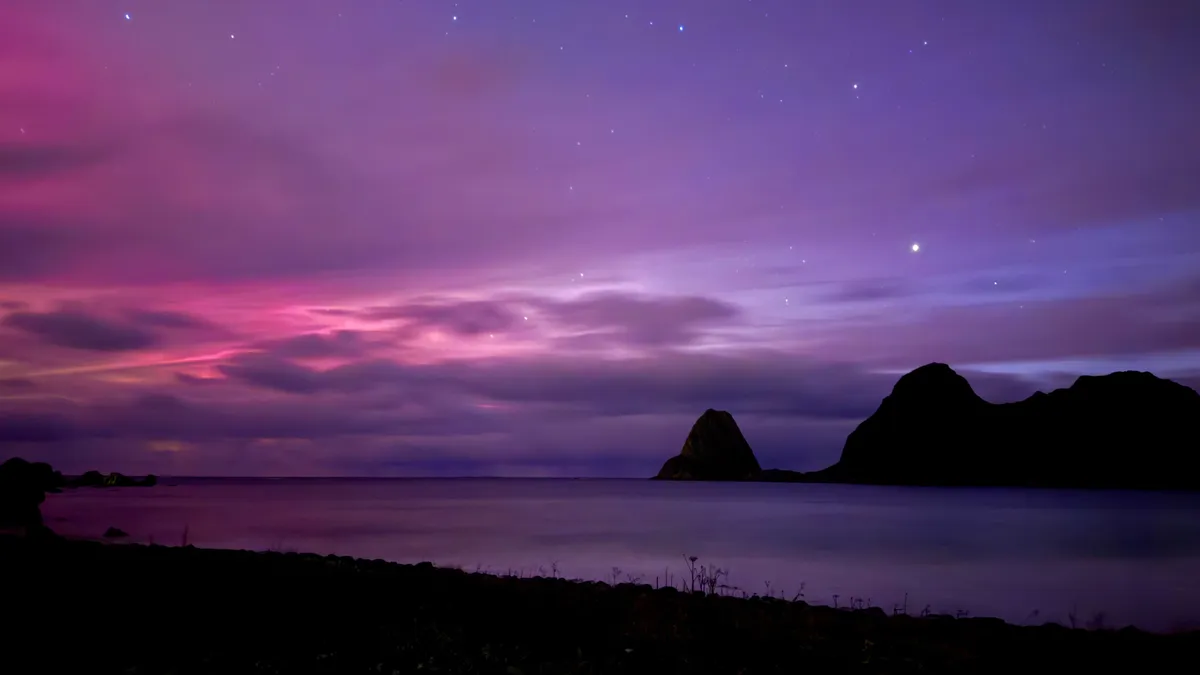
Visit Tromsø sells aurora-watching trips around the city of Tromsø in Norway. The largest urban area in Northern Norway and the world's third largest city above the Arctic Circle, Tromsø lies just within the Northern Lights Oval, the region above Earth's geomagnetic North Pole where aurora displays are most likely to occur.
Visit Tromsø sells 'aurora chases,' dynamic night hunts for aurora displays in the aurora season between September and April, and slower-paced 'experiences' such as dog-sled and boat trips and overnight stays at aurora hotspots. Tromsø can be accessed by plane from Norway's capital Oslo; adventure seekers are sometimes rewarded by an aurora display during their incoming flight.
Sweden
Lights over Lapland
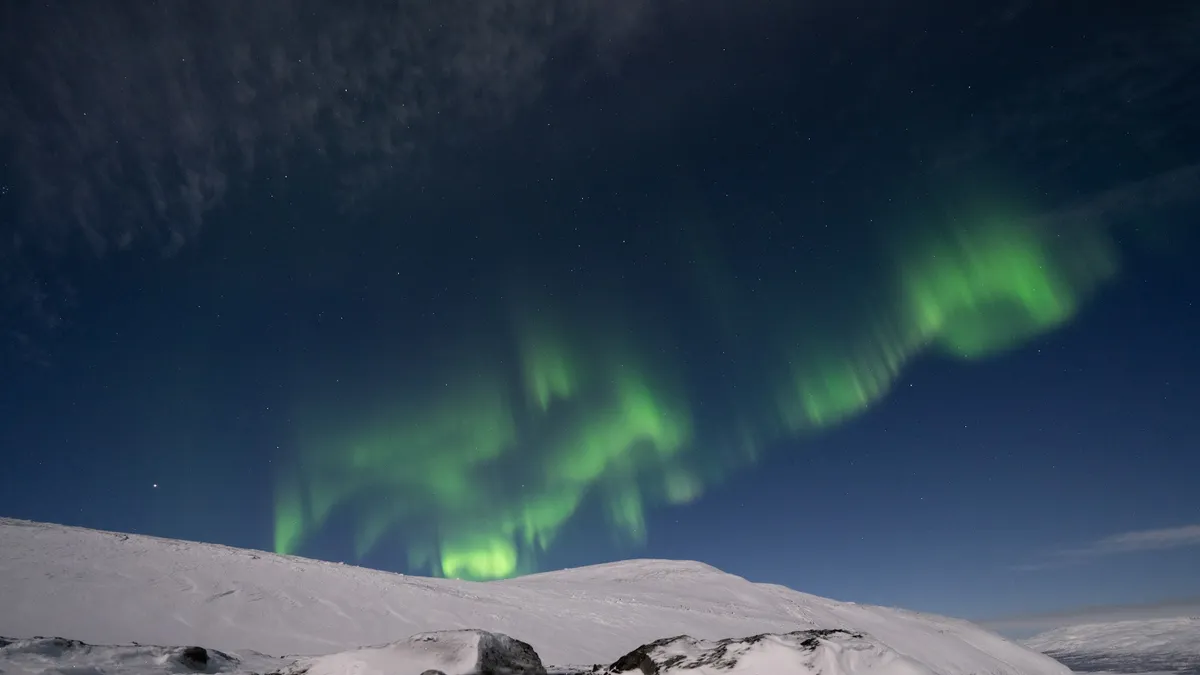
Lights over Lapland sells a range of aurora-watching packages that take skywatchers to Sweden's northernmost region, Lapland. Lapland straddles the border between Sweden and Finland, with both sides offering excellent aurora viewing opportunities in the winter months and the midnight sun experience in summer.
Lights over Lapland operates on the Swedish side of the border with most of its tours aiming for Abisko National Park (not far from the Esrange Space Center, which runs rocket tests for ESA and is gearing up to perform the first satellite launches from continental Europe).
"Abisko has developed a reputation for being the No. 1 aurora-watching destination on the planet, due to the fact that it is located in a very special microclimate with less precipitation than any other location on Earth that is located within the aurora zone," photographer Chad Blakley, who is a co-founder of Lights over Lapland, told Space.com via email.
If you want to see what it's like to chase auroras in Swedish Lapland, check out my article on what it's like to put Abisko's "cloud-busting weapon" to the test.
Iceland

Guide to Iceland
Guide to Iceland offers a range of aurora-watching packages on the North Atlantic island, including bus tours, boat tours and hunting trips. Situated just below the Arctic Circle, Iceland provides a decent chance of catching the Northern Lights during winter months. If that doesn't work out, you can instead relax in the island's powerful natural hot springs and outdoor pools.
Viatour northern lights night tour from Reykjavik
Viatour operates evening aurora-watching trips from Iceland's capital Reykjavik. The bus tour takes tourists across the island to its most popular aurora spots. The operator says that those who don't get to see the northern lights during their trip can join again at no additional cost.
Arctic Adventures
Arctic Adventures offers a large number of tours from day trips to multi-day excursions to experience the very best of Iceland. There is a range of northern lights tours available whether it be traveling by bus, boat, or multi-day hiking tours. Experience the majestic northern lights with Arctic Adventures and make memories that will last a lifetime.
Where to see the northern lights in North America 2026

If you're interested in trying to photograph the northern lights check out our guides on how to photograph auroras, as well as the best equipment for aurora photography.
North America offers many excellent locations for aurora viewing. While far-eastern Canada often experiences cloudy conditions, areas such as the shores of Hudson Bay, the northern Canadian towns of Yellowknife and Whitehorse, and Alaska's west coast are typically great options.
For those seeking a more accessible destination, the city of Fairbanks in Alaska is an excellent choice for witnessing the northern lights without venturing deep into the wilderness.
Alaska Tours
Alaska Tours offers a range of packages from one-day trips to week-long tours that take visitors past the Arctic Circle to the heart of Alaska's wilderness, where the chance of catching the glowing auroras is among the best in the world.
Aurora Borealis Yukon
Aurora Borealis Yokon runs one-day to five-day aurora-watching trips in the Yukon territory in northwestern Canada. A direct neighbor of Alaska, Yukon offers pretty much the same aurora-observing conditions during the winter months.
Churchill Arctic Adventures
In the east, Churchill Arctic Adventures offers trips to Churchill, Manitoba, on the western shores of Hudson Bay. The company operates dedicated 'aurora domes,' heated cabins and other outposts in the boreal forest that allow visitors to observe the magnificent lights in perfect comfort. If the aurora doesn't show up, then perhaps some of the polar bears residing in this region may.
Can I see the northern lights from my home?
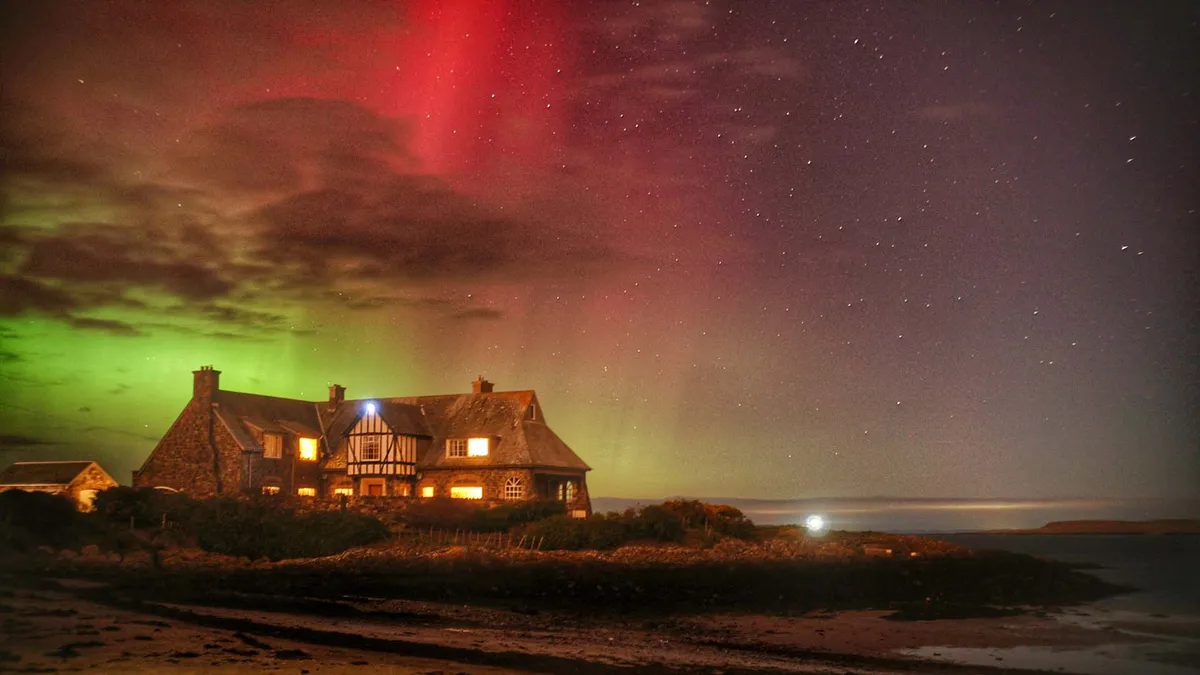

Keep up to date with the northern lights without aurora forecast live blog.
The "standard" aurora borealis, observable in the Arctic regions, is generated by the solar wind, which constantly flows toward Earth. It manifests itself into a large "ring" above Earth's geomagnetic North Pole and is known as the aurora oval.
During times of heightened solar activity, the aurora oval can expand to more southern latitudes. The National Oceanic and Atmospheric Administration (NOAA) Space Weather Prediction Center maintains a detailed 30-minute aurora forecast where you can see the predicted extent of the auroral oval and the probability of auroras. The aurora borealis is visible most nights, weather permitting, within a band several hundred miles wide that's centered at about 66 degrees north — about the same latitude as the Arctic Circle.
If you capture an amazing photo of the northern lights and would like to share it with Space.com and our news partners for a story or gallery, send images to spacephotos@space.com.
But geomagnetic storms, caused by coronal mass ejections (CME), can ramp up the northern lights considerably and make them visible over much wider areas. In early May 2024, for example, a powerful geomagnetic storm sparked as far south as Florida, U.S. and northern India. I, for one, saw a stunning display overhead from my home in Nottingham, U.K., far beyond the usual range! Research suggests these were some of the strongest auroras in 500 years.
Related: Aurora myths, legends and misconceptions
As the solar cycle intensifies, such occurrences might become more common (or rather, slightly less rare). We recommend keeping an eye on Spaceweather.com for alerts of possible incoming geomagnetic storms as well as NOAA's Space Weather Prediction Center.
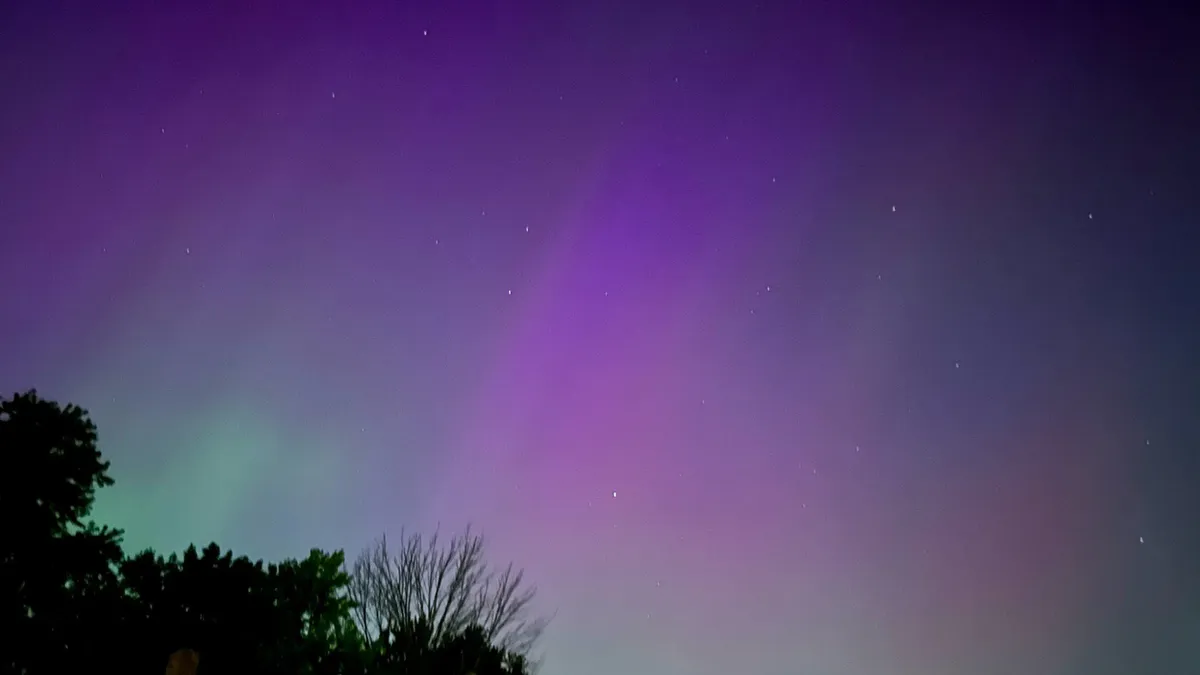
Yet even the most powerful geomagnetic storm will fail to deliver the experience unless other factors cooperate — a cloud-free sky, not too much moonlight, nighttime hours and absence of light pollution. (City-dwellers have to get out into the countryside for an aurora experience no matter how strong the geomagnetic storm supercharging the sky might be.)
But you can have an aurora experience without even leaving your house if you so choose. Our northern lights webcams article offers aurora views from some iconic locations across Europe and North America, all in one place.
What causes the northern lights?
To understand why some nights are better than others for aurora viewing, it helps to know how the northern lights form.
The northern lights are created when energized particles from the sun slam into Earth's upper atmosphere at speeds of up to 45 million mph (72 million kph), but our planet's magnetic field protects us from energetic assault.
As Earth's magnetic field redirects the particles toward the poles the dramatic process transforms into a cinematic atmospheric phenomenon that dazzles and fascinates scientists and skywatchers alike. The southern lights, or aurora australis, are produced in the same way.
When to see the northern lights

If you're planning a northern lights trip, timing is everything. In general, the best time to see the aurora borealis is during the long, dark nights of the Northern Hemisphere Winter.
Auroras are visible year-round, but darkness is essential. The best viewing season typically runs from late September through late March, when nights are longest.
Moonlight can also affect visibility, so many aurora chasers plan trips around new moon periods, when the sky is at its darkest. That being said, I have witnessed auroras during a full moon and it was a spectacular sight as the moon lit up the landscape below in dramatic fashion.
Is 2026 a good year to see the northern lights?
Yes. Although the sun has now passed the peak of its roughly 11-year solar cycle of activity, the years following solar maximum are often the most active and unpredictable for auroras.
"It's good news for aurora chasers as peak auroral activity occurs a few years after solar maximum," Pål Brekke, solar physicist at the Norwegian Space Agency, previously told Space.com. "Thus, we should have several years still with very high aurora activity."
What time of night are the northern lights most visible?
On active nights, auroras can appear as soon as it gets dark, but they are most commonly seen between 10 p.m. and 2 a.m. local time, when geomagnetic activity often peaks. Displays can last just a few minutes or continue for hours, so patience is key.
I've been on many aurora hunts where the lights appeared suddenly, without warning. Being outside, staying warm and giving yourself plenty of time dramatically improves your chances — and often makes the experience even more memorable.
Northern lights forecasts
You can get an idea of how active the northern lights are likely to be in your area by keeping tabs on a short-term aurora forecast, such as the one provided by the Geophysical Institute. One predicting the next half hour is available on NOAA's Space Weather Prediction Website. Also, a citizen science website called Aurorasaurus gives on-the-ground instant information from aurora enthusiasts wanting to alert the community to new sky shows.