Astrophotographer Josh Dury captured a magnificent view of comet C/2025 R3 (PanSTARRS) glowing in the predawn sky among the stars of the constellation Pegasus on April 12.
PanSTARRS' bright, central nucleus was photographed rising low over the Mendip Hills nature reserve in Somerset, England, as light pollution created a false dawn in the long-exposure image.
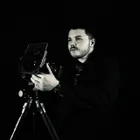
Josh Dury is an award-winning landscape astrophotographer and author of the book "52 Assignments: Night Photography" (Ammonite Press, 2025).
The comet's sweeping tail extends over approximately 10 degrees of sky — roughly the equivalent of your clenched fist held at arm's length — created as reflective material from the nucleus is pushed outward and shaped by charged particles flowing outward from the sun, known as the solar wind.

The Canon EOS R7 is the best camera for beginners hoping to capture shooting stars. It features a 34.4MP sensor, ISO range up to 32,000 and a video capability of 4K UHD 60p and all the best tools to help a novice master photography. Read our full Canon EOS R7 review.
It was, in some ways, a meeting of the ancients. Dury chose the Mendip Hills as the location of his shoot because of its links to the distant past. The region was home to the remains of "Cheddar Man", a roughly 10,000-year-old skeleton discovered in 1902 and later became the oldest British individual to have his genome sequenced, according to the University College London.
Comet PanSTARRS meanwhile, has a history that stretches back billions of years to the formation of the solar system. "The story and age of this comet is harrowing," Dury told Space.com. With an estimated inbound orbital period of around 170,000 years, the comet likely originates from the distant Oort Cloud — a shell of icy objects that surrounds our parent star at a distance ranging between 10,000-100,000 times the Earth-sun divide, according to NASA.
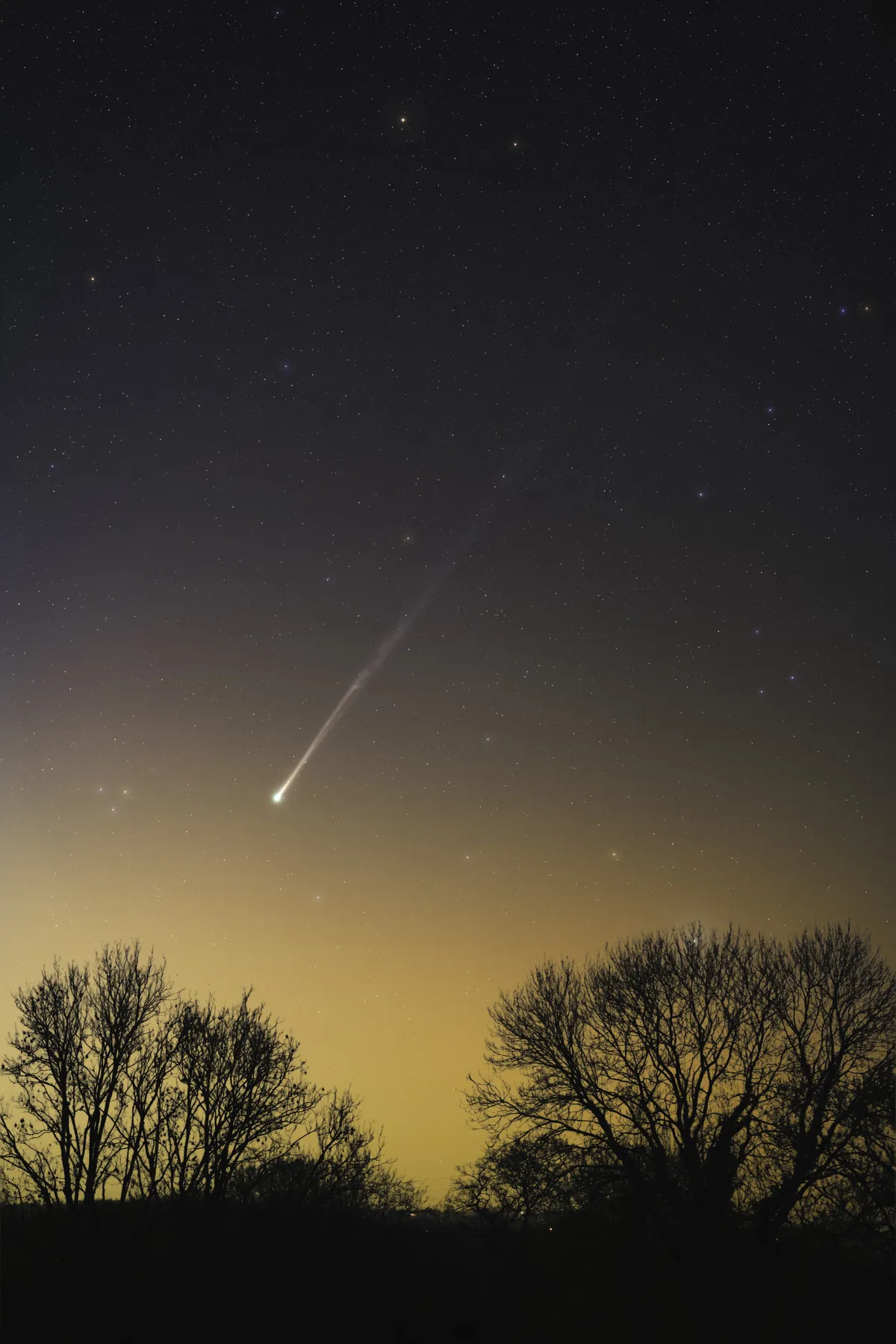
"Its passage from the Oort Cloud makes some of the earliest primitive finds of Britain minuscule through the ravages of time," continued Dury. The comet is currently bright enough to be seen with the naked eye as a hazy patch of light from a dark sky location, ahead of its close brush with the sun during perihelion on April 19-20. A pair of 10X50 binoculars will help to reveal its glowing nucleus and perhaps a hint of its tail.
Dury was able to reveal the beauty of its tail by capturing 33 separate long-exposure images with his Sony A7S III camera and Sigma 135mm F/1.4 lens, before combining and editing them using Adobe Lightroom and Photoshop to increase the signal-to-noise ratio.
Want to take gorgeous images of solar system comets for yourself? Then be sure to check out our roundups of the best cameras and lenses for astrophotography, along with our expert guide to photographing wandering comets.
Editor's Note: If you would like to share your astrophotography with Space.com's readers, then please send your photo(s), comments, and your name and location to spacephotos@space.com.