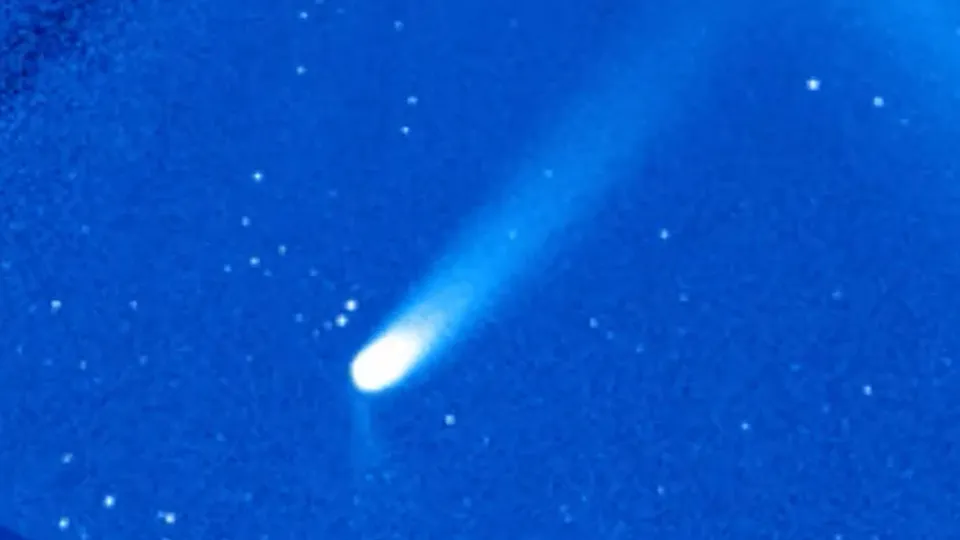
A sungazing spacecraft captured spectacular views of Comet C/2025 R3 (PanSTARRS) as its ion tail appeared to "switch on" and swing away from the sun during a close approach to Earth on April 26.
Comet C/2025 R3 was discovered in September 2025 and quickly stirred up excitement among the comet-chasing community during its rush toward the sun, with some wondering if PanSTARRS could brighten enough to be the great comet of 2026.
The wandering comet put on an impressive show in the weeks leading up to its brush with the sun during perihelion on April 19. It then went on to dazzle stargazers in spacecraft imagery around perigee, when the icy wanderer passed closest to Earth in its seemingly one-off orbit, before cutting a return path to the outer regions of the solar system.
The joint NASA/ESA Solar and Heliospheric Observatory (SOHO)'s coronograph, an instrument that blocks out the light of the sun's bright disk, captured impressive imagery of Comet PanSTARRS' ion tail brightening as it soared past the sun. This narrow tail shifted to stream directly away from the sun, in contrast to the broader, dust-laden primary tail.
Why does comet PanSTARRS have two tails?
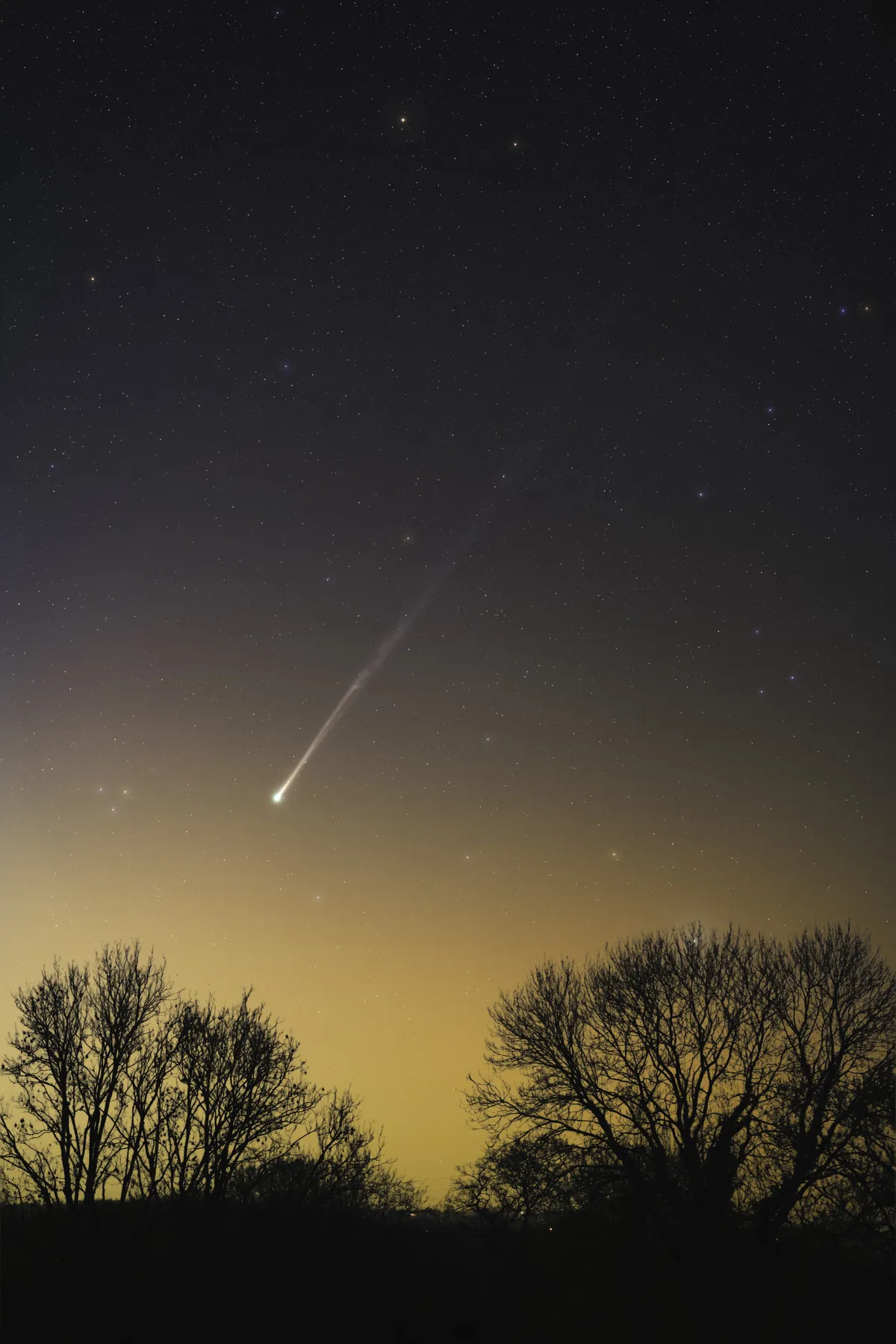
Comets develop tails as they approach the sun and heat up. Solar radiation causes material locked inside the comet's solid nucleus to escape through a process called sublimation, releasing dust and gas into space. The heavier dust particles are pushed back by sunlight, forming a broad, often curved tail that reflects sunlight according to Swinburne University of Technology.
A comet's dust tail can stretch for millions of miles and is very good at reflecting sunlight, sometimes making comets shine bright enough to be seen by the naked eye, while appearing visually spectacular in long exposure photography!
At the same time, ultraviolet radiation from the sun strips electrons from gas molecules in the comet's coma — a process known as ionization. These charged particles are then caught up in the solar wind,creating a second, straighter tail.
The ion tail always points away from the sun, driven as it is by the solar wind, which travels at hundreds of kilometers per second, while the larger particles that make up the dust tail move at a slower pace, and so lags behind its ion counterpart as the comet moves around the sun.
Want to be ready to capture the next commentary visitor as it approaches the sun? Then be sure to read our guide to photographing comets, along with our roundups of the best lenses and cameras for night sky photography.
Editor's Note: If you would like to share your cometary astrophotography with Space.com's readers, then please send your photo(s), comments, and your name and location to spacephotos@space.com.