A sonic boom heard throughout the northeastern United States last week was caused by a meteor, NASA confirmed after consulting satellite imagery.
The meteor's boom, heard widely on Saturday (May 30) at 2:06 p.m. EDT (local time), was audible over the northeastern U.S. NASA made the determination that it was a meteor based on both eyewitness reports to the American Meteor Society as well as images from the GOES-19 satellite from the National Oceanic and Atmospheric Administration (NOAA).
"The meteor appears to have fragmented at an altitude of 40 miles over northeast MA and southeast NH," NASA officials wrote on X on Sunday (May 31). "The energy released at breakup is estimated to be equivalent to about 300 tons of TNT, which accounts for the loud noise."

Sometimes meteors are associated with meteor showers, or annual clusters of visible meteors associated with the Earth passing through the dust stream of a comet or asteroid. The May 30 event was not one of those, NASA noted.
The GOES-19 geostationary lightning mapper captured the meteor's flash, added the Cooperative Institute for Research in the Atmosphere based at Colorado State University in a separate X post on Saturday with imagery of the event.
A bolide exploded high above New England in Earth's atmosphere on Saturday afternoon, creating a loud booming noise that was heard across the region.The flash of the exploding meteor was detected from the GOES-19 weather satellite's GLM instrument. pic.twitter.com/QHP2FWCucZMay 31, 2026
NBC News also captured video footage of the daytime event, noting the Massachusetts Emergency Management Agency said safety officials received reports of an "audible boom" as well as shaking in the state's eastern area.
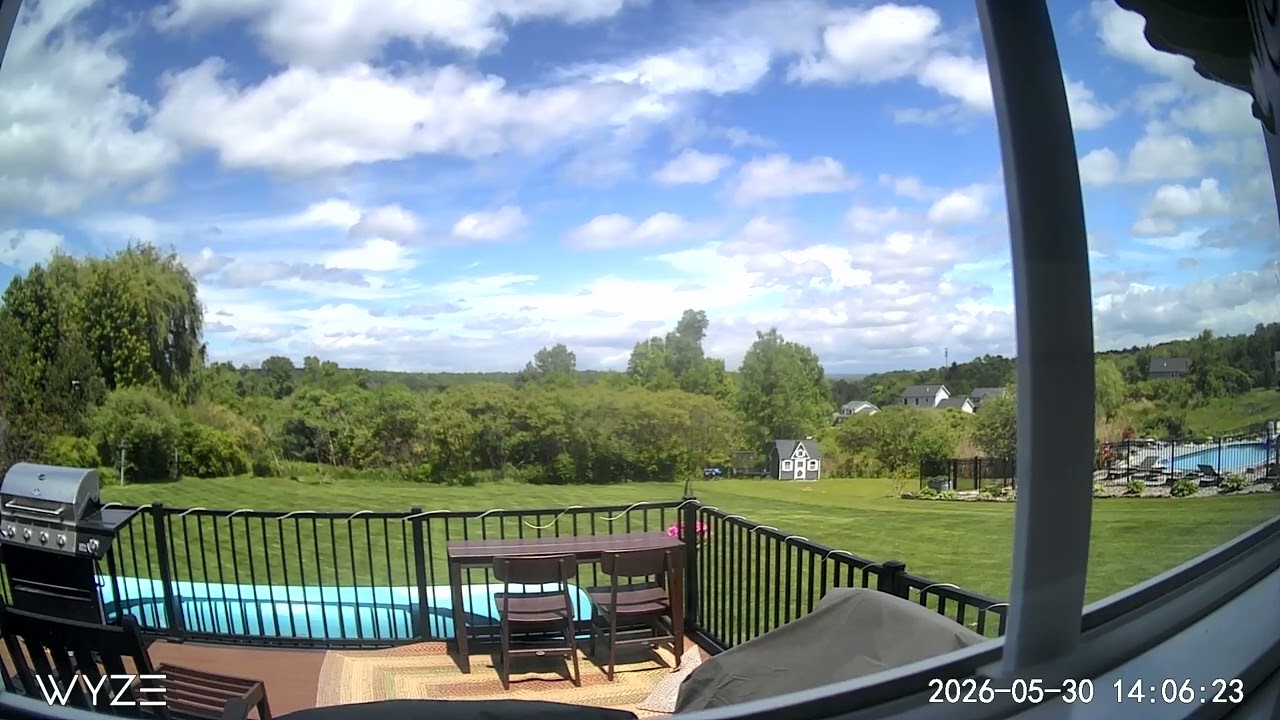
Meanwhile, video shared to the American Meteor Society by R. Schott shows the fireball streaking through the daytime sky as its boom can be heard:
Unfortunately for meteorite-hunters, it appears that pieces of the space rock all fell into the middle of Cape Cod Bay, stated NASA's Astromaterials Research & Exploration Science division on Saturday. "This fall into water is technically called a 'fishy squisher', in uber-serious scientific terms," the agency stated.
Radar signatures, shown in the map, show the meteor at KBOX (Boston, Mass.), TBOS (Boston Logan International Airport), KOKX (Long Island, N.Y.), and KENX (Albany, N.Y.), while officials said they may have seen another signature from from KGYX (Portland, Maine).
"While all the meteorites from this fall landed in water, the water depth at the fall site is 34 m (100 feet)," NASA officials added. "Most meteorites are strongly attracted to a magnet, and these ones are within reach of a 100-feet length of rope dangled off of a boat. In case anyone is interested in such factoids."
Natural meteors originate from extraterrestrial rock sources: a space rock about to enter our atmosphere is a meteoroid, one streaking through is a meteor, and one that has arrived on the ground is called a meteorite. Most of these events involve very small rocks, including grains of dust, although NASA (and increasingly, the U.S. Space Force) is always on the lookout for potentially threatening objects originating from space.