2025 was a very busy year for spaceflight, for better and for worse.
We saw quite a few milestones notched in the final frontier this year, including the first-ever fully successful private moon landing and the official arrival of Blue Origin's New Glenn heavy lifter on the spaceflight scene. But there were a number of failures as well, some of them quite dramatic.
Here's a brief rundown of 12 of 2025's most memorable mishaps. One caveat first, though: There is no shame in being on the following list. Spaceflight is hard, and coming up short sometimes is part of the deal. It took SpaceX four tries to reach orbit for the first time, after all, and look at where the company is today.
12. Indian rocket fails during satellite launch

An Indian PSLV-XL rocket launched from Satish Dhawan Space Centre on May 17, carrying the EOS-09 Earth-observing radar satellite aloft for the Indian Space Research Organisation (ISRO). But EOS-09 didn't make it to its destination: The PSLV-XL suffered an issue with its third stage about six minutes into flight, and the satellite was lost.
11. Firefly Aerospace suffers a 1-2 punch

Texas company Firefly Aerospace's Alpha rocket lifted off from California on April 29 on its sixth-ever mission, hauling a technology demonstration for Lockheed Martin toward low Earth orbit. Alpha's upper stage got about 200 miles (320 kilometers) up, but it failed to reach orbital velocity due to a problem suffered shortly after stage separation, and the payload was lost.
Firefly diagnosed the problem and began gearing up for Alpha's return to flight. But the company then suffered another setback on Sept. 29: The Flight 7 first-stage booster exploded on the stand during testing. The company traced the problem to a "process error" during integration and aims to launch Flight 7 (with a different first stage) in early 2026.
10. Landspace's Zhuque-2 rocket fails

The Zhuque-2, a two-stage rocket operated by Chinese startup Landspace, failed on its sixth-ever mission, which launched Aug. 14 from Jiuquan Satellite Launch Center in northwest China. The company did not disclose the payloads that were riding on the rocket. It was the second failure for the Zhuque-2, whose engines burn liquid methane and liquid oxygen, like SpaceX's Raptor, which powers the company's Starship megarocket.
9. Galactic Energy's Ceres-1, too

Nearly three months later, another Chinese rocket went up in flames — a Ceres-1, built by Beijing-based Galactic Energy. The Ceres-1 launched Nov. 9 from Jiuquan, carrying two commercial Earth-observing satellites and a third spacecraft manifested by a Chinese university. The rocket's first three stages performed well, according to media reports, but its fourth and final stage suffered an anomaly that doomed the mission.
There may have been another Chinese rocket failure this year as well. A Kuaizhou 1A vehicle — built by the company ExPace, a subsidiary of the state-owned China Aerospace Science and Industry Corporation — apparently exploded on a pad at Jiuquan before launch on March 1, though reports of its demise remain unconfirmed.
8. Japan's H3 rocket fails during launch of navigation satellite

Japan suffered a failure, too, with just 10 days left in 2025. The country's H3 rocket experienced a problem with its second stage on Dec. 21, during the launch of the Michibiki 5 navigation satellite. The rocket did not deliver Michibiki 5 to the proper orbit, and officials with the Japan Aerospace Exploration Agency (JAXA) declared the satellite lost.
7. The 1st orbital launch from European soil crashes and burns
On March 30, the German company Isar Aerospace launched its Spectrum rocket from Andøya Spaceport in Norway. It was the first liftoff for Spectrum and the first-ever orbital flight from European soil, but it didn't last very long: The rocket suffered an anomaly 18 seconds into flight, crashed back to Earth and exploded, generating a blazing orange fireball in a gorgeous wintry landscape.
Isar is bouncing back, however: It's currently gearing up for its second-ever launch, which will also take place from Andøya.
6. Australia's 1st homegrown orbital rocket comes up short
A similar story unfolded a few months later half a world away. On July 29, Australian company Gilmour Space debuted its Eris rocket from the Bowen Orbital Spaceport in coastal Queensland. It was the first-ever orbital launch attempt for a homegrown Australian rocket, but Eris soon came back to Earth: It slid sideways off the pad and fell back to terra firma 14 seconds after liftoff.
5. South Korean's 1st private orbital rocket, too
South Korean startup Innospace made history this year as well, launching the nation's first-ever private orbital rocket on Dec. 22. However, that vehicle, the Hanbit-Nano, suffered an anomaly about a minute into flight and came crashing back to Earth.
So it was a tough year for rocket debuts all the way around. But that's not exactly surprising: It's always been rare for a new launcher to ace its first-ever liftoff.
4. Returning boosters that didn't stick the landing

There were four failed landing attempts during orbital launches this year — one each by the first-stage boosters of Blue Origin's New Glenn rocket (on Jan. 15), SpaceX's Falcon 9 (on March 3), Landspace's Zhuque-3 (on Dec. 3) and the Chinese government's Long March 12A (on Dec. 22).
It's not entirely fair to include any of them on this list, as all four rockets reached orbit as planned, and landing the booster was a secondary objective for each of them. Plus, it was the first-ever flight for New Glenn (which stuck the landing on its second launch this past November), Zhuque-3, and the Long March 12A (both of which were attempting China's first-ever orbital booster touchdown). The loss of the Falcon 9 was the only landing hiccup for SpaceX this year out of more than 160 attempts. Still, they were technically failures, and all were memorable.
3. Private American lander tips over on the moon
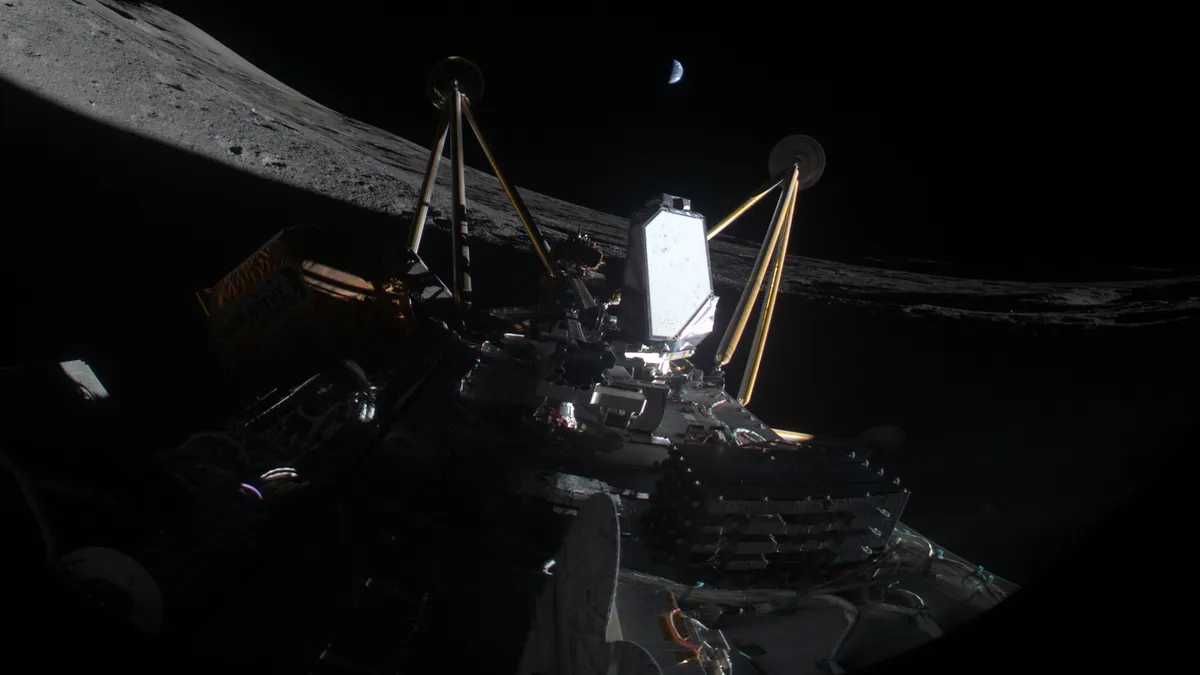
On March 6, Athena, a robotic lander built by the Houston company Intuitive Machines, landed successfully on the moon with a passel of NASA science payloads. But Athena soon toppled over. Its prone position prevented some payloads from deploying properly, and the lander couldn't collect enough sunlight to recharge its batteries. Intuitive Machines declared Athena dead a day later.
It was the second such outcome in a little over a year for Intuitive Machines. The company made history in February 2024 with the lunar landing of its Odysseus spacecraft. But Odysseus toppled over as well, apparently after breaking a leg during its touchdown, cutting its mission short.
Intuitive Machines will be back on the moon soon, if all goes to plan: Its third robotic mission for NASA is currently targeted for the first half of 2026.
2. Private Japanese lander crashes into the moon
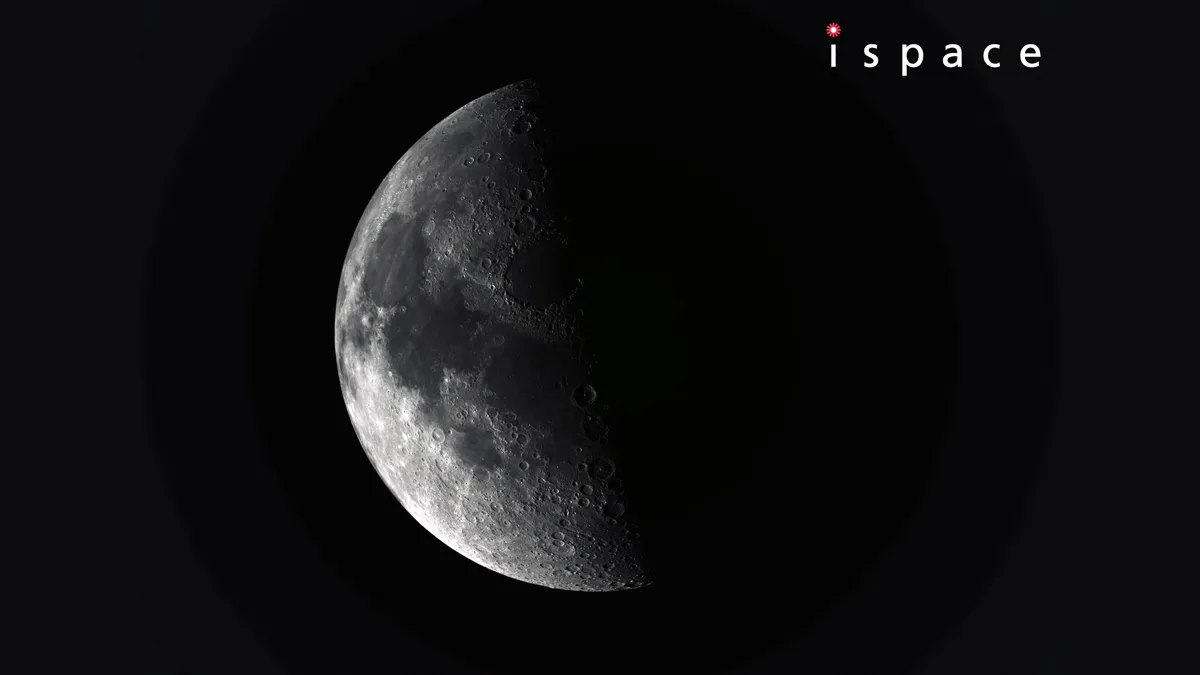
The Tokyo-based company ispace tried to put its Resilience lander down on the moon on June 5 but came up short; the vehicle slammed hard into the gray dirt in the Mare Frigoris ("Sea of Cold"). It was the second such setback for ispace, which also failed during a lunar landing try in April 2023.
There were plenty of silver linings on both missions, however; the company's lander made it to lunar orbit successfully on both occasions, notching a number of milestones but coming up short during the final stages of descent. And ispace plans to try again in 2027.
1. Starship's test-flight fireworks
SpaceX's Starship, the biggest and most powerful rocket ever built, launched five times in 2025, on suborbital test flights from the company's Starbase site in South Texas. The first three did not go entirely according to plan.
On Jan. 16, Starship's first stage, a huge booster called Super Heavy, successfully came back to Starbase, where it was caught by the launch tower's "chopstick" arms. But the Ship upper stage exploded less than 10 minutes after liftoff, raining debris down over the Turks and Caicos Islands. A similar outcome occurred on March 6's test flight, which was the second Starship launch of 2025 and the eighth overall.
Flight 9, which lifted off on May 27, was something of a step backward for Starship, as both stages were lost prematurely (though Ship did fly for quite a bit longer than it managed to do on Flight 7 and Flight 8). A few weeks later, on June 18, the program suffered another setback: The Ship that SpaceX was prepping for Flight 10 exploded on a test stand at Starbase.
But SpaceX, and Starship, bounced back: The vehicle aced Flight 10 and Flight 11, which launched on Aug. 26 and Oct. 13, respectively. The company is now gearing up for the first test flight of Starship Version 3, a bigger and more powerful variant that will be capable of reaching Mars — the destination that SpaceX has long had in mind for the vehicle. Part of that prep featured the buckling of a Super Heavy during testing on Nov. 21, but SpaceX, as usual, is powering through.