The third time was not the charm for Space One's Kairos rocket.
Kairos launched for the third time ever on Wednesday (March 4), lifting off from Space One's Spaceport Kii in Wakayama Prefecture at 9:10 p.m. EST (0210 GMT and 11:10 a.m. local time in Japan on March 5). But it was all over about two minutes later.
"Kairos No. 3 was launched on March 5, 2026, at 11:10:00 a.m., but we determined that mission success was difficult and implemented flight termination measures," Tokyo-based Space One said via X on Wednesday evening (in Japanese; translation by X).
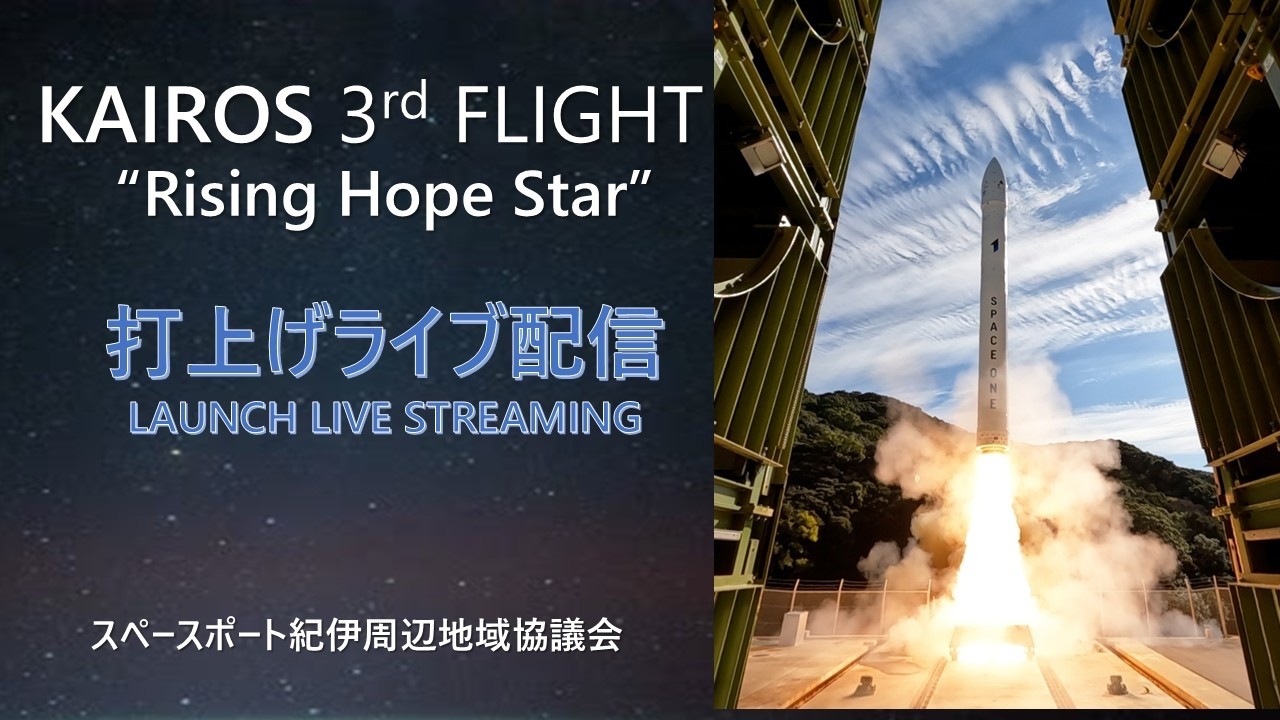
It was the third straight failure for Kairos. The rocket's debut flight, in March 2024, ended just five seconds after liftoff when the rocket's flight termination system detected lower-than-expected velocity and thrust.
The second launch, in December 2024, lasted longer but also met an explosive end. Space One terminated that mission about three minutes into flight, at an altitude of roughly 62 miles (100 kilometers), after detecting performance anomalies. Five satellites were lost.
Five small spacecraft were lost on Wednesday's flight as well. They were supposed to be deployed about 50 minutes after launch at an altitude of 310 miles (500 kilometers), according to Japanese outlet NHK.
It's too early to tell what went wrong on Wednesday. Space One said it will provide details when they are available.
Space One, which was founded in 2018, aims to become a major player in the small-satellite launch industry. The company wants to be launching 20 missions per year by the end of the decade and 30 per year in the 2030s.
Space One's first rocket is the 59-foot-tall (18 meters) Kairos, which consists of three solid-fuel stages topped by a liquid-propellant upper stage. Kairos can deliver up to 330 pounds (150 kilograms) of payload to sun-synchronous orbit, according to Space One.
Editor's note: This story was updated at 11:00 a.m. ET on March 4 with the new target launch date of March 4, then again at 9:30 p.m. ET on March 4 with news of the launch failure.