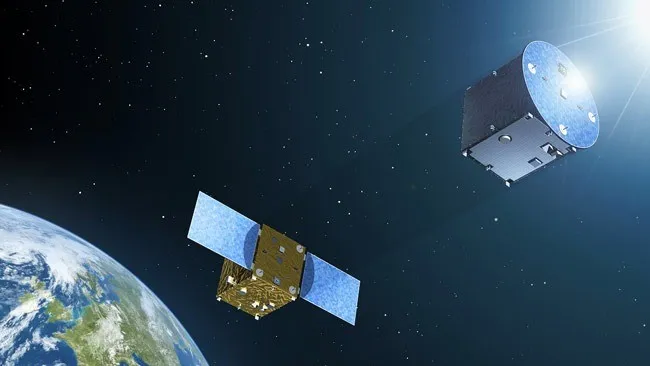
Europe has lost contact with one of its two Proba-3 spacecraft, after an anomaly caused the vehicle to lose orientation.
The European Space Agency's (ESA) Proba-3 mission launched to Earth orbit from India in December 2024. Proba-3 consists of two spacecraft designed to fly in precise formation to create artificial solar eclipses in space, allowing scientists to study the sun’s faint outer atmosphere, or corona. But the mission may be in jeopardy after an anomaly that occurred the weekend of Feb. 14 caused one of the probes to lose orientation.
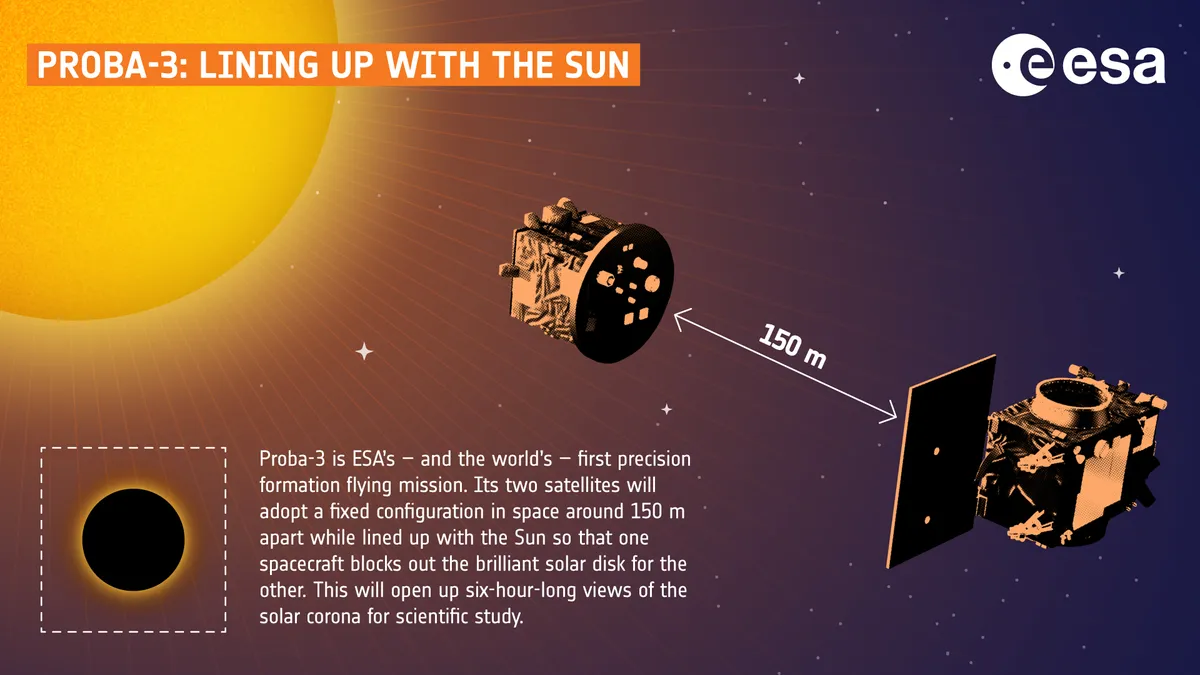
The incident involved Proba-3's Coronagraph vehicle, which is responsible for imaging the sun's corona. Its partner, the Occulter spacecraft, blocks out the bright disk of the sun's face in order for the Coronagraph to image the corona without the intrusion of blinding light from the star. To do this, both spacecraft must formation-fly about 500 feet (150 meters) apart while maintaining alignment within millimeter accuracy. Losing control of either of the vehicles would effectively end the Proba-3 mission.
The Proba-3 spacecraft entered their precise station-keeping formation in May 2025, demonstrating for the first time ever the ability for two spacecraft to remain in such synchronicity. Then, in June 2025, the mission captured its first photos of an artificial solar eclipse.
Now, ESA is trying to determine what exactly went wrong last month. "The root cause of the anomaly is under investigation, and mission teams are working hard to recover the situation," the agency said in an update on March 6.
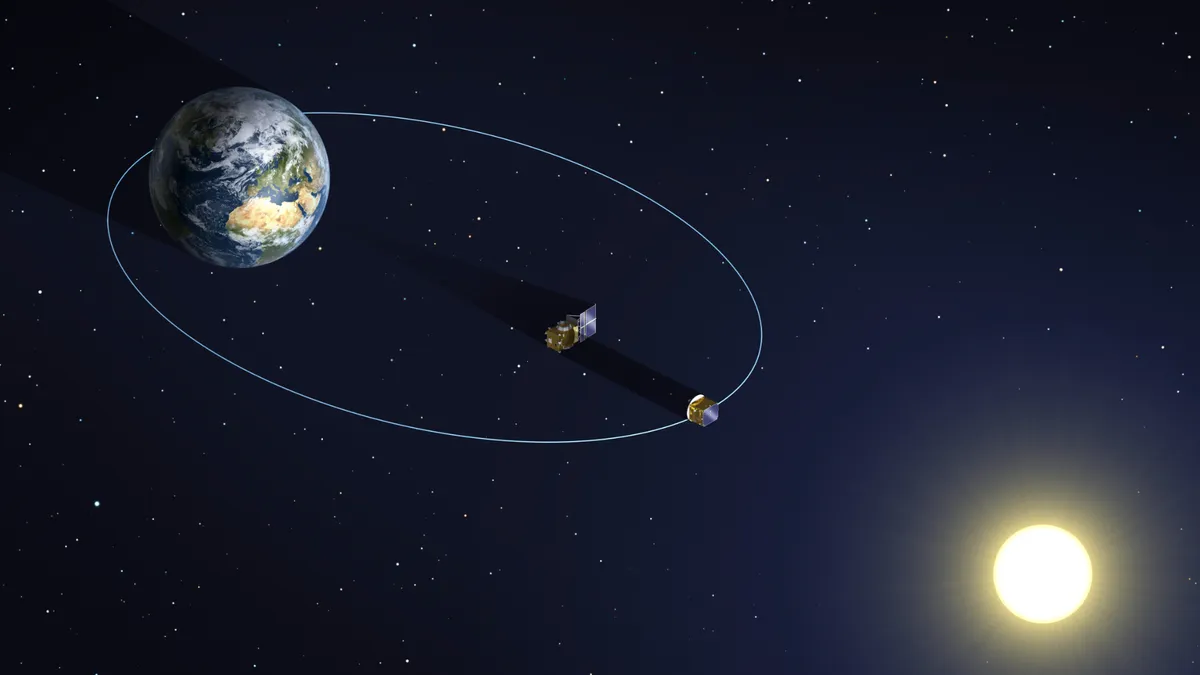
The anomaly caused an apparent chain reaction that prevented the Coronagraph from entering safe mode and led to a "progressive loss of attitude," the ESA update said. The change in orientation pointed the spacecraft's solar panels away from the sun, quickly draining its batteries and triggering a "survival mode."
As they search for a cause, mission operators are investigating how they might safely steer the Occulter probe closer to the Coronagraph to assist in diagnosing the issue and reestablishing contact. ESA officials said they will provide updates "as new information becomes available."