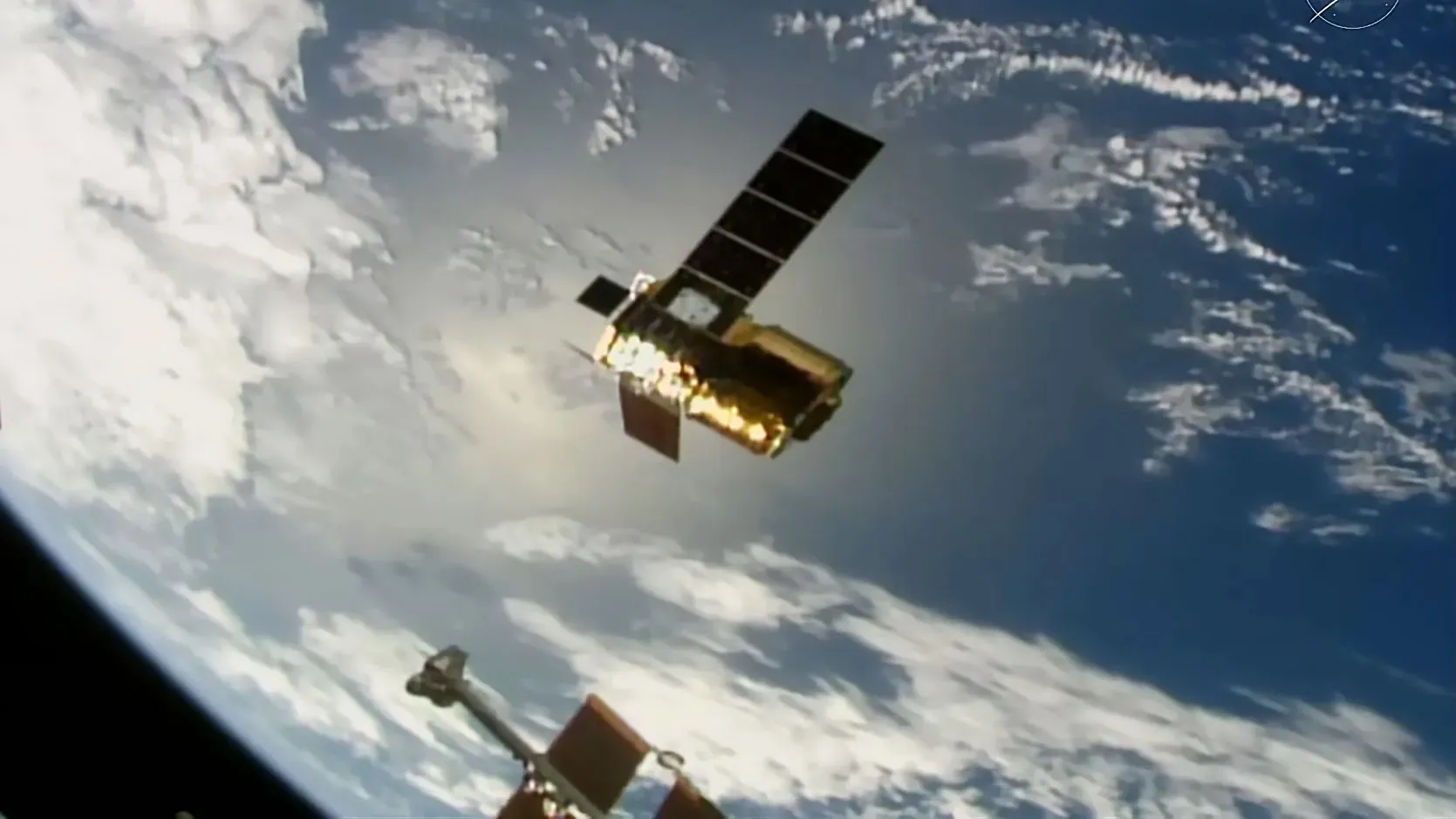
Japan's new HTV-X cargo spacecraft departed the International Space Station today (March 6) after a four-month stay.
The vehicle — known as HTV-X1, because it's the first of its kind — was released by the station's Canadarm2 robotic arm today at 12 p.m. EST (1700 GMT), right on schedule.
The ISS was flying about 260 miles (418 kilometers) above the Pacific Ocean at the time, according to a NASA update.
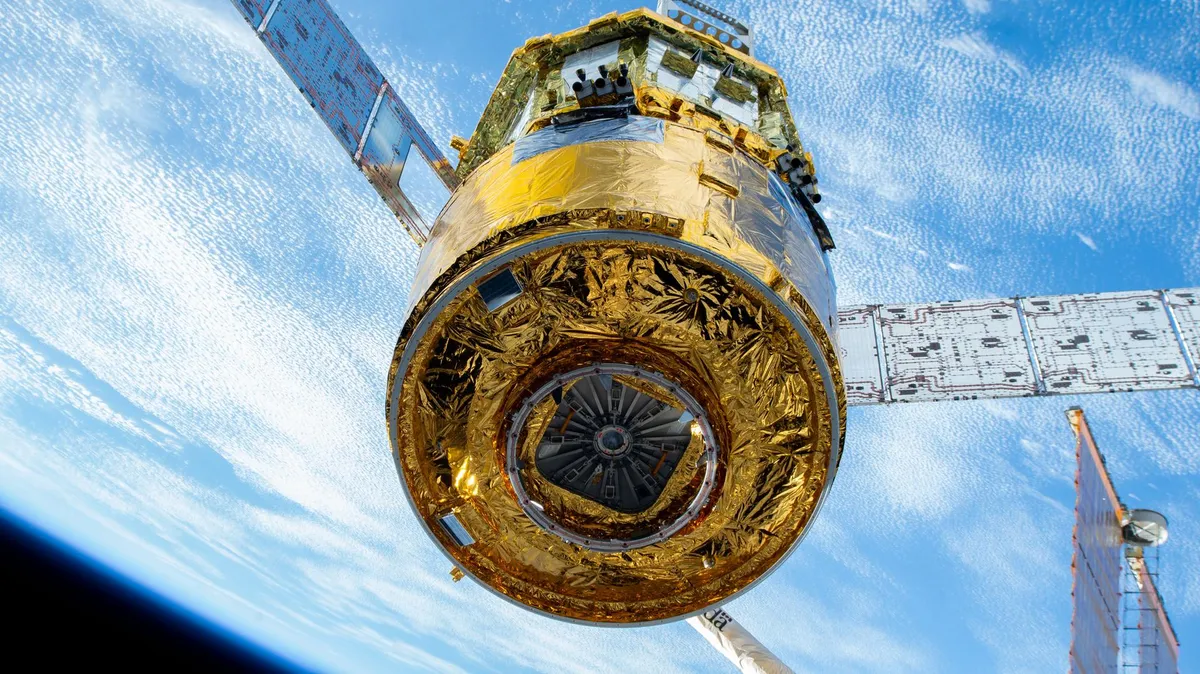
The robotic HTV-X is the successor to Japan's H-II Transfer Vehicle (HTV), which flew nine cargo missions to the International Space Station (ISS) from 2009 to 2020.
The new freighter launched for the first time on Oct. 25, carrying about 9,000 pounds (4,080 kilograms) of food and other supplies to the orbiting lab. On Oct. 28, HTV-X1 reached its destination, where it was grappled by Canadarm2 and affixed to the station's Harmony module.
The arm removed the vehicle from the module on Thursday (March 5), then began positioning it for today's release.
HTV-X1 will now stay up for a while as a free flyer.
"The HTV-X1 spacecraft will remain in orbit for more than three months acting as a scientific platform for JAXA’s experiments," NASA officials said in an update on Monday (March 2), referring to the Japan Aerospace Exploration Agency.
"Following the deorbit command, the spacecraft will dispose of several thousand pounds of trash during reentry into Earth's atmosphere, where it will burn up harmlessly," they added.
Three other freighters haul cargo up to the ISS these days as well — Russia's Progress vehicle, Northrop Grumman's Cygnus, and Dragon, which is built by SpaceX. Dragon is the only one that's reusable.
Editor's note: This story was updated at 1:15 p.m. ET on March 6 with the news of HTV-X1's departure from the ISS.