


It has been a whirlwind year for space science, to say the least.
The Trump administration only entered office at the beginning of this year, but has already shaken up the world of academic research and the structure of major science organizations such as NASA and the National Oceanic and Atmospheric Administration. An interstellar comet strayed into our solar system and scientists have been rushing to study this sample from beyond ever since (even during a government shutdown).
Satellites are crowding Earth orbit, the northern lights are suddenly visible to people who would never normally expect to see them, and we even went through one of the shortest days in history. We saw black holes devouring stars in new ways, witnessed experts fight over whether an exoplanet called K2-18b is actually exhibiting signs of life right before NASA's Perseverance rover found a possible biosignature of its own, and waited patiently for a new observatory to drop its first images — and that barely scratches the surface of it.
But I was curious about something. With so many massive cosmic stories competing for attention, which ones resonated the most? What space questions were people Googling? What sounded too good to miss?
To find out, I dug into our metrics and searched for the 12 most read stories of 2025. Here's what I found.
12. China reached out to NASA to avoid a potential satellite collision in 1st-of-its-kind space cooperation
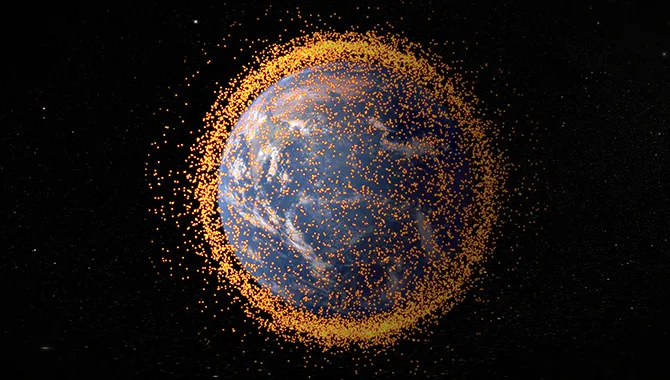
Possible satellite accidents and surprising international space cooperation kick off this list; At number 12, is a story that perhaps offered a glimpse of a more collaborative future in orbit that can drown out our Kessler Syndrome worries.
This year, officials with the Chinese National Space Agency did something unexpected: They reached out to NASA after detecting a potential satellite traffic collision, suggesting NASA hold its satellite still while they figure out a maneuver. While NASA has sent such alerts to China before, the reverse hadn't happened until now.
On one hand, there's something to be said here about how many satellites are traversing Earth orbit (so many that space traffic control is moving toward normalcy!) and, on the other, it shows China's space capabilities may have leveled up once more. Detecting and tracking potential collisions requires sophisticated space situational awareness, something long dominated by the U.S.
11. Big lake in Quebec suddenly disappears, satellite finds

The headline of this Space Photo of the Day from August is certainly worth a double-take, so I'm not terribly shocked it's on this list.
The short explanation for what happened here is that the land surrounding a lake in Quebec collapsed inward on itself, causing the lake's water to drain suddenly and triggering landslides with little to no warning. Families with the Cree First Nation of Waswanipi, an Indigenous community in Quebec, were devastated by the loss of their traditional hunting, fishing and campgrounds.
10. James Webb Space Telescope takes 1st look at interstellar comet 3I/ATLAS with unexpected results

Of course comet 3I/ATLAS had to make this list. It's one of the most fascinating cosmic serendipities to happen in recent memory.
Comets are very cool in and of themselves, but what's special about 3I/ATLAS is that it came from beyond our solar system — hence, its "interstellar" title – and it's only the third confirmed object to enter our corner of the cosmos from elsewhere. Scientists are trying to learn as much as possible about this so-called "invader" before it leaves forever, and in this article, you can see data about the comet captured by the James Webb Space Telescope — a highly revered, infrared-light-catching instrument that launched on Christmas Day in 2021.
9. Earth will spin faster today to create 2nd-shortest day in history

The second shortest day on record took place this year on July 22, but it was only 1.34 milliseconds shorter. The record didn't last long; it was broken again on Aug. 5.
What causes these variations? Well, Earth's rotation isn't perfectly constant because of variables like the gravitational pull of the moon on our planet, masses on our planet itself shifting (like its liquid core) and seasonal changes. And even though we can't actually feel the difference in rotation, it's maybe nice to know that forces beyond the context of our reality are shifting and aligning to keep our clocks ticking and our journey through the universe a healthy cruise.
8. Failed Soviet Venus lander Kosmos 482 crashes to Earth after 53 years in orbit

It was a bittersweet moment on May 10 this year, when a Soviet-era spacecraft, Kosmos 482, plunged back to Earth after more than five decades in orbit.
Kosmos 482's destiny was to ride the tides around Venus, but because of a failure during launch, the spacecraft never made it past our planet's orbit. And for the last five decades, it had remained in limbo there, unable to continue its journey or return home, until gravity closed the chapter.
At last, it's home.
7. Russian 'Noah's Ark' satellite carrying 75 mice and 1,500 flies lands back on Earth

Speaking of in-orbit objects that returned home, so did a spherical Russian spacecraft carrying 75 mice, 1,500 flies, microorganisms and plant seeds spent 30 days in orbit, exposing its living cargo to cosmic radiation and microgravity before returning to Earth.
While 10 mice died and some flies didn’t survive, most of the animals came back alive, giving scientists valuable insight into how living organisms cope with spaceflight.
6. Cosmonaut removed from SpaceX's Crew 12 mission for violating national security rules: report
In early December, an investigative report from Russian news site The Insider revealed that cosmonaut Oleg Artemyev was removed from SpaceX's Crew 12 mission after allegedly leaking confidential SpaceX documentation and photos.
This mission, scheduled to launch to the International Space Station as early as February, now lists cosmonaut Andrei Fedyayev as Artemyev's replacement on the four-person crew.

5. Scientists analyze 76 million radio telescope images, find Starlink satellite interference 'where no signals are supposed to be present'
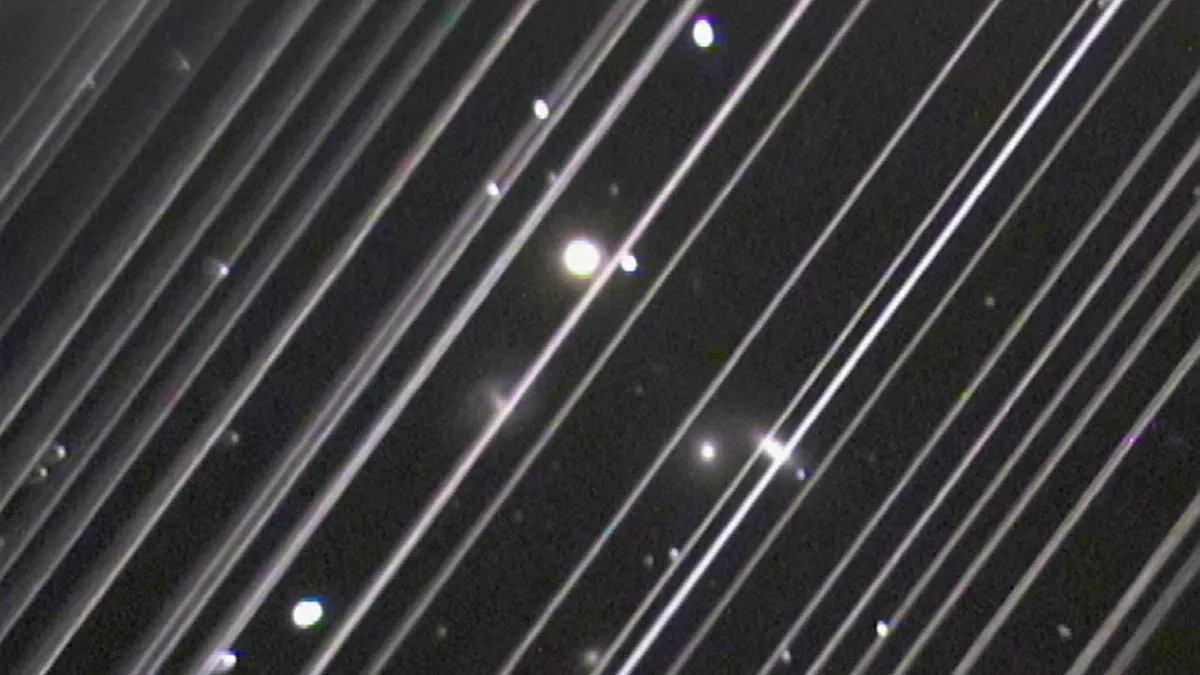
And on the note of SpaceX, the rise of satellite megaconstellations spearheaded by Elon Musk's company continues to make headlines for the negative impact it has on astronomy observations. Though other satellites are contributors to the issue of signal interference in night sky images — notably AST SpaceMobile's Bluewalker 3 — SpaceX's Starlink internet satellites are quite the polluters in this domain. There are over 10,000 deployed satellites, with more on the way.
This article is one of several that investigate how bad the Starlink effect is on astronomy, and how much worse it could get. A new study from this month, for instance, suggests satellite constellations like Starlink could obscure most space telescope observations by the late 2030s.
4. What time is Sept. 7 blood moon total lunar eclipse?

Number four on this list represents several blood moon stories from this year, as humanity's desire to view our lunar friend became quite clear to me while we searched through our most-read stories.
The blood moon, for context, happened because a total lunar eclipse was visible across Asia and Europe overnight from Sept. 7 through Sept. 8. The moon’s deep red hue appeared as it passed through Earth's shadow, with the exact shade shaped by conditions in Earth's atmosphere — a process explained in detail through an accompanying infographic.
It's also hard to forget how much the 2024 total solar eclipse captivated the world; it would seem space traffic is just as mesmerizing as space traffic control to us.
3. NASA's Perseverance rover hits the Mars rock gold mine: 'It has been all we had hoped for and more'

The Perseverance rover had some major wins this year while scouring the Martian surface for clues about the history of the Red Planet. One of them is the absolute bounty of peculiar rocks it found at a spot near Jezero Crater called "Witch Hazel Hill."
While exploring the region, the rover uncovered intriguing specimens, including once-molten rocks and, for the first time, material from the crater rim itself. One particularly prized sample, dubbed Silver Mountain, captivated scientists with its unusual textures — and will likely remain a highlight of the mission for years to come.
2. Northern lights may be visible in these 23 US States June 1

Similar to the deal with the blood moon conglomerate, this article represents all the northern lights stories that were running off the charts this year.
The current solar cycle has been kind enough to allow humans across the world to see the northern lights right in their backyards, even if they don't live in the frigid polar areas of our globe. And after getting a taste of what it's like to see these surreal light shows, it appears to have become a chase for many.
What'll happen when a solar cycle doesn't treat us this well in the future? Hello darkness my old friend?
1. Trump's signing of 'One Big Beautiful Bill' includes $85 million to move space shuttle Discovery from Smithsonian to Texas

Welcome to our number one most-read story this year: A rundown of how the Trump administration's "Big Beautiful Bill" allocated money to move the iconic space shuttle Discovery (currently located at the Smithsonian National Air and Space Museum in Washington D.C.) to Space Center Houston, the official visitor center for NASA's Johnson Space Center in Texas.
This idea has been met with much disdain from experts, in part because it would entail sort of chipping up Discovery into different pieces. Not to mention, it'd be pretty hard to complete the task — and the money involved could theoretically be used for other stuff.
It's fitting to have this story at our top spot because of how science has been flipped upside down this year due to changes implemented by the Trump administration. Several of Space.com's stories in 2025 have been dedicated to peeling back the layers of how the administration — since taking office at the start of this year — has led to mass layoffs of scientists, language changes on scientific websites, an increase in quiet censorship and arguably illegal moves from major organizations like NASA.
Considering the amount of dramatic news we see on this list alone, both directly and indirectly, it will be interesting to see what our 2026 "most read stories" list will look like.
