Quite a bit has happened in the space sector this year, out in the cosmos as well as on Earth — and actually, in Earth orbit, too.
For instance, U.S. President Donald Trump took office in only January, but his administration is responsible for a wealth of changes that have flipped life upside down for scientists in the States. China, Russia and India are meanwhile steadily strengthening their space programs, and other countries are starting to bloom toward the cosmos as well. Earth orbit, to say the least, is getting pretty crowded.
At the same time, an interstellar comet paid our solar system a surprising visit, black holes and neutron stars continue to baffle us with their mind-bending characteristics, the northern lights are suddenly appearing in skies across the world, a Mars rover managed to find rocky treasure on the Red Planet and science fiction has been captivating enough to float us into our imaginations on days when real things like spaceflight crashes and political encroachment on climate science get overwhelming.
But through it all, our reporters have been following the show.
So, to create a must-read story list for you, we asked our staff to select their favorite pieces of 2025. Alas, while you're drinking leftover hot chocolate or sitting in your room trying to escape questions from your extended family, here are some great reads, twisty reads, essential reads and long, joyful reads to relax into.
1. On NASA sinking its flagship science center and possibly breaking the law

Josh has been putting out amazing stories all year, but his investigative article revealing the sweeping and chaotic changes inflicted by NASA leadership on the Goddard Space Flight Center was of a different class. It was a considered, well-researched and thoughtfully written piece that explored the human cost of the administration's actions, while alerting the public to the long-term damage that the secretive moves could wreak on the agency's scientific capabilities.
It prompted discussion and action from both Space.com's readership and also the ranking member of the U.S. congressional committee on science, space and technology, Zoe Lofgren, who cited the story in a letter to NASA acting administrator Sean Duffy while demanding that NASA cease its actions and give "a full accounting of the damage inflicted on Goddard thus far."
TLDR: Josh is the journalist I want to be when I finally grow up.
2. The perplexing saga of an astronaut imposter


After more than 20 years of space reporting, I thought I'd heard most of the crazy stories from the space age, but must admit that Jeff Maysh's tale of huckster astronaut wannabe Robert Hunt, who for years play-acted being an astronaut, took me by surprise. Through some meticulous reporting, and interviews with Hunt himself, Jeff recounts an astounding story of one man's determination to play the role of a space traveler without actually being one. It's an amazing story, more so for how long Hunt seemed to get away with it.
How a fake astronaut fooled the world, broke women's hearts, and landed in jail
3. Edwin Hubble's helpers and an aurora cruise


As an astronomy editor, I read and write about Edwin Hubble a lot, and in many different contexts. His presence permeates so much of physics as a whole, from the Hubble Space Telescope and Hubble's Law to the Hubble Constant and resulting Hubble Tension. But what science writer Keith Cooper did with his look back on how Hubble proved our Milky Way galaxy isn't alone in the universe is focus on the side characters responsible for Hubble's great success — characters very rarely spoken about. This engrossing read is where my rabbit-hole of knowledge about Milton Humason began, a janitor and mule skinner who helped with the construction of Mount Wilson Observatory, then went on to aid Hubble in several major discoveries.
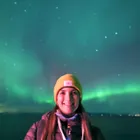
I'm not sure if this is allowed, but I also have a second favorite that needs to be on this list. Maybe I was biased because I read this story after having a slightly rough day and sipping tea in my bed, but our editor Daisy Dobrijevic's long, narrative piece about being on a multi-day aurora cruise along Norway's frigid coast was really a treat. The vivid imagery and honest retelling of what emotions are involved when viewing neon ribbons in the sky make you feel like you were there. There's one bit about a window that has stayed in my mind. You'll know when you read it.
100 years ago, Edwin Hubble proved our Milky Way galaxy isn't alone
Is an aurora cruise worth it? I joined Hurtigruten's Signature Voyage to find out
4. Trump's desire to slash NASA's budget rattles scientists


I love how we leaned into writing about the current U.S. administration's questionable decisions this year, and this was one of my favorites. In times of controversy, in-depth reporting matters more than ever.
'What a waste:' US scientists decry Trump's 47% cuts to NASA science budget
5. A NASA satellite corpse in disguise


This story from Rob Lea dives into a space mystery, which are always my favorite, and explores how a dead NASA satellite ended up fooling astronomers into thinking they had discovered a fast radio burst (FRB) from far beyond the Milky Way. Featuring interviews with the researchers behind the discovery itself, the story explores possible ways the defunct satellite could have produced such a remarkable burst of radio waves — which still remains a mystery.
6. A scientific conference with a veil of fear


Mona's piece is my top pick because of its timely and informative content and its narrative outline. She does a wonderful job describing the impacts of NASA's and the National Science Foundation's absences at a major astronomy meeting and connects it to wider issues concerning the scientific community at a time when many in their field feel uncertain about their academic and professional futures.
Mona plainly demonstrates the stakes from an easy-to-understand perspective, and shows the importance of such organizations at these kinds of biannual gatherings in a way that put me in the shoes of the disappointed scientists who traveled all the way to Alaska only for the headline act not to show up, and the scientists who eagerly await these meetings who were barred from attending.
I'd also like to add honorable mentions, though, to two other brilliant stories from this year: Daisy Dobrijevic's piece about visiting STARMUS in La Palma and Brett Tingley's about an Apollo-era radio telescope being up for sale.
NASA's been pulling out of major astronomy meetings — and scientists are feeling the effects
I went to STARMUS La Palma for science and music — I came back in love
7. The division between our universe's most monstrous objects


Black holes and neutron stars are without a doubt the two most fearsome and impressive objects in the known universe. Both are born when massive stars die and "go nova." That means that the obvious question is: Where is the dividing line between these two bodies? It is so cool that we are on the verge of discovering that division, which will lead us toward figuring out what the biggest neutron stars are and what the smallest black holes are.
How compact can a neutron star get before collapsing into a black hole?
8. An industrial project threatening the world's largest telescope
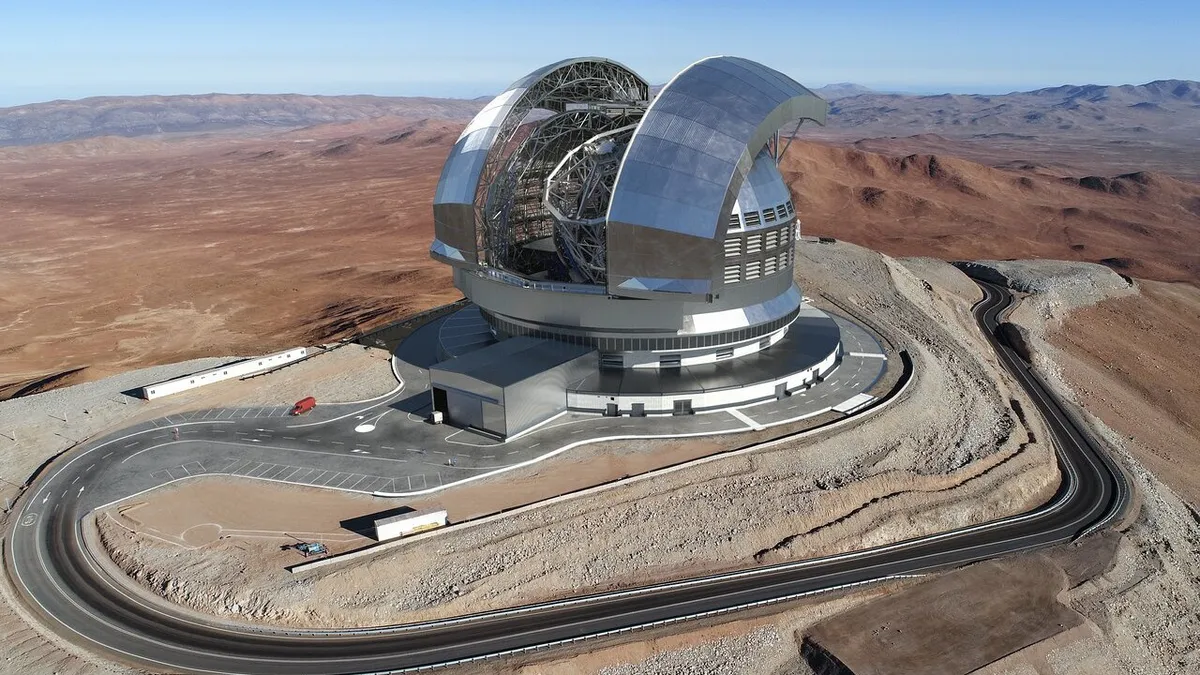
My favorite stories this year are Tereza Pultarova's paired features on the threat posed to Cerro Paranal, published about a year apart. Together, they show how journalism can follow an issue beyond the initial alarm, tracing it through evidence, expert voices and ultimately a call to action. They balance the urgent need for clean energy with our shared responsibility to protect the night sky, highlighting not just obvious impacts to astronomy like light pollution but also subtler ones such as vibrations and turbulence. To me, this is one of the biggest emerging threats to modern astronomy — and exactly the kind of story we need to keep telling.
World's largest telescope threatened by light pollution from renewable energy project
9. The hunt for alien life on Mars gets a lead


This story is a great example of how to cover the search for alien life responsibly. It highlights the inherent complexity and difficulty of the E.T. hunt without sucking the excitement out of important discoveries that spot the trail, like the Perseverance rover's "poppy seed" and "leopard spot" finds. All science journalists should seek to strike this balance.
Did NASA's Perseverance rover find evidence of ancient life on Mars? The plot thickens
10. The film "Apollo 13" is just as good as you remember


The quintessential space movie turned 30 this year, and Rich Edwards — one of our talented freelancers — looked back on Apollo 13 and how it showcased the grit and determination of NASA's scientists, and not just the rockstar astronauts onboard the stricken craft.
It's a beautifully written retrospective on a phenomenal movie, and if you missed it back in June, then it's time to perform a slingshot maneuver around the moon and check it out now.
'Apollo 13' at 30: The space movie where scientists have the right stuff too
11. The importance of journalism and a comet from beyond


I really enjoyed this story because I got a front row seat to see some of the coolest images of 3I/ATLAS in existence — and also because of the classic journalism spirit behind it. When this news broke, it was evening and just our astronomy editor Mona, myself, our video editor Steve, our spaceflight editor Mike and our editor in chief Tariq were on Slack, seeing these images together for the first time and tag-teaming to get the story polished and published. At one point, my internet (which I thankfully now have updated) wasn't working and I freaked out, fearing the job would reach a halt. Thankfully, the delay was short, and here we are.
So … long answer, but overall, not only is this story a joy to read because it's scientifically spectacular — look at those images of an interstellar object! — but also because of the people behind it. In a world where journalism and freedom of the press is under multiple threats, both from growing anti-intellectual culture and the rise of AI, it's important to remember people are at the heart of what we do.