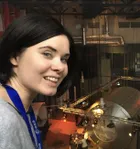
German Nobel Prize-winning astrophysicist Reinhard Genzel has penned a letter urging the government of Chile to halt the development of a green hydrogen plant in the vicinity of one of the world's top astronomical observatories.
In the letter, Genzel and 30 other world-leading astronomers urge Chilean leaders to protect the pristine, unpolluted night sky above Cerro Paranal, an 8,740-foot-high (2,664-meter) peak in the Atacama Desert that is home to the European Southern Observatory's (ESO) most valuable astronomical observatories including the Extremely Large Telescope (ELT), which when built will be the world's largest telescope.
The astronomers believe that the Paranal Observatory, currently considered among the least light-polluted astronomical sites in the world, will suffer if a planned clean hydrogen plant gets a go-ahead. "As currently conceived, the project represents an imminent threat to some of the most advanced astronomical facilities on Earth, operating under one of the world's last pristine dark skies," the scientists wrote in the letter, criticizing the placement of the clean hydrogen plant, called INNA, just a few miles from the summit of Cerro Paranal. "Earlier this year, an in-depth, data-driven technical analysis by ESO revealed that INNA would cause an increase of up to 35% in light pollution above Cerro Paranal."
It's not just light pollution that poses a threat, however. the letter continues. The signing scientists write that the same analysis "also revealed other impacts of the project, from creating micro-vibrations that will negatively affect and possibly impede the operation of some of the most cutting-edge astronomical facilities, to increasing turbulence that blurs our view of the universe."
The Paranal Observatory is home to the Very Large Telescope (VLT), which is actually a quartet of telescopes with 27-foot-wide (8.2 meters) mirrors that can work in concert as a so-called interferometer to maximize the facility's sky-observing abilities.
Genzel, who won the 2020 Nobel Prize in Physics for his research of the Sagittarius A* black hole at the heart of the Milky Way galaxy, used VLT to observe the movements of stars close to the galaxy's center to determine the black hole's properties.
Cerro Paranal is also home to the Cherenkov Telescope Array, the world's most powerful observatory for research of high-energy gamma rays, extremely energetic radiation emitted from black holes and released in supernova explosions. According to the ESO analysis, the Cherenkov array could suffer an up to 50% light pollution increase from the proposed plant, being located only 3 miles (5 kilometers) away from the prospected site.
The astronomers think that interference from the hydrogen plant might degrade Paranal from being the world's premium astronomy site to a merely mediocre one.
"We might lose the ability to observe about 30% of the faintest galaxies," Xavier Barcons, ESO's Director General, told Space.com in an earlier interview. "We are at the point of starting to be able to see details of exoplanet atmospheres, but if the sky gets brighter, we may not be able to see those details anymore."
The unspoiled nature of the Paranal sky, together with the world's most favorable weather conditions for astronomy, prompted ESO to choose the neighboring Cerro Armazones as a site of the next-generation ELT. ELT, currently under construction, will be fitted with a single 130-foot-wide (39.3m) mirror and will become the world's largest telescope capable of studying the universe in visible light.
The $1.4-billion observer should enable astronomers to directly image exoplanets orbiting nearby stars and observe the most distant galaxies. The presence of INNA, however, is likely to increase the brightness of the sky above ELT by 5%, reducing the telescope's scientific potential.
The $10 billion INNA renewable hydrogen plant, developed by the U.S.-headquartered energy company AES, will spread across 7,500 acres (3,021 hectares) of land and consist of three solar farms, three wind farms, a battery energy storage system and facilities for the production of hydrogen.
AES submitted its environmental assessment for the development a year ago and is awaiting a decision by local authorities. The astronomers call for the plant's relocation away from Atacama's precious observatories.
"While we recognize the need, both in Chile and globally, to develop green energy facilities, the proximity and extent of the infrastructure associated with the INNA project pose a grave threat, which cannot be mitigated given the closeness of the planned installation to the observatory," the scientists wrote in the letter. "We are convinced that economic development and scientific progress can and must coexist to the benefit of all people in Chile, but not at the irreversible expense of one of Earth's unique and irreplaceable windows to the universe."
AES previously told Space.com that the site's impact on the Paranal night sky would be negligible.