The final episodes of "Stranger Things" turned the Upside Down, well, upside down.
Having spent the best part of a decade believing it was a freaky parallel dimension populated by sinister creatures of the night, we learned it was actually an Einstein-Rosen Bridge linking Hawkins, Indiana, to another planet — the original home of the evil Mind Flayer.
More commonly known as wormholes, the existence of Einstein-Rosen Bridges was predicted by Albert Einstein and Nathan Rosen in a 1935 paper. These tunnels have a characteristic hourglass shape, with a "throat" connecting two distant points in the universe, theoretically providing a shortcut through the curvature of spacetime — if, of course, these inherently unstable objects stay open long enough for anything to travel through them.
"While the existence of wormholes is entirely theoretical, they have captured the fascination of scientists and science fiction writers alike," science teacher Mr Clarke (Randy Havens) tells a Hawkins Middle School class, and he's not wrong. Below we've assembled a list of sci-fi movies and TV shows that have used Einstein-Rosen Bridges as an explanation for interstellar — or interdimensional — travel.
We've kept this list to TV shows and movies that mention Einstein-Rosen Bridges by name, which is why "Interstellar" and "Stargate" don't make the cut, despite their wormhole-based plots. Spoilers ahead.
The Black Hole (1979)

While "Star Wars" has always been fantasy in space opera clothing, Disney's mission to capitalize on the success of George Lucas's 1977 classic was defiantly hard sci-fi — so much so that it made direct reference to an Einstein-Rosen Bridge.
As mad scientist Dr Hans Reinhardt (Maximilian Schell) plots a pioneering flight into the eponymous black hole, he asks sympathetic scientist Dr Alex Durant (Anthony Perkins) to track his progress. "I want you to monitor my flight," Reinhardt says. "Stay as long as you can at the event horizon. There might be an Einstein-Rosen Bridge to consider."
We're guessing, however, that neither Einstein nor Rosen would have postulated the unsubtle heaven and hell metaphors awaiting Reinhardt and his fellow travellers on the other side.
Star Trek: Deep Space Nine (1993 - 1999)

"Star Trek" has rarely shied away from exploring complex scientific ideas, while the Bajoran wormhole was utterly fundamental to "Deep Space Nine"'s plot. It seems bizarre, then, that the notion of the "Einstein-Rosen Bridge" only received — as far as we're aware — one mention over the show's seven-season run.
It's not even said out loud, as the words "Einstein" and "Rosen" only appear as part of a school vocabulary list, part of a presentation about wormholes in season 1 episode "In the Hands of the Prophets".

Sliders (1995 - 2000)

This '90s sci-fi show dispatched a quartet of mismatched adventurers on a long-running series of adventures across parallel Earths — places where the Soviet Union rules the United States, or the Golden Gate Bridge is blue rather than orange.
Young genius Quinn Mallory (Jerry O'Connell) had been trying to create an anti-gravity machine when he inadvertently opened a series of "Einstein-Rosen-Podolsky Bridges" between worlds.
And no, we don't know why physicist Boris Podolsky gets a mention, either — presumably the writers' room had a mix-up with the Einstein-Podolsky-Rosen paradox, an entirely separate thought experiment that doesn't involve wormholes.

Contact (1997)
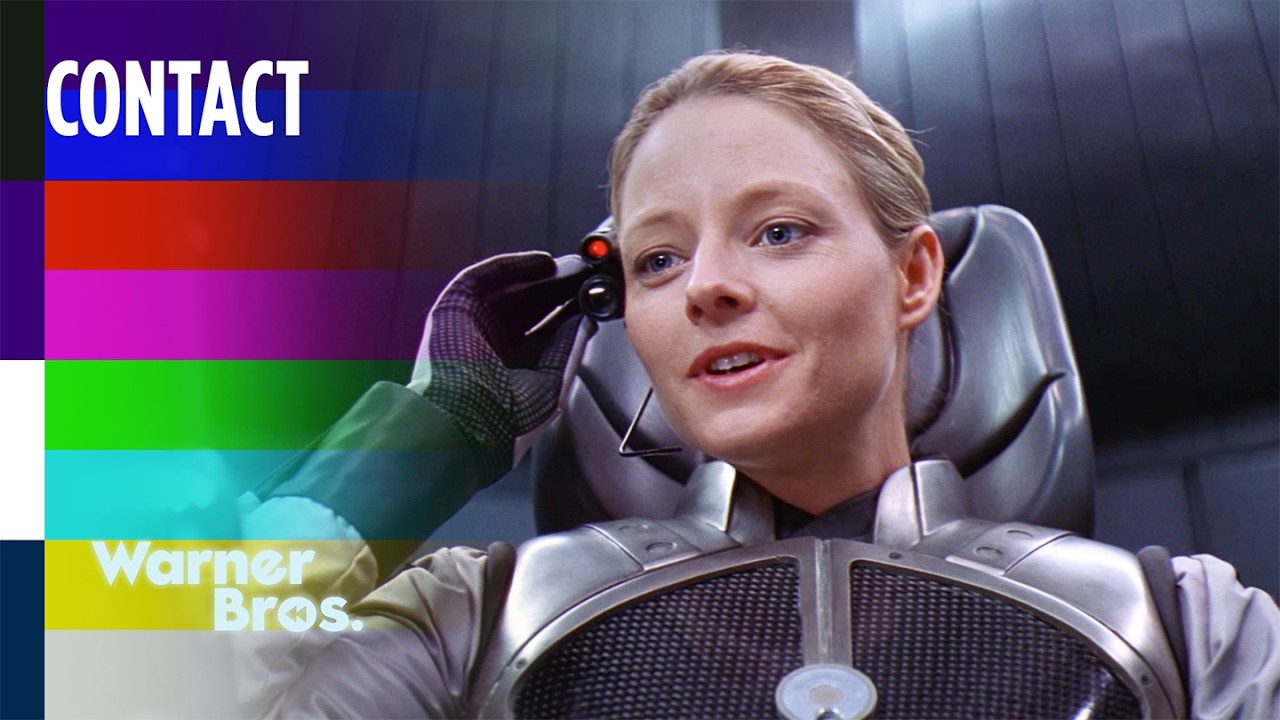
Dr Ellie Arroway (Jodie Foster) is, understandably, on the defensive after returning from her mission in an experimental spacecraft built from mysterious alien blueprints.
While she believes she's flown through a rollercoaster of wormholes to reach Vega — and met an alien in the form of her late dad (David Morse) — everybody back home is rather sceptical. It doesn't help that her interstellar adventure has apparently lasted mere fractions of a second.
But, faced with a Congress inquiry, she wheels out the big guns, clearly hoping that some hard science will be enough to bring the politicians on side. "Senator, I believe that the machine opened up a wormhole," Arroway says, "a tunnel through the fabric of spacetime, also known as an Einstein-Rosen Bridge. Because of the effects of general relativity, what I experienced as approximately 18 hours passed instantaneously on Earth." And who could argue with that?
The Marvel Cinematic Universe (2011 - present)

With its sorcerers, gods, and talking raccoons, the MCU doesn't usually get too hung up on academic rigor. Its writers do, however, like to fall back on the Einstein-Rosen Bridge as a quasi-scientific justification for its many interdimensional portals.
Its first mention comes in the original "Thor", when Dr Jane Foster (Natalie Portman) observes that the lensing around the anomaly that delivered Thor to Earth is "characteristic of an Einstein-Rosen Bridge". Dr Erik Selvig (Stellan Skarsgård) explains it as "a theoretical connection between two different points in spacetime", before Foster clarifies that it's "a wormhole".
It turns out that the Bifrost, the rainbow bridge connecting Midgard (aka Earth) to Asgard, is a very colorful Einstein-Rosen Bridge guarded by the all-seeing Heimdall (Idris Elba) — as Thor puts it, he comes from a place where magic and science are "one and the same thing".

The phenomenon is also mentioned on several occasions in TV spin-off "Agents of S.H. I.E.L.D.", while "Nova: Einstein-Rosen Bridges with Dr Erik Selvig" is a (fictional) documentary available on the plane to Europe in "Spider-Man: Far from Home".
Meanwhile, in "Thor: Ragnarok", Bruce Banner (Mark Ruffalo) observes that the infamous Devil's Anus (a wormhole in the atmosphere of Sakaar) "looks like a collapsing neutron star inside of an Einstein-Rosen Bridge". Obviously…
Stranger Things (2016 - 2026)

With the benefit of hindsight, this was a major giveaway. Mr Clarke's class about Einstein-Rosen Bridges in season 5's third episode, "The Turnbow Trap", always seemed a tad advanced for middle-school students.
Luckily, it also provided some handy exposition for one of the biggest reveals of the final episodes, as star student Erica (Priah Ferguson) explained that "wormholes are neat because they allow matter to travel between galaxies or dimensions without crossing the space between".
Fast forward to "Escape to Camazotz" (episode 6) and Dustin (Gaten Matarazzo) has realized — with the help of dodgy scientist Dr Brenner's (Matthew Modine) notebooks — that there's more to the spooky parallel world of the Upside Down than we originally thought.

"It isn't another dimension, it's not another world," Dustin says. "It's a wormhole, a bridge between two points in time and space. Between our world and another."
When the camera zooms out to show how the Upside Down connects our world with the so-called Abyss/Dimension X, we see that it exhibits a textbook Einstein-Rosen Bridge structure. It also has exotic matter at its heart, introducing even more theoretical physics to "Stranger Things"' sci-fi mix.