The Lyrid meteor shower has returned, and some lucky skywatchers are already catching glimpses of these bright meteors as they streak across the sky.
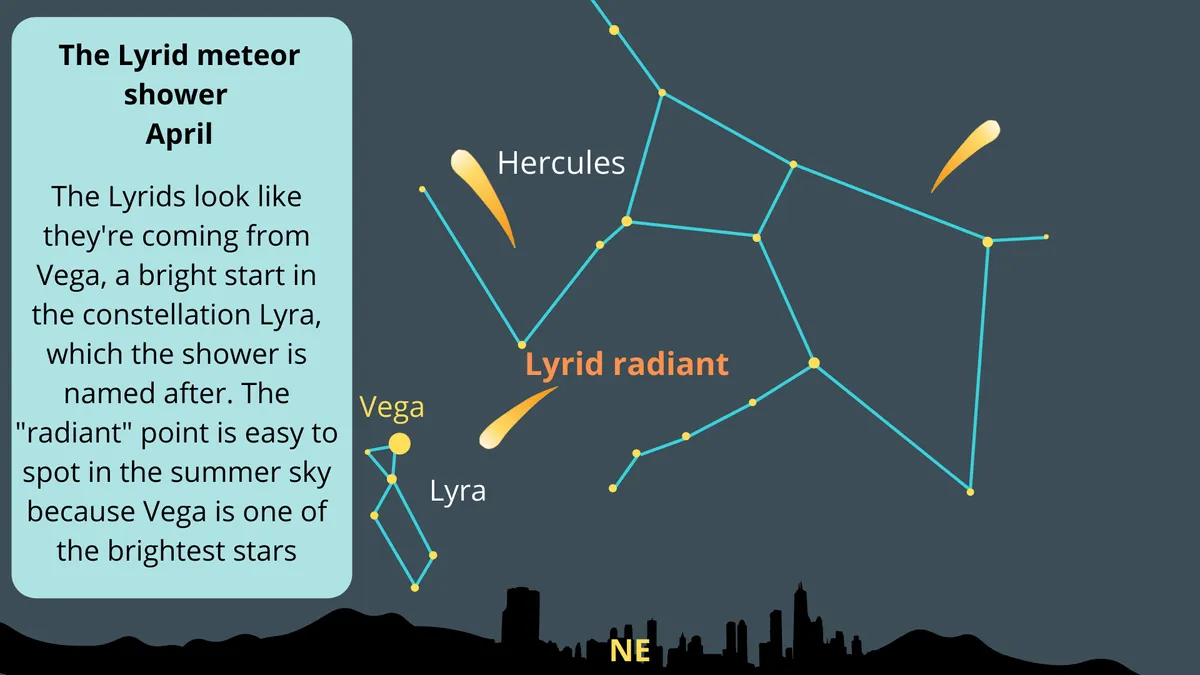
The Lyrids appear to radiate from the constellation Lyra, located near the bright star Vega in the northeastern sky. But don't focus directly on the radiant — some of the most dramatic meteors often appear farther away, streaking across the surrounding sky.
For the best show, head outside during the early morning hours of April 22, as this is the peak of the meteor shower, ideally between 3 a.m. and 5 a.m. local time, just before dawn.
To see the most meteors, find the darkest sky you can. Try and escape city lights and head to a rural location, a designated dark sky park, or even a quiet stretch of beach or mountain trail. But remember to stay safe and always let someone know where you are heading.
Related: 21 amazing dark sky reserves around the world
Let your eyes adjust to the dark for about 30 minutes, and try to use only red light to preserve your night vision. Then simply lean back, relax and look up!
This year's waning crescent moon won't rise until after 3:30 a.m. local time, so you don't have to worry about moonlight outshining fainter meteors. Under ideal conditions — very dark skies — you can expect to see about 15 to 20 meteors per hour and perhaps even more if you're lucky. The Lyrids are known for the occasional surprise outburst, so it's worth keeping an eye on the sky.

The Lyrids are a welcome sign of spring in the northern hemisphere. So what are you waiting for? Make yourself a nice hot drink, wrap up warm and head out for a night of springtime skywatching. You never know what you might find!