





Whether you're stargazing or nature watching, you shouldn't underestimate the power and portability of a good pair of binoculars. To help you choose the right pair, we have rounded up the best binoculars across a range of experience levels and budgets. There are beginner models, which are great for learning how to stargaze with binoculars and there are premium models with high-end optics and image stabilization.
Binoculars are a great option for quick and easy magnification when you want to get a close-up view of celestial objects. They can be used to look at constellations and stars as well as deep sky objects with higher magnification models. If you're struggling with what targets to set your new pair of binoculars on, our night sky guide has a comprehensive breakdown of the entire skywatching month.
The quick list

Best binoculars overall
The finest stargazing binoculars money can buy with in-built stabilization. As close to perfection as you’ll get for handheld astronomy.

Best optical performance
Some of the best optics on the market in an easily transportable roof prism design. A premium product at a premium price.
Best for steady stargazing
These binoculars offer sharp and up-close views of a range of celestial objects, with image stabilization making it easy to star hop and achieve stellar detail.
Best budget binoculars
Best thought of as a great value pair of entry-level binoculars for all-round use and for occasional night sky views.
Best for moon views
These binoculars give a superb stargazing experience at a reasonable price. Fantastic magnification for lunar viewing.

Best for magnification
See the universe close up and in stereo, but don’t plan to hike with them as they're big and heavy.
Load the next 4 products ↴

Best for beginners
Slender and lightweight, these are ideal for beginners and hobbyists who need a 'go-anywhere' binocular.

Best compact IS binoculars
Some of the best small compact binoculars we've tested, with great image stabilization that brings them comparably close to other, larger binoculars.

Best binoculars for low-light
These are great pair of beginner binoculars thanks to their low magnification but their huge exit pupil makes them highly immersive for low-light observation.

Best zoom binoculars
The only zoom capable model on this list, these binoculars are great for when you need a variable field of view when stargazing.
Best binoculars we recommend in 2026
Why you can trust Space.com Our expert reviewers spend hours testing and comparing products and services so you can choose the best for you. Find out more about how we test and review products.
Best overall


✅ You want the best of the best: Other than price and size, we really couldn't find major fault with these binoculars — we gave them 5 stars in our review.
❌ You're a casual user: These are an expensive pair of powerful binos, so if you're a casual sky-watcher or wildlife spotting, they'll be overkill.
❌ You want a lightweight binocular: These are undeniably heavy and bulky, so if weight is important to you, we'd suggest looking elsewhere.
🔎 Canon 10x42L IS WP binoculars: They're not perfect, but they’re as close as you’ll get for hand-held astronomy. They're an outstanding choice for super-steady stargazing thanks to their image stabilization, waterproof design and large objective lenses. ★★★★★
For hand-held astronomy, the Canon 10x42L IS WP binoculars are among the best you can get. Their standout feature is Canon's Optical Image Stabilization (IS). This clever technology uses gyroscope motion sensors to detect arm movements and a vari-angle prism to correct them by up to 0.8 degrees. With the push of a button, you can eliminate the movements caused by your hands shaking and get a steady image. This comes in particularly handy during long viewing sessions when your arms might get tired.
The Canon 10x42L IS WP use premium L-series glass with Canon's multi-layered anti-reflective lens coating (known as 'Super Spectra') to increase light transmission and reduce lens flare. This ensures a bright and clear view with accurate color reproduction. During our Canon 10x42L IS WP binoculars review, we were really impressed with the incredibly sharp image which featured no chromatic aberration, which is just what you need for observing stars.
The main downside to the Canon 10x42L IS WP binoculars is that they are, unfortunately, rather power hungry — but that's the same with any binos with high-tech features. Here, it's the IS system that requires so much power: We got through several AAA batteries in just one sky-watching session, so you'll need to bear that in mind if you're considering purchasing these and make sure you're well stocked-up on batteries every time you venture out. It's extra weight and bulk to carry around with you, and something else to think about when you're packing up your gear. We'd say that overall the Image Stabilization is worth it, though.
We also weren't wholly satisfied with the accessories provided with these binoculars, especially considering the price point. We struggled to get the one-piece lens caps to stay in place, and the carry case was a bit basic and flimsy, so you might want to upgrade it. But overall, these are still the best stargazing binoculars on our list thanks to the astronomy-centric glass and clever image stabilization feature.
- Read our Canon 10x42L IS WP binoculars review
Attributes |
Notes |
|---|---|
Design |
Rugged build quality, but bulky. |
Performance |
Produce bright and colorful images. |
Functionality |
Optical image stabilization. |
Best optical performance


✅ You want some of the best on the market: If you're prepared to pay for them, these binoculars have a premium finish and deliver stunning optical performance. They'll last you for years to come.
❌ You specifically want image stabilization: This may be the only thing missing from this pair of binos, so if that's important to you, there previous option in this guide might be better for you.
🔎 Nikon Monarch HG 10x42: A premium package with a premium price, these binoculars are not ideal for beginner users unless you have deep pockets or a real passion for wildlife- or sky-watching that you plan on pursuing for years to come. ★★★★½
Optics don't get much better than those on the Nikon Monarch HG 10x42 binoculars. But it's no surprise, when these binos come from Nikon, a brand synonymous with cameras and high-quality optical equipment. The Monarch HGs use a Field Flattener Lens System, which ensures that images are sharp all the way across the field of view and not just at one specific point. Coupled with their Extra-low Dispersion glass, which practically eliminates chromatic aberration, these binoculars are very hard to beat indeed.
During our Nikon Monarch HG 10x42 review we tested these binoculars in a range of challenging conditions and were pleased with the results every single time. Light transmission is good because the 42mm objective lenses are large enough to allow light to pass through even in twilight hours. Every single glass element also contains multilayer coatings to help improve the transmission of light, which Nikon reported as being 92% or higher.
Whilst they're undeniably pricey binoculars, we feel you're getting real quality for your money with this pair. Everything about them feels premium. The magnesium alloy body is slim and lightweight enough to slip into a coat pocket, but they feel balanced in the hand and come coated in a grippy rubberized armor. They're also entirely waterproof, so you don't need to worry about getting caught out in bad weather, and they're nitrogen-filled to prevent fogging as well.
Even the accessories feel high-quality. These binoculars come with a cushioned neck strap, objective lens caps and a premium carry case that has a secure safety catch to prevent them from falling out during transit (no relying on velcro here). We also enjoyed other unexpected details like the locking mechanism on the diopter adjustment ring which means it can't get accidentally knocked out of place. The only thing they lack is image stabilization technology.
Attributes |
Notes |
|---|---|
Design |
Premium finish all over. |
Performance |
Razor sharp views from edge to edge. |
Functionality |
Only way to improve would be inclusion of image stabilization. |
Best for steady stargazing


✅ You need the strongest image stabilization (IS): Three degrees of image stabilization make these some of the most powerful IS binoculars on the market and are good for use in unsteady environments.
❌ You prioritize light-gathering power: They are not the best at gathering light due to only 40mm objective lenses, so if you need to gather the most light, we would advise going for a pair with larger ones.
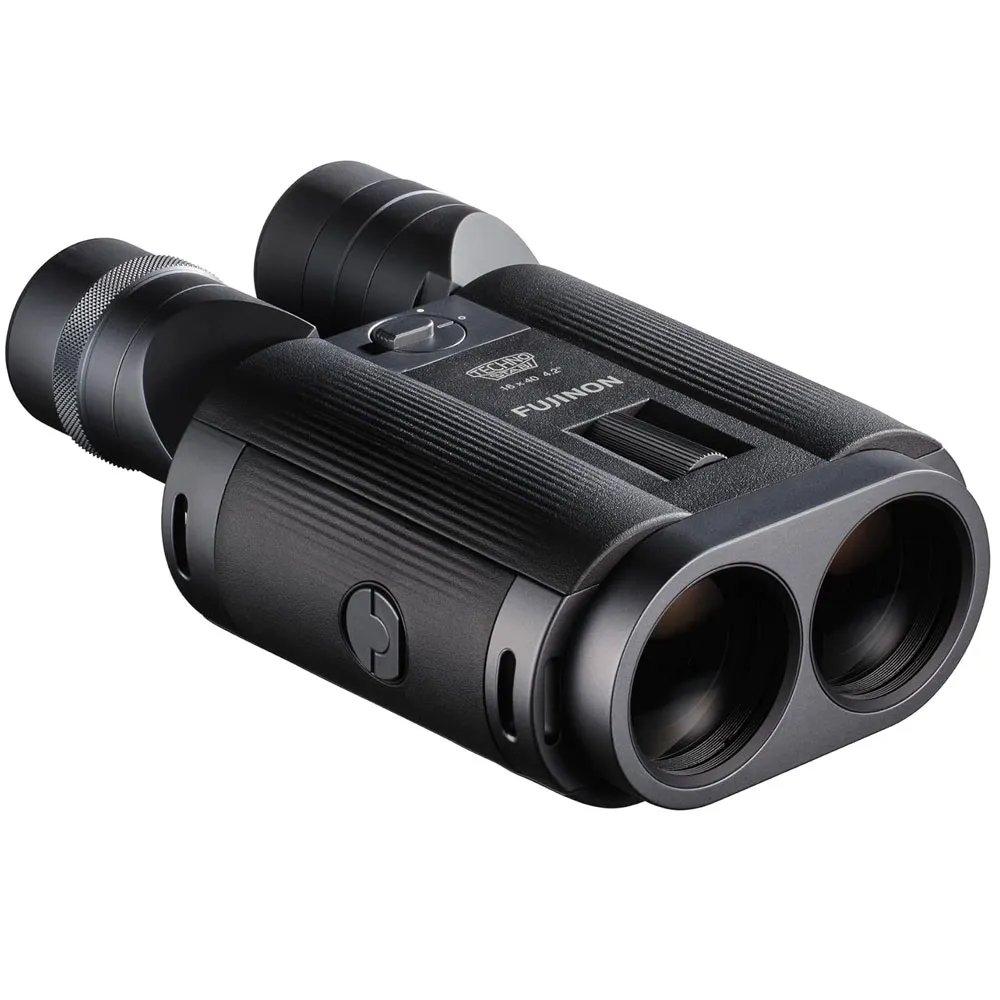
🔎 Fujifilm TechnoStabi TS-L 1640: They offer amazing detail during stargazing sessions thanks to strong image stabilization (IS), especially at the level of 16x magnification, but their 40mm objective lenses restrict their light-gathering ability. ★★★★½
Image-stabilized (IS) binoculars are revolutionizing modern stargazing as they allow handheld observation without any annoying shakes and without having to set up a tripod for stability. The Fujifilm Fujinon Techno-Stabi TS-L binoculars are another pair of IS binoculars that seem almost at the pinnacle of technological advancement. We gave them a huge four and a half stars thanks to their amazing three degrees of image stabilization and almost flawless handheld observation.
They have a huge 16x magnification and manage to stay streamlined thanks to their roof prism design. If you have already invested in the X-series of Fujifilm cameras, then you will find that the TS-L 1640s match in color and style. Coming in a sleek space grey with a textured rubberised coating for a sturdy grip, they would go well with an avid Fujifilm lover's kit.
During our stargazing testing, they performed well and we found that they were amazing for getting up-close views of star clusters, galaxies and constellations. The strong image stabilization (IS) allowed us to discern individual stars and objects in our view, even at 16x magnification, as there was no disturbance from shaking.
Whilst a good tool for stargazing while out on the go, we did find that the focus wheel was a bit stiff and meant we had to work harder to change the focus. They are also quite expensive, coming in at around $1400 but they do offer one of the best handheld stargazing experiences we have seen and come with a plethora of premium features like 30-hour battery life and a rugged IPX7 rating.
Attributes |
Notes |
|---|---|
Design |
Streamlined roof-prism body. |
Performance |
Steady observation at strong 16x magnification. |
Functionality |
IPX7 rated for submersion up to one meter for 30 minutes. |
Best budget binoculars


✅ You're a beginner: If you've used binoculars before, then these are unlikely to impress you, but they're perfectly suited to beginners.
❌ You specialize in astro: While they do give decent views of the night sky, anyone focusing solely on astronomy would likely want to go for a more powerful pair.
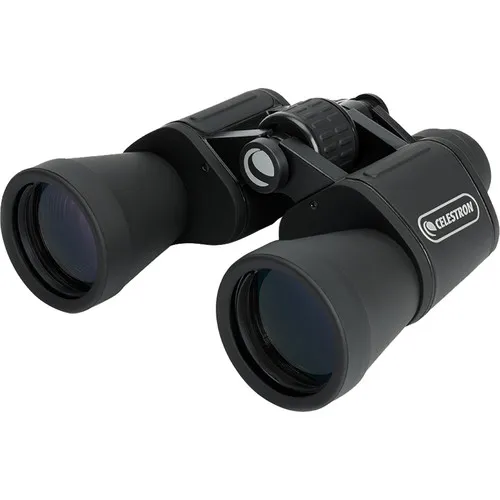
🔎 Celestron UpClose G2 10x50 Binocular: A great value pair of binoculars, well suited for entry-level and all-round use. They're also great for occasional night sky use and are easy to set up, use and adjust. If you're an astronomer on a budget, these are a decent choice, although we do question their longevity. ★★★★½
These are affordable skywatching binoculars that would be ideal for anyone just starting out who wants to get the most for their money.
In our Celestron UpClose G2 10x50 binocular review, we found the moon looks amazing through these binoculars, easily fitting into the view with just a hint of false color. In July 2020, the UpClose G2 10x50 binoculars were very effective in spotting the naked-eye comet C/2020 F3 (NEOWISE). We managed to spot three stars within the Trapezium Cluster near the center of the Orion Nebula (Messier 42), but you'd need a pair with higher magnification if you want to see the fourth bright star in this star-forming area.
If you're on a budget, then, the UpClose G2 10x50 binoculars are a fantastic choice, particularly if you're just starting out on a stargazing hobby. They're light enough to carry around and if you're out trekking, they're ideal to throw in a backpack without adding too much extra bulk.
They're not all perfect, though; of course some corners have been cut considering the price. We've discussed the pitfalls in more detail in our review, but you'll need to adjust the alignment of the lenses (collimation) for one.
They aren't waterproof, either, and they haven't been nitrogen-purged, so we wouldn't recommend using them in inclement weather. While the rubber armor and aluminum housing is labeled as water-resistant, we certainly wouldn't like to push our luck with them. They're liable to fog up in the cold — although they were fine during a two-hour session in near-freezing conditions.
Attributes |
Notes |
|---|---|
Design |
Basic build design and quality. |
Performance |
Surprisingly little chromatic aberration. |
Functionality |
Needs greater magnification for astro. |
Best for moon views


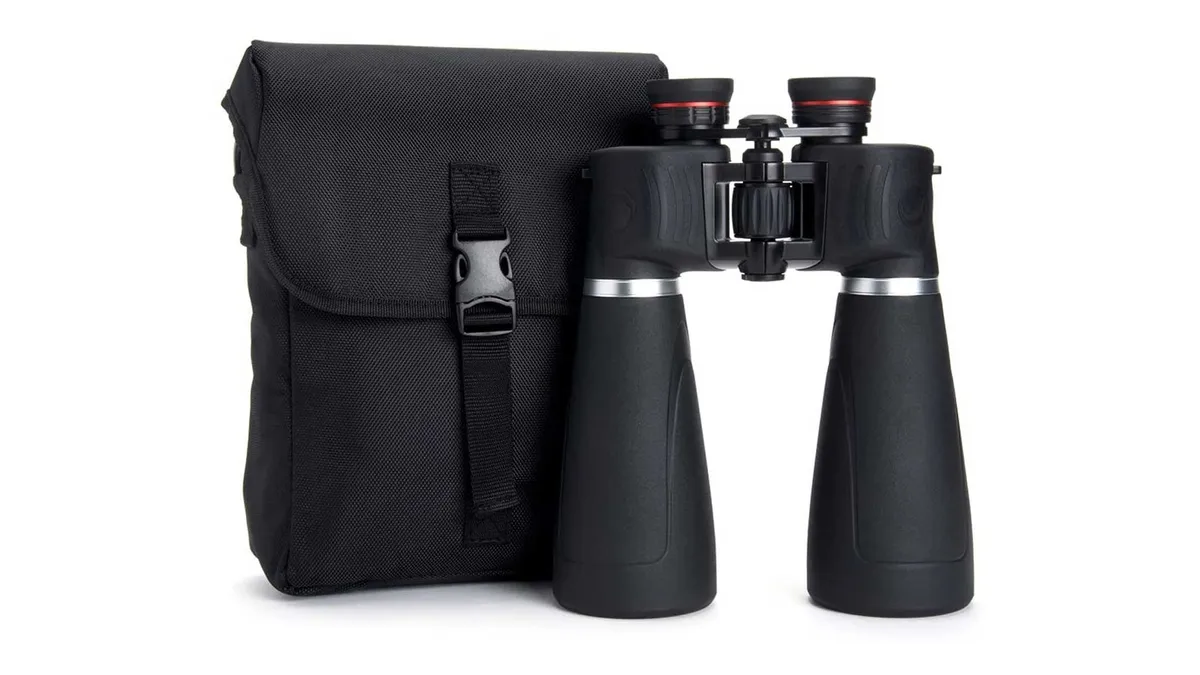


✅ You want good quality without breaking the bank: Given the high magnification, sturdy build and large objectives, we think these offer a lot for the price.
❌ You want to view planets or small distant galaxies: They don't excel in this area, they're more suited to providing dramatic wide-field views or larger objects.
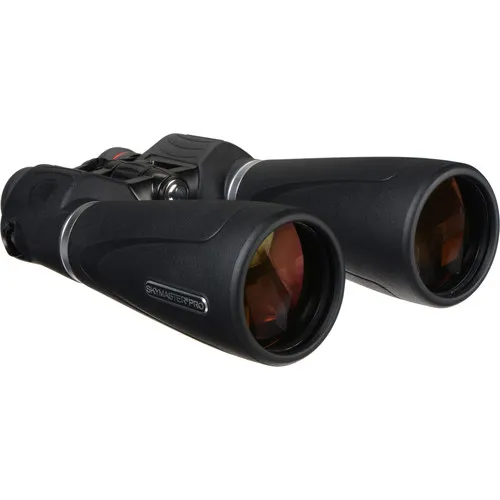
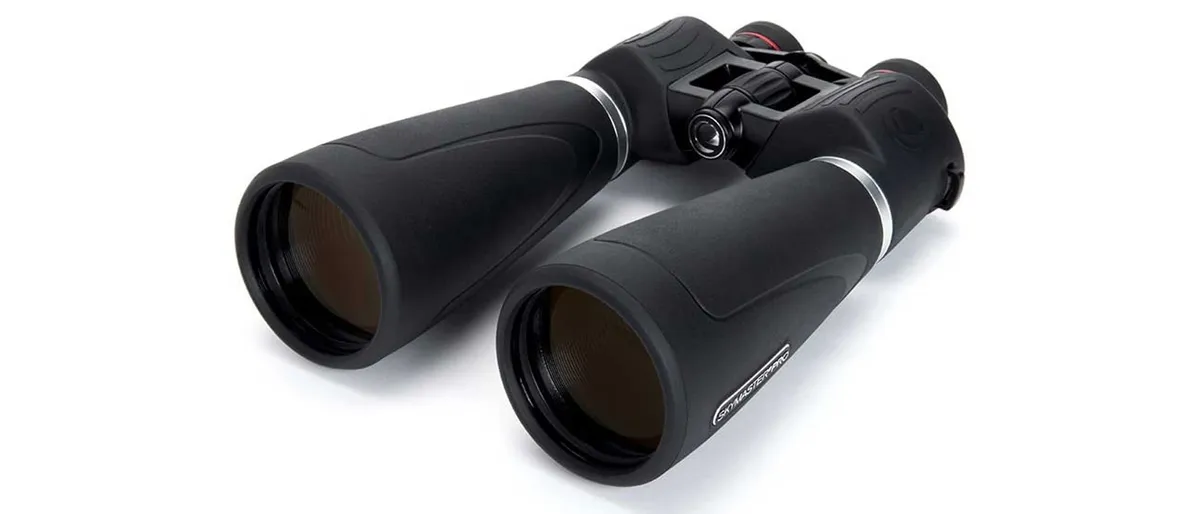
🔎 Celestron SkyMaster Pro 15x70 Binoculars: These offer a top stargazing experience for a reasonable price. They won’t give you close-ups of planets or reveal the most distant galaxies, but they make up for it by providing dramatic wide-field views in a good, dark sky. ★★★★½
Celestron is a well-respected brand with a strong reputation and the SkyMaster binoculars, including the 15x70 'giant' model, deliver excellent views at an affordable price. Despite being a bit on the heavy side, these binoculars are durable and we think they offer impressive quality for their cost.
The SkyMaster 15x70 binoculars' number one advantage is how much light they can gather. The 70mm objective lenses pull in a huge amount of light and, coupled with the 15x magnification, they're perfect for gazing at the stars with. Objects in the night sky are much clearer than they are with less powerful binoculars, although it's worth noting that there's some blurring around the edges of the lens — a common trait of cheaper models.
They're a great choice if you wear glasses too, since the Celestron SkyMaster 15x70 binoculars have an impressive 0.7 inches (18mm) of eye relief, so you should be able to use them comfortably.
Optically the star images were excellent at the center of the field of view, but the distortion was evident towards the edges, with the stars appearing as streaks. This is not very disturbing, as one’s vision is only sharp at the center anyway, but it means that you would have to move the binoculars to explore a large starfield. To get edge-to-edge sharpness in binoculars of this size you will have to pay a great deal more.
At 11 inches (280mm) in length and weighing 3 lbs (1.36kg), we found in our Celestron SkyMaster Pro 15x70 binocular review that they certainly have a lot of heft. Using them handheld isn't impossible, but for maximum comfort, it's best to use a tripod with these binoculars. Their powerful magnification makes views of the moon truly stunning, and we were especially impressed by how the lunar surface looked three-dimensional.
Despite the larger 70mm objective aperture, the higher magnification of 15x reduces the apparent field of view to 4.4 degrees, compared to typical 10x50s or 12x50s that provide a degree more.
Attributes |
Notes |
|---|---|
Design |
Robust construction. |
Performance |
Optics give good detail. |
Functionality |
Excellent for viewing larger deep-sky objects. |
Best for magnification
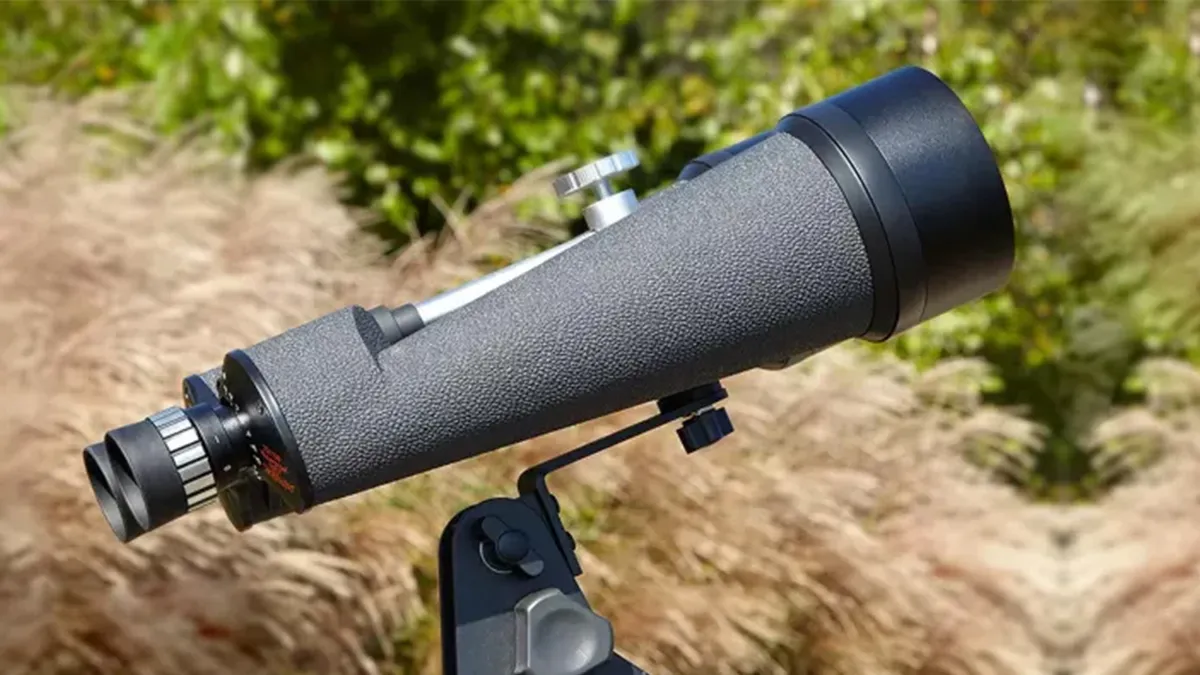


✅ You want more detailed views: The high magnification means you can pick out some incredible details in the vast night sky.
❌ You want to use them handheld: They're big and heavy, so using them handheld would end in arm-ache and you'd have a hard job holding them steady.
🔎 Celestron SkyMaster 25x100 Binocular: These heavy-hitters are certainly not for uninitiated. We think these are more akin to two 100mm refractor telescopes stuck together as they have an enormous reach. They're our favorite large astronomy binoculars, and with proper care, they could give you decades of joyful stereoscopic star-hopping. ★★★★
The Celestron SkyMaster 25x100 are our top pick for large astronomy binoculars. They act like two 100mm (4-inch) refractor telescopes set up side-by-side, with built-in image-erecting prisms and eyepieces that rotate independently through 450 degrees rather than the combined central focus knob that you get on traditional binoculars. They also have a 15mm eye relief, which is just enough to comfortably use them with glasses.
During our Celestron SkyMaster 25x100 review, we were impressed with the breathtaking images of the night sky they provided. We were able to pick out clusters of galaxies like the Leo Triplets, Jupiter's atmospheric belts and the Sagittarius star cloud (also known as Messier 24). The multi-coated optics produce bright, clear views through the unusually large objective lens diameters.
It goes without saying that the Celestron SkyMaster 25x100 binoculars are very heavy and large. You won't be able to use them handheld, so they will need to be mounted to a tripod using the built-in tripod adapter. They're rather heavy, too, weighing in at 8.75lbs (3.97kg) which doesn't make them all that suitable for carrying around (particularly considering you'll also need to carry a tripod).
But the size is, of course, for a reason, because without binoculars this large you can't get such breathtaking views of the night sky. The only real let-downs are the disappointing lens covers and the thin carry case, but aside from those, we think these binoculars are amongst the best for astronomy.
- Read our full Celestron SkyMaster 25x100 review
Attributes |
Notes |
|---|---|
Design |
Requires tripod to use. |
Performance |
Perfect for finding clusters of galaxies. |
Functionality |
450 degree independent eyepiece rotation. |
Best for beginners

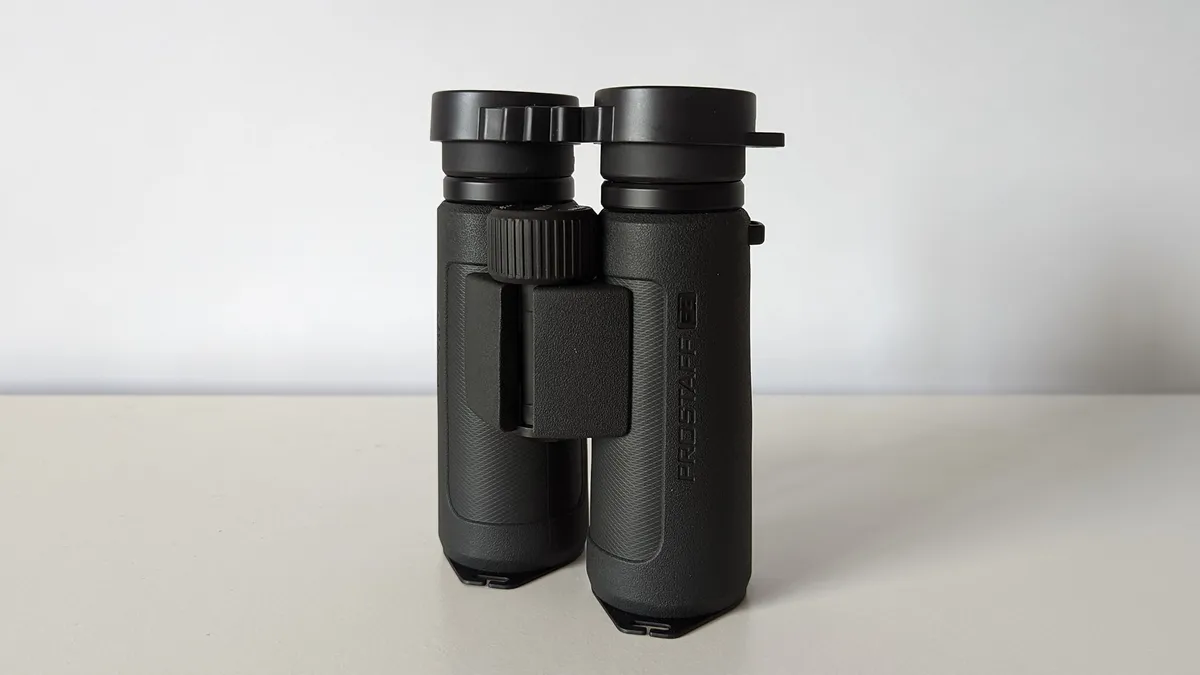


✅ You want quality on a budget: Nikon hasn't cut any corners here, and the optics are excellent for the low price point.
❌ You primarily use them for stargazing: While we did find they performed well for stargazing, they're not astro-specialists, so if that's your niche there are better options out there.
🔎 Nikon PROSTAFF P3 8x42: Slender and lightweight, these are ideal for beginners and hobbyists who need a 'go-anywhere' binocular, or for those who want a lighter binocular around their neck. ★★★★
If you're looking for a fantastic pair of entry level binoculars, look no further than the Nikon Prostaff P3 8x42. We think they are of a much higher quality than their modest price tag would imply, and they're a great buy for any beginner or casual user.
The Prostaff P3 8x42 are fairly new to the market and they really stand out from the crowd due to their excellent optics — they really are a cut above the competition. Another stand-out feature is their impressive eye relief: at 20.2mm it's one of the largest on this list, making them perfect for anyone who wears glasses (or needs adjustable eyecups for comfort).
These binoculars are designed to be lightweight and durable. Made from strong fiberglass-reinforced polycarbonate resin, they have a non-slip rubber coating for a comfortable grip during long use. The shockproof design makes them resistant to damage from any accidental drops or bumps, and they are also waterproof and fog-proof, which is impressive for their affordable price.
During our Nikon Prostaff P3 8x42 binocular review, we found adjusting the focus on very easy, and we love that they offer just the right amount of resistance, even when you're wearing thick gloves. Although they don't include a tripod adaptor, their 8x magnification and lightweight design (only 572g) make them manageable without one.
The Nikon Prostaff P3 8x42 are great for casual nature watching or travel, without stressing about exceeding your luggage weight limit. However, if you plan on long nights of extended stargazing, they might not be the most suitable choice.
Attributes |
Notes |
|---|---|
Design |
Waterproof and fogproof. |
Performance |
Sharp and bright views. |
Functionality |
Solid polycarbonate fiberglass-reinforced body. |
Best compact IS binoculars


✅ You want compact binoculars: These are truly tiny and offer fantastic image stabilization which enhances the optics tenfold.
❌ You need waterproof binoculars: While they worked ok in light rain, these binoculars aren't waterproof and so may not handle heavier rain as well.
🔎 Nikon Stabilized 12x25 S binoculars: Incredibly compact and easily pocketable, these binoculars are ideal for carrying around as well as offering fantastic IS, enhancing the optics and skywatching experience — you won't want anything else ★★★★★
In our full Nikon Stabilized 12x25 S binoculars review, we called them out as one of the "best small binoculars I’ve ever tested and I highly recommend them for stargazing." Their compact design makes them easy to pop in your pocket and carry with you wherever you go, while the IS enhances your skywatching experience.
The IS is easy to engage, with a button located on the top of the binoculars. Its auto shut-off is rather delayed compared to other brands we've tested, turning off after 60 minutes but Nikon argue this is to save energy. This makes sense when the IS is powered by two AA batteries, although rechargeables can be used.
We tested the IS on land and on water and throughout various times of the day — we felt the IS was very good. In terms of skywatching, we managed to see common constellations in much more detail, plus we manage to spot M31 (Andromeda galaxy) and M42 (Orion nebula). Unfortunately, any smaller or fainter objects were not observed in light polluted areas.
The views you get through these binoculars are sharp in the center, however, they are a little softer on the edges. We also found the views to be darker than what you'd see with the naked eye. Nevertheless, for their size and the ability to use IS, we think they're a truly great pair of compact binoculars with none of the 'flaws' we spotted to be anything other than expected for such a compact pair of binoculars.
Attributes |
Notes |
|---|---|
Design |
Lightweight and incredibly compact |
Performance |
Great IS function that's easy to engage |
Functionality |
Powered by two AA batteries with unobtrusive controls |
Best for low light
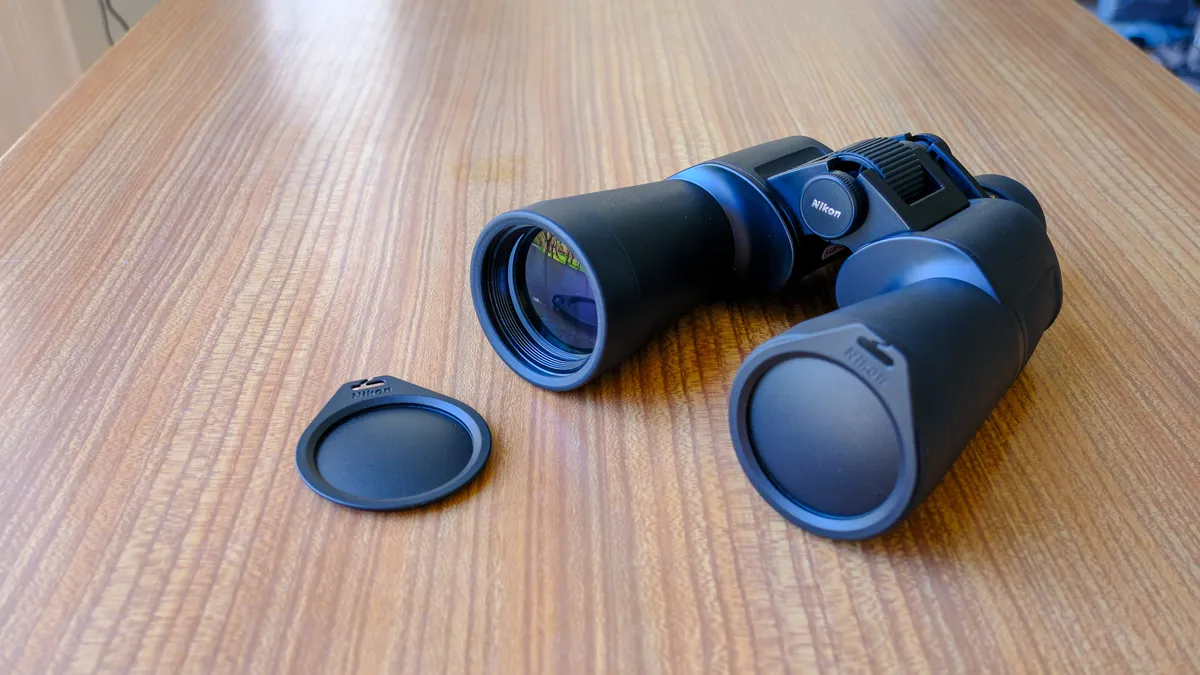

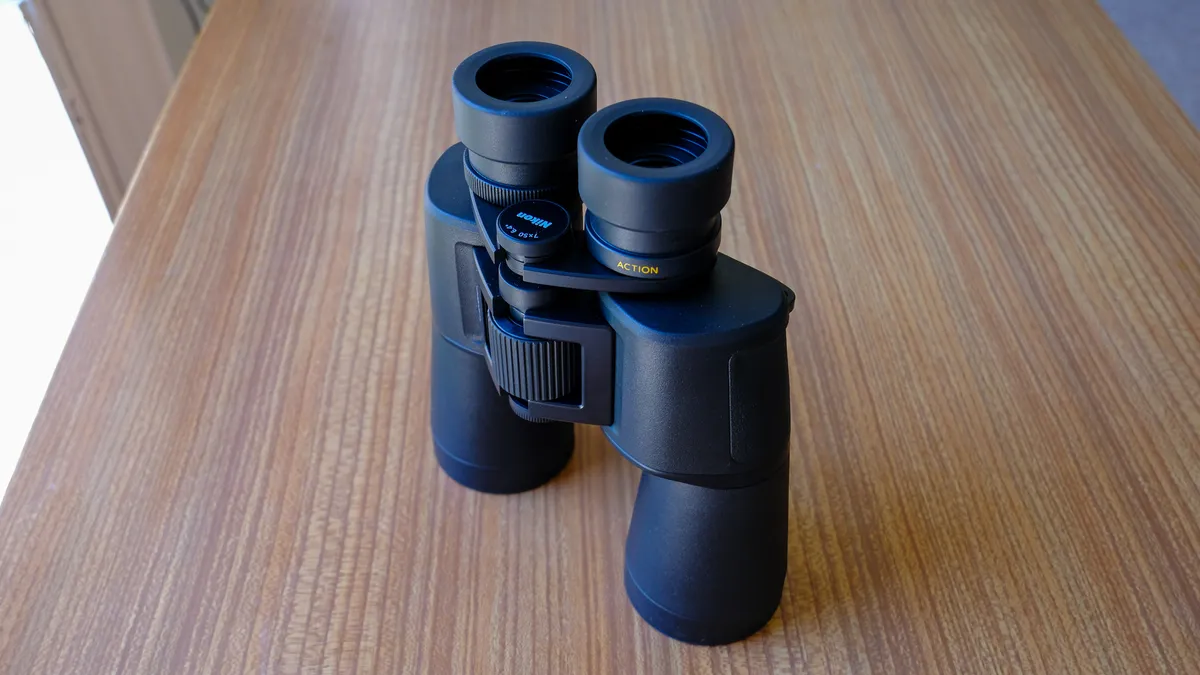

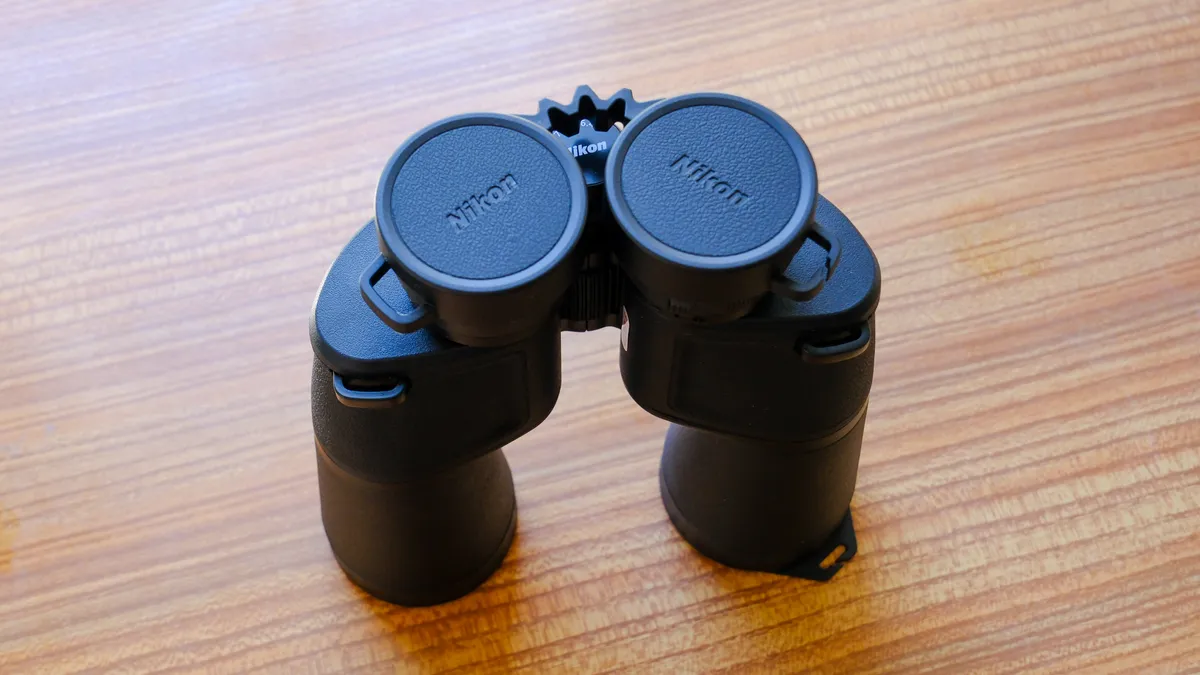
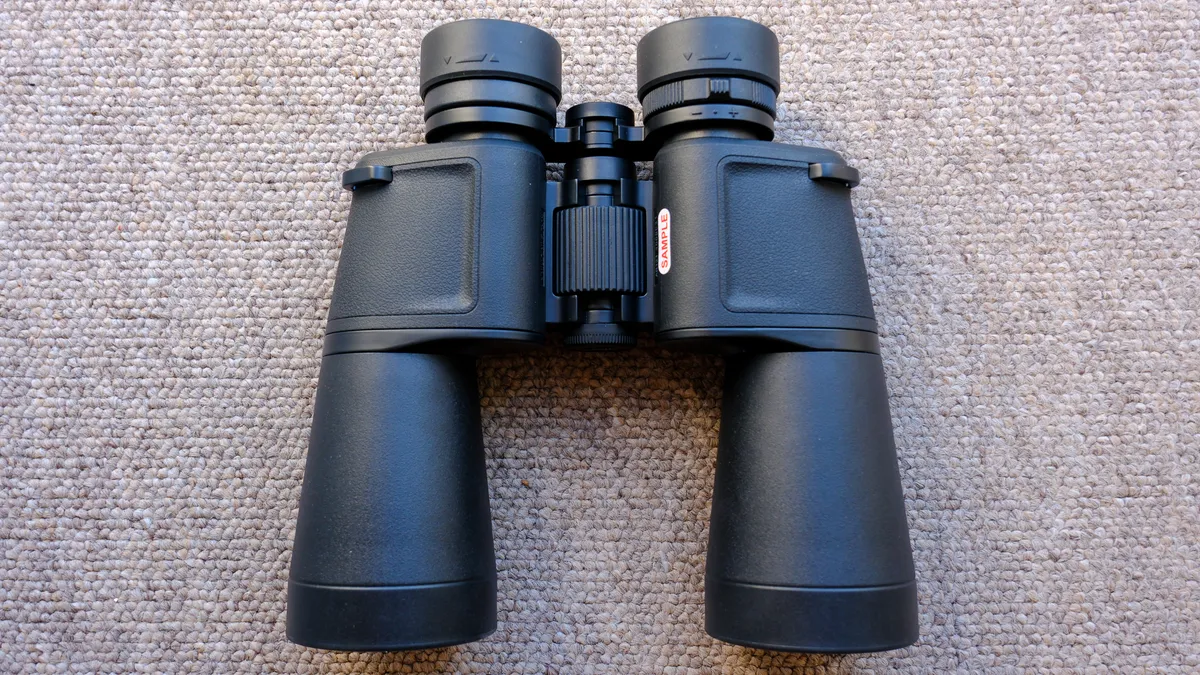


✅ You want bright and wide views: These are amazing binoculars for getting an immersive and bright view of the stars, thanks to 50mm objective lenses and a large 7.1mm exit pupil.
❌ You want a close view of deep sky objects: These are great for sky scanning at low magnification but may not satisfy stargazers who are wanting close-ups of galaxies, star clusters and nebulas.
🔎 Nikon Action 7x50 binoculars: A great beginner pair that sits at a medium price point but offers premium Nikon optics and a huge exit pupil for bright viewing of large cosmic structures. ★★★★
In our full Nikon Action 7x50 binoculars review, we appreciated this 2026 release in the new Action line, which replaces the older Aculon models and delivers significant upgrades. The model has become way more stable and sturdy with an aluminum alloy chassis, which make them more robust for frequent use. Eye relief has also been extended to 19.6mm so that eyeglasses wearers don't have to press their eyes right up to the eye cups.
Whilst magnification, objective lens diameter and exit pupil remain the same as older iterations of these binoculars, Nikon has used a new optical system which incorporates refined multilayer coatings on the lenses. Boosted light transmission for lens coatings make the huge 7.1mm exit pupil even more spectacular. Constellations like the Big Dipper and Orion become immersive images with bright pinpoint stars in the view that are much brighter than binoculars at other magnifications. We tested these alongside the 10x50 and 16x50 models, which have much smaller exit pupils, and found that the 7x50s delivered the brightest views even if they weren't as magnified.
These are a solid pair for beginner stargazers who have a moderate budget or for experienced binocular users who want a lower magnification pair. They aren't super cheap, retailing at around $140, but they deliver excellent value for money. You get premium Nikon optical technology, a solid pair of low magnification binoculars and a huge exit pupil for bright viewing during low-light conditions and stargazing sessions.
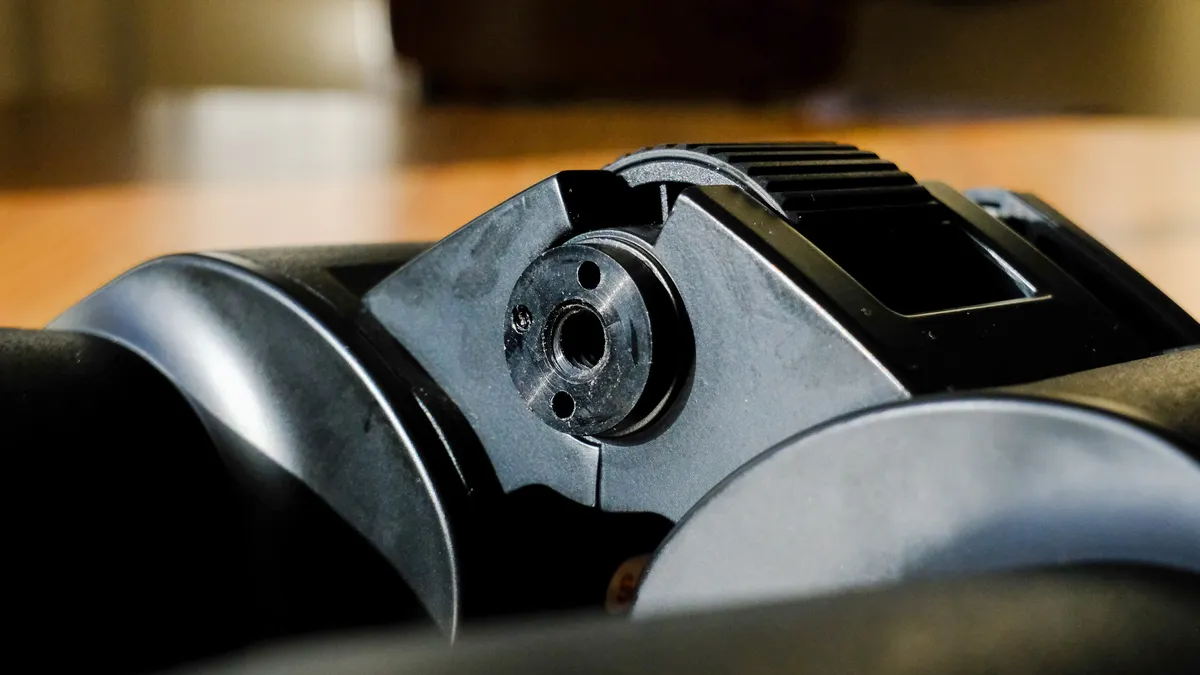
In terms of binocular stargazing, these are a great pair for taking out with you during stargazing sessions without needing to cart around a telescope. They excel in wide-field observations such as scanning the Milky Way or learning constellations in the night sky. They may disappoint those who want a closer up on deep-sky objects, but once you start upping the magnification on hand held binoculars, you will need to start looking at getting a tripod or a pair with image stabilization for detail in those smaller objects. 7x magnification is low enough for steady views without amplified handshake and if you wanted to add a tripod for super-stable views, the Nikon Action 7x50 also includes a screw in tripod adapter socket.
- Read our Nikon Action 7x50 binoculars review.
Attributes |
Notes |
|---|---|
Design |
Sturdy aluminium alloy chassis |
Performance |
Bright and immersive views at low magnification |
Functionality |
Extended eye-relief and a tripod adapter socket. |
Best zoom binoculars


✅ You want different levels of magnification in the same binoculars: Good zoom binoculars are rare but not unheard of. They offer you variability in terms of magnification so you can use them for different types of observation.
❌ You want bright close-up views: Whilst relatively bright at 10x magnification, zooming into the full 22x level significantly dims the image and doesn't deliver as much light as we wanted for deep sky objects.
🔎 Nikon Action Zoom 10-22x50 binoculars: A highly versatile pair of binoculars which give users the ability to use them at different magnifications controlled by an eyecup lever. They are great for variability but lack a consistently bright image throughout the magnification range. ★★★★
Because zoom binoculars can come with a range of downsides, it is quite hard to find a pair that is reliable and delivers optical quality that would convince us to purchase them. Enter the Nikon Action Zoom 10-22x50 binoculars, the most exciting pair from their revamped 2026 Action line-up. Whilst technically an upgrade of the older Aculon A211 10-22x50, the choice to include them in a new lineup release means that Nikon believes they are worth the buy.
During our testing of the Action Zoom 10-22x50 binoculars, we found that they suffer from some of the same problems as other zoom binoculars. The biggest issue was with the brightness of the image throughout the range. We used them at 10x to star hop between Castor and Pollux before locating the Beehive Cluster in Cancer, which was a bright observing experience. When we zoomed in on the Beehive Cluster, the brightness of the image dimmed noticeably as we approached 22x magnification and I felt like the view was much more rewarding at lower magnification. Combined with some handshake amplified by the higher magnification and it was not easy to get a still and detailed view of this famous star cluster.
On the other hand though, the zoom function itself was remarkably robust and thanks to the new aluminum chassis, the zoom lever is fairly stiff and allows both barrels to zoom in in perfect sync. For brighter images like the moon, the dimming from zooming into full magnification was not an issue but the usual shakes from high magnification were. Thankfully the Nikon Action Zoom 10-22x50 binoculars have a built in tripod adapter socket for mounting on a tripod at those higher magnifications.
For a beginner who is unsure of what level of magnification binocular they want, the Action Zoom 10-22x50 binoculars are a good first buy to test out the different magnifications that are available. They have a dial with numbers on so that you can keep them fixed at different levels between the minimum and maximum magnifications. There is dimming and some softness, but the premium Nikon optics still offer a great view of the night sky, with variability on how close-up you want to look without switching models. They won't give you the same optical clarity as a fixed model but if you aren't sure which magnification you want, they are a great first pair to get into binocular stargazing for a price point around $200.
Attributes |
Notes |
|---|---|
Design |
Sturdy Porro prism design with aluminum chassis |
Performance |
Variable magnification range, with dimmer views at higher magnification |
Functionality |
Easy-to-use zoom lever and tripod socket adapter |

A contributing expert to Space.com, Live Science, All About Space and more, Gemma is the author of several books including 'Quantum Physics in Minutes'. She holds a degree in physical sciences, a Master's in astrophysics and a PhD in computational astrophysics and became fellow of the Royal Astronomical Society in 2011. Gemma is also the Communications and Outreach Office at the European Space Agency.
Best binoculars FAQ
When is Amazon Prime Day in October?
Amazon Prime Day in October was live from Tuesday Oct. 7 until Wednesday Oct. 8. It's Black Friday at the end of November, Friday Nov. 28.
Which binoculars are best?
The answer to this question depends on your needs, abilities and budget. Binoculars come in two kinds: Porro-prism and Roof-prism. The Porro-prism kind have the most common look of any binocular. They feature a gradual and stepped-up appearance, forming part of the housing which includes two exit pupils, eyecups, central focuser, objective lenses and optical system. You’ll find them best for observing due to their affordability.
Meanwhile, the Roof-prism binocular boasts a “H”-shaped appearance that lends well to a smaller, and lighter-weight design. These instruments have complicated optical designs, which means that observers need to spend a substantial amount of money to own a reliable binocular of this type. As such, a good Roof-prism binocular isn’t ideal for those on a budget, or casual observers.
What do binocular numbers mean?
Examine any binoculars and you’ll discover that one of several combinations of numbers separated by a 'x' will be visible — for example, 7x40, 10x50, 8x40 and so on. These numbers, which are often located close to the eyepieces, tell you the magnification and aperture of the optical system. For example a 10x50 binocular has a magnification, or 'power' of 10x and front lenses with a diameter of 50mm. These numbers determine which objects you can observe by telling you how much you can magnify them by and how much light your binoculars can collect.
The larger the aperture, the easier it will be to see fainter night sky targets such as galaxies and nebulae. As a rule of thumb, and under decent observing conditions, 7x35 binoculars will reveal a hundred thousand stars while 10x50s will show the finer details of the moon, planets, the Andromeda Galaxy (Messier 31) and the Orion Nebula. Larger, heavier binoculars such as 20x80s and 20x100s open up a wealth of objects such as the fainter spiral galaxies Messier 65 and NGC 3628 and a selection of globular clusters and star-forming regions.
Some models of binocular have their field of view printed on the barrels or somewhere close to the magnification and aperture. Given in degrees, this number tells you how wide you can see when peering through the eyepieces. The larger the number, the wider the scene. Ten degrees will allow the Big Dipper’s bowl to comfortably fit within your field of view.
Which is best BaK-4, BK-7 or K9 binoculars?
As you shop around for your next piece of observing kit, you’ll come across the terms BaK-4, BK-7 and K9. These refer to the formulations of glass found in the prisms of spotting scopes, binoculars and monoculars.
BK-7 and K9 glass refer to borosilicate formulations and can be found in cheaper products. While they're used across a wide range of brands, this glass is said to lead to problematic exit pupils; the field of view in particular isn’t perfectly round, which can leave the observer with poor clarity around the edges of their chosen target. We must stress that this isn’t true of all pieces of kit, so we advise giving your chosen binoculars a test before committing to them.
While it's a touch more expensive than BK-7 and K9, the BaK-4 — or barium crown glass — is preferable for binoculars. With this type of prism you’ll achieve a higher quality of image, particularly when combined with a well-made optical system.
Multi-coated vs fully-coated binoculars
Without coatings on the optics of binoculars, images would be blurry and lack contrast since light transmission would be poor, glare would become prevalent and light would be lost through internal reflections. The observer would be left with a disappointing view.
It’s easy to find out if your binocular lenses feature a coating: you’ll see a darker appearance when you peer through the barrels, while the glass will feature a bluish or greenish tint thanks to a layer of magnesium fluoride. If you see a brownish tint, then your optics are coated with calcium fluoride. Both offer the same outcome — they halt the reflection of some wavelengths, allowing more light to enter your eyes through the exit pupils.
Binoculars largely come in two varieties when it comes to coatings: they’re either fully coated or multi-coated. In both versions, all lenses, glass surfaces and prisms feature at least one layer of magnesium fluoride or calcium fluoride. Binoculars with multi-coated optics are the most superior kind you’ll be able to find on the market, with at least one of the surfaces featuring several layers of anti-reflective compounds.
Which binoculars are best for astronomy?
For a decent observing experience in the dark, the best binoculars for stargazing must have an optical system that is able to collect as much light as possible to pick out those faint targets. In other words, the larger the aperture, the better. This does mean that they tend to be bulkier and more expensive than models used for other disciplines, though.
We advise purchasing at least 10x50 binoculars for comfortable views of a selection of targets; they’re light enough to hold for long periods of time, while offering good views of a selection of night-sky targets. The larger the binocular, the more you’ll be able to see, but be warned: They’ll also be heavier and will require a tripod for steady sights of the heavens.
It isn’t just the aperture that you need to be mindful of. The quality of the optical system is an essential feature to consider for high-definition, excellent contrast and crystal-clear views. You’ll discover two major kinds of binoculars at reputable stockists: the porro-prism and roof-prism. Choose the Porro-prism design for a reliable and affordable piece of kit, making sure that the lenses feature a coating and the glass is of decent quality (we can vouch for multi-coated optics and BaK-4 prisms). If you wear spectacles, we advise choosing binoculars that offer eye relief of at least 14 to 15mm.
Whichever model you decide to go for, there are plenty on the market to suit a variety of budgets, observing interests and abilities.
Update log
Editor's Note 07/13/26: Removed mention of Amazon Prime Day in introduction. Removed Celestron Nature DX 12x56, Celestron TrailSeeker 8x42, Vortex 10x50 Crossfire HD, Celestron Cometron 7x50, Nikon 10x50 Aculon A211 and Celestron Nature DX ED 12x50 models. Added Nikon Action 7x50 and Nikon Action Zoom 10x22x50 models.
How we test the best binoculars
We provide honest and open reviews of binoculars, testing them in real-life settings and highlighting the good parts and the bad parts of each product.
Binoculars come in a huge range of power and specs, each offering different features and capabilities. We review each binocular based on its build and intended use. For example, we don’t compare powerful, heavier and chunkier porro prism models with the slimmer and light roof prism models directly as they each have benefits and drawbacks depending on what we aim to observe and associated peripherals like tripods and adapters.
We also check the optical performance of the binoculars, looking for aberrations, distortions and flaring present due to different quality glass (BaK-4, BK7 or K9) and lens coatings. We do this by observing a range of subjects and night sky objects with binoculars of differing magnification. Binoculars with 10x magnification are good for wide-field observation of the moon and scanning the Milky Way, whereas 15x and higher levels have been used to observe planets in more detail in addition to deep sky objects like The Andromeda Galaxy.
Water- and fogproofing are important features for binoculars not least because they are portable and are easier to travel with between climates and environments. So to make sure the binoculars live up to the manufacturer's claims, we observe with them in all kinds of weathers and temperatures.
We do the hands-on testing of binoculars so you don’t have to, but that also extends to the accessories and peripherals that they ship with. Observations are made and noted in our reviews on the quality and durability of materials. Our staff and freelance reviewers are experienced users of binoculars, having tested out multiple different types for us in different situations ranging from stargazing to wildlife observation. We compare the claims by manufacturers with real-life use to see if they hold up and will also suggest helpful accessories you may need to buy in addition to the models so you can observe your chosen subject comfortably.
