On Sunday, Sept. 21, the moon will chew a noticeable "bite" out of the sun; this partial solar eclipse will be visible across parts of the Southern Hemisphere and streamed live for skywatchers worldwide.
It's the second and final solar eclipse of 2025, arriving just before the September equinox, a date on which day and night are roughly the same length in both the Northern and Southern Hemispheres.
You can learn more about the partial solar eclipse on Sept. 21 with our partial solar eclipse 2025 guide and keep up to date with the latest solar eclipse content with our solar eclipse live blog.
Timings
Starts: 1:29 p.m. EDT (17:29 GMT)
Peaks: 3:41–3:43 p.m. EDT (19:41–19:43 GMT), with about 80% of the sun obscured
Ends: 5:53 p.m. EDT (21:53 GMT)
Roughly 16.6 million people live within regions that will witness some degree of the eclipse. No location will see totality, as this is a partial eclipse only.
Where to watch
The greatest eclipse, where 80% of the sun will be covered, happens over a remote patch of the South Pacific between New Zealand and Antarctica.
Notable locations include:
- Balleny Islands (uninhabited, under New Zealand jurisdiction): ~78% coverage, starting about 10 minutes after sunrise
- Zucchelli Station (Italian Antarctic base): ~72% coverage
- McMurdo Station (U.S. Antarctic base): ~69% coverage
New Zealand highlights (local time on Sept. 22) according to Time and Date:
- Auckland: Starts 5:52 a.m., peaks 6:55 a.m. (60% coverage), ends 8:04 a.m.
- Christchurch / South Island dark-sky regions: Starts 6:03 a.m., peaks 7:08 a.m. (~70% coverage), ends 8:18 a.m.
- Invercargill and Stewart Island: Starts 6:09 a.m., peaks 7:13 a.m. (~73% coverage), ends 8:22 a.m.
How to watch
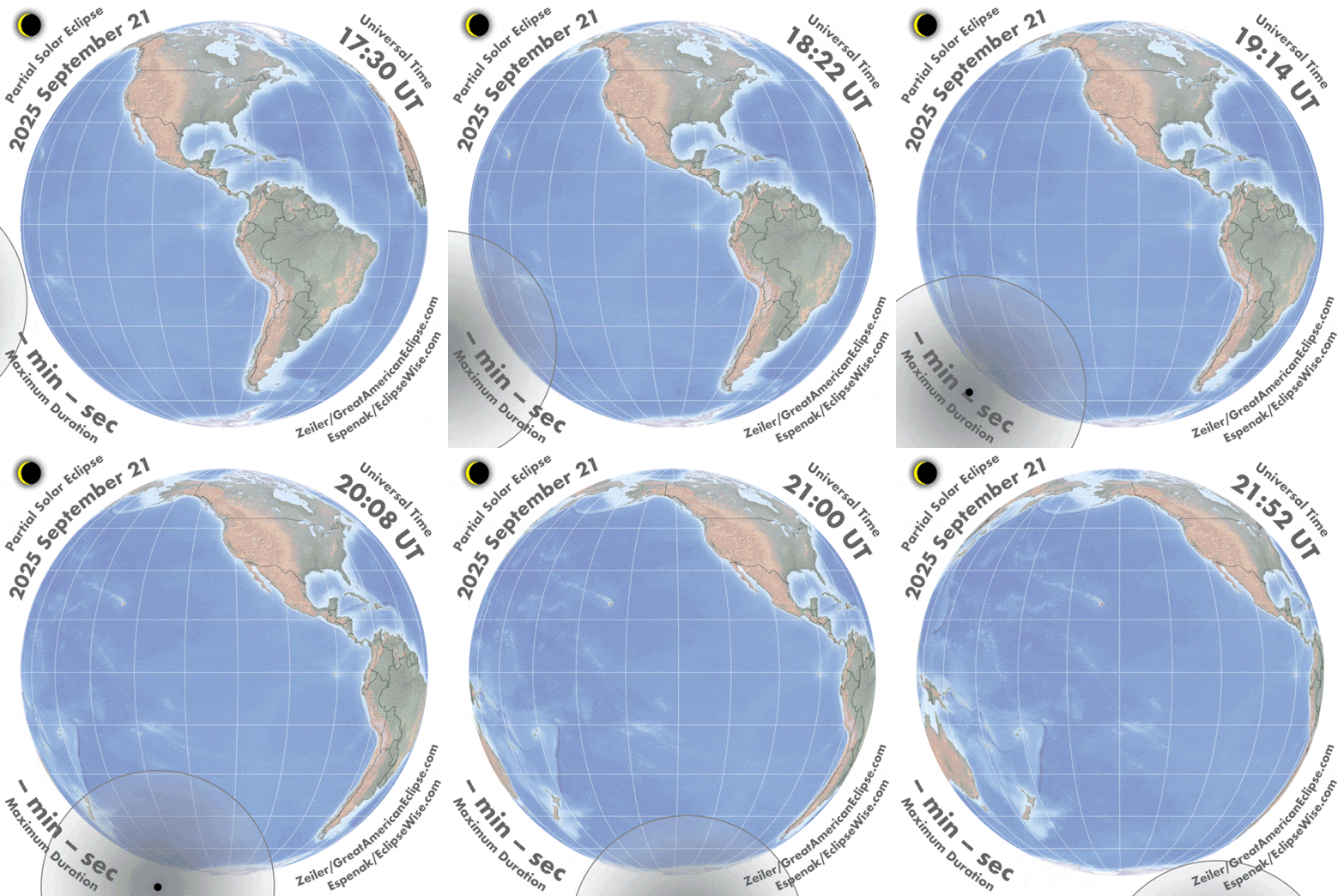
As this is a particularly remote eclipse, the majority of observers will likely be watching online. We will be livestreaming the eclipse here on Space.com; more details will be released closer to the time.
If you are in the path of the eclipse and plan on viewing it in person, remember it is never safe to look at the sun directly without adequate eye protection. Always use solar eclipse glasses or solar filters on telescopes, binoculars or cameras to avoid eye damage. Our how to view the sun safely guide is here to help you get the most out of your solar viewing experience.