


Many full moon names date back to Native Americans of what is now the northern and eastern United States. Those tribes of a few hundred years ago kept track of the seasons by giving distinctive names to each recurring full moon.
Their names were applied to the entire month in which each occurred. To be sure, there were some variations in the moon names, but in general, the same ones were current throughout the Algonquin tribes from New England west to Lake Superior. European settlers followed their own customs and created some of their own names.
Since the lunar ("synodic") month is roughly 29.5 days in length on average, the dates of the full moon shift from year to year. Here is a listing of all the full moon names, as well as the dates and times for 2026. Unless otherwise noted, all times are for the Eastern Time Zone.
Why do full moons have names?
Full moon names are rooted in ancient traditions often from Native American, European or other cultural lore. The names often reflect natural events such as animal behavior or seasonal changes.
What is the most famous full moon?
The most well-known full moon is likely the "Harvest Moon" which is the closest full moon to the Autumn Equinox, it can fall in either September or October.

Joe Rao is Space.com's skywatching columnist, as well as a veteran meteorologist and eclipse chaser who also serves as an instructor and guest lecturer at New York's Hayden Planetarium.
Jan. 3: Full Wolf Moon

Jan. 3, 5:03 a.m. EST (1003 GMT)
Amid the zero cold and deep snows of midwinter, the wolf packs howled hungrily outside Indian villages. It was also known as the Old Moon or the "Moon After Yule." In some tribes, this was the Full Snow Moon; most applied that name to the next moon.
Feb. 1: Full Snow Moon
Feb. 1, 5:09 p.m. EST (2209 GMT)
Usually, the heaviest snow falls this month. Hunting becomes very difficult, and hence to some tribes, this was the Full Hunger Moon.
March 3: Full Worm Moon

March 3, 6:38 a.m. EST (1138 GMT)
In this month, the ground softens, and the earthworm casts reappear, inviting the return of the robins. The more northern tribes knew this as the Full Crow Moon, when the cawing of crows signals the end of winter, or the Full Crust Moon because the snow cover becomes crusted from thawing by day and freezing at night. The Full Sap Moon, marking the time of tapping maple trees, is another variation.
A total lunar eclipse will take place on this morning. In the eastern U.S., the moon sets while fully eclipsed, disappearing into Earth's shadow near the horizon. Across the central U.S., the moon sets as it begins to emerge from the shadow, while in the western U.S., the entire eclipse is visible before moonset
April 1: Full Pink Moon
April 1, 10:12 p.m. EDT (0212 BST April 2)
The grass pink or wild ground phlox is one of the earliest widespread flowers of the spring. Other names were the Full Sprouting Grass Moon, the Egg Moon, and — among coastal tribes — the Full Fish Moon, when the shad came upstream to spawn. This is also the Paschal Full Moon; the first full Moon of the spring season. The first Sunday following the Paschal Moon is Easter Sunday, which indeed will be observed four days later, on Sunday, April 5.
May 1: Full Flower Moon

May 1, 1:23 p.m. EDT (1723 BST)
Flowers are abundant everywhere. It was also known as the Full Corn Planting Moon or the Milk Moon.
May 31: Blue Moon
The second full moon occurring within a calendar month is usually bestowed the title of blue moon. Although the name suggests that to have two full moons in a single month is a rather rare occurrence (happening "just once in a . . . "), it occurs once about every 32 months (on average). The last time it happened was in August 2023 and the next time — after May 2026 — will be in December 2028.
June 29: Full Strawberry Moon
June 29, 7:57 p.m. EDT (2357 BST)
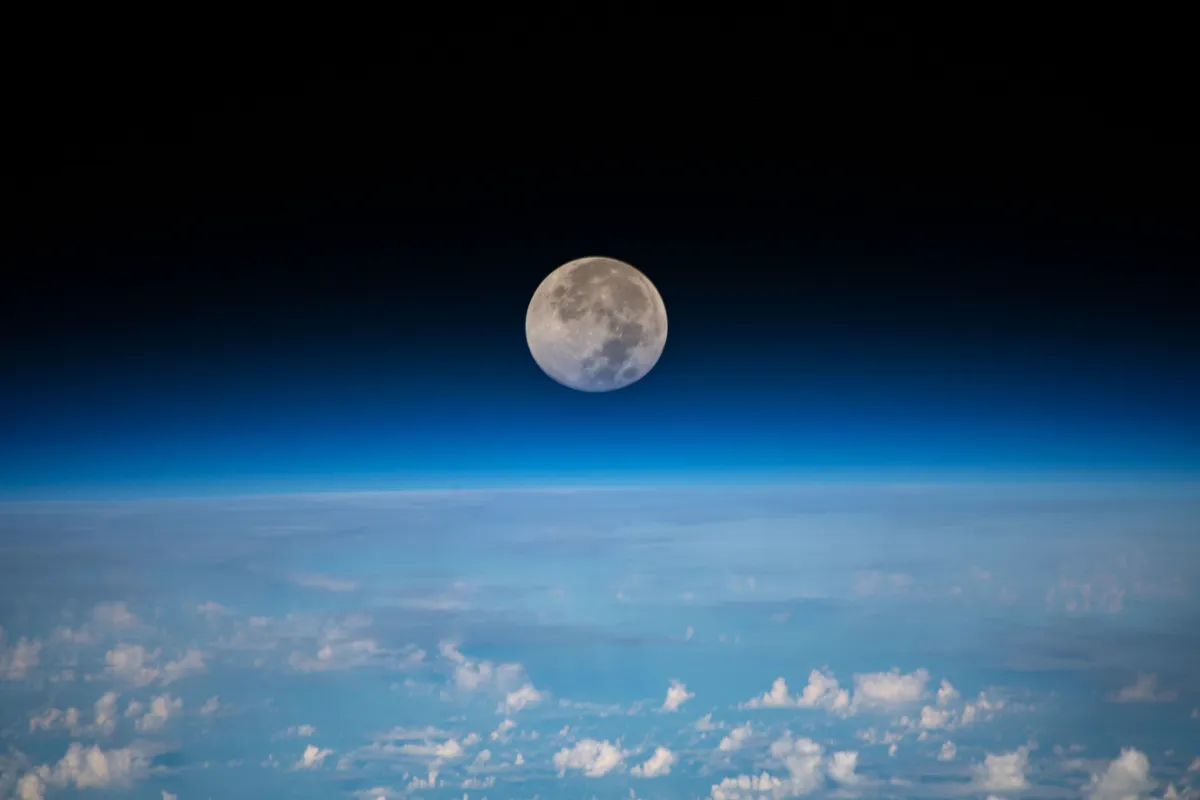
June was the time to harvest the ripening strawberries, hence the name Strawberry Moon, known to every Algonquin tribe.
According to the Farmer's Almanac, it was also known as the Berries Ripen Moon (Haida), Birth Moon (Tlingit), Green Corn Moon (Cherokee) and the Hatching Moon (Cree), to name but a few.
July 29: Full Buck Moon
July 29, 10:36 a.m. EDT (1436 BST)
The Buck Moon gets its name from when the new antlers of buck deer push out from their foreheads in coatings of velvety fur in July. It was also often called the Full Thunder Moon, thunderstorms being now most frequent. Sometimes it is also called the Full Hay Moon.
Aug. 28: Full Sturgeon Moon

Aug. 28, 12:18 a.m. EDT (0418 GMT)
In August, sturgeon fish of the Great Lakes and other major bodies of water like Lake Champlain, are most readily caught. A few tribes knew it as the Full Red Moon because the moon rises looking reddish through sultry haze, or the Green Corn Moon or Grain Moon.
A nearly total lunar eclipse will take place over much of North America. At greatest eclipse (12:12 a.m. EDT), 93.2% of the moon will be immersed in Earth's shadow. Only the uppermost limb of the moon will lie outside the dark umbral shadow. For northern California and much of Oregon and Washington state, the moon will have already begun its passage into the shadow when it rises.
Sept. 26: Harvest Moon
Sept. 26, 12:49 p.m. EDT (1649 BST)
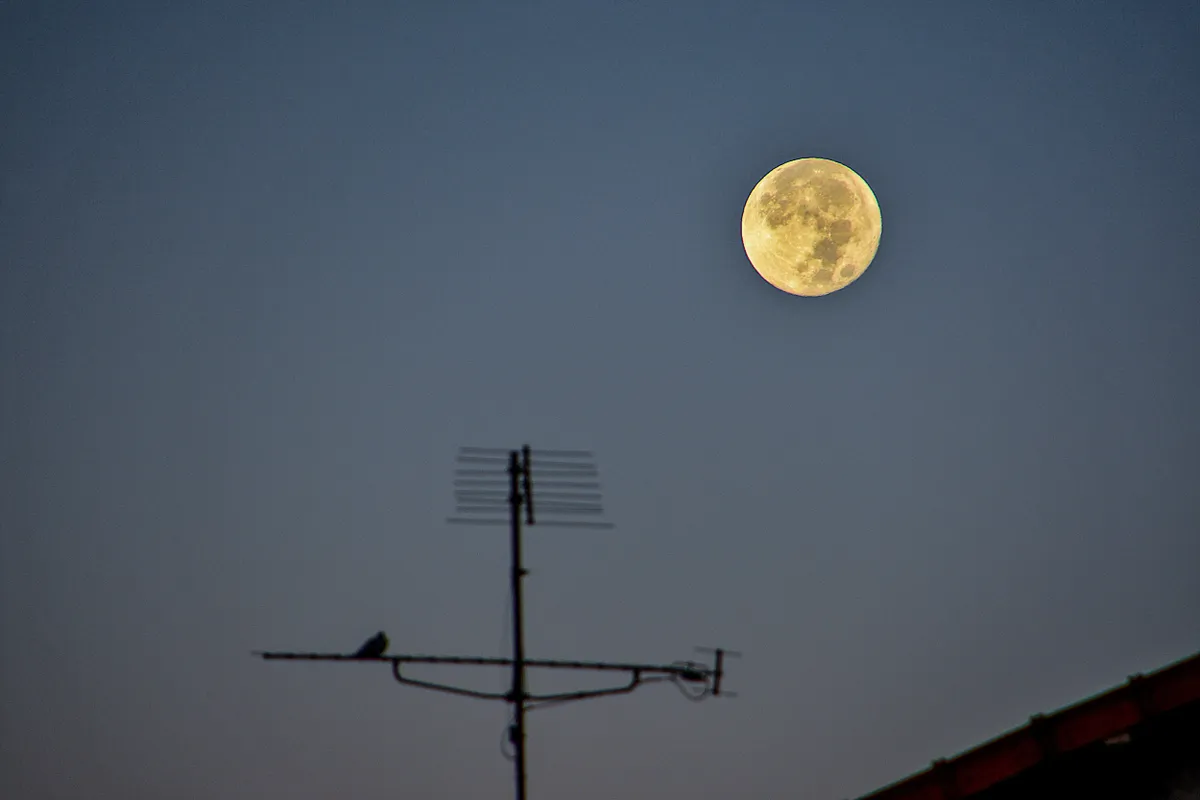
The Harvest Moon is always the full moon occurring nearest to the Autumnal Equinox. Corn, pumpkins, squash, beans, and wild rice — the chief Indian staples — are now ready for gathering.
Oct. 26: Hunter's Moon
Oct. 26, 12:12 a.m. EDT (0412 GMT)
With the leaves falling and the deer fattened, it is time to hunt. Since the fields have been reaped, hunters can ride over the stubble, and can more easily see the fox, also other animals that have come out to glean and can be caught for a Thanksgiving banquet after the harvest.
Nov. 24: Full Beaver Moon
Nov. 24, 9:53 a.m. EST (1453 GMT)
Time to set beaver traps before the swamps freeze to ensure a supply of warm winter furs. Another interpretation suggests that the name Beaver Full Moon comes from the fact that the beavers are now active in their preparation for winter. It is also called the Frosty Moon.
Dec. 23: Full Cold Moon

Dec. 23, 8:28 p.m. EST (0128 GMT Dec. 24)
The December full moon, among some tribes, is also known as the Full Long Nights Moon. In this month, the winter cold fastens its grip, and the nights are at their longest and darkest. Also sometimes called the "Moon before Yule" (Yule is Christmas, and this time the moon is only just before it). The term Long Night Moon is a doubly appropriate name because the midwinter night is indeed long and the moon is above the horizon for a long time. The midwinter full moon takes a high trajectory across the sky because it is opposite to the low sun.
The moon will also be at perigee — the closest point in its orbit to the Earth — on the following morning (Dec. 24), at 3:31 a.m. EST. At that time, it will be 221,612 miles (356,650 km) from Earth, known colloquially as a "supermoon." Enhanced tides can be expected from the coincidence of perigee with full moon.
Joe Rao serves as an instructor and guest lecturer at New York's Hayden Planetarium. He writes about astronomy for Natural History magazine, the Farmers' Almanac and other publications. Follow us on Twitter @Spacedotcom and on Facebook.