A diverse volcanic region on the moon's near side could become the landing site for China's first crewed lunar mission, according to a new study.
China aims to land its first astronauts on the moon before the end of the decade. Over the last year, the nation has been testing hardware for this ambitious endeavor, including lunar landing and launch simulations and crew spacecraft abort and rocket tests. Now, a team of scientists has conducted a detailed assessment of a priority candidate landing area, providing fresh insights into the planning for the historic mission — and its potential scientific payoff.
Jun Huang, a professor at the China University of Geosciences in Wuhan, and colleagues used multiple sets of orbital images and data sets from a range of spacecraft to study the moon's Rimae Bode region, finding that the area offers an appealing combination of scientific value and safe landing conditions for a future crewed mission. The paper was published in the journal Nature Astronomy on March 9.
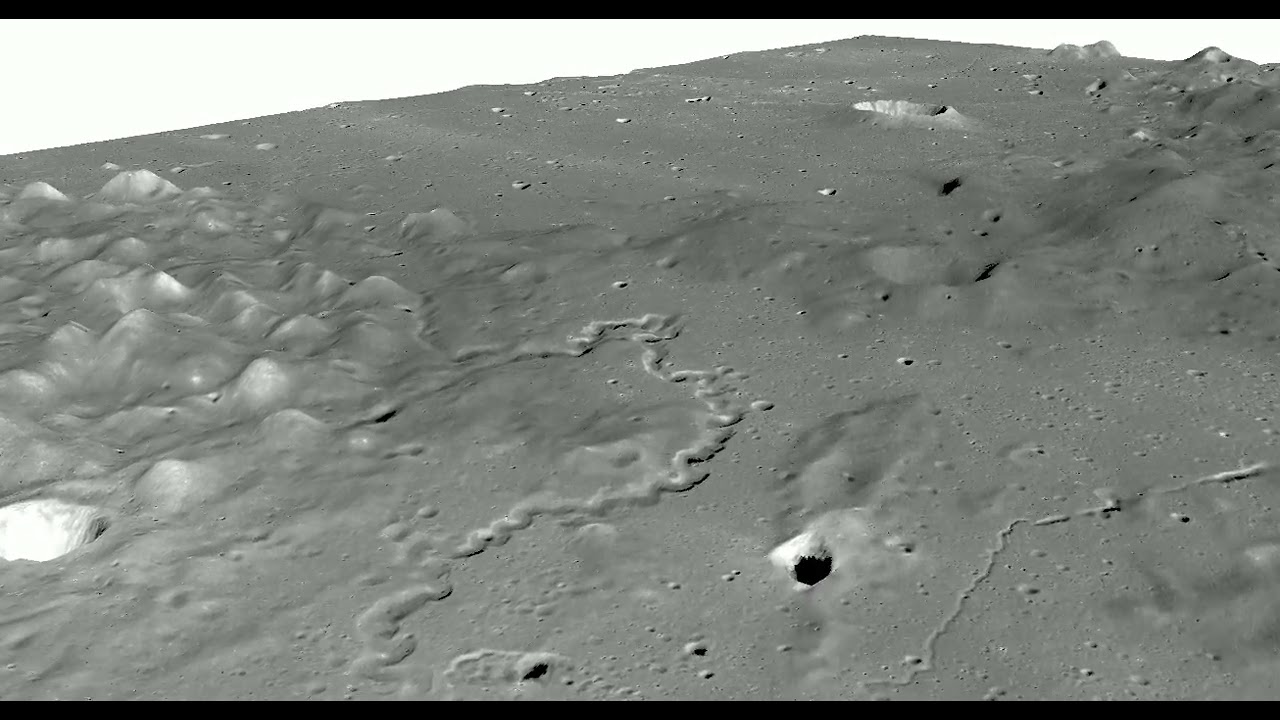
Rimae Bode is located near the Sinus Aestuum volcanic plains on the near side of the moon, not far north of the lunar equator, and is one of 14 potential astronaut-touchdown sites selected from an initial 106 candidates. These needed to meet engineering constraints for a safe lunar landing, including being on the near side for communications purposes, relatively flat terrain, and being at a low latitude so as to ensure enough power from the sun.
According to the researchers, the Rimae Bode region also provides access to multiple types of lunar material within a relatively small area, including ancient lava flows, rilles — long, narrow, channel-like features formed by ancient lava flows — and ejecta from nearby craters. As the mission will include an unpressurized rover, different geological units will be accessible to the astronauts for sampling. Overall, the researchers identified four feasible landing sites in the region, each with slightly different sample priorities.
The Rimae Bode region stands out as a premier candidate for China's first crewed landing, as it is a "geological museum," mixing scientific potential and engineering safety, Huang told Space.com. "It offers a diverse landscape of volcanic plains and ancient highlands, allowing astronauts to sample everything from volcanic ash erupted from the deep lunar interior to debris from massive ancient impacts within a single traversable area," Huang said.
Perhaps most intriguingly, Rimae Bode could offer insights into the moon's deep interior.
"The most groundbreaking discovery from the Rimae Bode region would likely come from the dark mantle deposits, which consist of volcanic ash and glass beads that were violently erupted from the moon's deep interior billions of years ago," said Huang. "These samples act as 'messengers' from the lunar mantle, offering a rare opportunity to directly analyze the chemical composition of the moon's deep heart — information that is usually hidden beneath miles of crust."
Examining this material, alongside that from the region's complex network of lava channels, could help scientists reconstruct the moon's volcanic history. Samples could tell us how the moon cooled and what triggered its most massive eruptions. "This would transform our understanding of not just the moon's history, but how all rocky planets, including Earth, cooled and evolved after their birth," said Huang.
Huang noted that the astronauts selected for the mission must undergo intensive geological training before the landing. China's astronaut corps recently completed analog training in a cave environment as preparation for future lunar missions.
"Astronauts act as our expert eyes and hands on the ground," the researcher said, noting that they must distinguish ordinary rocks from "scientific gold," such as tiny volcanic glass beads that may hold clues about the moon's deep interior. Strong training would help them spot important clues hidden among otherwise ordinary-looking gray rocks, identify the best spots to place sensitive scientific instruments, and navigate tricky terrain, Huang said.
Huang did not reveal the next steps in site selection for China's first lunar crewed landing mission, but the process will continue, including the expected launch of a dedicated lunar remote-sensing satellite to provide further data. And the next-generation Mengzhou spacecraft could have its first full orbital flight later this year, on the new Long March 10A rocket.
When China's astronauts land on the moon, they will not be mere visitors but rather deep-space detectives looking to solve geological puzzles, Huang said.