It is time for Star Trek to boldly go where no streaming series has gone before: back to the 20+ episode seasons of old!
Star Trek's ongoing mission into the streaming era has been a bumpy ride, often missing the mark with fans and critics alike, while struggling to capture the magic that makes Star Trek special. Don't get us wrong, there have been some great stories and characters in shows like Discovery and Strange New Worlds, and especially in the deeply underappreciated Prodigy, but none of them have managed to trigger the Trekkie renaissance that's surely due.
Starfleet Academy is a bold move, and while we were initially skeptical of it, it seems to be paying off for Paramount, but this is still Paramount moving at impulse. We need a warp speed change to ensure that Star Trek lives long and prospers. And that change is more. Star Trek needs to return to a 20+episode broadcast season, and now is the time to do it.
The Next Next Next Generation

Since streaming took over our viewing habits, TV seasons have become something new. The binge has become king, with shows no longer giving us 24-episodes of episodic TV over the span of several months. Instead, the norm has become 8-12 episodes, usually telling a singular story that's meant to be watched in a few days. It has produced some truly fantastic television, but it has not produced fantastic Star Trek. Despite bigger budgets, better special effects, a cinematic look, and splash casting, the franchise has struggled in this new format.
The reality is that with this setup, the franchise has received mostly tepid responses from fans and critics alike. One of the main sticking points is the lack of episodic content within the show's two launch series, Star Trek: Discovery and Picard. To his credit, Kurtzman attempted to pivot. SNW, Lower Decks, Prodigy, and Academy all deliver more episodic storytelling, though they are still focused around season-long story arcs delivered in 8-10 episodes.
It is, in fact, SNW that most easily proves the point that Star Trek needs more room to breathe, despite being the one live-action show specifically marketed as a return to form for the franchise. The ten-episode episodic season leaves absolutely no room for error, experiment, or its own season-long stories. Instead, the show crams everything into a space that can't hold it, culminating in this past third season that exploded with too much of practically everything.
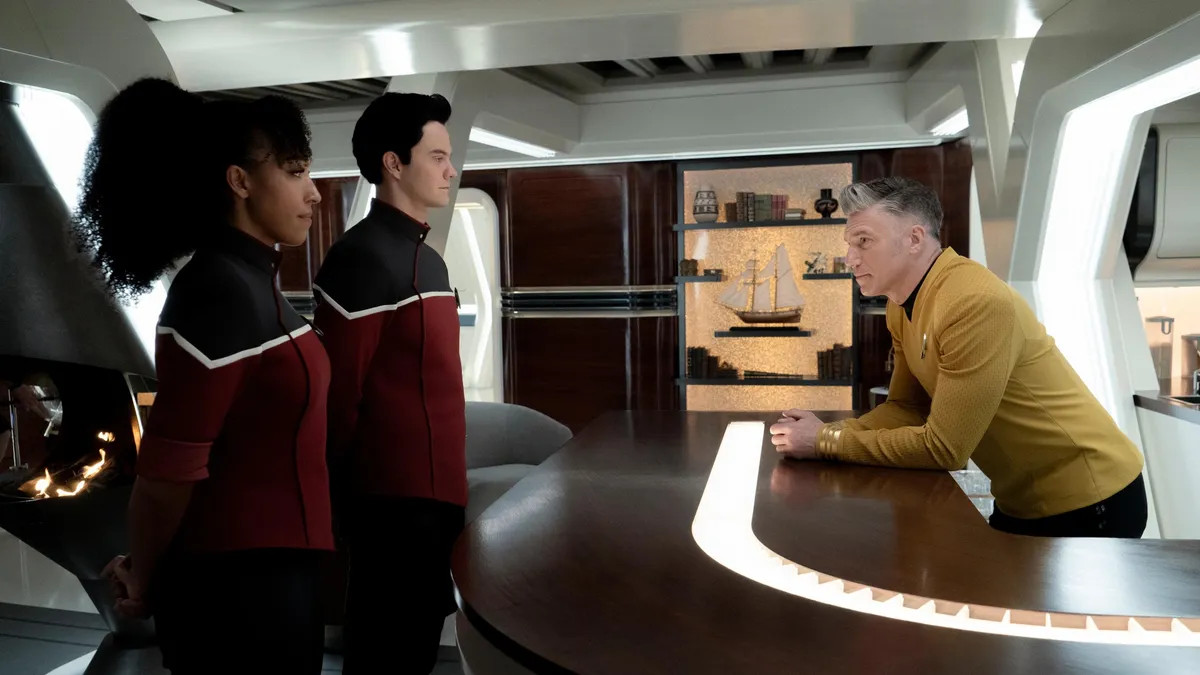
With only 10 episodes per season, every episode feels like it needs to be a banger, but that's not possible. SNW's quality was so up and down, it felt like we were in a malfunctioning turbolift. The show was all over the place. While it took some big swings with stylistic choices ("What is Starfleet?"), character focus ("Terrarium"), and comedy ("Four-and-a-Half Vulcans), those swings didn't all hit.
With ten episodes, every single failure felt prolific or, at the least, a waste of time. Crew members seemed shoved to the side, storylines dangled, and the good moments felt drowned out by the bad.
With a 24-episode season, you get room to breathe. No one is going to argue that every episode of Star Trek is a winner. There was some really bad Trek out there long before we ever heard the name Michael Burnham. The difference is that with more episodes, the bad merges with the good.

A show can try out new ideas and not have to nail each and every one. There's room to delve into a character for an episode without feeling like you also have to drive the overall plot along. You can make an episode about big, important things one week and then a comedy another week, and not have the audience feel like they've gotten warp speed tonal whiplash.
And you can still tell a coherent big story throughout that season. It was, in fact, Star Trek: Deep Space Nine that pioneered this concept on broadcast TV. Star Trek, with its large casts, wide variety of themes, and ability to pretty much tell any story (thank you holodecks), needs to be episodic to truly work. And episodic shows need episodes.
What Trek needs now is a new generation of shows that allow it to grow again, and now is the time for it.
Strange New Ownership

With the recent, surprisingly well-received (we were wary, but it's growing on us) of Star Trek: Starfleet Academy and two seasons still left in Star Trek: Strange New Worlds (SNW), this may seem like bad timing for such a bold shift, but thanks to Paramount's recent buyout, it may not just be the best timing; it might be necessary. The new ownership, which clearly wants costs down and profits up, brought in Chris Parnell as EVP of Originals at Paramount+ specifically because of his genre work at Apple TV+, and he immediately started working alongside Kurtzman. However, Kurtzman's contract is up soon, and his future with the franchise is nebulous at best. What isn't nebulous is that there's new blood coming to Trek, and that makes this the right time to relaunch yet again.
Maybe Academy will turn out to be a hit, but the show was planned before Parnell's arrival and, while appearing to be somewhat episodic, is far more in the vein of the current style of Trek presented by SNW. If Parnell is looking to keep Trek alive, he'll want something that drives subscriptions and keeps them. 22 episodes of Trek will do that better than 10, even if they only have one series running at a time. Of course, "it will make more money" is a cynical reason to double the episode count, but it wouldn't be a bad thing for fans either.
And it really would save Paramount money.
Rule Number 175 of Acquisition: Spend Less, Make More

Since the launch of Discovery, one thing is clear: a bigger budget doesn't mean better shows. Discovery's budget for one season reportedly eclipsed $125 million. The two shows that have been best received over the course of this new era - Lower Decks and Prodigy – are the two least expensive series to produce, with the obvious caveat that they're both animated. Still, it's proof that quality doesn't come from what you spend but from how you spend it.
Given that a single season of TNG at the height of its popularity kicked out 26 episodes for an estimated $75 million (adjusted for inflation) and this past season of SNW cost more than $100 million, it's clear that more great Trek can be made for less.
Would there be a dip in quality for special effects and visual panache? Sure. Could you probably not land bigger actors with busier schedules? Of course, but necessity has always been the mother of invention for Trek.

The idea of a show having low-budget bottle episodes – made with existing sets and smaller casts – was practically born out of TOS episodes, which were built around whatever set they could film on that was already built on Paramount's lot. Series classics like TNG's "Clues," Voyager's "Living Witness," and DS9's "In the Pale Moonlight" were all made to cut costs.
More episodes on a tighter budget actually makes better Trek, and even when it doesn't, it's way easier to forget those bad episodes over the course of 24 weeks. Creatively, financially, and fandomly (totally a word), it's clearly time for Star Trek to return to its roots and give everyone what they've been clamoring for: more Star Trek.