"Greenland 2: Migration," the long-gestating sequel to 2020’s sci-fi disaster hit, "Greenland," lands today in theaters with the ongoing survival saga of the Garrity family. This time, John (Gerard Butler), Allison (Morena Baccarin), and their teen son, Nathan (Roman Griffin Davis), flee their protective bunker for brighter horizons amid atmospheric horrors and a hail of fiery meteors.
It's a danger-fraught trek across land and sea to reach the supposed sanctuary of the Clarke Comet crater in Southern France, where the impact zone's high walls act as a natural barrier against radioactive maelstroms and an incessant barrage of fiery leftover comet fragments.
Director Ric Roman Waugh ("Angel Has Fallen") has crafted a sharply-focused follow-up that clocks in at a lean 98 minutes and never feels false or flat. Most post-apocalyptic films focus on the main calamity and rarely the aftermath of the catastrophe, and here’s where "Greenland 2: Migration" is unique in its extended examination of humanity’s attempt to regroup and rebuild.

We connected with Butler on this sensational sequel to learn more about his added involvement as the project’s producer, shooting in Iceland, and the movie's adherence to depicting real-world scenarios in the face of an extinction-level event five years after a lethal comet strikes Earth.
"I think that we really wanted to try and make a different kind of disaster survival thriller in the first movie," Butler tells Space.com. "It wasn't all about these big special effects. It was really taking it from the emotional, personal, intimate point of view of a family and then seeing it through their eyes, watching the fabric of society break down, and seeing how different people reacted to the situation as society falls apart. Which way do they go? Do they decide to help, be a giver, be of service? It felt like it made the experience much more grounded, even if it was messier.
"That seemed to hit home, and then there was the pandemic, which took everybody by surprise in the same way that this comet attacked the Earth. It was crazy, the synergy between those two moments and the extra resonance the movie took on. We were hoping to carry that on. What happens next? How do you survive? You've got to just get through, white-knuckling it."
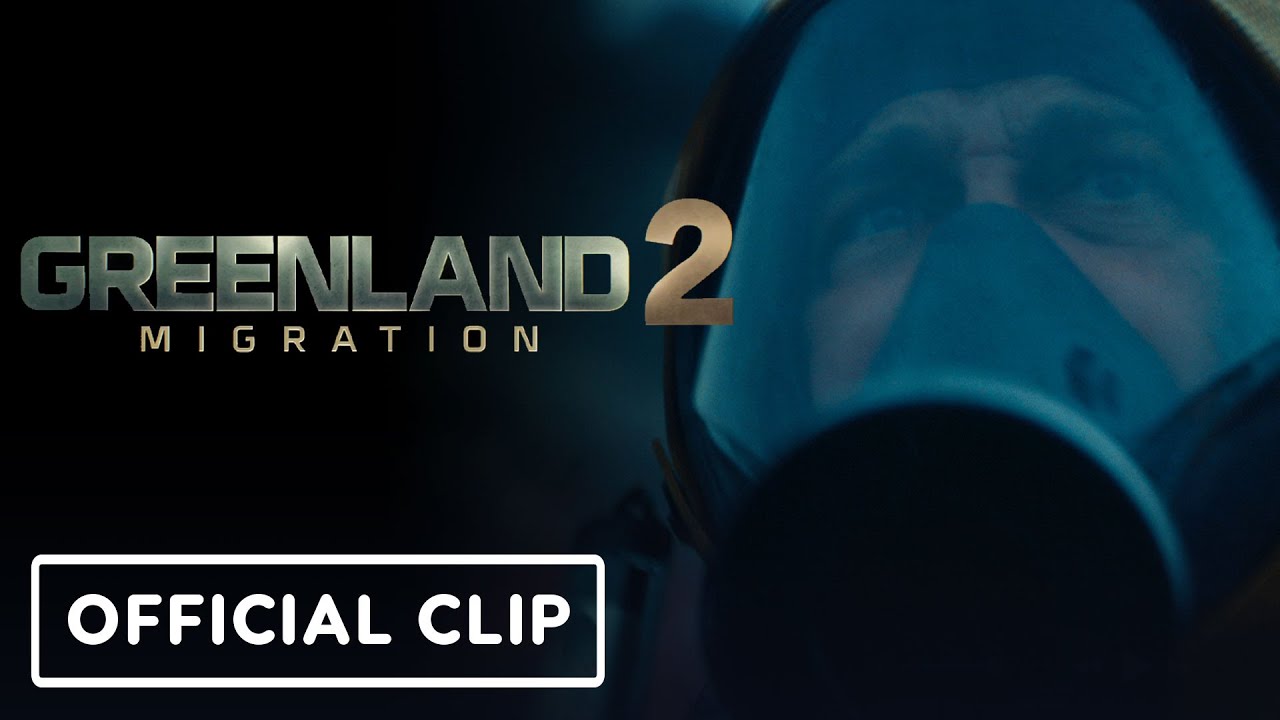
Working closely again with Ric Roman Waugh, this time as one of the movie's hands-on producers, Butler enjoyed a competitive creative chemistry with his director that only enhanced the final product.
"Ric works very, very hard and he cares deeply, and so do I, which leads to amazing creativity together and at times some interesting heated debate about the way a movie should go," Butler explains.
"Ric is great at grounding stories and getting to the heart of characters. Sometimes it can be on the more morbid or depressing side. And I'm coming from, 'Yes, let's have that, but let's bring the film up again and have moments of entertainment and humor and heart. Together, there's a nice balance between how we like to tell stories, and I feel like our movies have worked for those reasons. At the end of the day, you can have all the effects and action you want in a movie, but if you're not moved by the story, then you've forgotten about it the second you leave."
Composer David Buckley's original score adds a sublime level of mood and atmosphere, as he provided for the first Greenland movie, and Butler is grateful for his masterful music in this sci-fi sequel.
"There's some really interesting kind of melancholy, reflective quality to his music, with some hope in there. I do love his composition and how Ric uses it in other moments to put some meat on the bones of what else is happening in our movie to set a tone and a feel. And I think he's done that beautifully. Music is so important in movies. It can kill a movie if the music is wrong."

"Migration" was apparently an exhausting mental and physical shoot in the UK and Iceland and Butler and his exceptional cast were up for the rigors of filming their post-apocalyptic fable, even if days were long and the pressures great.
"To make these kind of movies, you have to come in with a certain amount of resilience. Then, from years of making these kinds of films, you build up that resilience. You know you're gonna take a beating. You know every day is a marathon. You're going to pick up injuries, and you're going to have to work through them. And that's part of it, and weirdly, the bigger the challenge, very often it helps you in your performance because it makes it more convincing.
"This movie was particularly hard because I made five movies back-to-back, and three of them were big ones. Just before 'Migration', I made 'How To Train Your Dragon' where I had a 90-pound costume, and I was pretty beat after that. I wish that I had a chance to make "Greenland 2" at the beginning. To be honest, halfway through, I was done. I was burned out. It works because of my character and what he's going through with health issues. Movies themselves are often the thing that keep your brain ticking, your heart pumping, that keep the oxygen in your blood to keep you fit as much as going to any gym."
Disaster movies have long been a staple of Hollywood for decades, especially beginning in the 1970s with blockbuster features like "The Poseidon Adventure," "Earthquake," and "The Towering Inferno," and "Greenland" and "Greenland 2: Migration" are worthy additions to that storied legacy.

"'Poseidon Adventure' with Gene Hackman is my favorite disaster movie of all time," Butler notes.
"I could not get that movie out of my mind. I just watched it again recently. It's wonderful. What 'Greenland' I think offers, and what was surprising to people, is that there's a depth to it you don’t often get with a lot of these disaster movies. They're more about the spectacle and the wow factor. We still have big spectacle and stakes, but I think our movie is surprisingly emotional and personal. If you look at 'The Day After Tomorrow' or '2012,' they’re very entertaining, but they don't touch you in any kind of deep way or leave a lasting impact except how you’ve been visually stimulated.
"I'm not sure how much it shines through, but there's a spiritual element to this movie in relation to who we are and how we fit into nature. Something about obedience to the celestial realms, which I loved. And just the triumph of the human spirit. The idea of how much more power we have when we come together. It's about the themes of love and sacrifice, and family. And maybe asking ourselves, 'What am I going to do that adds quality to this world?'"
"Greenland 2: Migration" is available to watch in theaters now.