The solar system is our cosmic neighborhood, made up of the sun and everything that orbits it — planets, moons, asteroids, comets, and even dust and gas.
The order of the planets in the solar system, starting nearest the sun and working outward, is the following: Mercury, Venus, Earth, Mars, Jupiter, Saturn, Uranus, Neptune and then the possible Planet Nine.
It's a dynamic system shaped by gravity and time, and while we've learned a lot, it still holds plenty of mysteries. In this guide, we'll explore how the solar system formed, its structure, and the many fascinating objects it contains.
What is the solar system?
The solar system is a collection of celestial objects bound to the sun by gravity. At the center is the sun, a yellow dwarf star that contains 99.8% of the solar system's mass. Everything else — from the eight major planets to dwarf planets, comets, asteroids, and icy objects — revolves around it.
The solar system also includes the Kuiper Belt and Oort Cloud, which are distant regions filled with small icy bodies and long-period comets.
Related: 10 incredible volcanoes in our solar system
How did the solar system form?
The solar system formed about 4.6 billion years ago from a giant rotating cloud of gas and dust known as the solar nebula. Gravity caused the nebula to collapse in on itself, forming a dense, hot core that ignited to become the sun.
The remaining material flattened into a spinning disk. Through a process called accretion, particles in this disk began sticking together, forming planetesimals — the building blocks of planets. Over millions of years, these objects grew larger, sweeping up material in their orbits and becoming the planets we know today.
This model of solar system formation is known as the nebular hypothesis.
The structure of the solar system
The solar system is structured in a roughly flat plane called the ecliptic, with most planets orbiting the sun in the same direction (counterclockwise, as viewed from above the sun's north pole). It can be divided into several key regions:
1. The inner solar system
This area includes the four terrestrial (rocky) planets:
- Mercury
- Venus
- Earth
- Mars
These planets are smaller, denser, and closer to the sun. The region also contains the asteroid belt between Mars and Jupiter, where many rocky remnants from the early solar system reside.
2. The outer solar system
Beyond the asteroid belt are the gas and ice giants:
- Jupiter
- Saturn
- Uranus
- Neptune
These planets are much larger and mostly composed of hydrogen, helium, and ices like water, methane, and ammonia. They also have extensive systems of rings and moons.
3. The Kuiper Belt
The Kuiper Belt is a donut-shaped region beyond Neptune, extending roughly 30 to 55 astronomical units (AU) from the sun. It contains thousands of icy bodies, including dwarf planets like Pluto, Haumea, Makemake, and Eris.
Many Kuiper Belt Objects (KBOs) are remnants from the solar system's formation and help astronomers study its early history.
4. The Oort Cloud
Far beyond the Kuiper Belt lies the hypothetical Oort Cloud, a spherical shell of icy objects believed to surround the solar system at distances up to 100,000 AU. Though we've never directly observed it, the Oort Cloud is thought to be the source of long-period comets that take thousands of years to orbit the sun.
Planets of the solar system in order
Here's a quick overview of the eight official planets, listed in order from the sun:
- Mercury — Smallest planet, no atmosphere, extreme temperatures.
- Venus — Thick toxic atmosphere, hottest planet, similar in size to Earth.
- Earth — Our home planet, only one known to support life.
- Mars — The red planet, home to giant volcanoes and dry riverbeds.
- Jupiter — Largest planet, has a Great Red Spot and dozens of moons.
- Saturn — Known for its spectacular rings.
- Uranus — Rotates on its side, has a pale blue color due to methane.
- Neptune — Strongest winds in the solar system, deep blue color.
A common mnemonic to remember the order is: "My Very Educated Mother Just Served Us Noodles."
If you were to order the planets by size from smallest to largest they would be Mercury, Mars, Venus, Earth, Neptune, Uranus, Saturn and Jupiter.
Solar system planet FAQs: Expert answers to common questions
We asked Maximilian Guenther, ESA Project Scientist and mission representative of ESA's Characterising Exoplanet Satellite (CHEOPS) mission a few frequently asked questions about solar systems.

I am the European Space Agency (ESA) Project Scientist and Mission Representative of CHEOPS (the Charactersing Exoplanets Satellite), and a science team member of several other space- and ground-based telescopes. I am fascinated by our quest to find Earth-sized exoplanets around small stars, and the big question of how stellar flares impact their habitability. Whenever I am not searching for new worlds, I enjoy exploring our own Earth, travelling, and the outdoors (scuba diving, rock climbing and hiking).
Are there other solar systems in the Milky Way?
Yes, so many! If you had asked anyone just 30 years ago, the answer would have been "we don’t know". But since then we have discovered already more than 5,000 planets orbiting stars other than our sun (so-called exoplanets). And since often we find multiple of them orbiting the same star, we can count about 4,000 other solar systems.
Do solar systems move?
Absolutely, and in many ways. For one, all the exoplanets orbit their stars, just like our planets (such as Earth and Mars) orbit our sun. In addition, our solar system as well as all of the others orbit around the black hole in the centre of the Milky Way! But what is even more, some of these other solar systems actually have not one, but two or more stars (like Tatooine!) — and then these stars perform a rhythmic dance around each other, together with their exoplanets.
Do all stars have solar systems?
That is the 1 million Euro question. We are currently just exploring what processes drive the formation and evolution of other solar systems, and what we can learn from this about our own solar systems (and Earth’s!) history. We think that many other stars have exoplanets around them but probably not all of them. In average, studies found there to be about 1 to 2 exoplanet per star — but that is an average! Some stars may have 8, others may have none.
Defining planets: Characteristics and classifications in the solar system
The IAU defines a true planet as a body that circles the sun without being some other object's satellite; is large enough to be rounded by its own gravity (but not so big that it begins to undergo nuclear fusion, like a star); and has "cleared its neighborhood" of most other orbiting bodies.
But that restrictive definition helped isolate what should and should not be considered a planet — a problem that arose as astronomers discovered more and more planet-like objects in the solar system. Pluto was among the bodies that didn't make the cut and was re-classified as a dwarf planet.
The problem with Pluto, aside from its small size and offbeat orbit, is that it doesn't clear its neighborhood of debris — it shares its space with lots of other objects in the Kuiper Belt. Still, the demotion of Pluto remains controversial.
The IAU planet definition also put other small, round worlds into the dwarf planet category, including the Kuiper Belt objects Eris, Haumea and Makemake.
Ceres, a round object in the Asteroid Belt between Mars and Jupiter, also got the boot. Ceres was considered a planet when it was discovered in 1801, but it was later deemed to be an asteroid. That still didn't quite fit because it was so much larger (and rounder) than the other asteroids. Astronomers instead deemed it a dwarf planet in 2006, although some astronomers like to consider Ceres as a 10th planet (not to be confused with Nibiru or Planet X).
Below is a brief overview of the eight true planets in our solar system, moving from that closest to the sun to the farthest from the sun:
The sun

The sun is by far the largest object in our solar system, containing 99.8% of the solar system's mass. It sheds most of the heat and light that makes life possible on Earth and possibly elsewhere. Planets orbit the sun in oval-shaped paths called ellipses, with the sun slightly off-center of each ellipse.
NASA has a fleet of spacecraft observing the sun, such as the Parker Solar Probe, to learn more about its composition, and to make better predictions about space weather and its effect on Earth.
Related: Solar eclipses: When, where & how to see them
Mercury: The closest planet to the sun

Mercury is the closest planet to the sun and the smallest planet in the solar system — it is only a little larger than Earth's moon. Mercury zips around the sun in only 88 days and because it is so close to our star (about two-fifths the distance between Earth and the sun).
Mercury experiences dramatic changes in its day and night temperatures. Mercury temperatures can reach a scorching 840 F (450 C) in the day, which is hot enough to melt lead. Meanwhile, on the night side, temperatures drop to minus 290 F (minus 180 C).
- Discovery: Known to the ancient Greeks and visible to the naked eye
- Named for the messenger of the Roman gods
- Diameter: 3,031 miles (4,878 km)
- Orbit: 88 Earth days
- Day: 58.6 Earth days
- Number of moons: 0
Mercury's atmosphere is very thin and primarily composed of oxygen, sodium, hydrogen, helium and potassium. Because the atmosphere is so thin it cannot deflect incoming meteors, its surface is therefore pockmarked with craters, just like our moon.
Over its four-year mission, NASA's MESSENGER spacecraft revealed incredible discoveries that challenged astronomers' expectations. Among those findings was the discovery of water ice and frozen organic compounds at Mercury's north pole and that volcanism played a major role in shaping the planet's surface.
Venus: Earth's twin — atmosphere and surface details
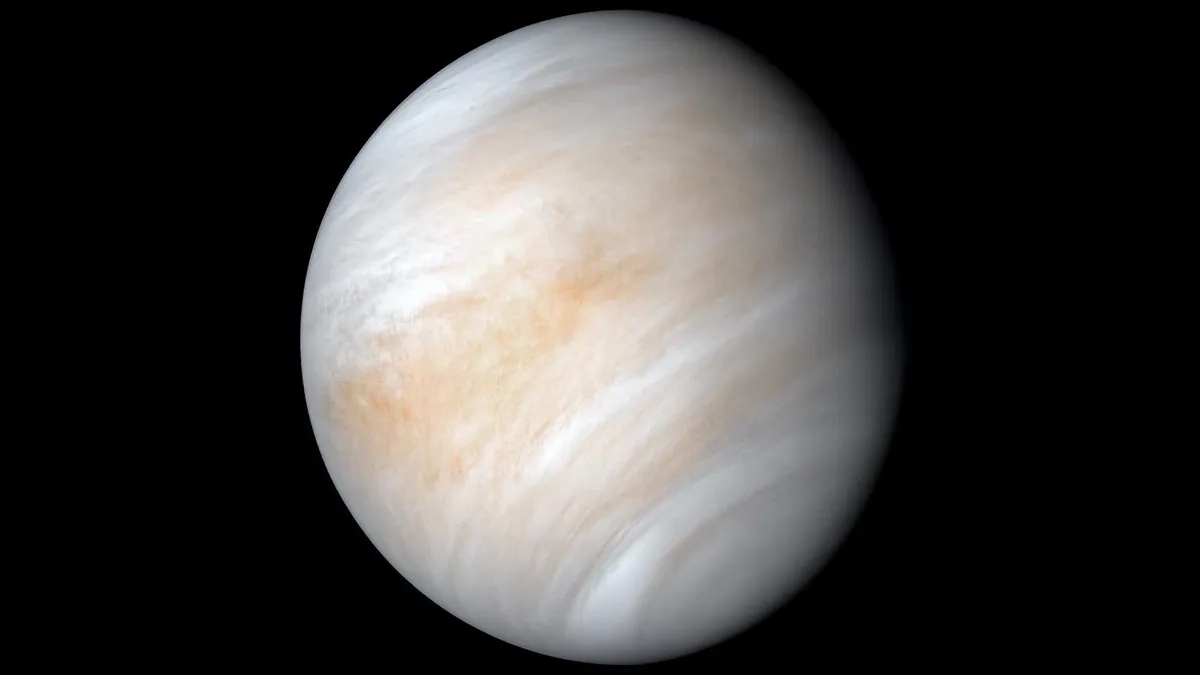
Venus is the second planet from the sun and is the hottest planet in the solar system. Its thick atmosphere is extremely toxic and composed of sulfuric acid clouds, the planet is an extreme example of the greenhouse effect.
- Discovery: Known to the ancient Greeks and visible to the naked eye
- Named for the Roman goddess of love and beauty
- Diameter: 7,521 miles (12,104 km)
- Orbit: 225 Earth days
- Day: 241 Earth days
- Number of moons: 0
The average temperature on Venus' surface is 900 F (465 C). At 92 bar, the pressure at the surface would crush and kill you. And oddly, Venus spins slowly from east to west, the opposite direction of most of the other planets.
Venus is sometimes referred to as Earth's twin as they are similar in size and radar images beneath its atmosphere reveal numerous mountains and volcanoes. But beyond that, the planets could not be more different.
The Greeks believed Venus was two different objects — one in the morning sky and another in the evening. Because it is often brighter than any other object in the sky, Venus has generated many UFO reports.
Related: How was Venus formed?
Earth: Our home planet, filled with life

Earth, our home planet, is the third planet from the sun. It is a water world with two-thirds of the planet covered by water. Earth's atmosphere is rich in nitrogen and oxygen and it is the only world known to harbor life.
- Name originates from "Die Erde," the German word for "the ground."
- Diameter: 7,926 miles (12,760 km)
- Orbit: 365.24 days
- Day: 23 hours, 56 minutes
- Number of moons: 1
Earth rotates on its axis at 1,532 feet per second (467 meters per second) — slightly more than 1,000 mph (1,600 kph) — at the equator. The planet zips around the sun at more than 18 miles per second (29 km per second).
Related: 10 Earth impact craters you must see
Mars: The solar system's Red Planet

Mars is the fourth planet from the sun. It is a cold, desert-like planet covered in iron oxide dust that gives the planet its signature red hue. Mars shares similarities with Earth: It is rocky, has mountains, valleys and canyons, and storm systems ranging from localized tornado-like dust devils to planet-engulfing dust storms.
Substantial scientific evidence suggests that Mars at one point billions of years ago was a much warmer, wetter world, rivers and maybe even oceans existed. Although Mars' atmosphere is too thin for liquid water to exist on the surface for any length of time, remnants of that wetter Mars still exist today. Sheets of water ice the size of California lie beneath Mars' surface, and at both poles are ice caps made in part of frozen water.
- Discovery: Known to the ancient Greeks and visible to the naked eye
- Named for the Roman god of war
- Diameter: 4,217 miles (6,787 km)
- Day: Just more than one Earth day (24 hours, 37 minutes)
- Number of moons: 2
Scientists also think ancient Mars would have had the conditions to support life like bacteria and other microbes. Hope that signs of this past life — and the possibility of even current lifeforms — may exist on the Red Planet has driven numerous Mars missions and the Red Planet is now one of the most explored planets in the solar system.
Related: How long does it take to get to Mars?
The asteroid belt: Composition and location in the solar system
Between Mars and Jupiter lies the asteroid belt. Asteroids are minor planets, and according to NASA there are approximately between 1.1 and 1.9 million asteroids in the main asteroid belt larger than 0.6 miles (1 km) in diameter and millions more smaller asteroids.
The dwarf planet Ceres, about 590 miles (950 km) in diameter, resides here. A number of asteroids have orbits that take them closer into the solar system that sometimes lead them to collide with Earth or the other inner planets.
Jupiter: The largest planet in our solar system

Jupiter is the fifth planet from the sun and the largest planet in the solar system. The gas giant is more than twice as massive as all the other planets combined, according to NASA.
- Discovery: Known to the ancient Greeks and visible to the naked eye
- Named for the ruler of the Roman gods
- Diameter: 86,881 miles (139,822 km)
- Orbit: 11.9 Earth years
- Day: 9.8 Earth hours
- Number of moons: 95 confirmed
Its swirling clouds are colorful due to different types of trace gases including ammonia ice, ammonium hydrosulfide crystals as well as water ice and vapor.
A famous feature in its swirling clouds is Jupiter's Great Red Spot, a giant storm more than 10,000 miles wide, first observed in 1831 by amateur astronomer Samuel Heinrich Schwabe. It has raged at more than 400 mph for the last 150 years, at least.
Jupiter has 95 moons, including the largest moon in the solar system, Ganymede.
Related: Jupiter's moons: Facts about the largest Jovian moons
Saturn: The ringed jewel of the solar system
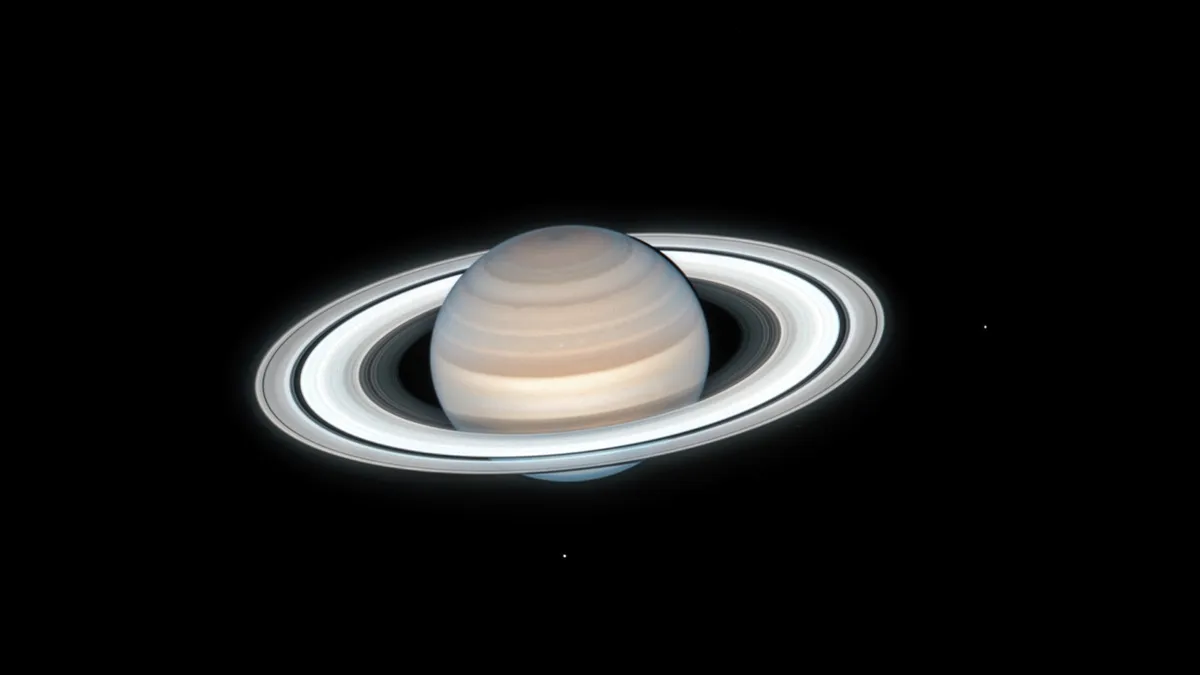
Saturn is the sixth planet from the sun and is famous for its large and distinct ring system. Though Saturn is not the only planet in the solar system with rings.
- Discovery: Known to the ancient Greeks and visible to the naked eye
- Named for Roman god of agriculture
- Diameter: 74,900 miles (120,500 km)
- Orbit: 29.5 Earth years
- Day: About 10.5 Earth hours
- Number of moons: 146
If you put Saturn in a bathtub it would float as Saturn has an average density that is less than water. You'd just need to find a bathtub big enough…
When polymath Galileo Galilei first studied Saturn in the early 1600s, he thought it was an object with three parts: a planet and two large moons on either side. Not knowing he was seeing a planet with rings, the stumped astronomer entered a small drawing — a symbol with one large circle and two smaller ones — in his notebook, as a noun in a sentence describing his discovery. More than 40 years later, Christiaan Huygens proposed that they were rings.
The rings are made of ice and rock and scientists are not yet sure how they formed. The gaseous planet is mostly hydrogen and helium and has numerous moons.
Related: How far away is Saturn?
Uranus: The tilted, sideways planet in our solar system

Uranus is the seventh planet from the sun and is a bit of an oddball.
It has clouds made of hydrogen sulfide, the same chemical that makes rotten eggs smell so foul. It rotates from east to west like Venus. But unlike Venus or any other planet, its equator is nearly at right angles to its orbit — it basically orbits on its side.
- Discovery: 1781 by William Herschel (was originally thought to be a star)
- Named for the personification of heaven in ancient myth
- Diameter: 31,763 miles (51,120 km)
- Orbit: 84 Earth years
- Day: 18 Earth hours
- Number of moons: 28
Astronomers believe an object twice the size of Earth collided with Uranus roughly 4 billion years ago, causing Uranus to tilt. That tilt causes extreme seasons that last 20-plus years and the sun beats down on one pole or the other for 84 Earth years at a time.
The collision is also thought to have knocked rock and ice into Uranus' orbit. These later became some of the planet's 28 moons. Methane in Uranus' atmosphere gives the planet its blue-green tint. It also has 13 sets of faint rings.
Uranus holds the record for the coldest temperature ever measured in the solar system — minus 371.56 degrees F (minus 224.2 degrees C). The average temperature of Uranus is minus 320 degrees Fahrenheit (-195 degrees Celsius).
Related: How did Uranus form?
Neptune: A giant, stormy blue planet

Neptune is the eighth planet from the sun and is on average the coldest planet in the solar system. The average temperature of Neptune at the top of the clouds is minus 346 degrees Fahrenheit (minus 210 degrees Celsius).
- Discovery: 1846
- Named for the Roman god of water
- Diameter: 30,775 miles (49,530 km)
- Orbit: 165 Earth years
- Day: 19 Earth hours
- Number of moons: 16
Neptune is approximately the same size as Uranus and is known for its supersonic strong winds. The planet is more than 30 times as far from the sun as Earth.
Neptune was the first planet predicted to exist by using math, rather than being visually detected. Irregularities in the orbit of Uranus led French astronomer Alexis Bouvard to suggest some other planet might be exerting a gravitational tug. German astronomer Johann Galle used calculations to help find Neptune in a telescope. Neptune is about 17 times as massive as Earth and has a rocky core.
Related: There's something strange going on inside Neptune
Trans-Neptunian region: Objects and discoveries beyond Neptune
Astronomers had long suspected that a band of icy material known as the Kuiper Belt existed past the orbit of Neptune extending from about 30 to 55 times the distance of Earth to the sun, and from the last decade of the 20th century up to now, they have found more than a thousand of such objects. Scientists estimate the Kuiper Belt is likely home to hundreds of thousands of icy bodies larger than 60 miles (100 km) wide, as well as an estimated trillion or more comets.
Pluto, now considered a dwarf planet, dwells in the Kuiper Belt. It is not alone — recent additions include Makemake, Haumea and Eris. Another Kuiper Belt object dubbed Quaoar is probably massive enough to be considered a dwarf planet, but it has not been classified as such yet. Sedna, which is about three-fourths the size of Pluto, is the first dwarf planet discovered in the Oort Cloud. NASA's New Horizons mission performed history's first flyby of the Pluto system on July 14, 2015.
Pluto: Once a planet, now a dwarf planet
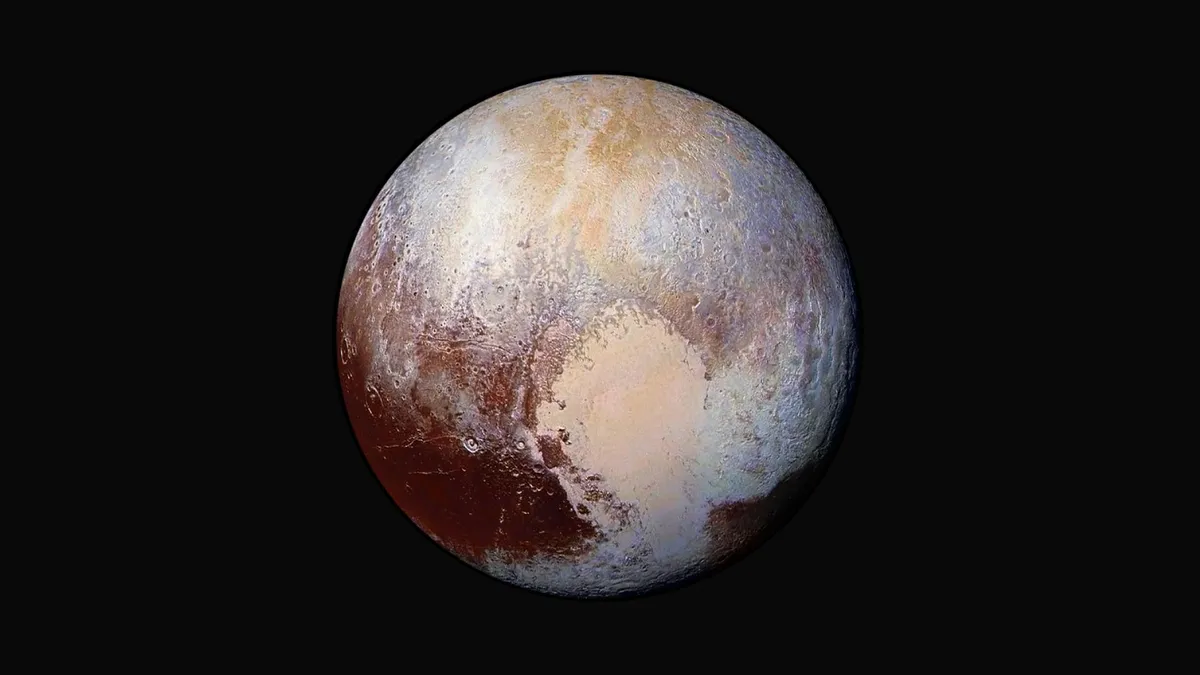
Pluto was once the ninth planet from the sun and is unlike any other planet in the solar system.
- Discovery: 1930 by Clyde Tombaugh
- Named for the Roman god of the underworld, Hades
- Diameter: 1,430 miles (2,301 km)
- Orbit: 248 Earth years
- Day: 6.4 Earth days
- Number of moons: 5
It is smaller than Earth's moon; its orbit is highly elliptical, falling inside Neptune's orbit at some points and far beyond it at others; and Pluto's orbit doesn't fall on the same plane as all the other planets — instead, it orbits 17.1 degrees above or below, taking 288 years to complete a single orbit according to ESA.
From 1979 until early 1999, Pluto had been the eighth planet from the sun. Then, on Feb. 11, 1999, it crossed Neptune's path and once again became the solar system's most distant planet — until it was redefined as a dwarf planet. It's a cold, rocky world with a tenuous atmosphere.
Scientists thought it might be nothing more than a hunk of rock on the outskirts of the solar system. But when NASA's New Horizons mission performed history's first flyby of the Pluto system on July 14, 2015, it transformed scientists' view of Pluto.
Pluto is a very active ice world that's covered in glaciers, mountains of ice water, icy dunes and possibly even cryovolcanoes that erupt icy lava made of water, methane or ammonia.
Related: Why isn't Pluto a planet anymore?
Planet Nine: A planet search at solar system's edge

In 2016, researchers proposed the possible existence of a ninth planet, for now, dubbed "Planet Nine" or Planet X. The planet is estimated to be about 10 times the mass of Earth and to orbit the sun between 300 and 1,000 times farther than the orbit of the Earth.
Scientists have not seen Planet Nine. They inferred its existence by its gravitational effects on other objects in the Kuiper Belt, a region at the fringe of the solar system that is home to icy rocks left over from the birth of the solar system. Also called trans-Neptunian objects, these Kuiper Belt objects have highly elliptical or oval orbits that align in the same direction.
Scientists Mike Brown and Konstantin Batygin at the California Institute of Technology in Pasadena described the evidence for Planet Nine in a study published in the Astronomical Journal. The research is based on mathematical models and computer simulations using observations of six other smaller Kuiper Belt Objects with orbits that aligned in a similar matter.
A hypothesis proposed in September 2019 on the pre-print server arXiv suggests Planet Nine might not be a planet at all. Instead, Jaku Scholtz of Durham University and James Unwin of the University of Illinois at Chicago speculate it could be a primordial black hole that formed soon after the Big Bang and that our solar system later captured, according to Newsweek. Unlike black holes that form from the collapse of giant stars, primordial black holes are thought to have formed from gravitational perturbations less than a second after the Big Bang, and this one would be so small (5 centimeters in diameter) that it would be challenging to detect.
Astronomers continue to come up empty in their search for Planet 9. A recent 2022 sky survey using the 6-meter Atacama Cosmology Telescope (ACT) in Chile found thousands of tentative candidate sources but none could be confirmed.
Related: The nonexistent planet Nibiru
The edge of the solar system: Kuiper Belt and Oort Cloud
Past the Kuiper Belt is the very edge of the solar system, the heliosphere, a vast, teardrop-shaped region of space containing electrically charged particles given off by the sun. Many astronomers think that the limit of the heliosphere, known as the heliopause, is about 9 billion miles (15 billion km) from the sun.
The Oort Cloud lies well past the Kuiper Belt, considered to be located between 2,000 and 5,000 astronomical units (AU) from the sun. The outer edge of the Oort Cloud may reach as far as 10,000 up to 100,000 AU from the sun. One AU is equal to approximately 93,000,000 miles (150 million kilometers). The Oort Cloud is home to billions, or even trillions of objects, according to NASA Science.
But where exactly is the edge of the solar system? Well, it depends on your criteria. If you base it on where the planet's end you would say the edge is Neptune and the Kuiper Belt. If based on the edge of the sun's magnetic field then it ends at the heliosphere. But if you judge it by the endpoint of the sun's gravitational influence, the solar system ends at the Oort Cloud, according to NASA.
Frequently asked questions
What is the correct order of the planets in the solar system?
From the sun outward: Mercury, Venus, Earth, Mars, Jupiter, Saturn, Uranus, and Neptune.
Why is Pluto no longer considered a planet?
Pluto was reclassified as a dwarf planet in 2006 because it does not meet all the criteria set by the International Astronomical Union. Specifically, it hasn't cleared its orbit of other debris.
What lies beyond Neptune?
Beyond Neptune is the Kuiper Belt, home to many icy bodies including Pluto. Even farther out is the theoretical Oort Cloud, thought to be a source of long-period comets.
How many dwarf planets are there?
There are five officially recognized dwarf planets: Pluto, Eris, Haumea, Makemake, and Ceres. Many more are likely awaiting classification.
Which planet is the hottest?
Despite not being the closest to the sun, Venus is the hottest planet due to its thick atmosphere and runaway greenhouse effect.
How did the solar system get its name?
The term "solar system" comes from "Sol," the Latin name for the sun. It refers to the system of planets and objects gravitationally bound to our sun.
Additional resources
Explore the solar system in greater detail with these interactive resources from NASA. Discover the wonders of the solar system with this educational material from ESA. See where the planets are in their current orbit of the sun with this interactive orrery from NASA.
Bibliography
Prialnik, Dina K., Antonella Barucci, and Leslie Young, eds. The Trans-Neptunian Solar System. Elsevier, 2019.
Pirani, Simona, et al. "Consequences of planetary migration on the minor bodies of the early solar system." Astronomy & Astrophysics 623 (2019): A169.
Scholtz, Jakub, and James Unwin. "What if Planet 9 is a primordial black hole?." Physical Review Letters 125.5 (2020): 051103.
Brown, Michael E., and Konstantin Batygin. "Observational constraints on the orbit and location of planet nine in the outer solar system." The Astrophysical Journal Letters 824.2 (2016): L23.
Raymond, Sean N., et al. "Building the terrestrial planets: Constrained accretion in the inner Solar System." Icarus 203.2 (2009): 644-662.