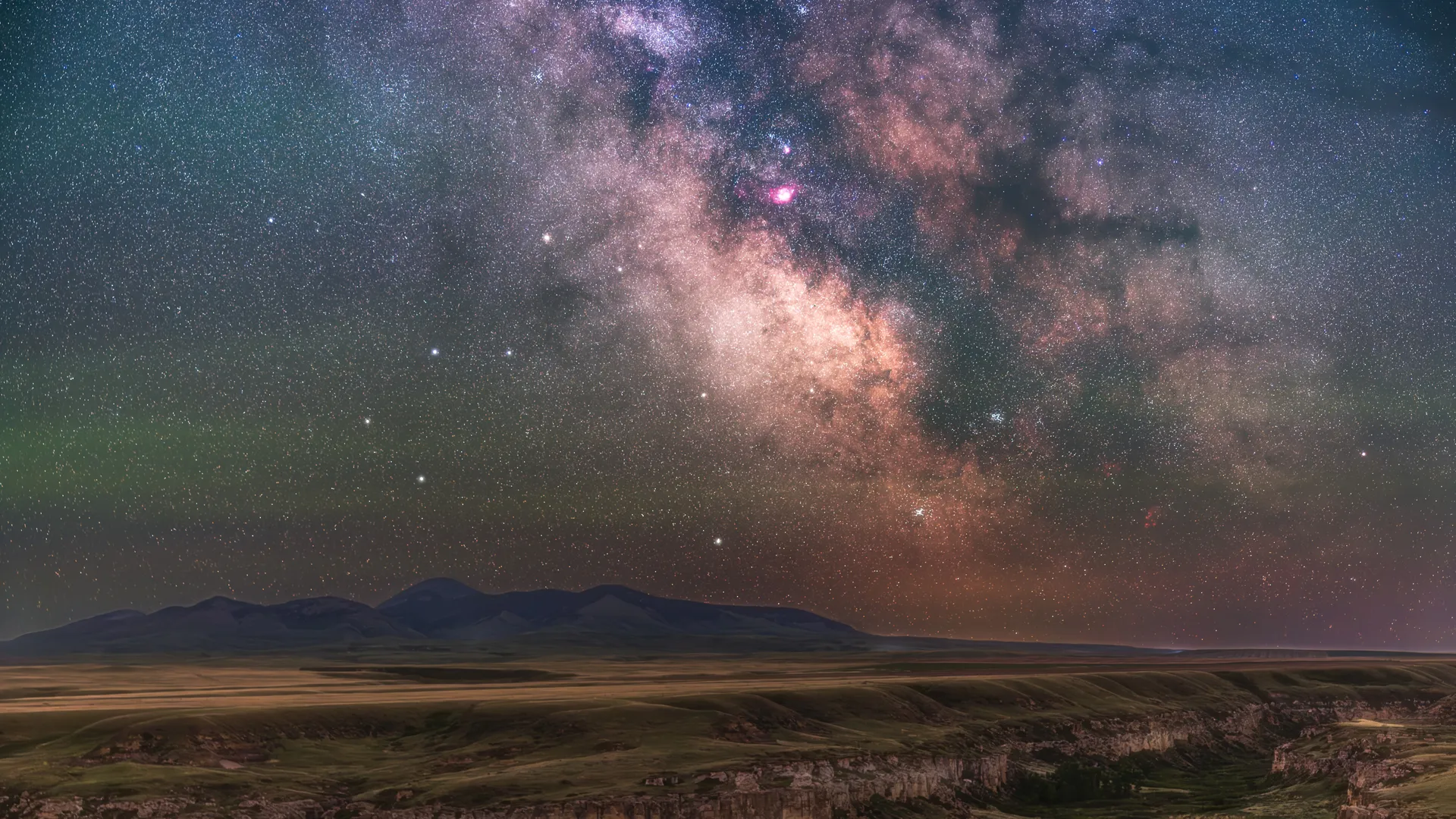
The moonless nights of mid-May are a fantastic time to spot the glowing band of the Milky Way arching across the spring sky, before the encroaching twilight of the summer months shortens the viewing window.
When is the best time to spot the Milky Way?
The best time to spot the Milky Way in the northern hemisphere is from February to October, often referred to as "Core Season", when Earth's orbit brings the bright heart of our galaxy into view.
Each Core Season has peak windows of visibility centering around the monthly new moon. This month's new moon on May 16 will provide darker skies ideal for spotting our galaxy's glowing core.
The best time to see the Milky Way's core is between midnight and dawn, when the ribbon of interstellar dust, gas and countless stars is at its highest in the night sky. The May new moon also provides a longer window for viewing the deep sky wonder compared to the June new moon, which occurs close to the summer solstice, when twilight eats further into the dark of night.
Where to look to see the Milky Way
For the best view of the Milky Way, you'll need to head out to a dark sky location and direct your gaze to the southern sky. There, you'll see the dense core of our galaxy arching past the constellations Aquila, Scutum, Sagittarius and Scorpius as it tumbles towards the horizon.
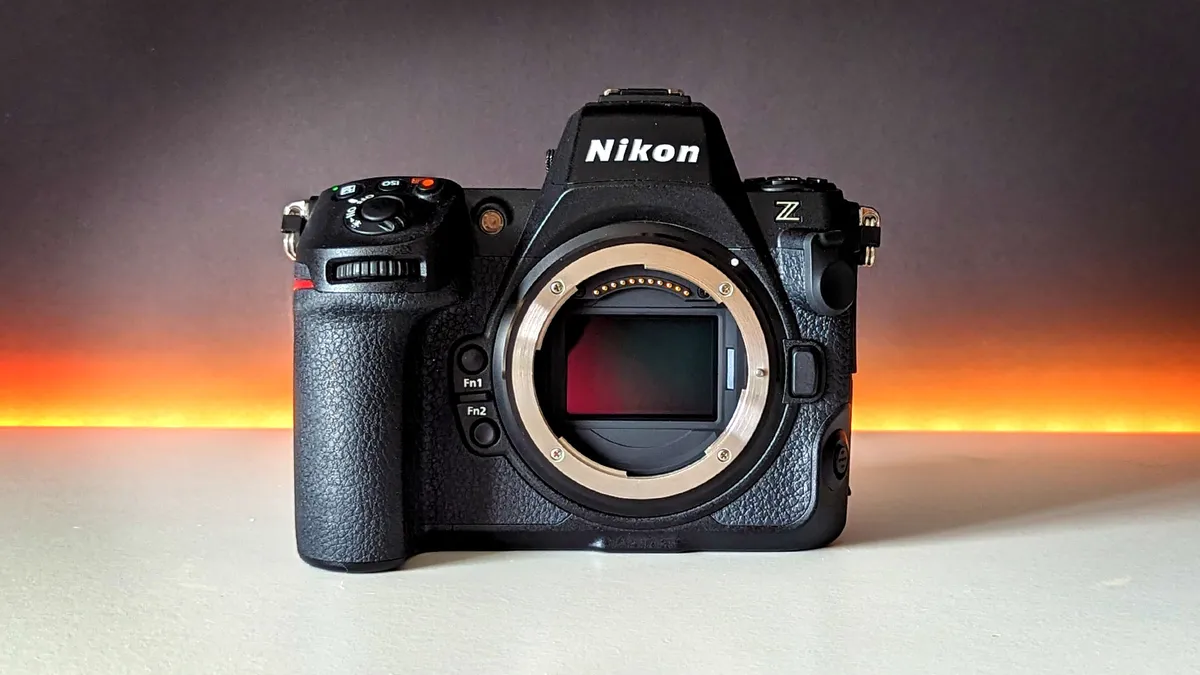
The Nikon Z8 excels in just about every department and we rate it as the best overall camera out there. It features a full-frame 45.7MP sensor, 8K video capabilities, excellent low-light performance, very high FPS burst speed and more. It is pricey, but you get a lot of bang for your buck. Check out our Nikon Z8 review for a more in-depth look.
Remember to use a trusted website like DarkSky.org to find a dark sky location near you, along with smartphone astronomy apps like Stellarium or Sky Safari 7 Pro to help plan your skywatching excursion. We would also recommend using Time and Date's daylight tracker to discover the exact timings for twilight and night for your specific location.
Want to capture gorgeous images of our galaxy shining in the night sky? Then be sure to read our beginner's guide to photographing the Milky Way, along with our roundups of the best cameras and lenses for astrophotography.
Editor's Note: If you would like to share your photos of the Milky Way with Space.com's readers, then please send your image(s), comments, name and location to spacephotos@space.com.