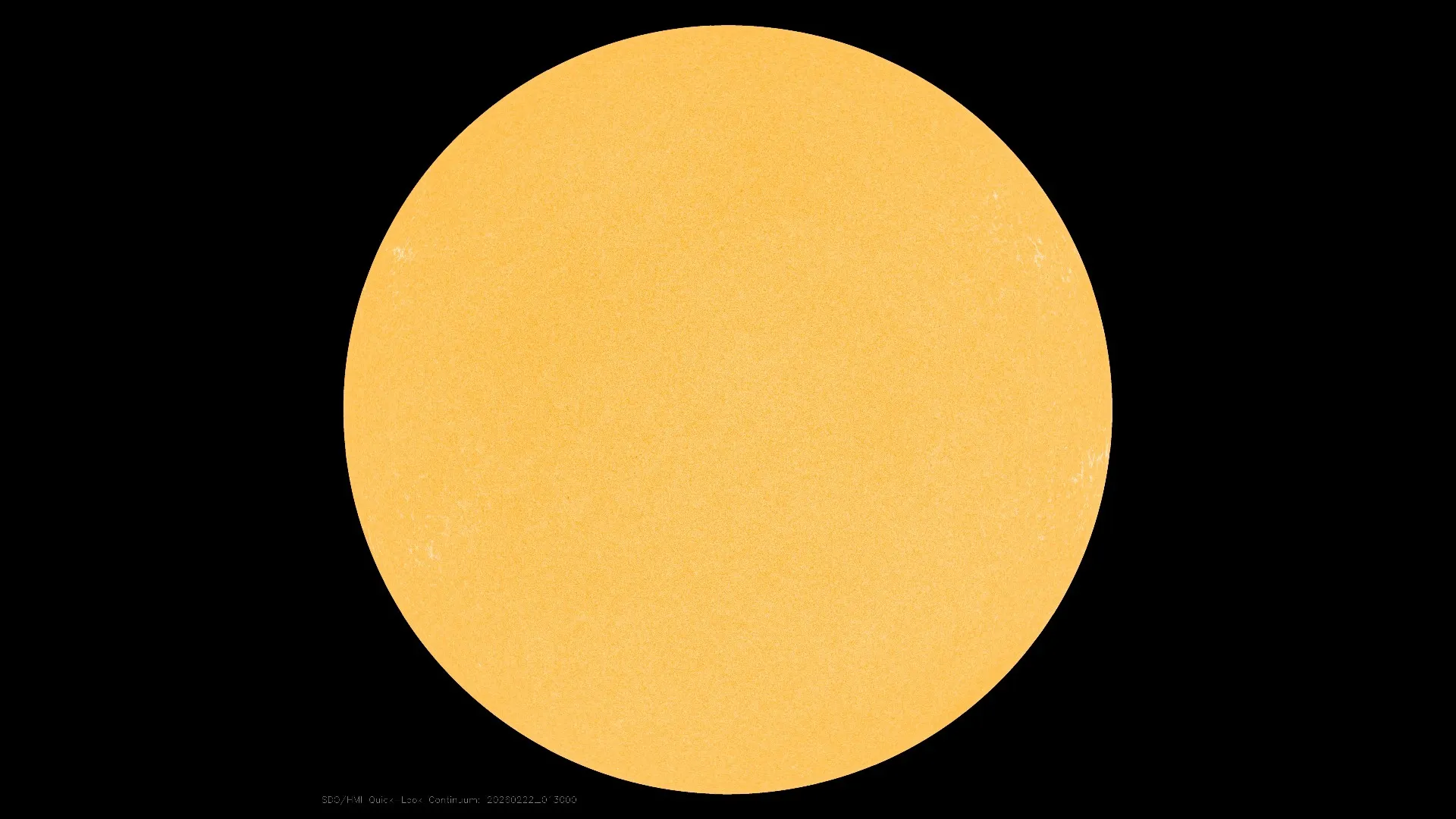
The sun's visible disk has been perfectly free from sunspots for the first time since June 2022, suggesting the current solar cycle might be heading toward its quieter phase.
Sunspots are cooler areas on the sun's surface that appear darker compared to their surroundings. These solar blemishes are caused by intense magnetic fields that prevent heat from the star's interior from rising to the surface. When the tangled magnetic field lines around these spots burst, the sun emits solar flares and coronal mass ejections of dense plasma that can cause geomagnetic storms on Earth.
The sun follows an approximately 11-year cycle during which its activity ebbs and flows. During the solar maximum, sunspots are a constant presence and flares and coronal mass ejections occur almost daily. During the minimum, on the other hand, the sun may go for months without a single sunspot.
The current solar cycle, the 25th since records began, peaked in 2024. The last time the sun's face was perfectly spotless was on June 8, 2022, more than 1,355 days ago.
It seems that this spotless state may have only lasted for two days, though. On Tuesday, (Feb. 24), some eagle-eyed observers began to spot a newly-emerging active region. It's also possible that other sunspots exist on the sun's surface, but are not currently visible to observers on Earth and have rotated away from the view of Earth-orbiting satellites.
Although the slowdown in the sun's production of sunspots is likely signaling that the current solar cycle is waning, solar activity is not expected to reach its next minimum before 2030, according to the UK Met Office. During the last solar minimum between 2018 and 2020, the sun went for 700 days without a spot, according to spaceweather.com.
For now, this spotless day on the sun offers a brief lull in activity, but it's too early to say whether it signals a longer-term slowdown in solar storms and aurora displays.