An Australian company wants to join efforts to study a rare space event, conducting its own flyby of the asteroid Apophis when it makes its close approach to Earth in 2029.
Sydney-based HEO Robotics, a provider of commercial satellite-to-satellite imagery, wants to add to the international missions already planning to get up close to the 1,115-foot-wide (340 meters) asteroid Apophis as it zooms by Earth in April 2029 by buying a satellite near the end of its life up in geostationary orbit and use its remaining fuel.
Satellites in the geostationary belt (GEO) orbit 22,236 miles (35,786 kilometers) above the equator. Spacecraft nearing the end of their lives use their remaining fuel to head into a so-called graveyard orbit above GEO to take themselves out of the way of the operational satellites. HEO aims to buy a satellite near the end of its mission lifetime and, using a little more fuel than needed for the graveyard trip, make a close approach to Apophis, which will pass within the GEO belt when it makes its close approach to Earth on Friday, April 13, 2029.
Despite being classified as a potentially hazardous asteroid, which will get within a mere 5.9 Earth radii of our planet, Apophis poses no threat on this close encounter. Rather, scientists regard the 2029 flyby as an opportunity, as an asteroid the size of Apophis passes this close to Earth on average just once every 7,500 years. The close approach thus offers a unique chance for close study of how an asteroid is influenced when flying by a planet.
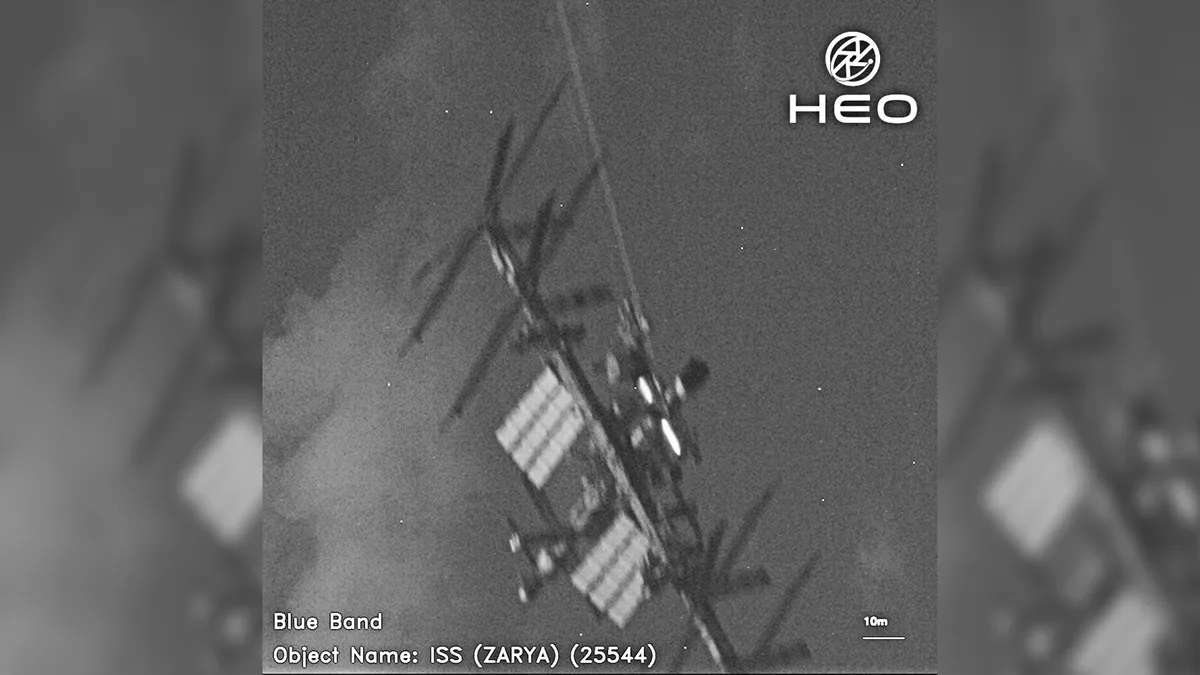
HEO will be far from alone. NASA, the European Space Agency and Japan are all preparing their own missions (OSIRIS-APEX, RAMSES and DESTINY+, respectively) to get up close to Apophis before, during and after the unique flyby, which could potentially be seen by as many as 2 billion people. Other spacecraft, including a probe from China, may join.
The move is part of HEO’s plans to expand beyond providing non-Earth imagery in low Earth orbit and eventually provide images from across the solar system on demand.
"It's not even the easiest asteroid to go visit," Will Crowe, co-founder and chief executive of HEO, said of Apophis when speaking to Space.com at the International Astronautical Congress (IAC) in Sydney in early October. "I think there's just been a lack of imagination," Crowe added, stating that other asteroids will soon be in HEO’s sights.
"We're starting with just the ones that are coming through the Earth-moon system," he said. "But there's no reason why we can't enable it for everything — the asteroid belt or all the other weird asteroid classes. It should be possible."