The year 2011 was a huge one for space photography, with NASA's historic final space shuttle missions and dazzling views of the sun, auroras and the cosmos. <br><br>It wasn't easy, but we pulled 50 of the most amazing views from space in 2011 for you to review. But which one is the best? Vote now and decide!
The breathtaking final launch of the space shuttle Atlantis on July 8 was captured in an incredible photo snapped from an airborne training aircraft NASA uses to teach astronauts how to fly the winged spaceship. [<a href="http://www.space.com/12221-final-shuttle-launch-atlantis-aerial-photo.html">Read More</a>] <br><br>NEXT: World's Most Complex Radio Telescope Snaps Stunning 1st Photo of the Cosmos
After years of planning, construction and assembly, a gigantic observatory billed as the world's most complex array of ground-based telescopes has opened its eyes in South America and captured its first image. The ALMA telescope in Chile is up and running. [<a href="http://www.space.com/13146-alma-radio-telescope-1st-image-released.html">Full Story</a>] <br><br>NEXT: Air Force's Nighttime Rocket Launch
When a U.S. Air Force rocket blasted off from NASA's Wallops Flight Facility on Wallops Island, Va., it lit up the late-night sky with a spectacular 11:09 p.m. EDT liftoff. <p>Skywatcher Neil Winston snapped this amazing photo of the Minotaur 1 rocket launch carrying the ORS-1 satellite on June 29, 2011. Winston took the photo from a beach in Lusby, Md., overlooking Chesapeake Bay near NASA's Wallops Flight Facility in Virginia, where the rocket launched. [<a href="http://www.space.com/12123-dazzling-rocket-launch-night-photos-minotaur-ors-1-satellite.html">See More Dazzling Rocket Launch Photos</a>] <br><br>NEXT: Southern Lights & Space Shuttle Dazzle in Astronaut Photo
A dazzling new photo from astronauts in orbit show NASA's space shuttle Atlantis zooming above Earth with the eerie green glow of the Southern Lights in the distance.[<a href="http://www.space.com/12308-southern-lights-space-shuttle-astronaut-photo.html">Read More</a>] <br><br>NEXT: Atlantis Retuning
A member of the Expedition 28 crew aboard the International Space Station caught this spectacular photo of a lifetime, showing space shuttle Atlantis actually hurtling through the Earth's atmosphere on its way back to Kennedy Space Center, Florida, July 21, 2011. [<a href=http://www.space.com/12341-shuttle-atlantis-final-space-station-undocking-photos.html>Photos of Atlantis in Orbit</a>] <br><br>NEXT: Dazzling View of Shuttle From Australia
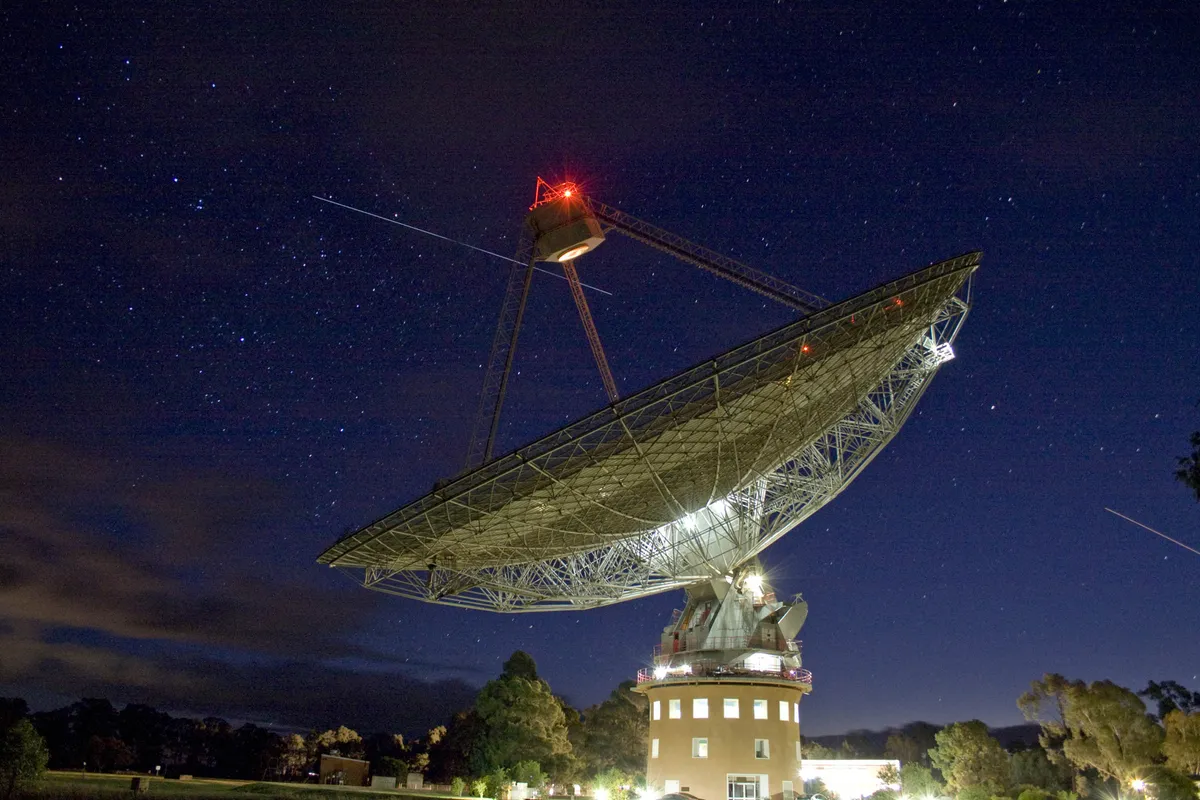
Scientist John Sarkissian captured this never-to-be-seen-again image of space shuttle Atlantis and the International Space Station streaking through the Australian sky with the Parkes 64 meter radio telescope in the foreground. Atlantis's trail moves right to left behind the radio telescope, while the space station follows arcing from the lower right corner of the frame, about two minutes behind Atlantis in low Earth orbit. The Parkes 64 meter radio telescope has a long connection to human spaceflight, having supplied television images from the moon to Earth during Apollo 11. Also visible in the night sky of New South Wales, Australia, are southerly constellations Vela, Puppis, and Hydra. Atlantis made its final landing on July 21, 2011, at NASA's Kennedy Space Center. This image was released to SPACE.com on July 26. [<a href="http://www.space.com/34-image-day.html">See Daily Space Photos</a>] <br><br>NEXT: Juno Launch as Seen by Astronaut
Astronaut Nicole Stott caught Juno's launch on August 5, 2011. She tweeted the picture with this comment: "Our view of Juno launch from Cocoa Beach. Next stop Jupiter! Beautiful!" [<a href=http://www.space.com/12363-photos-jupiter-juno-rocket-launch-nasa.html>More Juno Launch Photos</a>] <br><br>NEXT: NASA Rover Arrives at Huge Mars Crater After 3-Year Trek
After a nearly three-year journey, NASA's Mars Exploration Rover Opportunity reached the giant crater Endeavour on Aug 9 to study rocks never seen before. [<a href=http://www.space.com/12594-nasa-mars-rover-opportunity-arrives-huge-crater.html>Full Story</a>] <br><br>NEXT: Infrared Photos of Neptune & Uranus
Astronomer Mike Brown captured some stunning new photos of Neptune and Uranus using Hawaii's Keck telescope last week. [<a href=http://www.space.com/13086-photos-neptune-uranus-moons-infrared-images.html>Full Story</a>] <br><br>NEXT:Astronaut's Spectacular Meteor Photo From Space
The amazing images actually started flowing on Aug. 13, when space station astronaut Ron Garan captured a stunning image of a "shooting star" during the Perseid meteor shower from his window seat 220 miles above Earth. [<a href=http://www.space.com/12633-perseid-meteor-shower-space-photo.html>Full Story</a>] <br><br>NEXT:Ginormous Black Hole Caught Eating Another

A monstrous black hole at the heart of one galaxy is being devoured by a still larger black hole in another, scientists say. The discovery is the first of its kind and was announced on Wednesday, Aug. 31. [<a href=http://www.space.com/12790-monster-black-hole-cannibal-galaxy-collisions.html>Full Story</a>] <br><br>NEXT:Skywatchers' View of Heart Nebula
Skywatching enthusiasts Bob and Janice Fera took a spectacular image of the brilliant NGC 896 Emission Nebula, the brightest part of the Heart Nebula, between Sept. 26 and 27 at the Eagle Ridge Observatory, Foresthill, Calif. [<a href=http://www.space.com/13271-brilliant-nebula-ngc-896-skywatcher-photo.html>Full Story</a>] <br><br>NEXT:Amazing NPP Satellite Night Launch Photo
NASA launched an unprecedented Earth-observing satellite from California today (Oct. 28) in a dazzling predawn blastoff that created an artificial sunrise as its rocket soared toward space. [<a href=http://www.space.com/13434-nasa-npp-weather-climate-satellite-photos.html>See more NPP satellite launch photos</a>] <br><br>NEXT: Saturn Moons Mind the Gap
Saturn's moon Titan hangs dimly in the background of this photograph, which also shows the bright moon Dione in the foreground. Pandora, another moon, floats at the right, just outside the narrow sliver of Saturn's rings visible in this image. A fourth moon, Pan, almost imperceptibly makes it into this image in the dark Encke Gap of Saturn's A ring at left. This image was posted on Nov. 9, 2011. [<a href=http://www.space.com/34-image-day.html>See more stunning photos from space</a>] <br><br>NEXT: Giant Sunspot Unleashes Massive Solar Flare
A powerful solar flare that erupted Thursday (Nov. 3) from a huge blemish on the sun's surface has been classified as an X1.9 flare, ranking it in among the most powerful types of storms from our star can unleash. The flare originated in a humongous sunspot that was sighted earlier this week, which ranks as one of the largest sunspots seen in years. The event began at 4:27 p.m. ET (2027 GMT). [<a href=http://www.space.com/13517-giant-sunspot-unleashes-massive-solar-flare.html>Full Story</a>] <br><br>NEXT: NASA's Best Moon Map
Scientists have stitched together the highest-resolution topographic map of the moon ever created, using observations made by NASA's Lunar Reconnaissance Orbiter (LRO) spacecraft. <br><br> The new lunar map covers 98.2 percent of the moon and depicts the natural satellite's surface and features at a pixel scale of about 330 feet (100 meters). A global view of Earth's nearest neighbor at such high resolution had never existed before, scientists said. <br><br> "Our new topographic view of the moon provides the dataset that lunar scientists have waited for since the Apollo era," said Mark Robinson of Arizona State University, principal investigator of the Lunar Reconnaissance Orbiter Camera (LROC), in a statement Thursday (Nov. 17). [<a href=http://www.space.com/13666-moon-map-lunar-reconnaissance-orbiter.html>Read More</a>] <br><br>NEXT: Smoky Solar Eclipse
This photo of a solar eclipse looks all the more magical when seen through chimney smoke from a home in a Siberian village near Novosibirsk, Russia. [<a href=http://www.space.com/13792-skywatcher-photo-partial-solar-eclipse-chimney-smoke.html>Read More</a>] <br><br>NEXT: Asteroid Vesta's 'Rainbow' Ingredients
NASA's Dawn spacecraft is revealing the asteroid Vesta in a whole new light. [<a href=http://www.space.com/13836-asteroid-vesta-rainbow-image-rock-composition.html>Read More</a>] <br><br>NEXT: Hubble's Clear Star Cluster View
The NASA/ESA Hubble Space Telescope has used its powerful optics to separate the globular cluster NGC 6401 into its constituent stars. NGC 6401 lies within the constellation of Ophiuchus (The Serpent Bearer). The globular cluster's faintness requires a telescope and some observational experience to see it. Globular clusters contain very rich, and generally spherical, collections of stars, hence the name. They orbit the cores of galaxies, with the force of gravity also keeping the stars bound as a group. There are around 160 globular clusters associated with our Milky Way, of which NGC 6401 is one. These objects are very old, containing some of the most ancient stars known. However, there are many mysteries surrounding them, with the origin of globular clusters and their role within galaxy evolution still not completely understood. [<a href=http://www.space.com/34-image-day.html>View all images</a>] <br><br>NEXT: Eerie Green Space Cloud
In this image by NASA's Hubble Space Telescope, an unusual, ghostly green blob of gas appears to float near a normal-looking spiral galaxy. The bizarre object, dubbed Hanny's Voorwerp (Hanny's Object in Dutch), is the only visible part of a 300,000-light-year-long streamer of gas stretching around the galaxy, called IC 2497. Astronomers unveiled their best view yet of the object in January 2011. [<A href=http://www.space.com/10595-hubble-hannys-voorwerp-space-cloud.html>Full Story</a>] <br><br>NEXT: Comet Lovejoy Over Chile
The stunning comet that survived a recent brush with the sun is amazing astronomers again, this time in dazzling new photos captured just before sunrise over Chile in December. <br><br>The provided a jaw-dropping sight for astronomer Gabriel Brammer, photographed the comet rising ahead of the sun on Dec. 22 at Paranal Observatory in Chile's high Atacama Desert, who snapped this view and others of the icy wanderer. [<a href=http://www.space.com/14045-spectacular-christmas-comet-amazes-skywatchers-chile.html>Full Story</a>] <br><br>NEXT: The Sun's Massive Storm
The sun unleashed a massive solar storm on June 7 in a dazzling eruption that kicked up a vast cloud of magnetic plasma that appeared to rain back down over half of the sun's entire surface, NASA scientists say. <br><br>"The sun produced a quite spectacular prominence eruption that had a solar flare and high-energy particles associated with it, but I've just never seen material released like this before," Young said. "It looks like somebody just kicked a giant clod of dirt into the air and then it fell back down." [<a href=http://www.space.com/11893-huge-sun-eruption-spectacular-solar-flare.html>Full Story</a>] <br><br>NEXT: The Sun Has a Smile
Our sun is apparently a happy star according to a video from a NASA observatory. The video shows a pattern of sunspots that, when viewed from afar, forms a vast happy face smiling across face of the sun. <br><br>The video shows an apparent smiley face on the sun as seen by the Solar Dynamics Observatory. The solar happy face is seen in different wavelengths in a video posted on July 25, 2011.[<a href=http://www.space.com/12502-sun-smiley-face-video-sunspots.html>Full Story and image</a>] <br><br>NEXT: First & Last Space Shuttle Crew
The first and last astronauts to fly on NASA's space shuttles met Nov. 2 in Houston to pose for a series of historic photographs. <Br><br>John Young and Robert Crippen, who in April 1981 flew onboard space shuttle Columbia on its STS-1 mission, joined the final shuttle crew — STS-135 astronauts Chris Ferguson, Doug Hurley, Sandra Magnus and Rex Walheim — at NASA's Johnson Space Center. The six former and current astronauts united at the Space Vehicle Mockup Facility, where both crews had trained prior to their missions in the agency's full-scale shuttle mockups. <br><br>"This picture was important to me," Crippen said in an interview with the Houston Chronicle. "I thought it kind of gave us the bookends of the program." [<a href=http://www.space.com/13551-historic-space-shuttle-astronauts-photos.html>Full Story</a>] <br><br>NEXT: Huge Saturn Storm
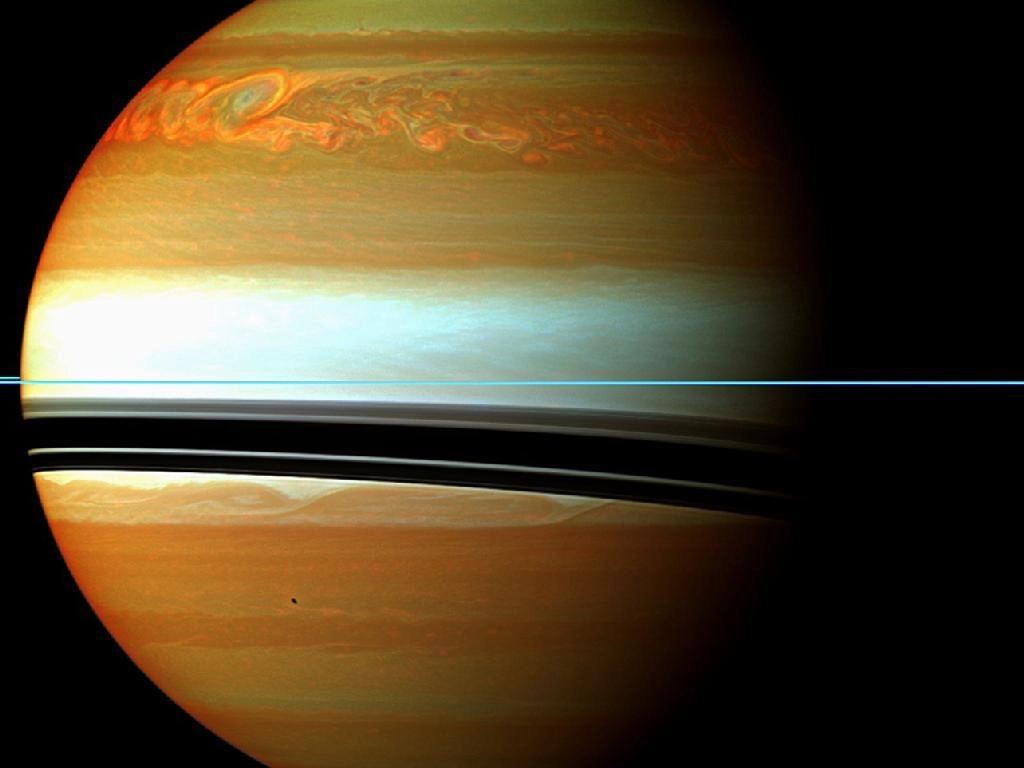
Saturn's northern storm marches through the planet's atmosphere in the top right of this false-color mosaic from NASA's Cassini spacecraft. The images were taken on January 11, 2011, over about 50 minutes, at a distance of approximately 569,000 miles (915,000 kilometers) from Saturn. [<a href=http://www.space.com/13671-photos-monster-storm-saturn-cassini.html>Photos: Monster Storm on Saturn</a>] <br><br>NEXT: Comet Lovejoy From Space
Comet Lovejoy is visible near Earth's horizon in this nighttime image photographed by NASA astronaut Dan Burbank, Expedition 30 commander, onboard the International Space Station on Dec. 21, 2011. <br><br>The comet survived a close encounter with the sun and amazed astronomers and skywatchers alike with its dazzling tail after the solar encounter. <br><br>"When it disappeared behind the sun, I think astronomers thought it would not appear again, it would probably burn up," Burbank said. "But it's probably the most spectacular thing that you can imagine." [<a href=http://www.space.com/14031-spectacular-comet-photo-astronaut-space.html>Full Story</a>] <br><br>NEXT: A Black Hole Ring
The black hole ring photo, which NASA released Feb. 9, was taken using several space telescopes across different parts of the light spectrum. Two interacting galaxies, known collectively as Arp 147, set the stage for the spectacular view. [<a href=http://www.space.com/10809-black-hole-ring-valentines-day-photo.html>Full Story</a>] <br><br>NEXT: 6 Solar System Planets in 1 Photo
In February, NASA unveiled a striking portrait of our solar system as seen by the Messenger probe, which was headed for the planet Mercury. The images, taken in Nov. 2010 and released on Feb. 18 of this year, all the major planets except Uranus and Neptune, which were too faint to detect. <br><br>Earth's moon and several of Jupiter's big moons – the Galilean satellites Callisto, Ganymede, Europa and Io – were also visible, and are highlighted in insets. [<a href=http://www.space.com/10901-solar-system-planets-photo-messenger.html>Full Story</a>] <br><br>NEXT: Shuttle Discovery and ISS: Feb. 2011
Skywatcher Rob Bullen of Forest of Dean, Gloucestershire, England caught this snapshot of shuttle Discovery (left) as it approached the International Space Station on Feb. 26, 2011. Discovery was flying its final mission, STS-133. [<a href=http://www.space.com/11067-shuttle-discovery-station-skywatching-photos.html>Full Story</a>] <br><br>NEXT: First Photo from Mercury Orbit
NASA's Mercury Messenger probe captured this historic image of Mercury, the first ever obtained from a spacecraft in orbit about the solar system's innermost planet. The photo was taken on March 29, 2011 at 5:20 am EDT. [<a href=http://www.space.com/11254-nasa-photos-mercury-orbit-messenger-spacecraft.html>Full Story</a>] <br><br>NEXT: Supermoon of 2011
Photographer Sandy Adams snapped this great view of the "supermoon" full moon of March 19, 2011 over Washington, D.C. Adams was one of many skywatchers who caught amazing views of the largest full moon of the year. [<a href=http://www.space.com/11178-supermoon-photos-2011-skywatcher-images.html>More Supermoon Photos</a>] <br><br>NEXT: Shuttle and Space Station Together
This photo of shuttle Endeavour at the International Space Station shows a rare look at the orbiter while it is attached to the orbiting lab. This photo is one of the first-ever views of a NASA shuttle docked at the space station and was taken during Endeavour's final flight on May 23, 2011 by astronaut Paolo Nespoli on a nearby Soyuz spacecraft.[<a href=http://www.space.com/11899-photos-shuttle-endeavour-space-station-nasa-gallery.html>Gallery: Shuttle Endeavour & Space Station</a>] <br><br>NEXT: Under a Bloody Moon
The moon turned a blood red over the Sossusvlei Desert Lodge on NamibRand Nature Reserve in Namibia in this stunning photo taken by skywatcher George Tucker on June 15, 2011. [<a href=http://www.space.com/11978-photos-total-lunar-eclipse-june-2011.html>Photo Gallery of the Lunar Eclipse</a>] <br><br>NEXT: Moon's Shadowy Tycho Crater
Sunrise shadows on the moon's Tycho crater made for a haunting scene as seen by NASA's Lunar Reconnaissance Orbiter on June 10, 2011. NASA released the photo on June 30. [<a href=http://www.space.com/12125-moon-crater-shadows-amazing-photo.html>Full Story</a>] <br><br>NEXT: Shuttle Endeavour Streaks Over Night Earth
NASA's shuttle Endeavour was nearing the end of its final spaceflight when astronauts snapped amazing photos of the spaceship soaring over a nighttime Earth on May 28, 2011. <br><br>"It's pretty spectacular, the view of the planet from orbit," Endeavour commander Mark Kelly told reporters at the time. "It's something you never forget." [<a href=http://www.space.com/11831-nasa-photos-shuttle-endeavour-earth-night.html>Full Story</a>] <br><br>NEXT: Pluto's New Moon
A tiny new moon was discovered around Pluto, the fourth and smallest one yet found orbiting the dwarf planet, in photos from the Hubble Space Telescope reveal. The moon, called P4, was announced on July 20, 2011. [<a href=http://www.space.com/12356-pluto-fourth-moon-discovery-hubble-photo.html>Full Story</a>] <br><br>NEXT: Moon & Space Capsule Shine
When a Russian spaceship returned three space men home on Sept. 16, the recovery team sent to meet them caught a stunning sight: a Soyuz space capsule floating to Earth under a parachute with a bright moon in background. <br><br>The spectacular space snapshot is one of several taken by NASA photographer Bill Ingalls of the Russian-built Soyuz TMA-21 space capsule as it landed on the southern steppes of Kazakhstan in Central Asia. [<a href=http://www.space.com/12981-nasa-photo-shows-moon-soyuz-space-capsule-landing.html>Full Story</a>] <br><br>NEXT: Aurora's Rainbow of Green
'A Starry Night in Iceland' by Stephane Vetter nabbed first prize in the Beauty of the Night Sky category of the 2011 Earth & Sky Photo Contest, put on by The World at Night (TWAN), an international organization dedicated to night-sky photography. An aurora dances over Iceland in the photo. [<a href=http://www.space.com/11734-night-sky-stars-photo-contest-light-pollution.html>Full Story</a>] <br><br>NEXT: "Midnight Eclipse" in Bodø, Norway
In Bodø, Norway some transparent clouds made the partial solar eclipse of June 1-2, 2011, look more dramatic. Observed with a H-alpha filter, more details on the sun are visible. The rare "midnight eclipse" began on Thursday, June 2, 2011, but crossed the International Date Line to end on Wednesday, June 1. [<a href=http://www.space.com/11865-photos-midnight-partial-solar-eclipse-2011.html>Photo Gallery: 2011 Midnight Solar Eclipse</a>] <br><br>NEXT: Giant Black Hole's Massive Jets
Energetic jets spewed forth from a galaxy's supermassive black hole got a close-up in their most detailed image ever taken by Earth radio telescopes. <br><br>The picture, released in May, shows jets racing away at one-third the speed of light from a huge black hole weighing 55 million times the sun's mass. The black hole is 12 million light-years from Earth and is tucked at the center of the Centaurus A galaxy. [<a href=http://www.space.com/11738-giant-black-hole-jets-photo.html>Full Story</a>] <br><br>NEXT: Last Day in Space
This picture shows astronaut Ron Garan on his last day at the International Space Station before returning to Earth in September 2011. He posted the picture on Twitter, writing "That's me in the cupola of the International Space Station off the coast of Australia taking my last of over 25,000 pics that I still want to share w/ everyone." [<a href=http://www.space.com/13181-spectacular-photo-astronaut-final-space-day.html>Full Story</a>] <br><br>NEXT: Titan and Dione
Saturn's largest moon, Titan, appears deceptively small paired here with Dione, Saturn's third-largest moon, in this shot snapped by NASA's Cassini spacecraft on Nov. 6, 2011. Titan is much farther from the spacecraft than Dione is in this view. The view was captured at a distance of approximately 684,000 miles (1.1 million kilometers) from Titan but only about 85,000 miles (136,000 km) from Dione. [<a href=http://www.space.com/14059-nasa-cassini-photos-titan-saturn-moons.html>Full Story</a>] <br><br>NEXT: A Giant Space Bubble
A delicate-looking cosmic bubble shape appears to float inside a distant nebula in this stunning view captured by California-based skywatcher Larry Van Vleet. The photo shows a giant bubble of gas blown by the nebula NGC 7635, also known as the Bubble nebula. Van Vleet used a RCOS 16 Truss telescope and Apogee U16M to capture the photo from his Sierra Remote Observatories in Shaver Lake,Calif., in August. <br><br>The nebula is 7,100 light-years from Earth in the constellation Cassiopeia. [<a href=http://www.space.com/13306-giant-space-bubble-nebula-skywatcher-photo.html>Full Story</a>] <br><br>NEXT: December's Total Lunar Eclipse
Skywatcher Charles R. Jones II took this photo of the total lunar eclipse Dec. 10 from Phoenix, Ariz. [<a href=http://www.space.com/13894-photos-total-lunar-eclipse-december-2011.html>Photos of December's Total Lunar Eclipse</a>] <br><br>NEXT: October's Spell-Binding Northern Lights Display
Photographer Shawn Malone of Marquette, Mich., took this dazzling photo of the spectacular Oct. 24, 2011 northern lights display. <br><br>The aurora display, also known as the northern lights, was touched off by a wave charged particles unleashed by a massive sun storm on Saturday, which took two days to reach Earth, according to the Space Weather Prediction Center operated by the National Weather Service and NOAA. <br><br>"[I] had taken a few pics, went back to the car to change lenses, and when I looked up the sky was on fire," Malone said. "To the north there was this huge curtain that sent beams overhead to a corona in which I had to turn to the south to photograph. That's when I noticed the reds and pinks starting to happen. From there the lights were every which direction. It was hands down the best northern lights I've seen since the great storm of November 2004." [<a href=http://www.space.com/13383-spellbinding-northern-lights-display-skywatcher-photos.html>Full Story</a>] <br><br>NEXT: Nebula's Dark Hues
This photo shows the cosmic region known as Sh2-239 and LDN 155, where star formation activity has caused the mix of dust and colors in the nebulas visible here. The deep colors and dark clouds in this image resemble paintings by some of history's greatest artists. <br><br>This photo shows the cosmic region known as Sh2-239 and LDN 155, where star formation activity has caused the mix of dust and colors in the nebulas visible here. The deep colors and dark clouds in this image resemble paintings by some of history's greatest artists. The region lies near the southern end of the constellation Taurus, near the border of the constellation Perseus, more than 400 light-years away. [<a href=http://www.space.com/13945-dark-nebula-astrophotography-star-formation.html>Full Story</a>] <br><br>NEXT: Tints of Saturn and Moons
Saturn's third-largest moon Dione can be seen through the haze of its largest moon, Titan, in this view of the two posing before the planet and its rings from NASA's Cassini spacecraft released on Dec. 22, 2011. The north polar hood can be seen on Titan appearing as a detached layer at the top of the moon here. [<a href=http://www.space.com/14059-nasa-cassini-photos-titan-saturn-moons.html>Full Story</a>] <br><br>NEXT: Electrical Storm Above Shuttle
Lightning strikes near space shuttle Endeavour, waiting on launch pad 39a at Kennedy Space Center in Cape Canaveral, Fla., Thursday, April 28, 2011. [<a href=http://www.space.com/11610-image-day-april-2011.html>Spectacular Space Photos of April 2011</a>] <br><br>NEXT: A Moon Silhouette
An airplane appears unusually large against the smallest full moon of the year. Hungarian skywatcher Tamas Ladanyi of The World At Night(TWAN) managed to capture this spectacular image Oct. 11, 2011. [<a href=http://www.space.com/13989-skywatcher-photo-smallest-full-moon-airplane.html>Full Story</a>] <br><br>NEXT: Good Night, Space Shuttle
Space shuttle Atlantis gleamed in the darkness at it touched down on the Shuttle Landing Facility's Runway 15 at NASA's Kennedy Space Center in Florida for the final time. Atlantis' wheels came to a stop at 5:57:54 a.m. on July 21, 2011. [<a href=http://www.space.com/12364-image-day-july-2011.html>More Space Photos from July 2011</a>] <br><br>See the Results to see how your favorite photos fared! See you in 2012!