Astrophotographer Emil Andronic spent nearly 70 hours capturing the light of a beguiling reflection nebula near the head of the hunter in the constellation Orion, revealing impressive detail in the structure of the interstellar cloud as it glowed over the UK in late 2025.
Andronic's image reveals the blue reflection nebula designated Cederblad 51 glowing in the center of the image among the red clouds of the giant nebula SH 2-264. The region is also known as Orion's Head, owing to its proximity to the bright star Lambda Orionis, which represents the head of the celestial hunter.
Reflection nebulas are vast clouds of interstellar dust, that shine by scattering the blue light of nearby stars, according to NASA. Emission nebulas, meanwhile, glow with their own light, having been altered by the radiation of nearby stars.
"Ced 51 is a target that I wanted to capture for a very long time, but most of the time the conditions weren't that great and every time I ended up shooting something else," Andronic told Space.com in an email.
Andronic captured the nebula using a pair of 8-inch (200 mm) telescopes fitted with a series of specialized red, green blue and H-alpha filters and cooled astronomy cameras. The data was captured from Hertfordshire in the U.K. as the constellation Orion climbed higher into the autumn sky.

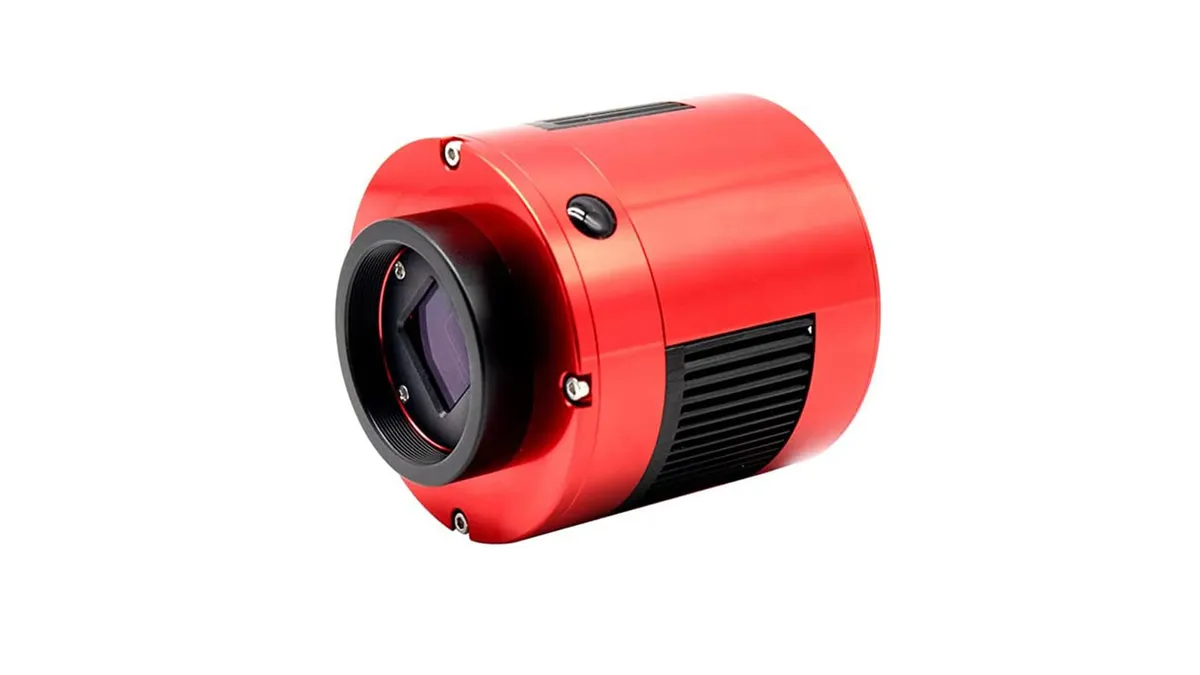
In our opinion the ZWO ASI533MC Pro camera is the best dedicated astro camera out there. It features a 9MP sensor with zero amp glow, 80% quantum efficiency and a 20FPS frame rate. Check out our ZWO ASI533MC Pro review for a more in-depth look.
"This time, I started to gather my data early in the autumn, when Orion was just coming up into the night sky and this way…I managed to get 69 hours and 15 minutes worth of HaLRGB data," continued Andronic. "Because Greater London with its very bad light pollution is not very far from where I live, shooting LRGB in the South is a bit tricky, but after a careful selection of the best subs (exposures), I got a result that I am very pleased with."
The individual exposures were then carefully stacked and edited using the astronomy software PixInsight and good old Adobe Photoshop, resulting in a breathtaking nebula image studded with the multicolored light of countless stars.
Interested in falling in love with astrophotography for yourself? Then be sure to check out our collection of the best cameras and lenses for astrophotography, along with our beginners guide to capturing the glowing band of the Milky Way with a DSLR camera. You can also check out our roundups of the best smart telescopes, which will have you taking your own incredible photos of galaxies and nebulas in no time!
Editor's Note: If you would like to share your astrophotography with Space.com's readers, then please send your photo(s), comments, and your name and location to spacephotos@space.com.