Grab your telescope and join us tonight as we take you on a tour of three magnificent lunar craters named after pre-eminent astronomers and philosophers who helped shape our understanding of the universe around us!
Earth's moon is an awe-inspiring sight, especially when viewed through the magnifying eyepiece of a telescope, which helps reveal the incredible array of craters scarring its ancient surface.
Each of these impact sites stands testament to the violence of its creation — cataclysmic collisions that carved vast basins in the lunar surface, while hurling debris miles across the face of Earth's natural satellite. Read on to explore three such geographical wonders named for the legendary astronomers Aristotle, Eudoxus of Cnidus and Giovanni Domenico Cassini, which make for spectacular targets on the nights surrounding the first quarter moon on Jan. 25.
Eudoxus Crater
Look high above the southern horizon at sunset on Jan. 25 to find the moon with its right half illuminated by direct sunlight and its left veiled in shadow. The 42-mile (67-kilometer) Eudoxus Crater is located in the northeastern quadrant of the lunar surface, above the ancient solidified lava plain of Mare Serenitatis.
The vast impact crater is named for the ancient Greek astronomer and mathematician Eudoxus of Cnidus, who attempted to describe the motion of the planets through the sky by developing a model of our solar system in which Earth — at its center — is surrounded by a series of concentric spheres that dictated the motion of celestial bodies.

Of course the 2.1-mile (3.4 km) deep crater that now bears his name was formed many millions of years before Eudoxus invented his model that bore silent witness to the numerous dramatic revisions that led to our current heliocentric view of the solar system. A vast swathe of the ancient crater's eastern interior will be veiled in impenetrable shadow on the night of Jan. 25, giving the impact site a dramatic appearance that is entirely lacking during other lunar phases.
Aristoteles Crater
Next, sweep your eyes just north of Eudoxus to find the 54-mile (87 km) Aristoteles Crater bordering the southern edge of Mare Frigoris (the Sea of Cold). As with Eudoxus, the angle of the moon and sun will cast sections of the Aristoteles Crater into shadow, highlighting the broken terrain bordering its central basin plain, upon which a collection of hill-like features reside.
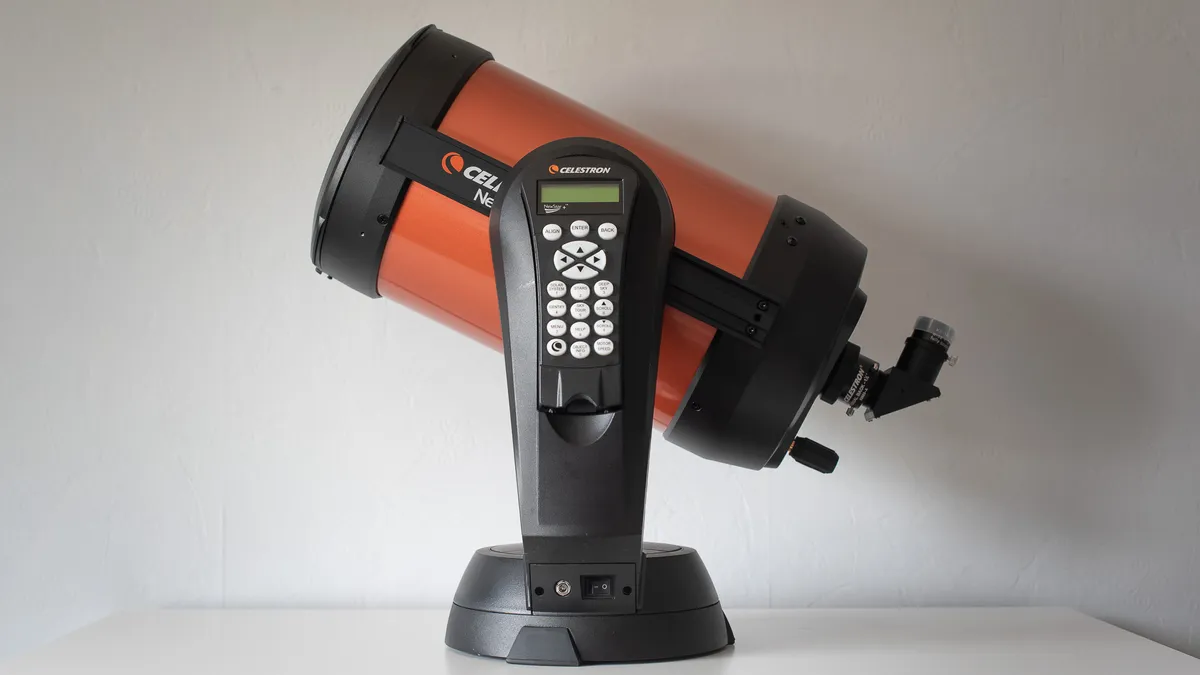
The Celestron NexStar 8SE is ideal for beginners wanting quality, reliable and quick views of celestial objects. For a more in-depth look at our Celestron NexStar 8SE review.
The crater is named after yet another famous Greek philosopher and astronomer, Aristotle, who lived from 384 to 322 BC. Like Eudoxus, Aristotle believed that Earth was positioned at the center of the universe and developed his own model of the solar system in which the sun, stars and planets revolved around it in a series of solid, crystalline spheres set in motion by a "Prime Mover", which resided in the outermost sphere.
Aristotle was also among the first of his contemporaries to recognise that Earth was spherical, based on his observations of the curved shadow cast on the lunar surface during a lunar eclipse.
Cassini Crater
For the final stop of our tour we'll take a leap towards the terminator, over the Montes Caucasus mountain range to visit the Cassini Crater, which can be found scarring the eastern edge of Mare Imbrium (the Sea of Showers) 40 degrees above the lunar equator.

The 35-mile (57 km) wide impact site was named after the 17th/18th century astronomer Jean-Dominique Cassini. His illustrious career saw him make detailed observations of the planets, calculate the rotational speed of Mars and discover the Saturnian moons Rhea, Tethys and Dione.
Only the outer rim of the Cassini Crater is visible, with the basin itself having been flooded by molten lava, which cooled many millions of years ago to resurface its interior. Two younger craters have since formed within Cassini's expanse, the basins of which are drenched in darkness around the time of the first quarter moon, making for a visually spectacular telescopic target.
Want to explore the moon's ancient surface for yourself? Then be sure to read our guide to observing the lunar surface with a telescope. If you're looking to update your gear you may also want to peruse our picks of the best binoculars and telescopes for astronomy, which cater to every experience level and budget.
Editor's Note: If you would like to share your lunar astrophotography with Space.com's readers, then please send your photo(s), comments, and your name and location to spacephotos@space.com.