Latest articles by Daisy Dobrijevic

Catch Lyrid meteors live online with these stunning sky cams from around the world.

The Lyrid meteor shower peaks in the early hours of April 22, offering up a possible feast of impressive shooting stars and the occasional fireball.
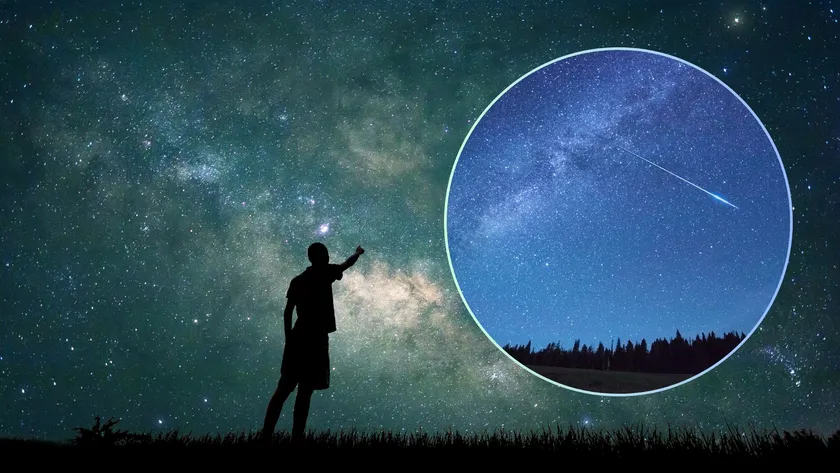
The Lyrids are back! Here's where to look and how to spot these shooting stars.

Fast solar wind could spark geomagnetic storms tonight, pushing auroras into mid-latitudes.

Reference The best time to view the Lyrids this year will be early morning on April 22.

Reference From its 1970 origins to a global movement, Earth Day 2026 highlights the power we all have to protect our planet.

Friday, April 10, 2026: See our latest news and updates on NASA's Artemis 2 moon mission.

Live coverage of Artemis 2's splashdown begins this evening as four astronauts return from their historic 10-day mission around the moon.

A Virtual Telescope Project livestream will track NASA's Artemis 2 Orion spacecraft as it races back toward Earth. Here's how to watch it live.

Artemis 2 astronauts witness a rare solar eclipse from beyond the moon during their historic lunar flyby.

Explore some of the best pranks carried out in space. From rogue gorillas to smuggled sandwiches, we discover the lighter side of space exploration.

Auroras may be visible from Alaska to Wyoming tonight as Earth braces for impact from a speedy coronal mass ejection.

An X1.4 solar flare triggered radio blackouts and launched a fast CME as NASA prepares for its Artemis 2 moon mission.

Powerful geomagnetic storms sent the northern lights dancing far beyond the poles, delivering a spectacular show across the world.

Auroras may be visible from Alaska to Illinois tonight and over the weekend as several coronal mass ejections and fast solar wind impact Earth.

Incoming solar storms could spark auroras this weekend and thanks to the spring equinox, Earth is perfectly aligned to amplify the show.

Auroras may be visible from Alaska to Illinois tonight as several coronal mass ejections barrel toward Earth.

Aurora chasers, keep your eyes on the skies over the coming days as several incoming coronal mass ejections could spark favorable conditions for widespread northern lights displays.

Auroras may be visible from Alaska to Maine tonight and tomorrow as a speedy solar wind stream is due to arrive.

Reference Here we explain why March is one of the best months of the year to see the northern lights — and how the spring equinox boosts aurora activity.

The James Webb Space Telescope captured a stunning spiral galaxy 65 million light-years away, revealing glowing dust clouds and stellar nurseries.

The next lunar eclipse will occur in the early hours of March 3, 2026, for observers in North America. We'll be updating this live blog as the event unfolds.

The JUICE spacecraft captured its first detailed glimpse of interstellar comet 3I/ATLAS, revealing a glowing coma and sweeping tail.

