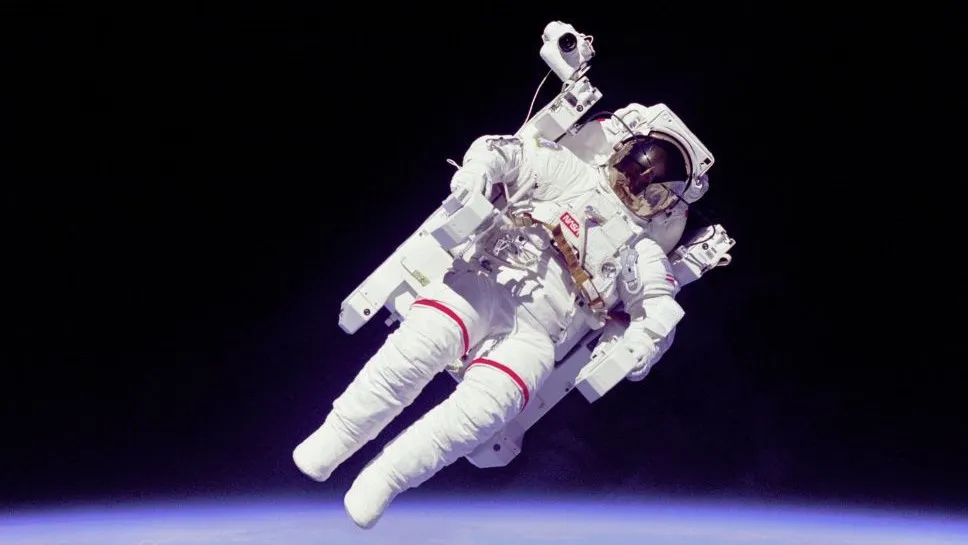
If you want to become an astronaut, there are lots of ways to do it now.
The traditional path is to apply to a space agency, like NASA. But that's not the only possible way to get to space. If you can afford it, you may be able to buy a ticket with a private vendor. Or you may get lucky and win a contest to fly to space.
As of August 2023, fewer than 700 people have made it to space. But that number is expected to surge as space tourism becomes even more popular and private companies expand their space research.
Read on to learn more about how to become an astronaut.
FAQ
What do you study to become an astronaut?
In general, professional astronauts need training in science, technology, engineering and math (STEM), along with considerable experience working in difficult environments, like airplanes or remote expeditions.
How long does it take to become an astronaut?
Most professional astronauts aren't hired until they are at least in their 30s, which means they have a decade or more of professional experience and educational experience in technical fields. Then, it takes about two years to qualify for space and several more years of mission training.
How hard is it to become an astronaut?
Becoming an astronaut requires resources and determination. Many people apply for professional astronaut jobs several times before being accepted. If you can't get to space through that pathway, however, you may be able to save up for space tourism.
NASA
This article focuses on the selection process for NASA, which applies to U.S. citizens. While many of the qualifications can be generalized to astronaut programs in other countries, each space agency has its own selection process.
NASA's basic requirements include U.S. citizenship, as well as a master's degree or equivalent in science, technology, engineering and mathematics (STEM). The agency also wants candidates to have at least two years of relevant professional experience (teaching students counts as experience) or 1,000 hours of pilot-of-command time in an aircraft.
Astronaut candidates also must pass a long-duration physical. Generally, astronaut candidates greatly exceed these requirements and have substantial experience in isolated, confined environments similar to space. See NASA's website for more information about the qualifications and process, which opens up every few years.
NASA and most other agencies have an astronaut candidate process, in which a newly selected individual must pass a series of basic tests across two to three years of training before being qualified as an astronaut.
Even after that, astronauts may spend years or decades on the ground, waiting for a slot to open on a rocket mission. They are busy on the ground, however, supporting other space missions, working on spacecraft development and performing other agency tasks.
NASA astronauts typically fly to the International Space Station (ISS) for up to a year and are now being assigned for Artemis program missions to the moon.
International space agencies
Non-U.S. citizens in the following geographical areas should consult one of these agencies for more information on becoming an astronaut:
- European Space Agency (ESA): Notably, ESA is now accepting "parastronauts," meaning astronauts with physical disabilities. The agency also has a reserve astronaut program in which you work another job following selection but may be called on short notice for a space mission.
- Japan Aerospace Exploration Agency (JAXA)
- Canadian Space Agency (CSA)
- Russian Federal Space Agency (Roscosmos)
- China National Space Administration
- Indian Space Research Organisation (plans to recruit astronauts relatively soon)
- United Arab Emirates (UAE) Space Agency (external page in Arabic)
Like the U.S. space program, JAXA, ESA and CSA fly missions to the ISS and are expected to bring people to the moon as well. (CSA already has an astronaut, Jeremy Hansen, assigned for the round-the-moon Artemis 2 mission, alongside three NASA astronauts.)
Russia is an ISS partner, but due to geopolitical concerns from its unsanctioned 2022 invasion of Ukraine, it is building an independent space program that will begin in 2028 at the earliest. The UAE is newer to human spaceflight, but so far, the country has been working closely with NASA on missions.
Some countries are going to space independently. China runs its own space program and space station, largely due to ongoing U.S. security concerns. India is working on launching astronauts independently through its Gaganyaan spacecraft.
Space tourism
As of August 2023, the major vendors for space tourism include Virgin Galactic and Blue Origin, while SpaceX has pledged to do long-duration space missions for tourists in the future.
Both Virgin Galactic and Blue Origin offer a few minutes of weightlessness in suborbital space. Blue Origin flies rockets beyond the Kármán line, the internationally recognized boundary of space at 60 miles (100 kilometers) above mean sea level. Virgin Galactic flies above the U.S.' definition of space, at 50 miles (80 km) above mean sea level, using a carrier plane and space plane.
These private space tourism companies are occasionally open to ticket queries, but seats come at a hefty price. Virgin Galactic tickets cost $450,000 apiece the last time the company opened registrations. Blue Origin has not publicly released a price for its space flights yet.
You also may be able to participate as an astronaut by being employed by one of these companies, particularly in the case of Virgin Galactic. That firm has astronaut instructors who fly alongside tourists to assist them during their brief moments of spaceflight and pilots who operate the spacecraft.
Occasionally, the nonprofit Space For Humanity opens up calls for tourists to participate in Blue Origin or Virgin Galactic flights — and some have gone to space already. Space For Humanity seeks to fly individuals from regions of the world that have been underrepresented in spaceflight, like Egypt or the Caribbean. The funding comes from billionaire founder Dylan Taylor, who flew on a Blue Origin flight as a space tourist.
As space tourism expands, you may find other opportunities to fly to space through contests or other companies. SpaceX has at least two tourism missions planned for its future Starship system. These missions are funded by billionaires. One, called dearMoon, will fly eight artists around the moon along with its funder, Japanese billionaire Yusaku Maezawa. On the other mission, billionaire Dennis Tito; his wife, Akiko; and eight other individuals will fly around the moon as well. No flight dates have been released for these opportunities yet.
Private companies
So far, the private companies offering flights to space are SpaceX and Axiom Space (with Axiom using SpaceX spacecraft.) Axiom Space does short-term missions to the ISS, with one of its employees (always a former NASA astronaut due to agency rules) in charge of the mission. The company has flown private individuals on these missions to conduct spaceflight research, but they have tended to be wealthy folks who have paid tens of millions of dollars for their seats.
SpaceX has pledged four missions with billionaire Jared Isaacman. One mission has already flown: Inspiration4 was a 2021 excursion to Earth orbit with Isaacman and three other individuals, who received their seats through contests or personal connections. The mission also aimed to raise hundreds of millions of dollars for St. Jude Children's Research Hospital in Memphis, Tennessee.
Isaacman is now running a private space initiative, the Polaris Program, in which he will return to space three more times if the program goes as planned. Each of these missions will also raise money for St. Jude.
The first of the three missions, Polaris Dawn, will fly Isaacman, two SpaceX employees and a long-term business associate of his on a high-altitude mission above Earth. Polaris has also offered a mission to boost the altitude of the Hubble Space Telescope, but NASA is investigating the mission feasibility and opening up the idea to other vendors as well.
Alternative pathways or substitutes
A few people have been to space through pathways that cannot easily be replicated. The North American X-15 program, for example, brought eight military pilots above the U.S. altitude of space in the 1960s. Early test flights on SpaceShipOne, the predecessor to today's Virgin Galactic ships, also flew above the U.S. boundary of space.
There are numerous options to study astronaut work on the ground, such as through private academies, research studies and analog missions. These pathways may or may not lead to space. But at the very least, they will get you doing astronaut-like activities, such as working in spacesuits, learning how to operate in remote water or land environments, and performing science research in difficult conditions.
Parabolic or zero-gravity flights will let you experience microgravity, or gravity like that on the moon or Mars, for a few seconds at a time. Private vendors Zero-G (in the United States) and Novespace (in Europe) use special aircraft that climb and fall in a pattern of parabolas. As the aircraft falls, you will experience either a few seconds of floating or a few seconds of lighter gravity, depending on the situation. These excursions are expensive (in the range of $10,000), but they are far cheaper than a ticket to space.
Some balloon companies, like World View and Space Perspective, are working on private missions that will bring tourists to the edge of space. Seats on World View, for example, are listed at $50,000 apiece. Both companies have pledged to fly their balloons high enough in the atmosphere for people to experience the curvature of the Earth and the blackness of space.
Q&A: Jasmin Moghbeli, NASA astronaut

Jasmin Moghbeli is a NASA astronaut and a lieutenant colonel in the U.S. Marine Corps.
She was selected by NASA in 2017 as an astronaut candidate and is now fully qualified for spaceflight. Her first mission will be Crew-7 on a SpaceX spacecraft. Before working at NASA, she was a Marine Corps test pilot. She has a Bachelor of Science in aerospace engineering (with information technology) and a Master of Science in aerospace engineering.
What degrees count to be an astronaut?
You need a master's degree in a STEM field, so science, technology, engineering or mathematics. There are certain degrees that don't count, such as nursing, psychology, exercise physiology or social sciences.
What do you do during training?
We're constantly working on training our first two years. This week, I'm getting in the Neutral Buoyancy Lab [a big swimming pool] to practice a spacewalk. Later, I'm getting into a T-38 jet. So it's a continuous process every day.
Why do astronauts need to pass a physical?
You need to be able to do spacewalks. You also need to be able to fly jets for training. So we need to make sure everyone's in their best physical condition.
This Q&A was based on a YouTube video by NASA on March 2, 2020.
Additional resources
Learn more about NASA astronauts on the agency's website. Get inspiration for your own educational pathway to space by reading the biographies of current NASA astronauts.
Bibliography
Axiom Space. (2023). "Private Astronauts." https://www.axiomspace.com/private-astronauts
European Space Agency. (n.d., accessed Aug. 16, 2023). "Parastronaut Feasibility Project." https://www.esa.int/About_Us/Careers_at_ESA/ESA_Astronaut_Selection/Parastronaut_feasibility_project
European Space Agency. (Nov. 23, 2022.) "ESA Presents New Generation of Astronauts." https://www.esa.int/Science_Exploration/Human_and_Robotic_Exploration/ESA_presents_new_generation_of_astronauts
NASA. (Feb. 7, 2022). "Frequently Asked Questions." https://www.nasa.gov/feature/frequently-asked-questions-0/
Space for Humanity (2023.) "The World's First Sponsored Citizen Astronaut Program." https://spaceforhumanity.org/apply