






'Arsenic Life' Claim Refuted by 2 New Studies
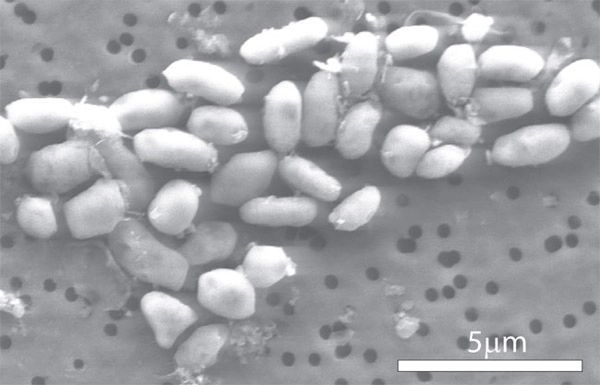
Leader of the 2010 study, Felisa Wolfe-Simon had acknowledged very low levels of phosphate within their study samples; however, they concluded the contamination would've been insufficient to allow GFAJ-1 to grow.
Now the two separate studies find that Wolfe-Simon's medium did contain enough phosphate contamination to support GFAJ-1's growth. It's just that GFAJ-1, a well-adapted extremophile living in a high-arsenic environment, is thrifty, and is likely capable of scavenging phosphate under harsh conditions, helping to explain why it can grow even when arsenic is present in its cells.
Wolfe-Simon and her colleagues discovered the bacteria in desolate Mono Lake, Calif., finding evidence the extremophiles could munch on arsenic to survive in the absence of phosphorus, an element long established as a critical building block of life. [Stunning Images of Mono Lake]
The finding soon spurred a lively debate, with outside researchers criticizing the paper's methods. "The basics, growing the bacteria and purifying the DNA, had a lot of contamination problems," said microbiologist Rosie Redfield of the University of British Columbia, in February. Redfield is the author of one of the newly published Science papers.
This story was provided by LiveScience, sister site to SPACE.com. Follow LiveScience on Twitter @livescience. We're also on Facebook & Google+.