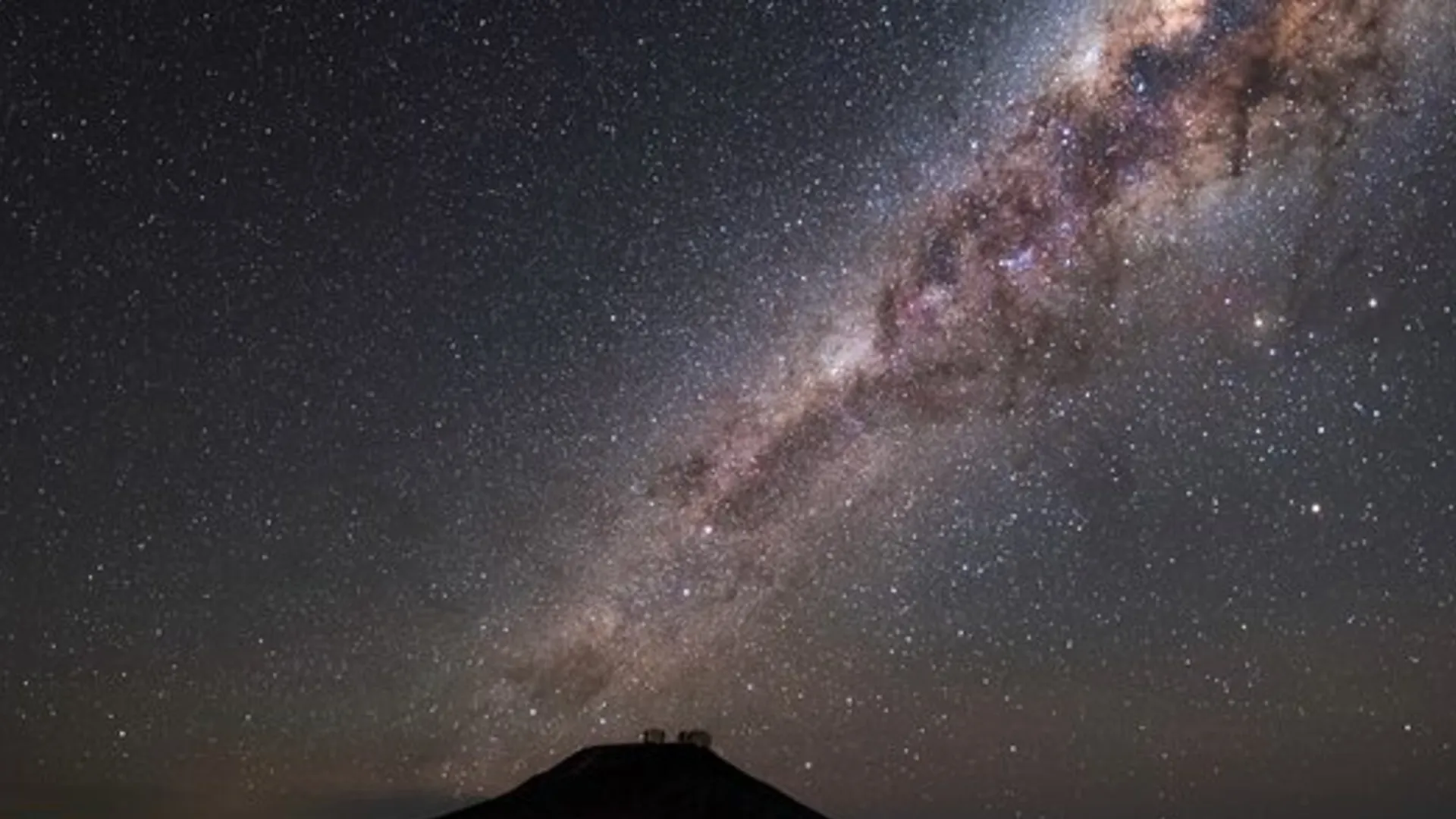
A plan to build a light-polluting green hydrogen plant near one of the world's most important astronomical observatories has been cancelled by the company behind it. The decision is a relief to astronomers all over the world as the site could have caused serious harm to astronomical research.
The project, called INNA, was planned by AES Andes, a subsidiary of the U.S. utility company AES Energy. First proposed in 2024, the $10 billion project caused a stir among astronomers as it was to be located only a few miles from the European Southern Observatory's (ESO) Cerro Paranal site, which hosts the Very Large Telescope (VLT), one of the most powerful machines for observing the distant universe. Despite assurances by AES that the lights at the 7,465-acre industrial park would only have a minor effect on nearby supersensitive astronomical instruments, ESO's own calculations showed that light pollution above Paranal could increase by up to 35%. ESO warned that such an increase would undo the advances made by improvements in telescope technology, prohibiting cutting-edge research such as direct observations of exoplanets or study of the most distant galaxies.
"When the cancellation is confirmed, we'll be relieved that the INNA industrial complex will not be built near Paranal," ESO Director General Xavier Barcons said in a statement. "Due to its planned location, the project would pose a major threat to the darkest and clearest skies on Earth and to the performance of the most advanced astronomical facilities anywhere in the world."
AES Andes did not give a reason for the cancellation. The company issued a statement on Jan. 23 that said it had "chosen to focus its efforts on the development and construction of its renewable energy and energy storage portfolio, in line with the guidelines of its parent company in the United States."
AES Andes submitted an environmental impact assessment for INNA to the Chilean government in December 2024, and astronomers have been up in arms since. In addition to the VLT, an interferometer telescope consisting of four 28-foot-wide (8.5 meters) telescopes that work together as one, the Extremely Large Telescope (ELT), currently constructed on the neighboring Cerro Armazones would also be affected by the light pollution from the plant.
ELT is an astronomical super-machine with a nearly 125-foot-wide (38 m) mirror. Once completed toward the end of this decade, the telescope, worth over$1.54 billion will be the world's largest observing the universe in the visible light spectrum.
Chile's Atacama desert is one of the most valuable astronomical locations in the world. In addition to low light pollution levels, it also benefits from an almost permanently clear sky, low humidity and high altitude, which minimizes the distortions of the observations caused by Earth's atmosphere. In addition to ESO's facilities, the U.S.-led Vera C. Rubin Observatory, opened last year in Atacama. The astronomy community was therefore concerned about the precedent a permission to build INNA near Paranal would set.
"ESO and its Member States are fully supportive of energy decarbonisation and initiatives that ensure a more prosperous and sustainable future," Barcons said in the statement. "Green-energy projects — and other industrial projects that drive national and regional development — are fully compatible with astronomical observatories, if the different facilities are located at sufficient distances from one another."