





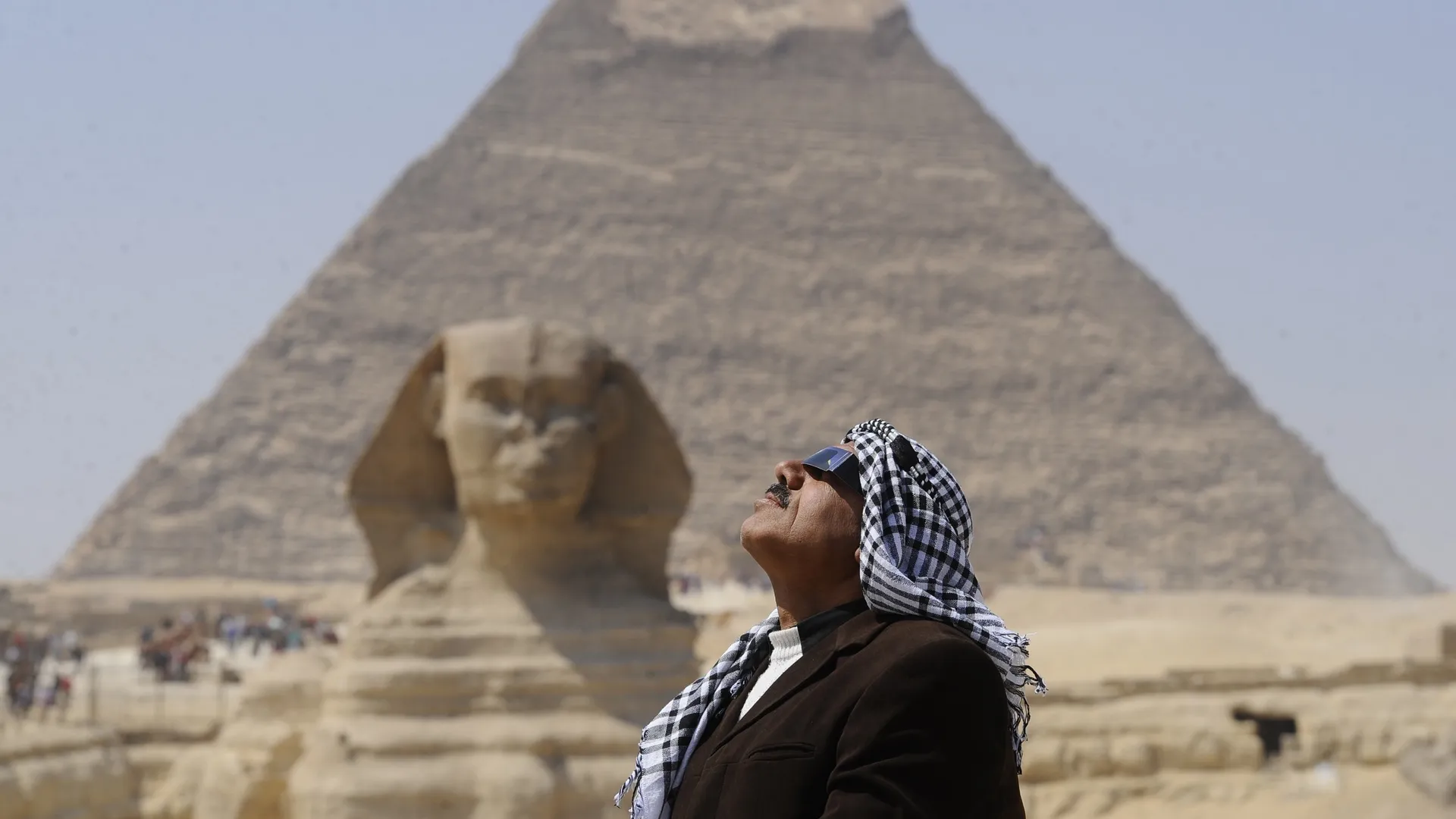
The solar system is a clock that can be run in both directions. On Aug. 2, 2027, that clock will bring the moon's dark central shadow — a path of totality — back to Egypt. A total solar eclipse will sweep across the country, passing directly over Luxor and plunging some of ancient Egypt's greatest surviving monuments into darkness. Totality will begin in Luxor at approximately 1:02 p.m. EEST and last 6 minutes 22 seconds, according to Time and Date.
We know when it will happen because we can calculate the motions of Earth and the moon centuries in advance. But run the same celestial clock backward and eclipses become one of nature's most precise timestamps.
Astronomers can reconstruct where the moon's shadow fell thousands of years ago, even when nobody left a record of it. When an ancient text reliably describes an eclipse, it can anchor a moment in history to a specific place and time.
Did an eclipse rewrite the Pyramid Age?
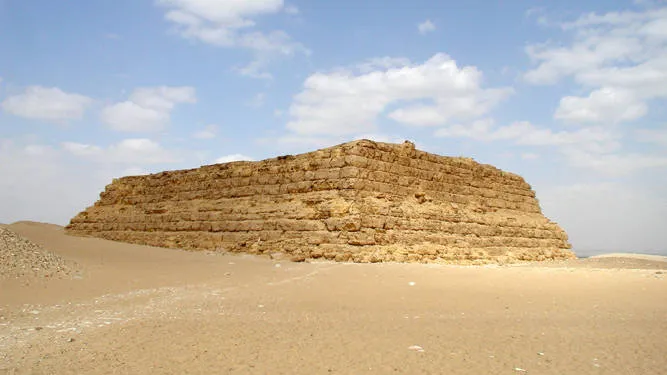
We know from astronomical calculations that eclipses crossed Egypt long before anyone left an identifiable written record of one. On April 1, 2471 B.C., a total solar eclipse swept across northern Egypt during the age of the great pyramid builders. In research published in 2025, archaeoastronomer Giulio Magli at the Polytechnic University of Milan proposed that the eclipse may help explain why Pharaoh Shepseskaf broke with tradition and built a huge rectangular tomb at South Saqqara instead of a pyramid. It's a tantalizing hypothesis, but no surviving Egyptian text records the eclipse.
Astronomers can calculate that an eclipse happened, but using it as a historical timestamp requires evidence that someone actually saw it and recorded it. That's where an eclipse almost 1,300 years later becomes particularly intriguing.
Is the oldest recorded eclipse hidden in the Bible?
A passage in the Old Testament book of Joshua describes the sun and moon as if they stopped in the sky. After leading the people of Israel into Canaan — modern-day Israel and Palestine — Joshua prayed: "Sun, stand still at Gibeon, and moon, in the Valley of Aijalon. And the sun stood still, and the moon stopped, until the nation took vengeance on their enemies." Ancient Gibeon is about six miles (10 kilometers) northwest of Jerusalem.
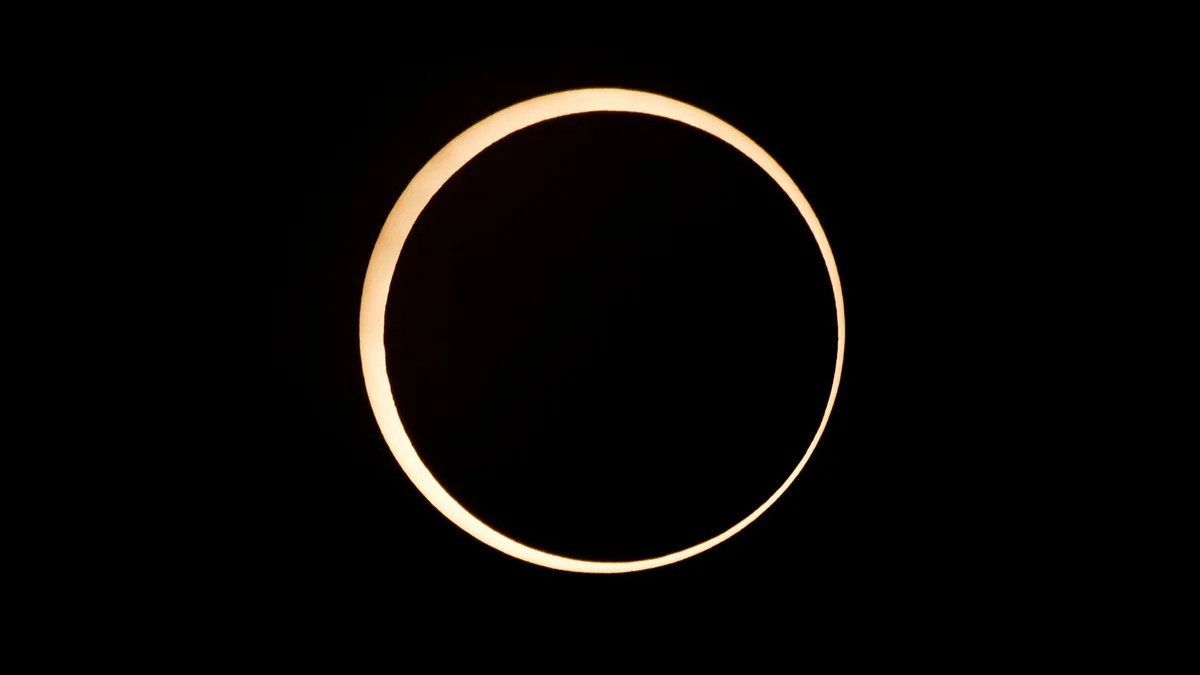
In research published in 2017, researchers Colin Humphreys and Graeme Waddington at Cambridge University in the U.K. claimed it could refer to an annular solar eclipse on Oct. 30, 1207 B.C. It's a controversial interpretation, not least because it depends on exactly how the ancient Hebrew text is translated. However, if correct, it could be the oldest recorded solar eclipse with a date that has been identified — and it could also more accurately date the reign of Ramesses II. Also known as Ramesses the Great, he reigned for 66 years during Egypt's New Kingdom, commissioned Abu Simbel, made major additions to Karnak and Luxor Temple, and lived to be over 90. His reign marked the final peak of ancient Egyptian imperial power. According to the BBC, he is the "Jupiter" of the pharaonic system. However, the precise dates of his reign remain subject to debate, with historians using a combination of archaeological, historical and astronomical evidence to reconstruct the chronology.
The riddle of the Merneptah Stele
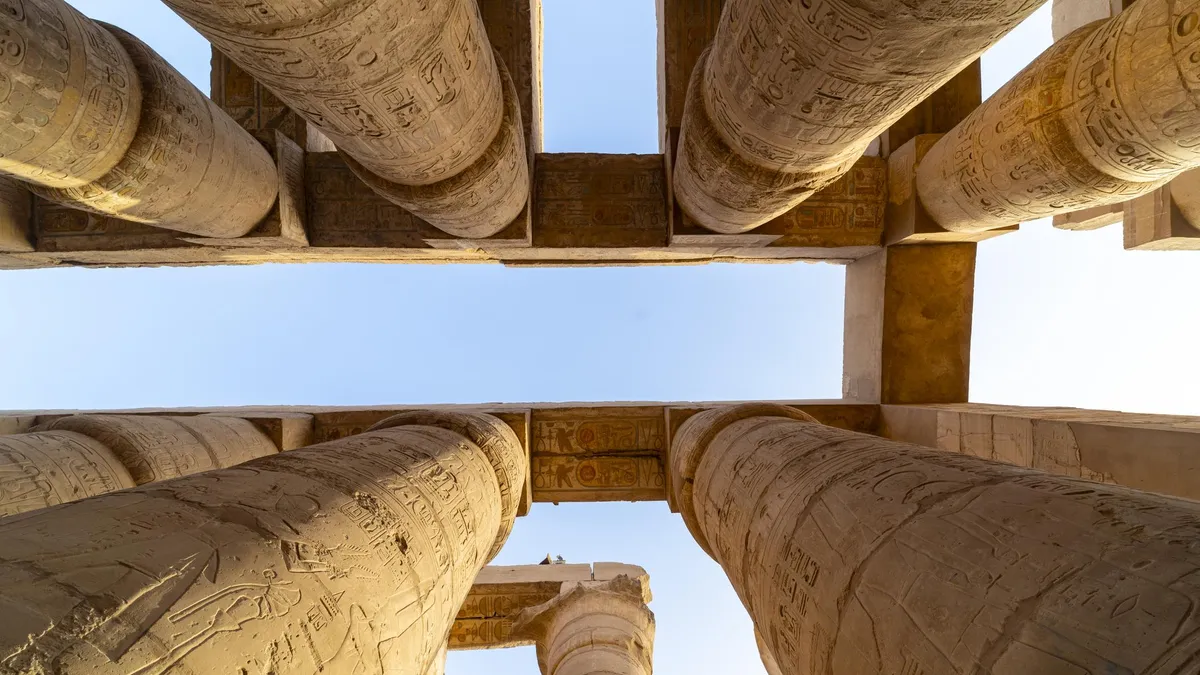
Now in the Egyptian Museum in Cairo, the Merneptah Stele is a large inscribed granite monument written in the fifth year of Pharaoh Merneptah's reign, successor to Ramesses II. Discovered in 1896 at Merneptah's mortuary temple on the west bank of the Nile, opposite modern-day Luxor, it describes an Egyptian military campaign in Canaan and mentions Israelites. Egyptologists generally date Merneptah's reign to around 1213 — 1203 B.C., placing his fifth year around 1209/1208 B.C. That means the Israelites were already living in Canaan by then.
Using calculations that accounted for changes in Earth's rotation over thousands of years, Humphreys and Waddington identified an annular eclipse visible from Canaan for five minutes on the afternoon of Oct. 30, 1207 B.C. If the biblical passage does describe this event, that's a fixed astronomical date that could be used to refine the chronology of the Egyptian pharaohs. The researchers proposed that it occurred during the second, third or fourth year of Merneptah's reign.
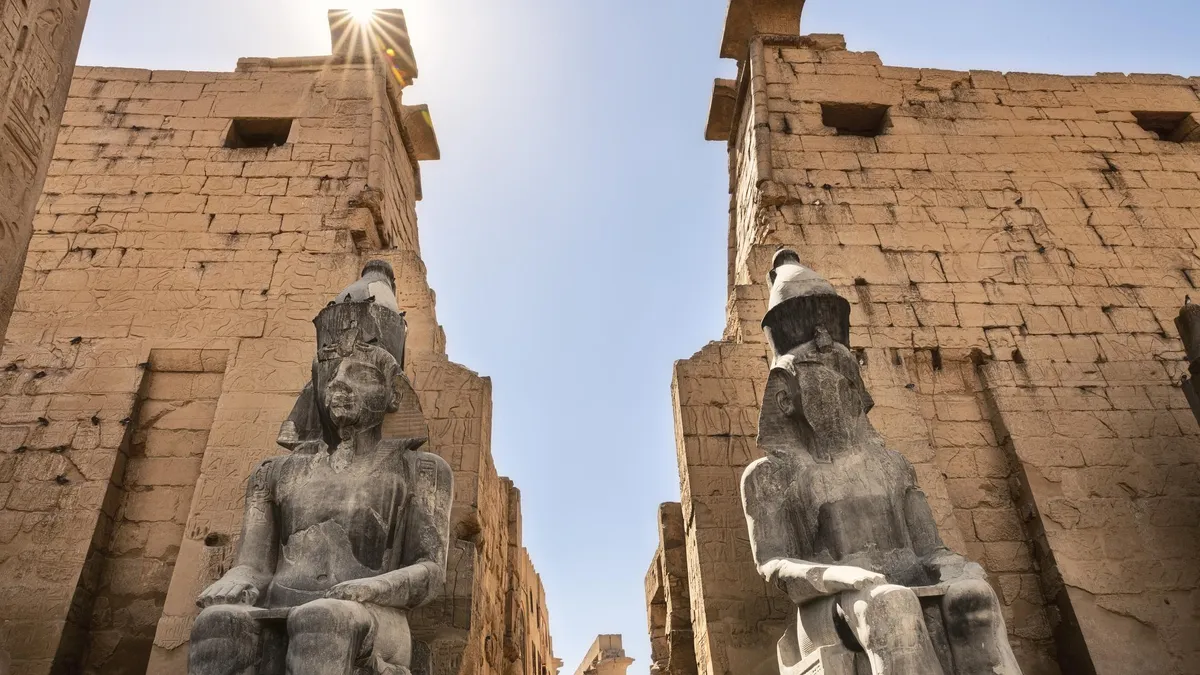
Can an eclipse rewrite history?
If Humphreys and Waddington's interpretation of the biblical text is correct, the eclipse of 1207 B.C. could be the oldest solar eclipse identified in a written record. The researchers propose that Ramesses II reigned from approximately 1276 to 1210, with an uncertainty of about a year, slightly different from the conventional dates of 1279-1213 B.C. used by the British Museum.
So an eclipse can be like a timestamp on an undated photograph, but this one does not show that the book of Joshua actually describes an eclipse. The interpretation of the Hebrew has been challenged by Marinus Anthony van der Sluijs, whose paper argues that the biblical narrative states that the sun was standing over Gibeon and the moon was over the Valley of Aijalon simultaneously — so not an eclipse at all.
On Aug. 2, 2027, there will be no such ambiguity. We already know where the moon's shadow will cross Egypt, when it will reach Luxor and how long darkness will last. Almost 4,500 years separate that eclipse from the one that crossed Egypt in 2471 B.C. and 3,233 years from 1207 B.C., but both are movements of the same celestial clock. Run it forwards, and it predicts the future. Run it backward, and occasionally an eclipse of the sun can put a date on history.