





A new set of slo-mo videos gives us a new perspective on SpaceX's first-ever recovery of a Starship upper stage.
The company notched the milestone on Saturday (Nov. 14), when the launch tower at its Starbase site in South Texas caught Starship's Ship spacecraft with its "chopstick" arms.
You've probably seen photos and videos showing the epic snag from afar. But on Tuesday (Nov. 17), SpaceX released up-close views — a series of four slo-mo videos captured by cameras near the top of the 480-foot-tall (146 meters) tower.
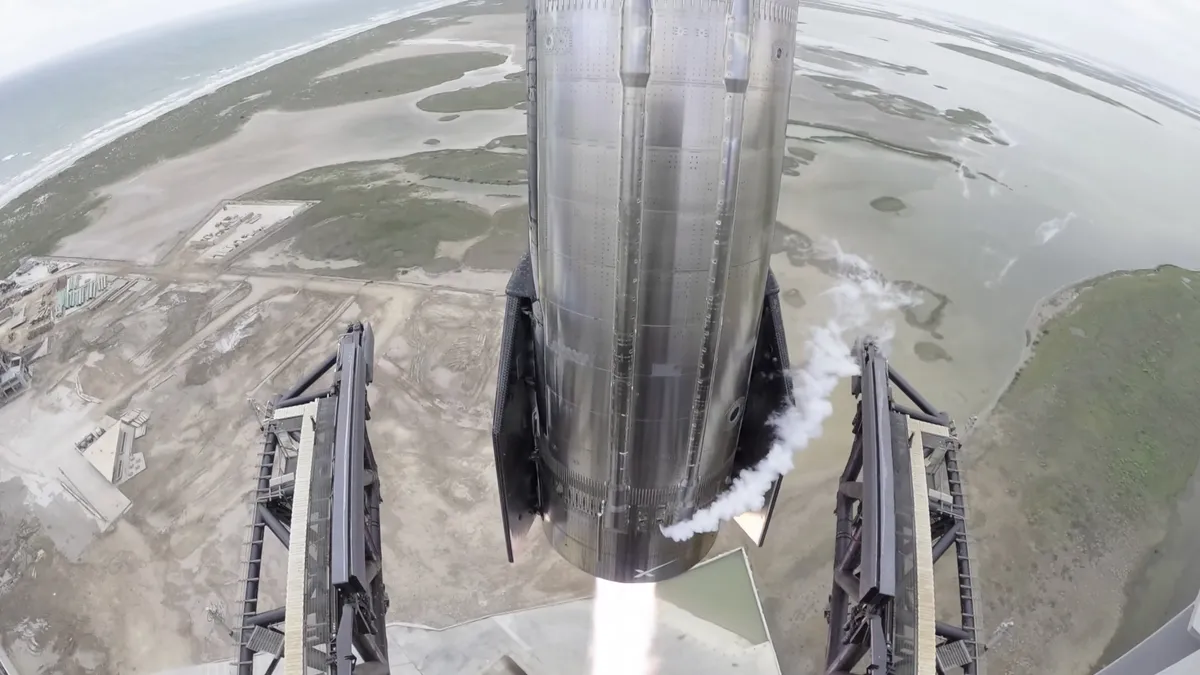
"The Starbase tower chopsticks catching their first Starship. This unique architecture was designed for full and rapid reusability, enabling repeat launches and landings from the same pad," SpaceX wrote in a Tuesday X post that shared the videos, a compilation of which you can see embedded above.
Starship is the biggest and most powerful rocket ever built. Its current "V3" version stands about 408 feet (124 m) tall, and future iterations will be even larger.
As SpaceX noted in Tuesday's post, the megarocket is also designed to be fully and rapidly reusable — a first for an orbital launch system. The company plans to catch both Starship stages — Ship and the Super Heavy booster — at the launch tower, a recovery strategy designed to enable efficient inspection, refurbishment and reflight.

SpaceX planned to carry out such a double catch on this most recent test flight, Starship's 15th to date, which launched on Friday evening (Nov. 13). But Super Heavy experienced a low-fuel warning during its return to Starbase about 6.5 minutes after launch and autonomously diverted to splash down in the Gulf of Mexico.
That wasn't a huge deal for SpaceX, as it had already caught Super Heavy on three previous test flights. Snagging Ship is tougher; the upper stage returns to Earth from orbit, so it comes in faster and hotter than the booster does.
SpaceX had not even attempted a Ship catch before Flight 15. But the company managed to pull off the maneuver on its first try.
And Ship did some work in orbit before coming home: It deployed 26 of SpaceX's next-gen Starlink V3 broadband satellites on Flight 15, the second batch that the company has sent to low Earth orbit. The first set was deployed on Flight 14, which launched on Sept. 28.