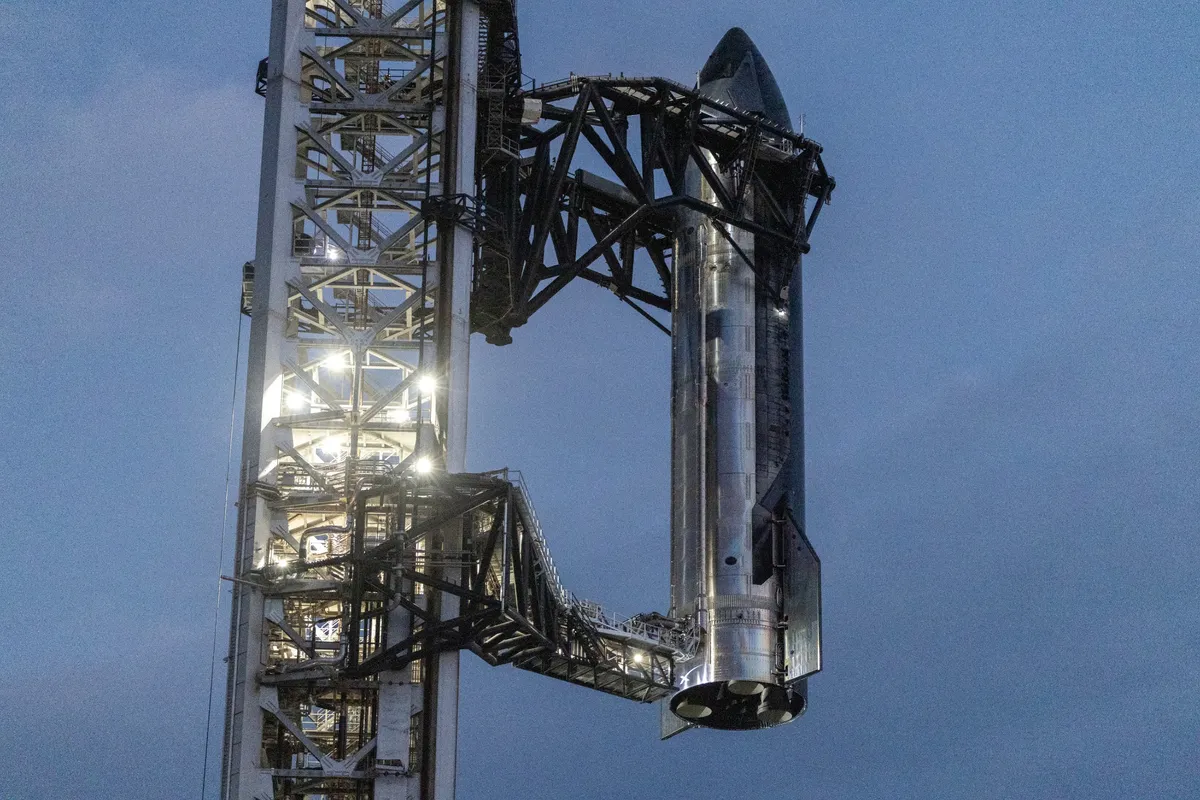





STARBASE, Texas — SpaceX has officially wrapped up the 15th test flight of its massive Starship rocket, successfully catching the vehicle's upper stage for the first time.
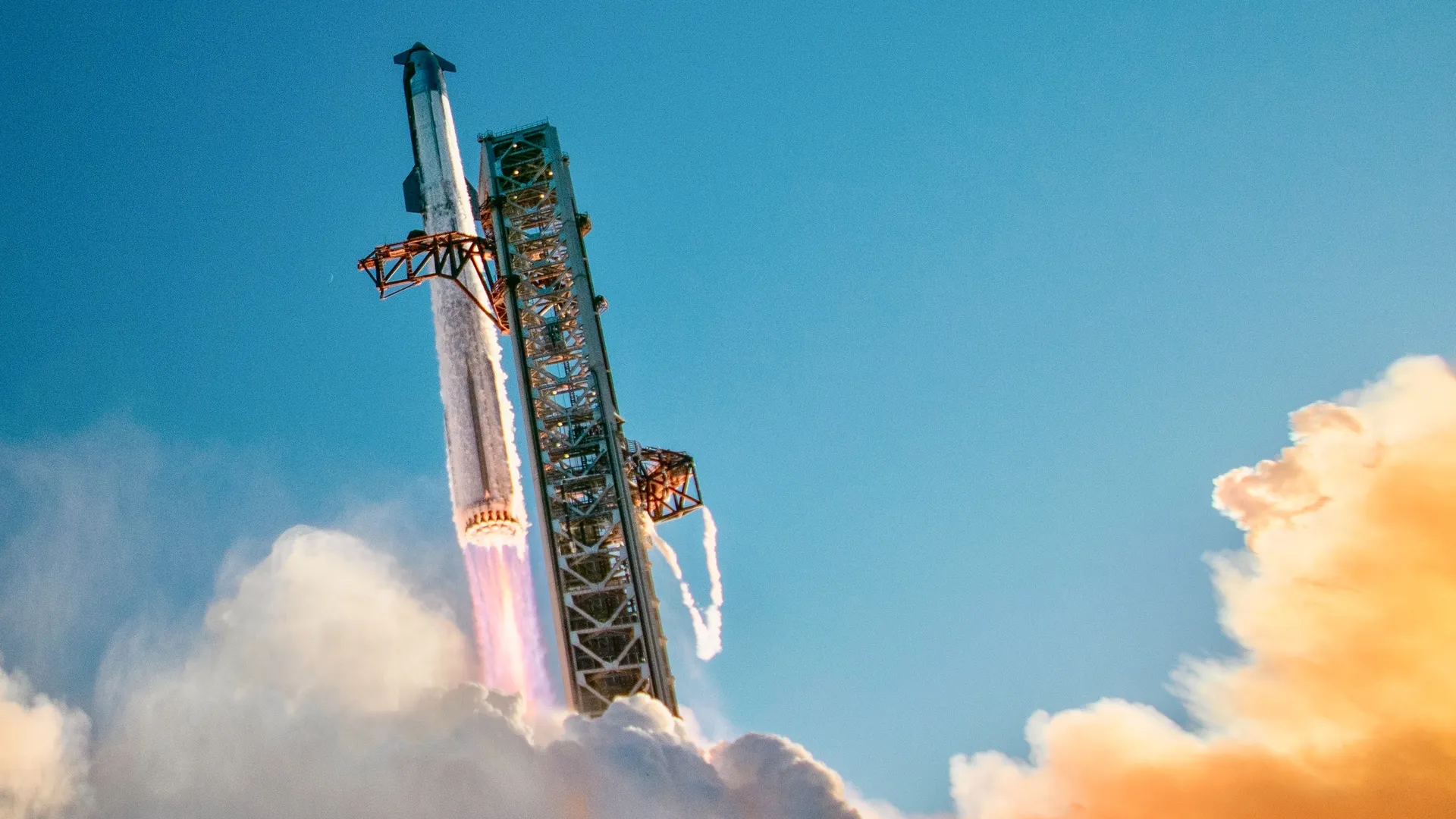
Flight 15 lifted off from SpaceX's Starbase facility here in South Texas on Friday (Nov. 13). The mission was billed as the first to bring both of Starship's stages, the Super Heavy booster and Ship upper stage, back to the launch site for recovery. And, while SpaceX was forced to divert Super Heavy's return to an off-shore splashdown (and explosion), the upper stage managed to survive its 22-hour jaunt in orbit and plunge through the atmosphere for a picture-perfect catch by the launch tower back at Starbase.
It was the first-ever Ship catch, and a huge milestone toward SpaceX's ultimate goal: making Starship completely reusable.
Liftoff occurred from Pad 2 at 5:47 p.m. EST (2247 GMT; 4:47 p.m. local time) on Friday, against a near cloudless blue sky. Super Heavy is powered by 33 Raptor 3 engines, which provide more than 18 million pounds of thrust at liftoff. And lift off the booster did.
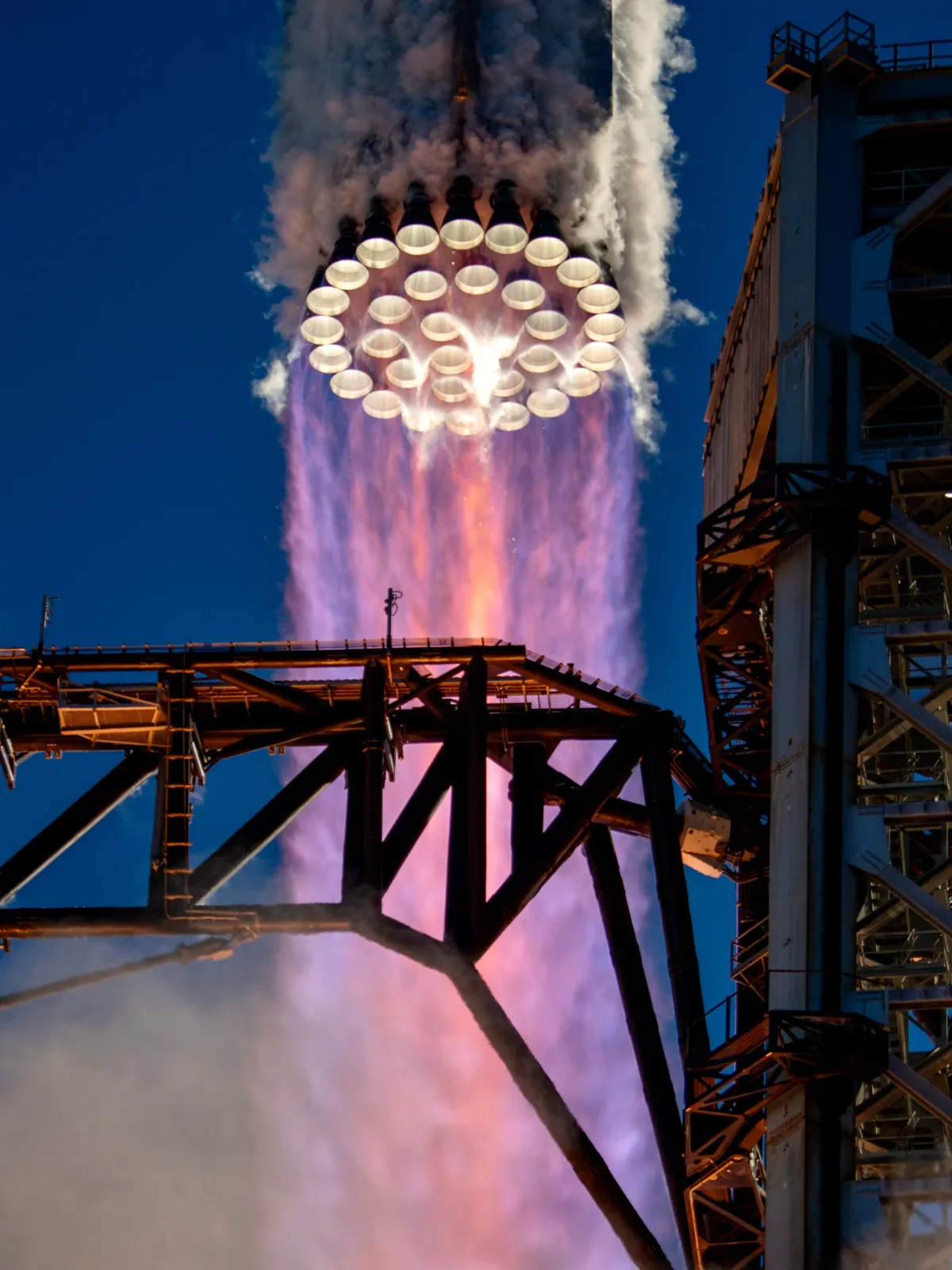
Starship roared off the pad under the power of those Raptors, pulsing visible shockwaves through the plume ejected from the rocket's flame trench.
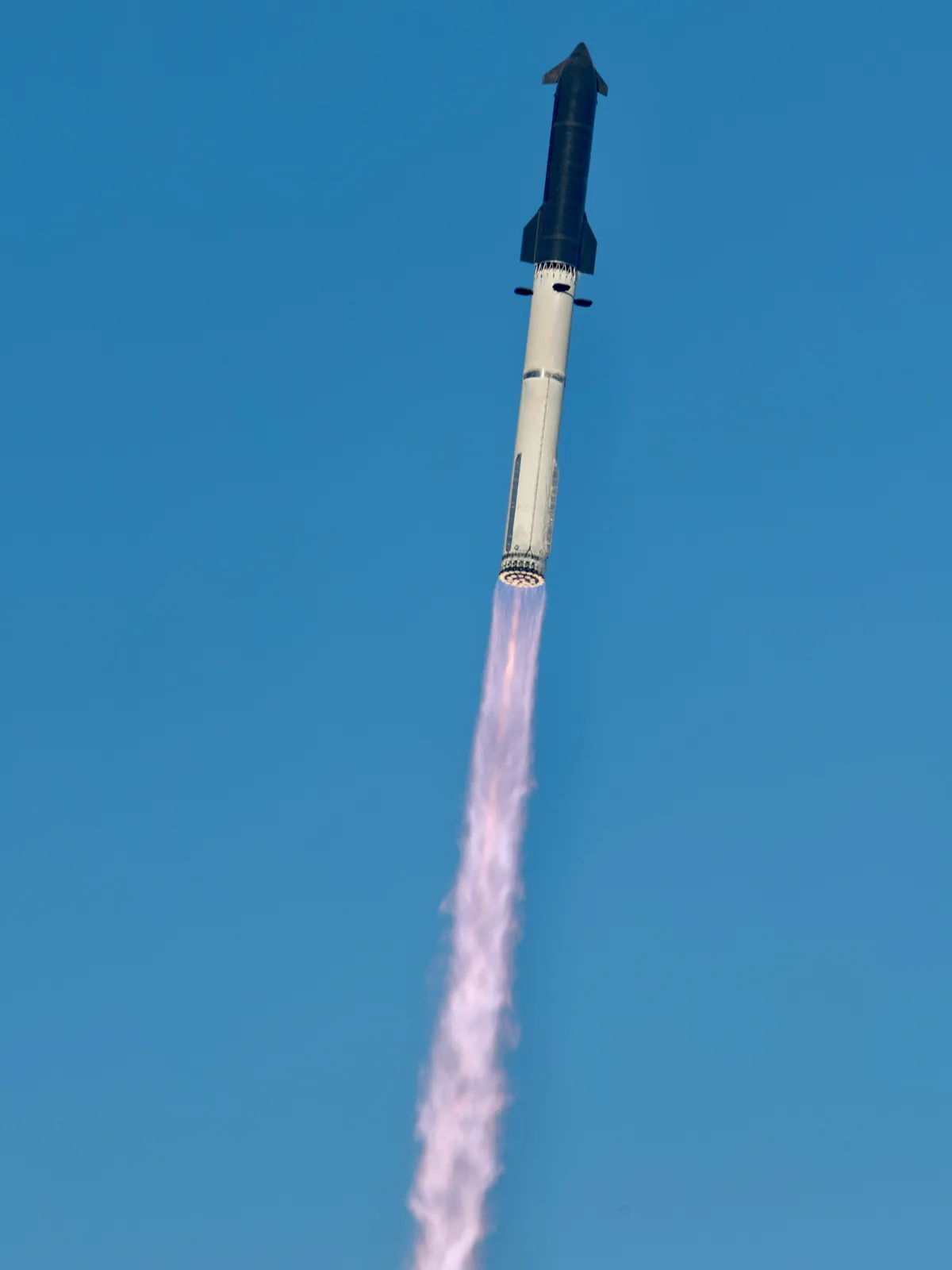
The first couple minutes of flight went nominally; the vehicle climbed into the sky, gearing up for the hot-staging separation of Super Heavy and Ship — all of which was visible for miles, thanks to the clear Texas skies.
Space.com's images taken from the media’s launch viewing area were shot on a Canon R5 Mark II, with an RF 200-800mm lens that made the sharp pictures of Starship’s liftoff and return possible from almost 4 miles away.

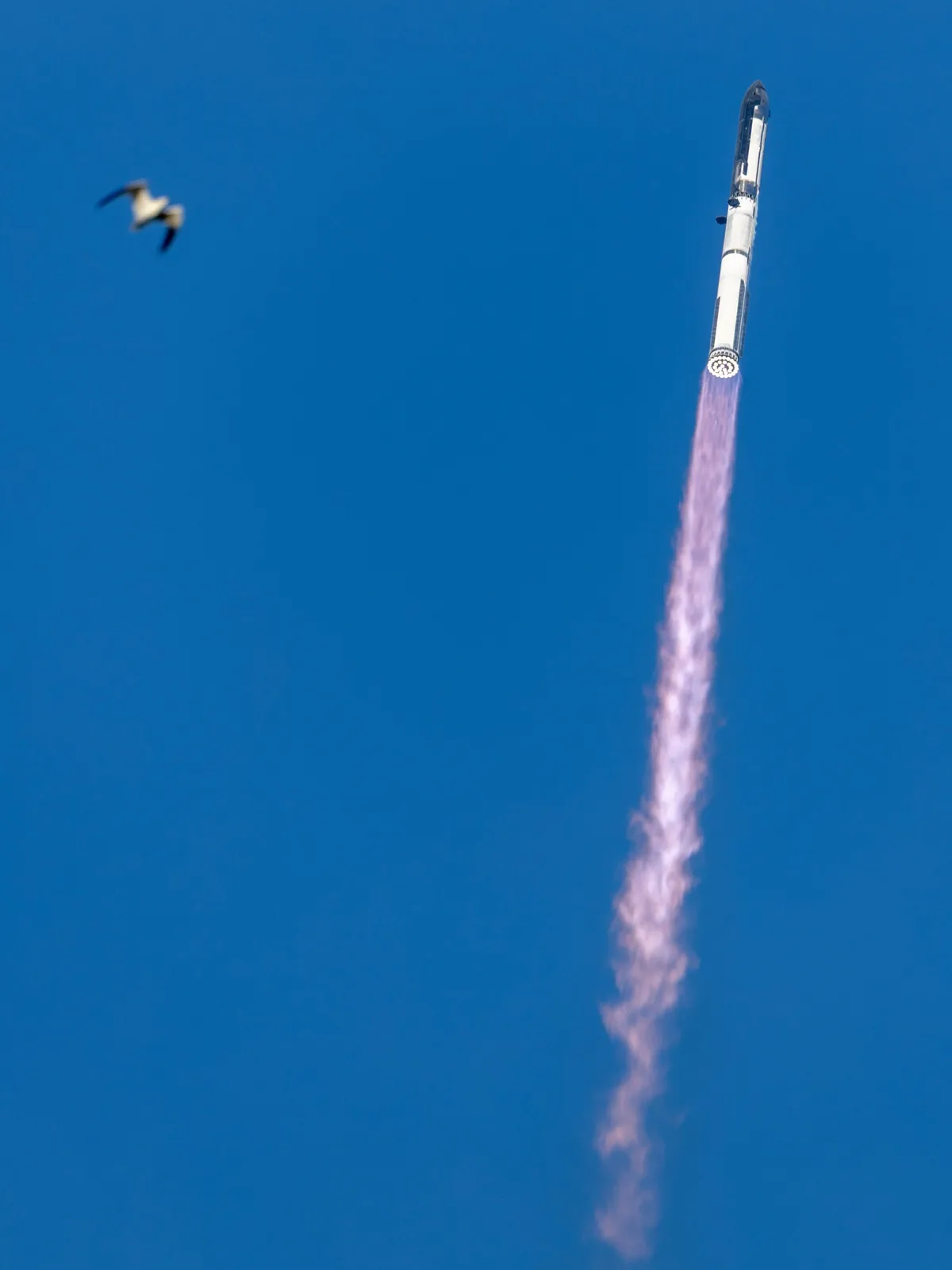
A successful separation occurred at T+2:21 minutes, as Starship soared approximately 40 miles (65 km) overhead. Once disconnected from its booster, Ship increased its thrust and continued onward to space, while Super Heavy, reoriented for its boostback burn and return to Starbase.
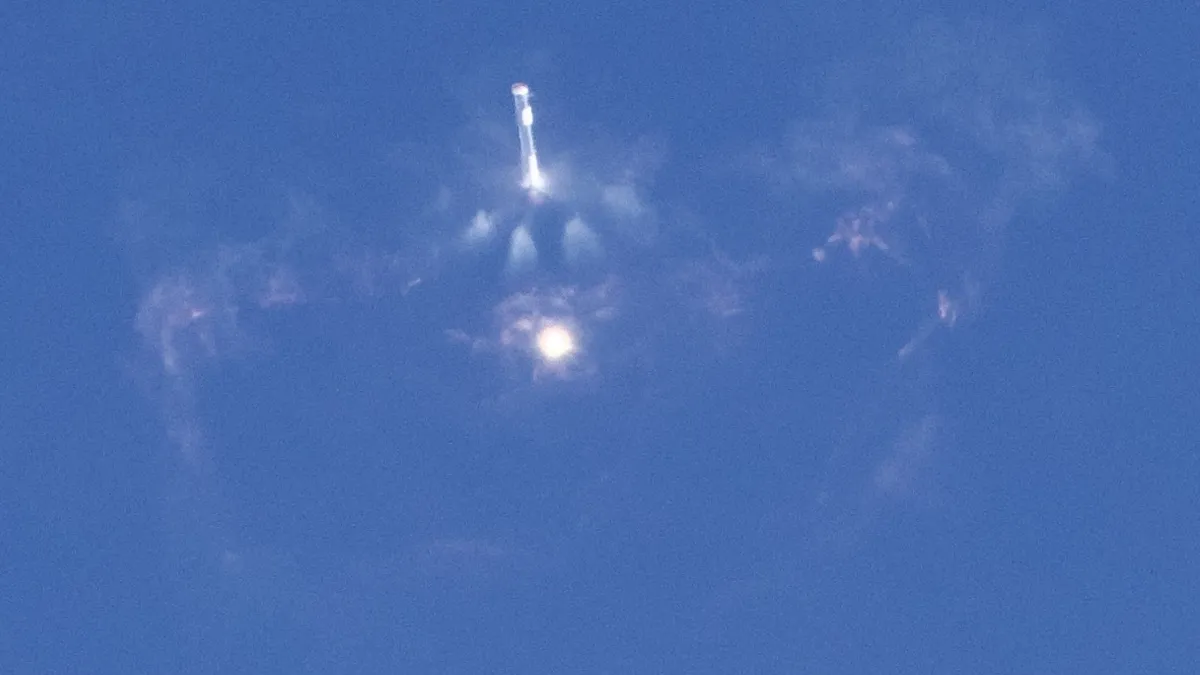
That return, however, did not go entirely as planned. Super Heavy experienced a low-fuel alarm and autonomously shifted to an offshore splashdown rather than a catch attempt at Starbase.
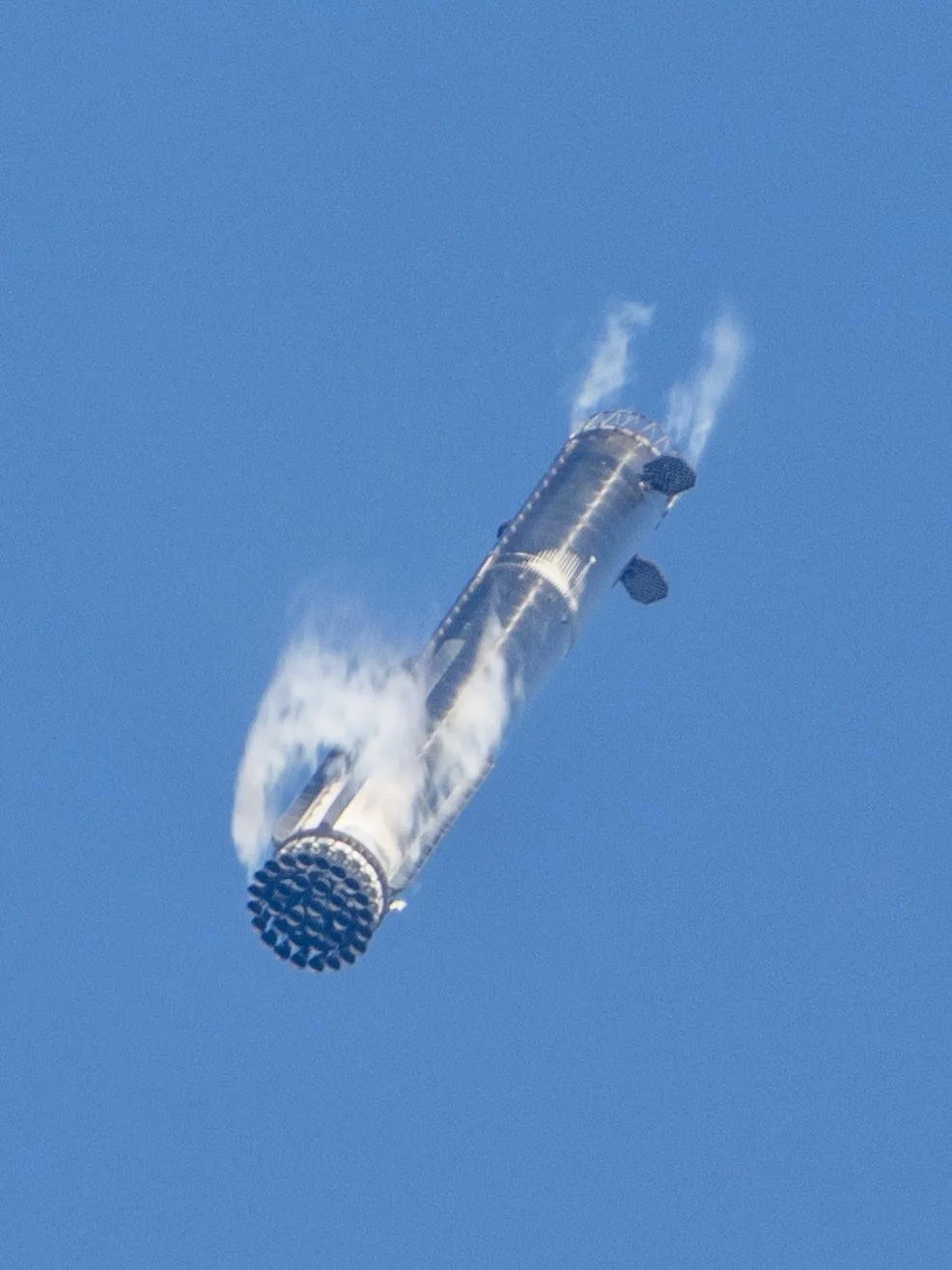
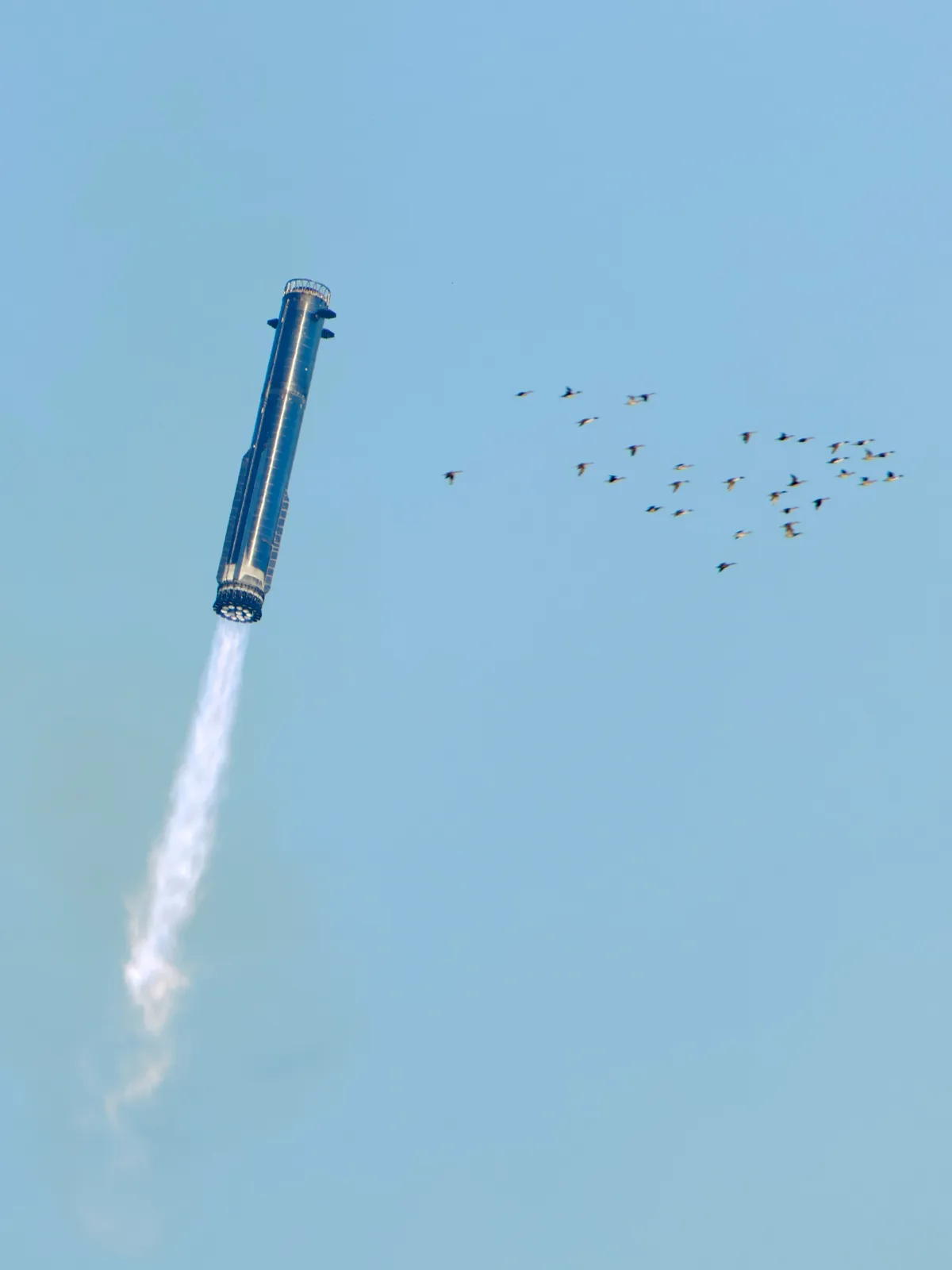
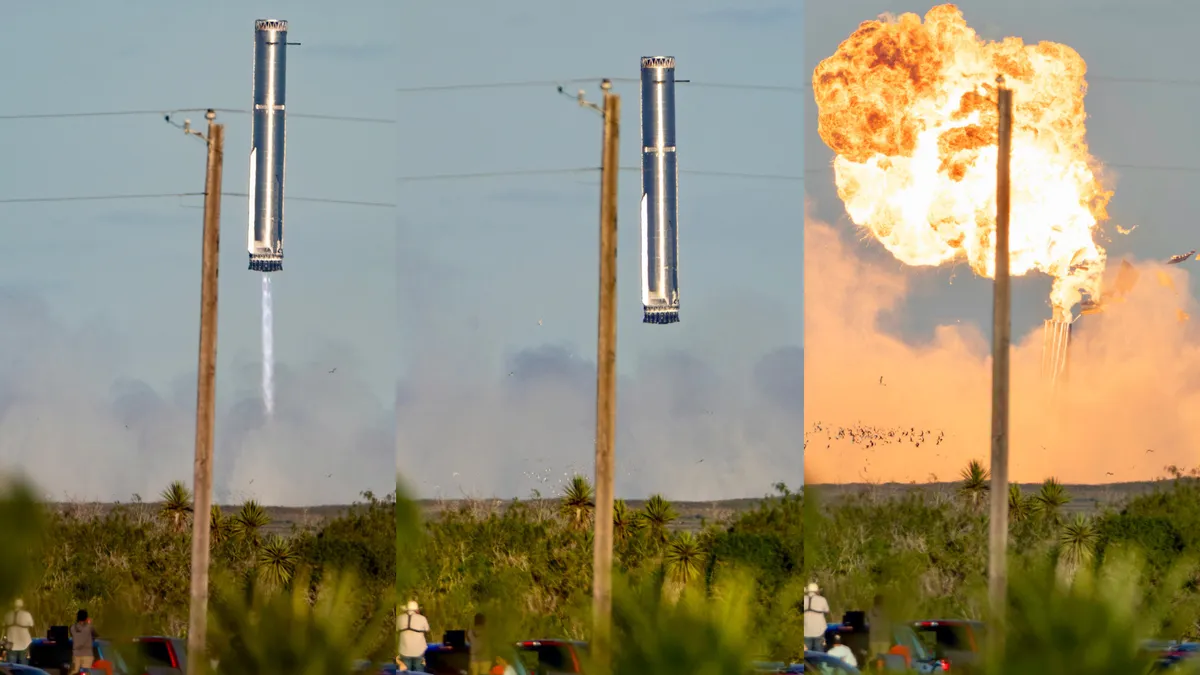
Super heavy performed its landing burn above the Gulf of Mexico before cutting its engines for a brief moment and exploding in a giant fireball.
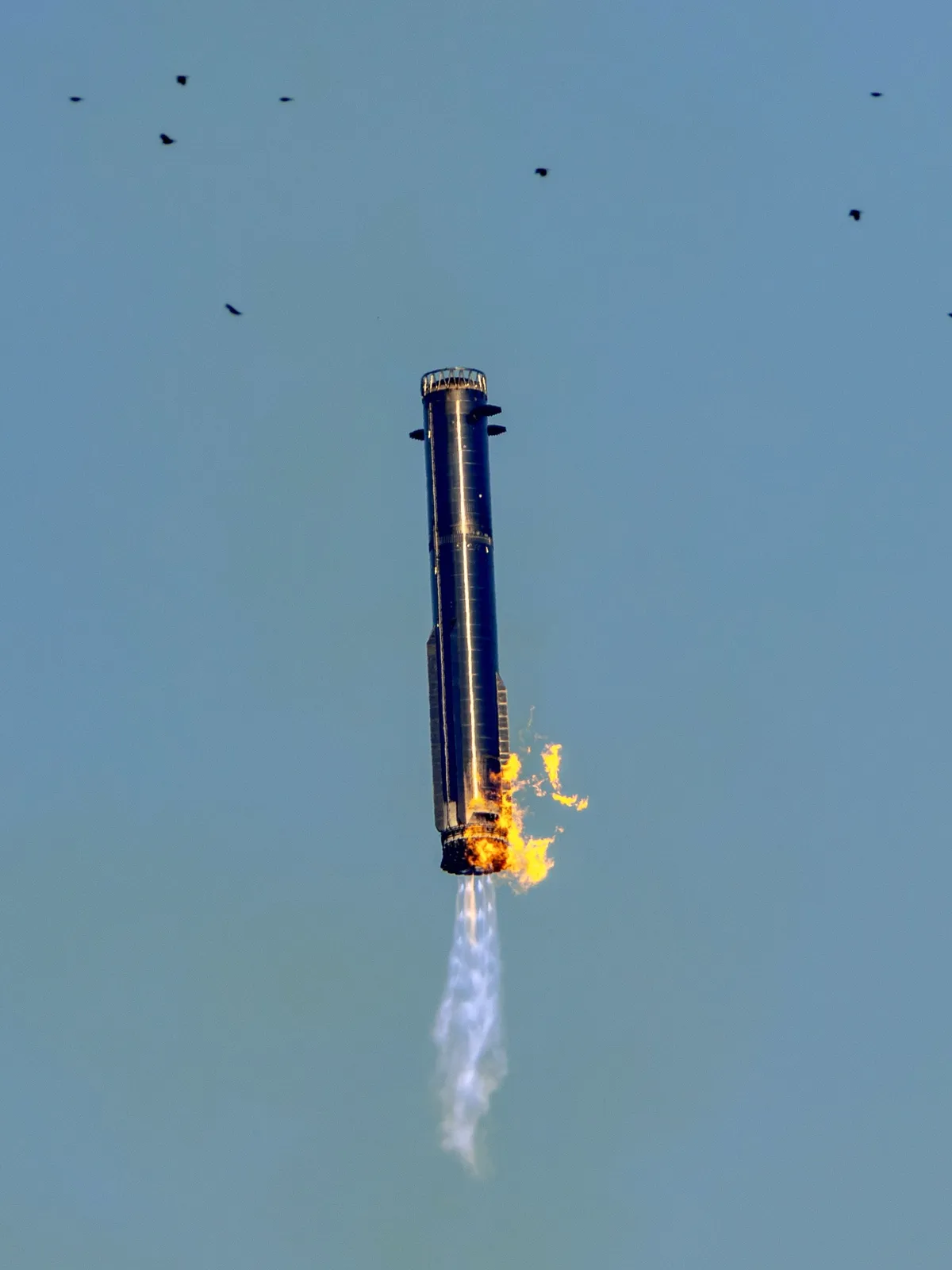
This was an intentional detonation, courtesy of the vehicle's flight termination system.
Ship continued on to low Earth orbit, where it deployed a payload of 26 upgraded Starlink Version 3 satellites. It was the second batch of V3 Starlinks delivered during Starship’s recent flight tests, each of which has added what SpaceX says is the equivalent of 10 Falcon 9 Starlink V2 satellite launches worth of data capacity to its orbital constellation.
Flight 15 was also Starship's second-ever mission to orbit, and its longest so far. Ship spent nearly a full day in orbit, circling Earth a total of 14 times. During its jaunt in space, the spacecraft cleared three separate check points, which allowed SpaceX the opportunity to divert the vehicle for an ocean splashdown if needed, and finally was given the green light to attempt the first-ever Ship tower catch.
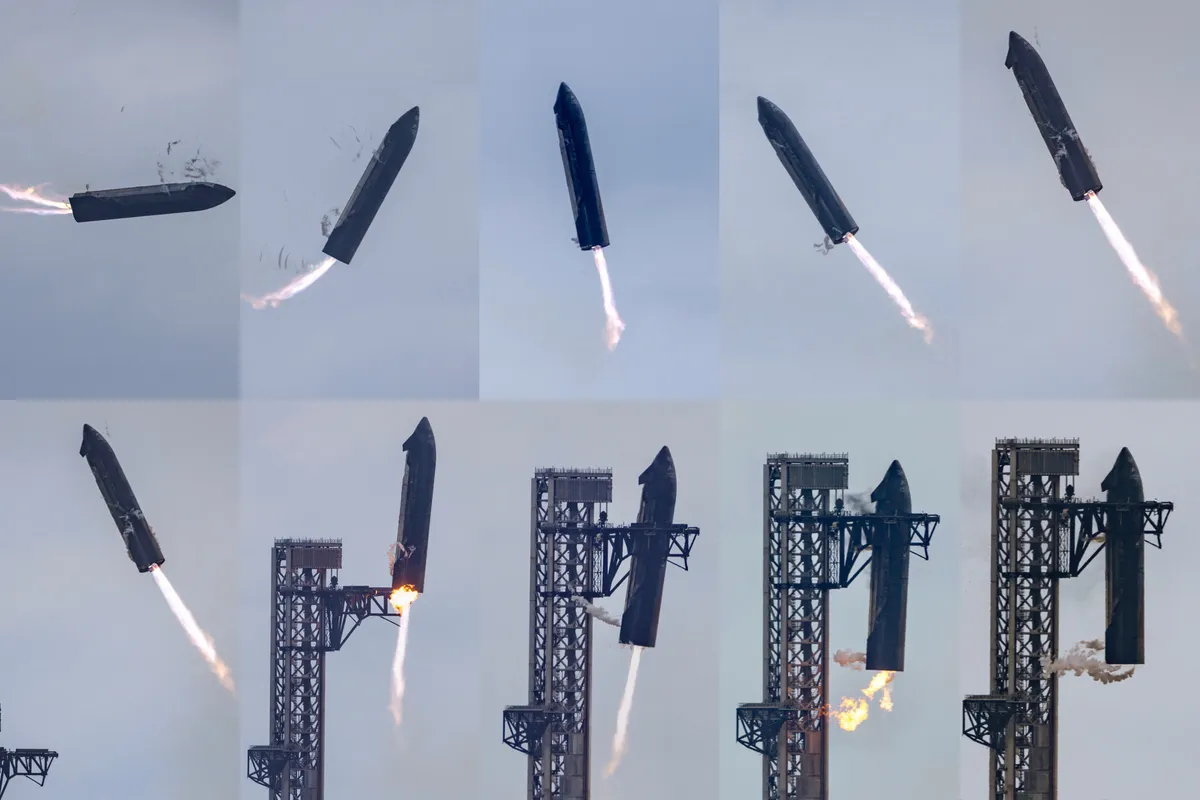
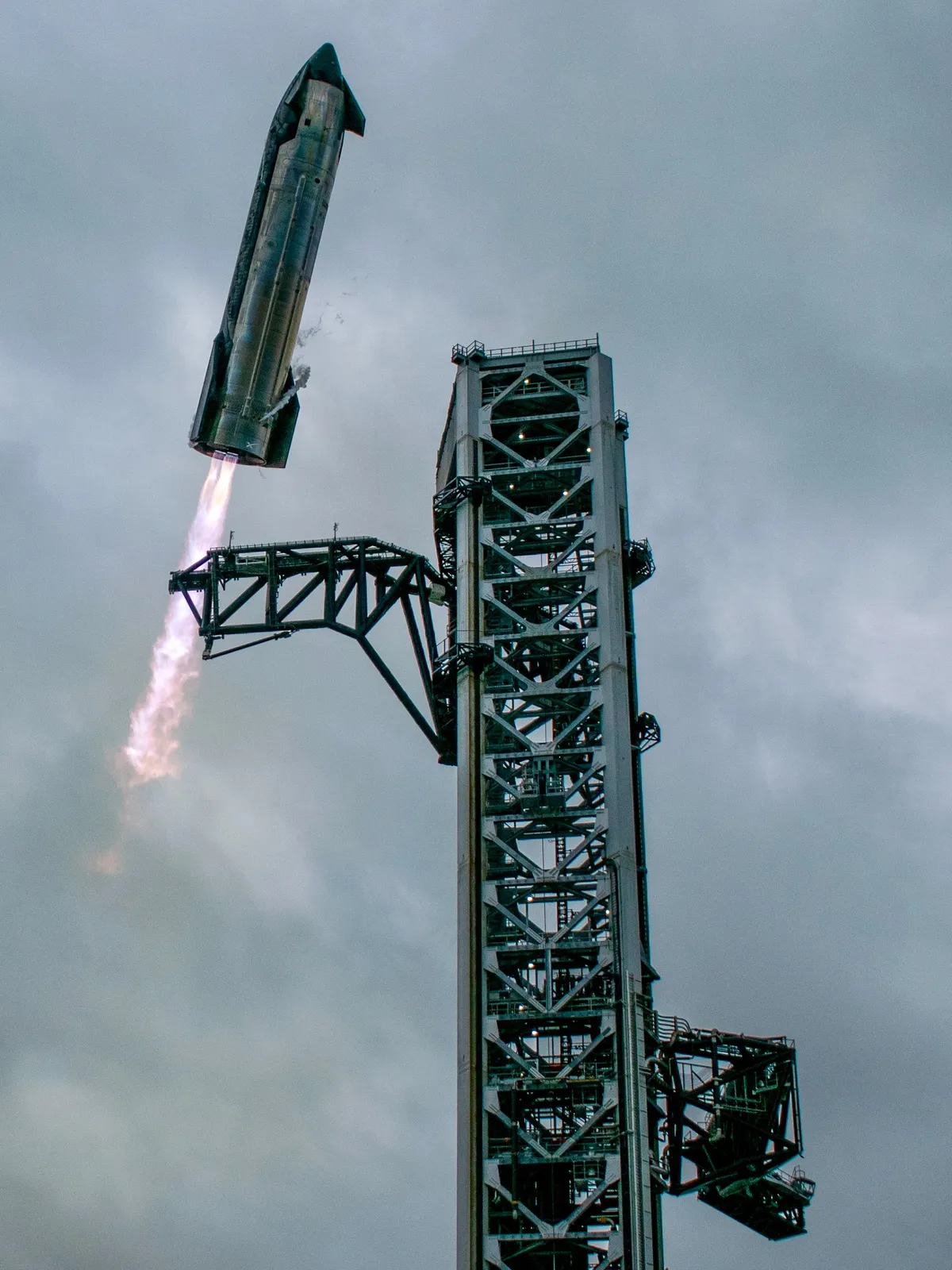
At approximately 4:18 p.m. EST (2018 GMT, 3:18 p.m. local time in Texas) on Saturday (Nov. 14), the spacecraft broke through the cloud cover that blanketed the skies above Starbase as onlookers watched its bellyflop plunge toward the ground. Moments after becoming visible, Ship ignited its engines for a flip and burn maneuver, which oriented it upright and swung its trajectory into the tightening grip of the chopstick arms of Starbase's "Mechazilla" launch tower.
After a slight sway back and forth suspended above Earth in Mechazilla's embrace, Ship came to a complete rest, hanging motionless as a historic milestone in SpaceX’s pursuit of fully reusable spaceflight.
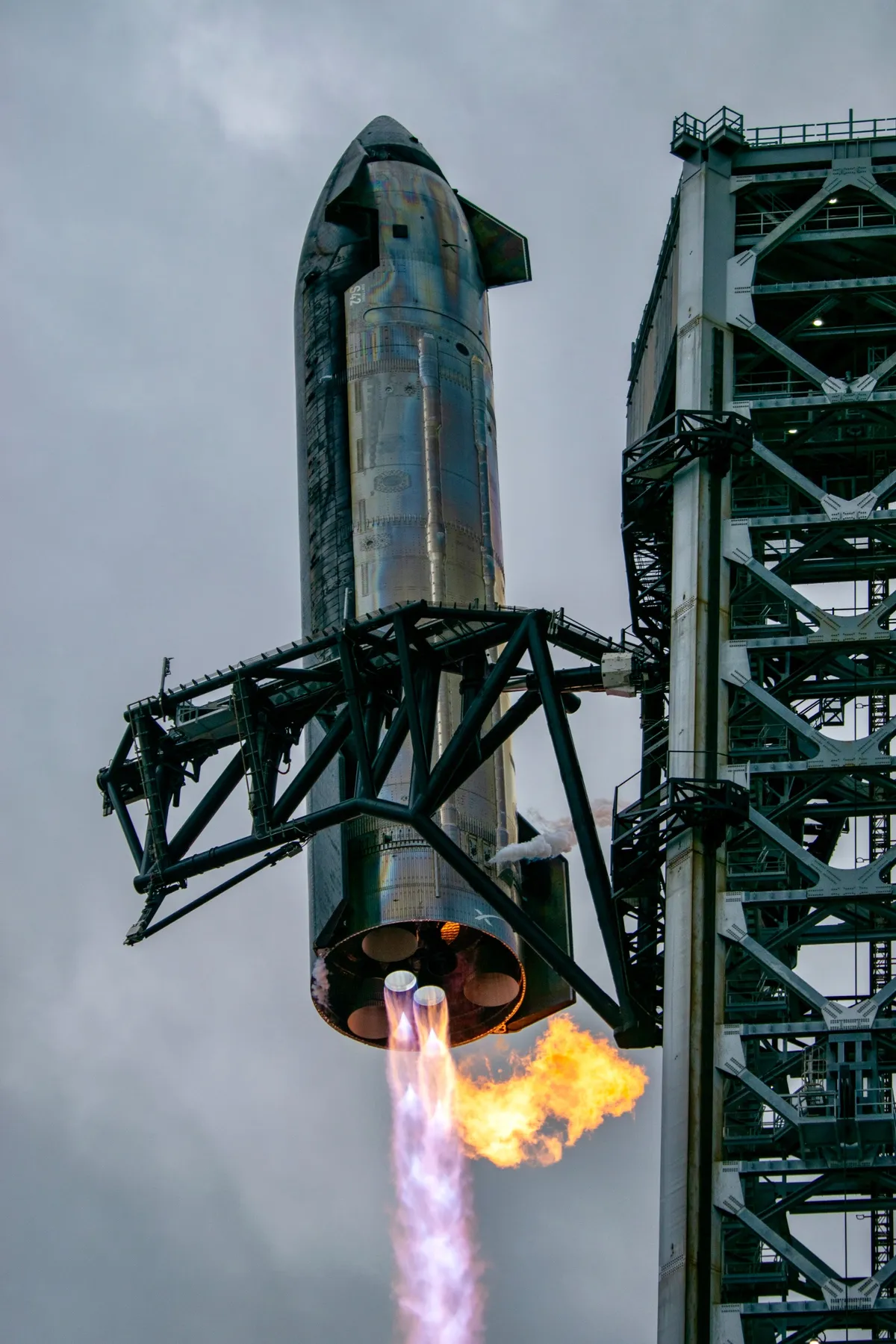
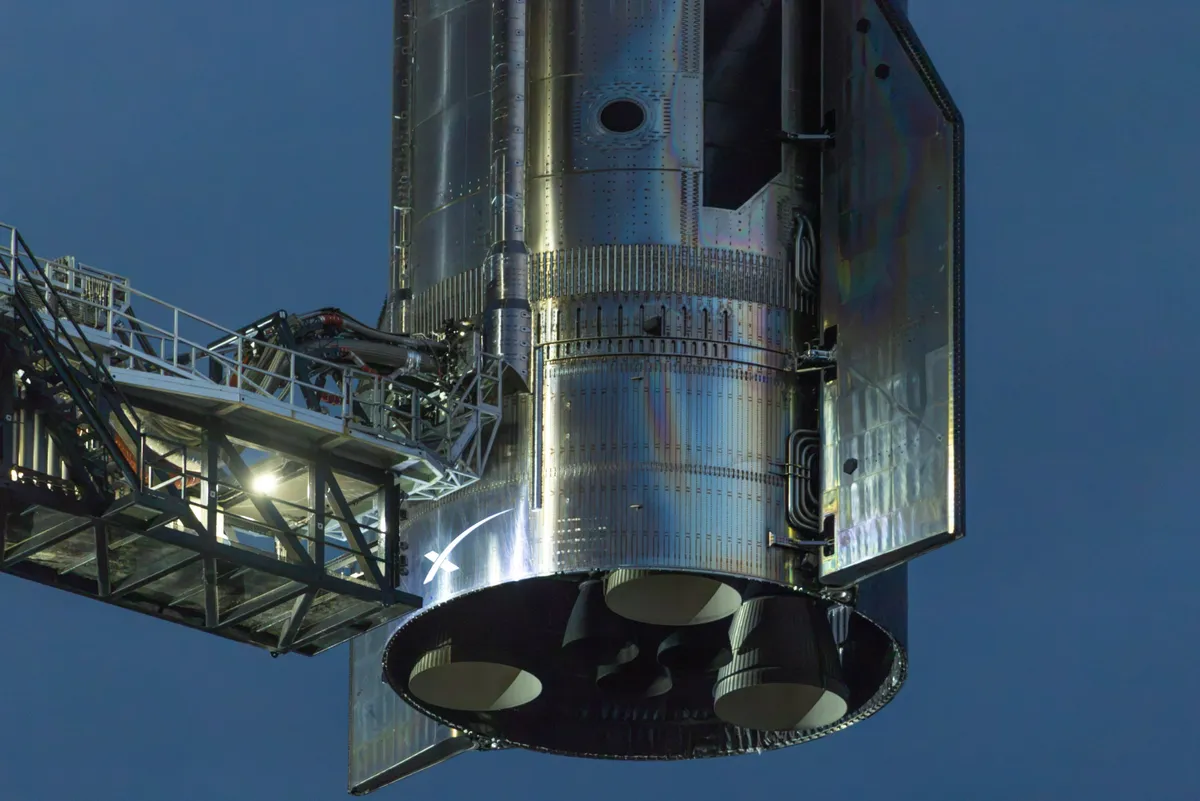
It hung there overnight as engineers, and even SpaceX CEO Elon Musk, inspected the spacecraft. Ship was lowered on Sunday (Nov. 15) and transported back to SpaceX's Starbase hanger bay for further checkouts.
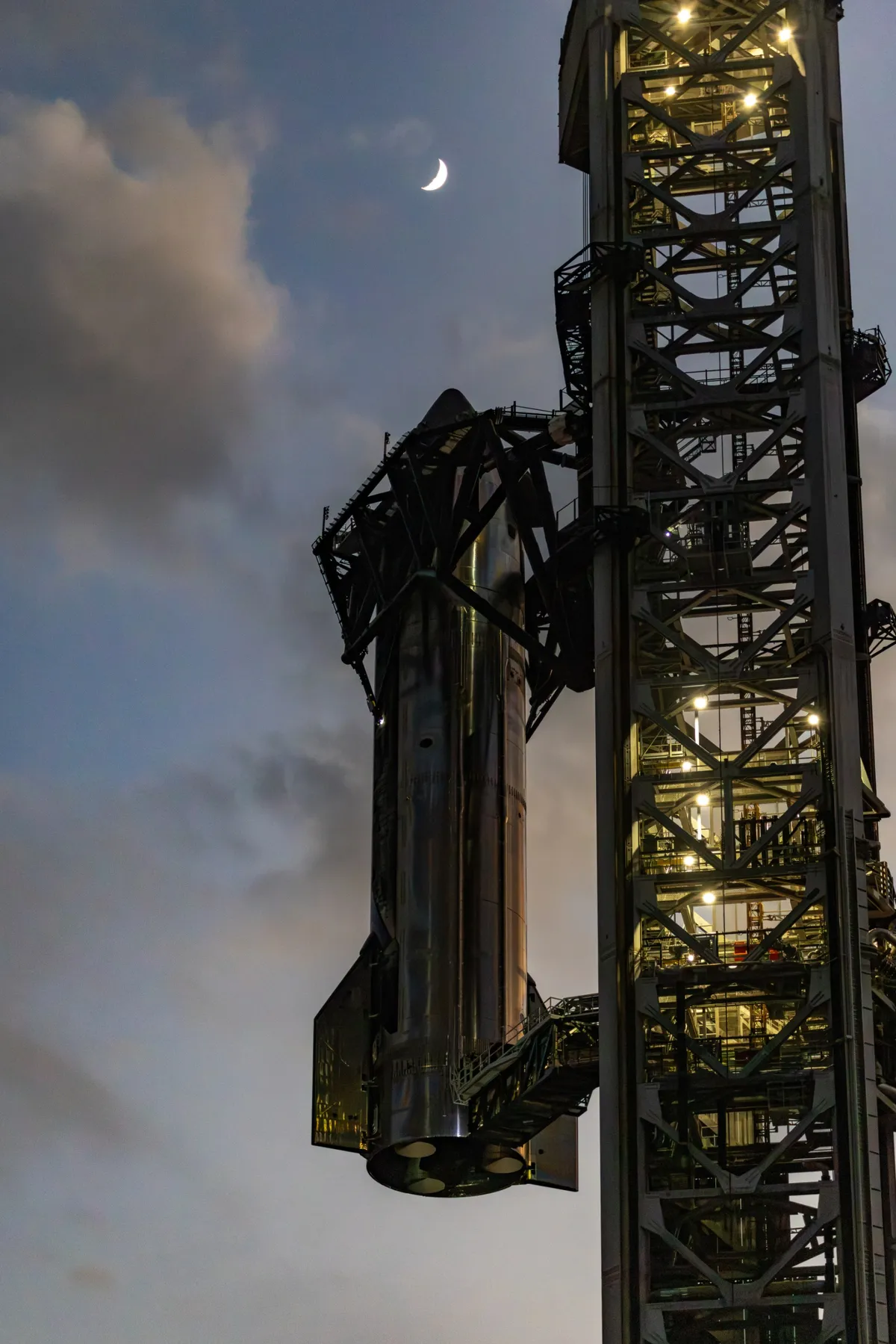
SpaceX has not yet said whether Ship 42 will fly again, but its return gives engineers a chance to examine how the spacecraft held up through launch, nearly a day in orbit and atmospheric reentry.
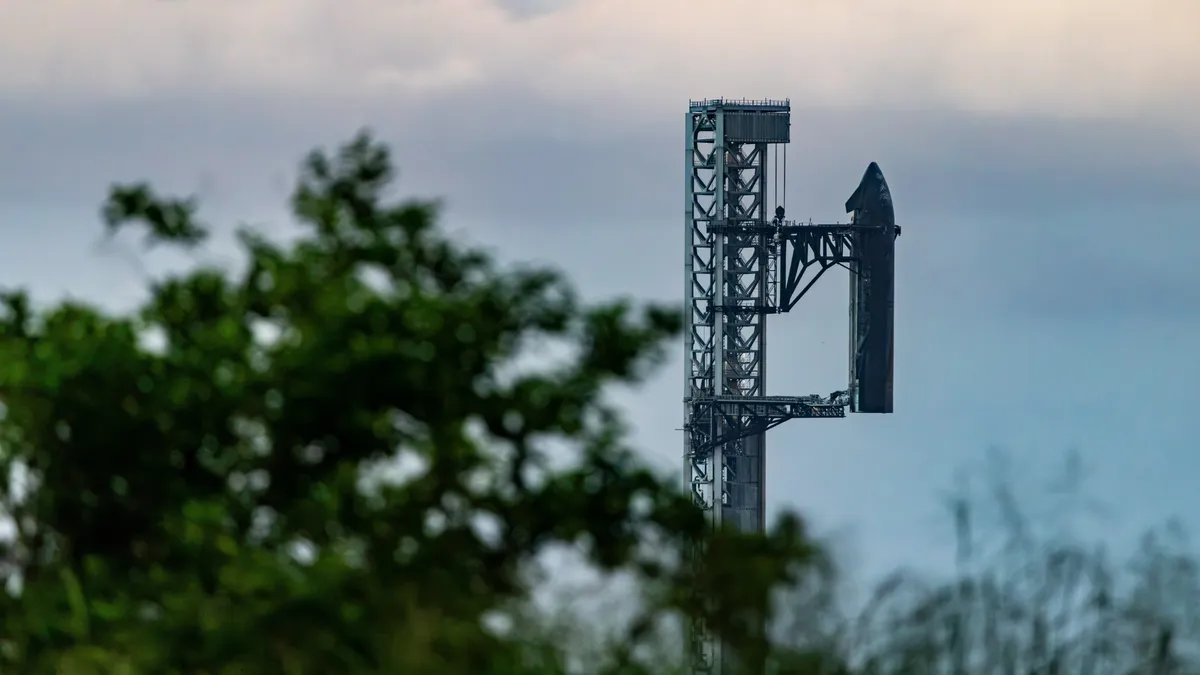
Those findings will help inform upcoming flights as SpaceX ramps up production to continue testing Starship's capabilities.