





SpaceX just checked another big box on the path to its 15th Starship test flight, which promises to be pretty epic.
The company conducted static-fire tests with Starship's Ship upper stage on Monday (Oct. 26) and Tuesday (Oct. 27), igniting its Raptor engines while the vehicle, known as Ship 42, remained anchored to the ground.
"Ship 42 static fires complete. The Starship preparing for Flight 15 performed a full duration, six-engine static fire, and fired a single Raptor engine to simulate a deorbit burn," SpaceX said in a Wednesday (Oct. 28) X post that shared video of the tests.
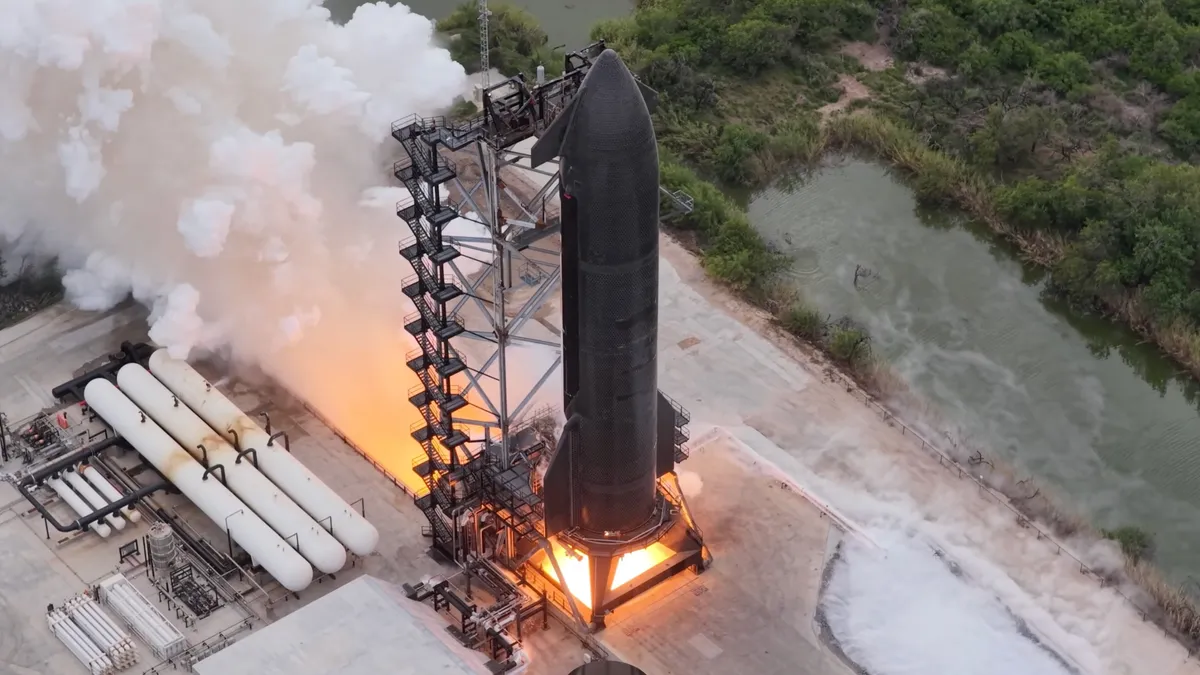
The Ship 42 tests come on the heels of a successful 33-engine static fire with Booster 22, the Starship Super Heavy first stage that will conduct Flight 15. Everything therefore appears to remain on track for Flight 15, which SpaceX founder and CEO Elon Musk has said is targeted for sometime in November.
All Starship launches are worth watching, but this one should be particularly exciting. Musk said last week that SpaceX will try to catch both Ship and Super Heavy during Flight 15, provided the company can get regulatory approval to do so.
These catches are performed by the "chopstick" arms of the launch tower at Starbase, SpaceX's Starship launch and manufacturing hub in South Texas. The company has snagged Super Heavy on three Starship test flights to date but has not yet attempted a Ship capture.
Double chopstick catches will be the norm on operational Starship launches, if all goes to plan. This recovery strategy will reduce the time needed to get Super Heavy and Ship ready for reflight, significantly boosting launch cadences, according to SpaceX. (Starship is designed to be fully reusable, unlike SpaceX's Falcon 9 and Falcon Heavy rockets, whose upper stages are expendable.)
SpaceX is already riding a historic success with Starship: The megarocket reached orbit for the first time ever on Flight 14, which took place on Sept. 28.
And Ship deployed 26 of the company's next-gen Starlink V3 satellites during that flight, starting the assembly of a new broadband constellation that Musk has said will eventually consist of 100,000 spacecraft.
Starlink V3 missions will therefore make up a significant percentage of Starship launches for the foreseeable future. But SpaceX also plans to use the megarocket to build an even bigger constellation in Earth orbit — Starmind, which could harbor one million of the company's AI data center satellites.