





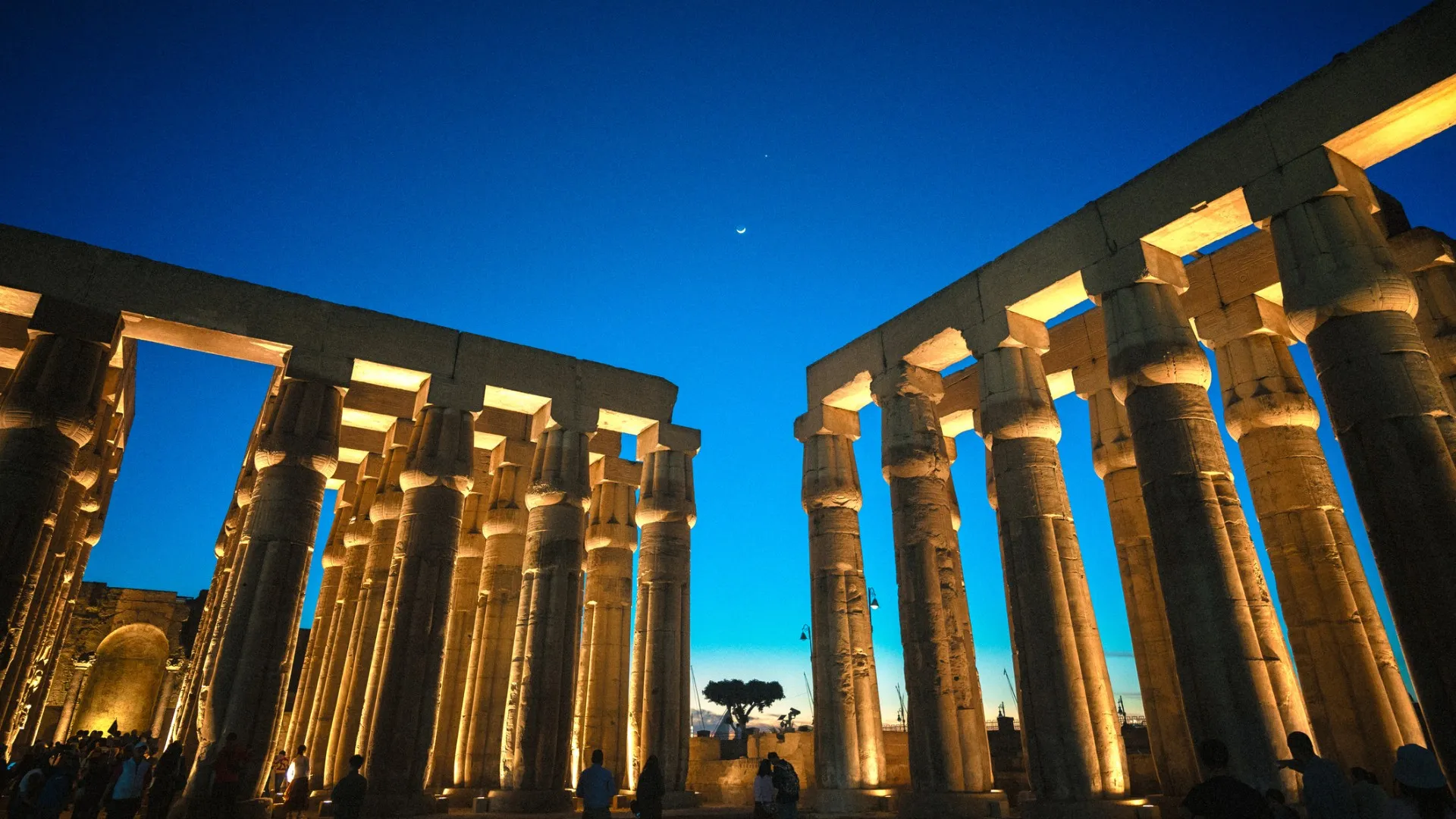
The total solar eclipse on Aug. 2, 2027, has an ancient feel. It will certainly be a celestial event for the ages — at 6 minutes 23 seconds, it will feature the longest totality on land of the 21st century and the longest anywhere until 2114. However, its point of greatest eclipse occurs just a few miles from Thebes, the magnificent religious and political capital of ancient Egypt's Middle Kingdom and New Kingdom.
On the east bank of the mighty Nile is Luxor, the great city of the living, with its massive temple complexes of Karnak and Luxor. On its west bank is the city of the dead, which includes the Valley of the Kings and the Temple of Hatshepsut. Modern Luxor, population 285,000, is set to become a focal point for eclipse chasers on Aug. 2, 2027, and will attract many thousands of international visitors. They'll come for the forecasted 0% chance of clouds and the era-defining duration of totality, but also to tour ancient Egypt's temples and monuments.
The chances of actually witnessing totality at any of the major temples are probably slim. Still, almost every eclipse chaser headed to Luxor will want to tour them before or after the eclipse. Visitors should be prepared for extreme August heat and check official opening and access arrangements before planning to watch the eclipse at any archaeological site. Certified eclipse glasses are essential during the partial phases; only during totality, when the sun is completely covered, is it safe to look without them.
Ancient monuments in the path of totality
Not all of ancient Egypt will experience totality. Egypt's top-ranking monument, the Pyramids at Giza, near Cairo, lies north of the path of totality and will get a 95% partial solar eclipse. Abu Simbel, on the shores of Lake Nasser south of Aswan, will also see a 92% partial solar eclipse. No matter, Luxor is home to some of the world's most impressive and well-preserved ancient monuments. Here are its temples, necropolises and palaces — and those nearby, also in the 160-mile (257-kilometer)-wide path of totality — that will have the moon's umbral shadow fall upon them on Aug. 2, 2027. All times, totality durations and historical cloud cover data come from Time and Date.
1. Karnak Temple
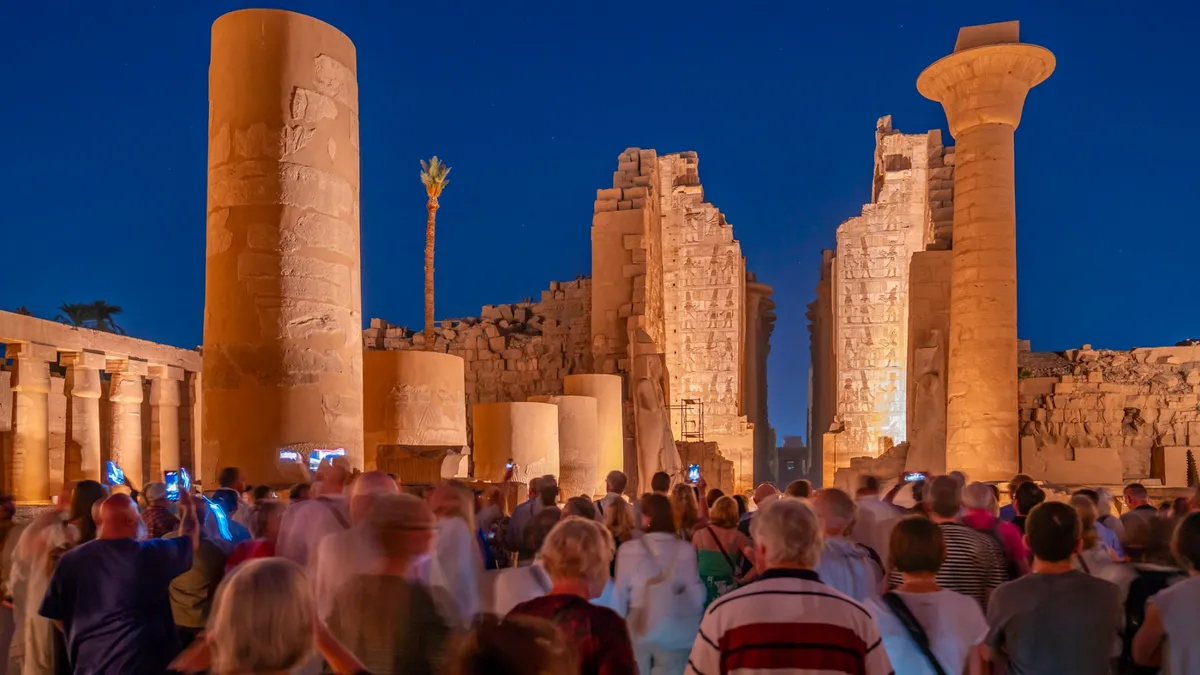
Location: East bank of Luxor, Egypt
Start of totality and duration: 1:02 p.m. EEST; 6 minutes, 19 seconds
Historical cloud cover: 0%
Dedicated to the god Amun-Ra — a fusion of the hidden god of the sun Amun and the ancient sun god Ra — this vast temple complex will be the hottest ticket in town for the eclipse. One of Egypt's most impressive and well-preserved ancient monuments, it's a place designed by ancient astronomers — the winter solstice sunrise still illuminates the innermost sanctuary. Access arrangements for eclipse day have yet to be confirmed, so keep an eye on official announcements before making plans to watch totality from the complex.
2. Luxor Temple
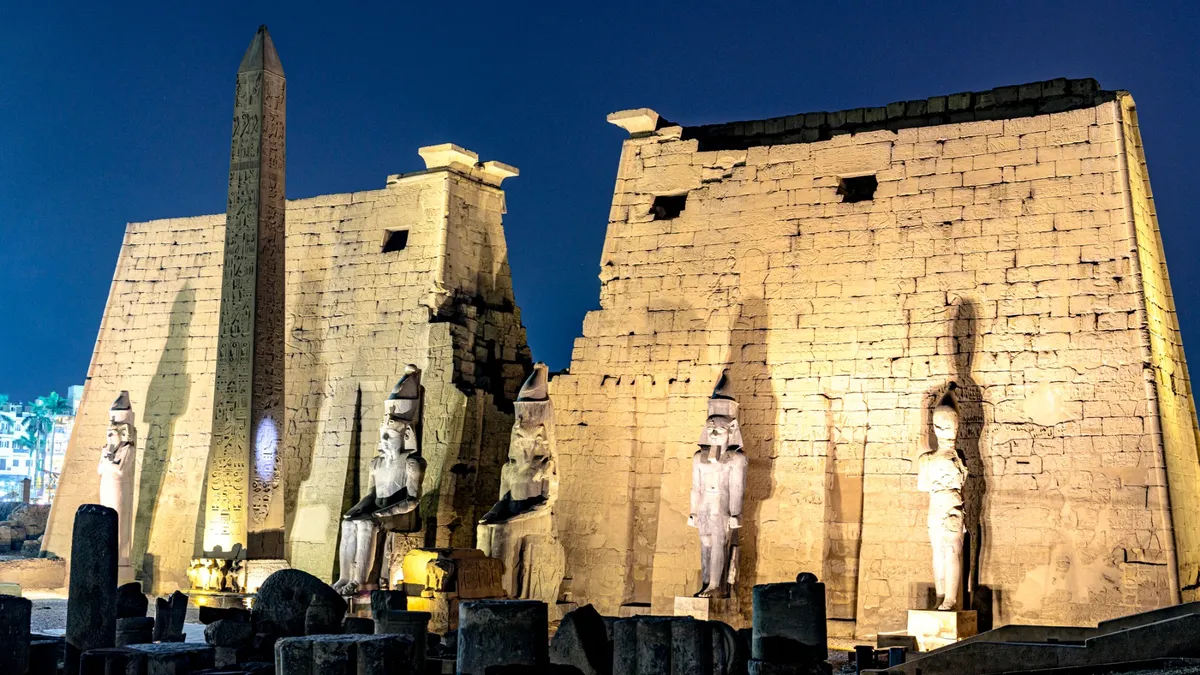
Location: East bank of Luxor, Egypt
Start of totality and duration: 1:02 p.m. EEST; 6 minutes, 19 seconds
Historical cloud cover: 0%
This is one of Egypt's best-preserved ancient temples and a must-see during the 2027 eclipse. It's on the banks of the Nile near the city center, so it's relatively easy to visit. Dedicated to the god Amun, it is known for its beautiful pillars and intricate carvings. A 75-foot (23 meters) tall obelisk on the east side of its entrance will point at the eclipsed sun almost directly overhead on Aug. 2, 2027. Its missing right-hand obelisk is in the Place de la Concorde, Paris.
3. Valley of the Kings
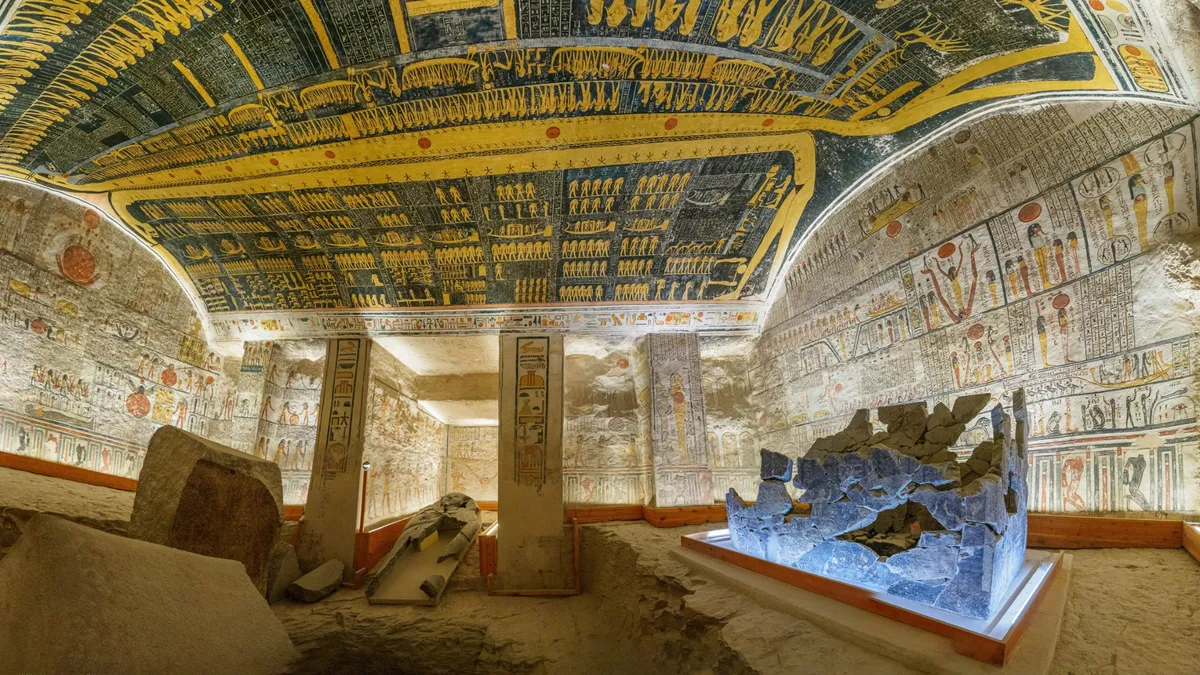
Location: West Bank of Luxor, Egypt
Start of totality and duration: 1:01 p.m. EEST; 6 minutes, 19 seconds
Historical cloud cover: 0%
This incredible necropolis is home to the tombs of the pharaohs and is a testament to the advanced engineering and architectural skills of the ancient Egyptians. Of course, you don't want to be underground for totality, but some of the tombs are a must-see. Your tickets include entry to any three tombs of your choice from those open that day, with extra tickets available for the really impressive ones—the spectacular KV17 (Seti I), small but iconic KV62 (Tutankhamun), and KV9 (Ramesses V & VI). The latter's Corridor G has a ceiling decoration that may depict a deep partial solar eclipse from 1143 BC.
4. Mortuary Temple of Hatshepsut
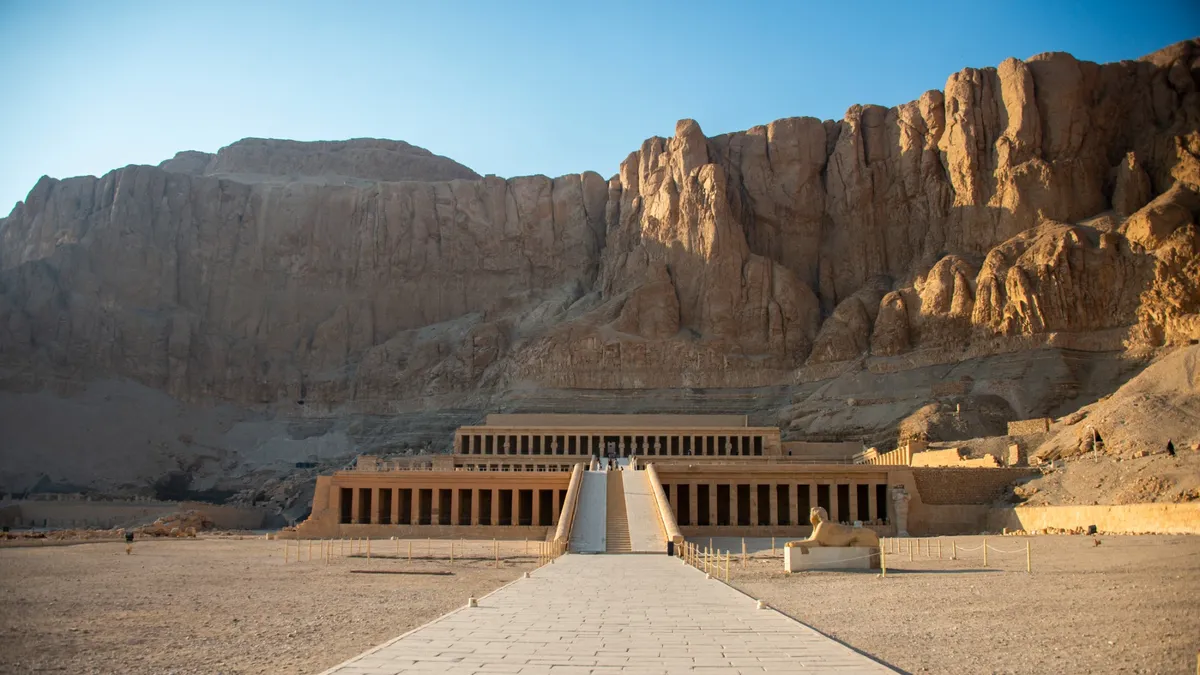
Location: West Bank of Luxor, Egypt
Start of totality and duration: 1:01 p.m. EEST; 6 minutes, 19 seconds
Historical cloud cover: 0%
If one temple is best suited to crowds for an eclipse, it's this vast, open-air gem dedicated to the legendary queen who became pharaoh. However, with almost no shade, it could be the least practical option. Three huge terraces rise above the desert floor and into the cliffs of Deir el-Bahari to the west. It's an absolute masterpiece.
5. Colossi of Memnon
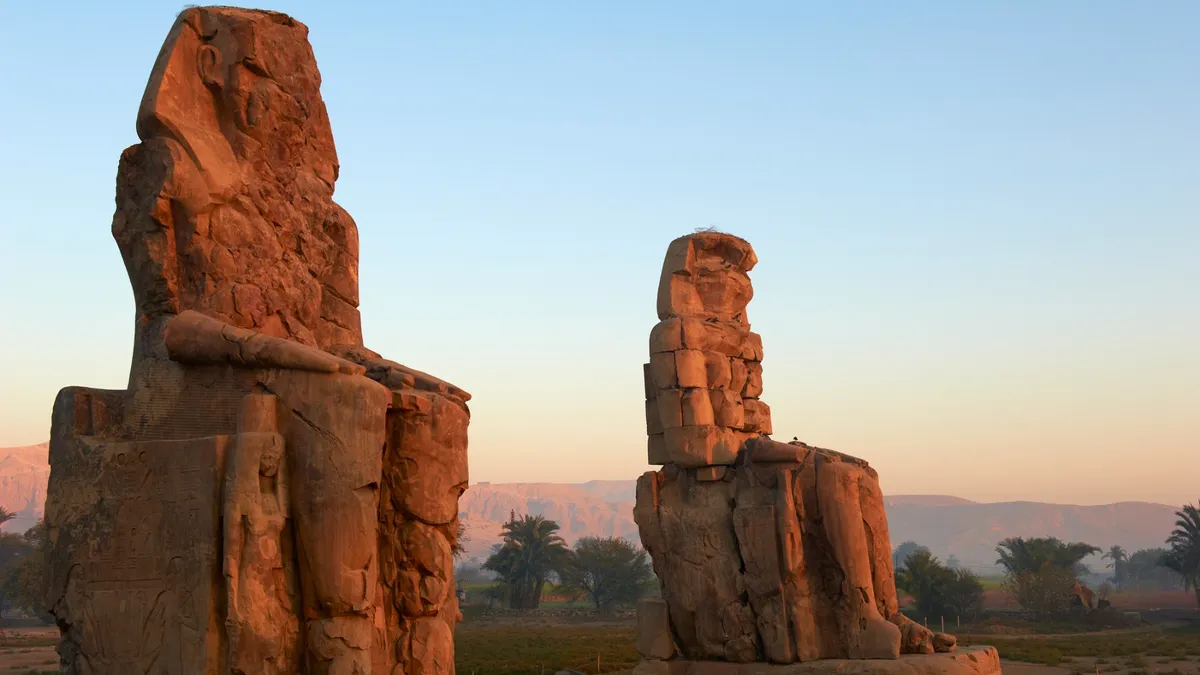
Location: West Bank of Luxor, Egypt
Start of totality and duration: 1:01 p.m. EEST; 6 minutes, 19 seconds
Historical cloud cover: 0%
This is where we get to temples that are fairly well known, but likely won't have as much pressure on them from eclipse chasers as the big three — Karnak, Luxor and Hatshepsut. However, anyone looking for ways to get temple architecture into images of an eclipse at zenith should look no further than these two large stone statues of Pharaoh Amenhotep III. Behind them are the ruins of the largest temple in the Theban Necropolis.
6. Medinet Habu
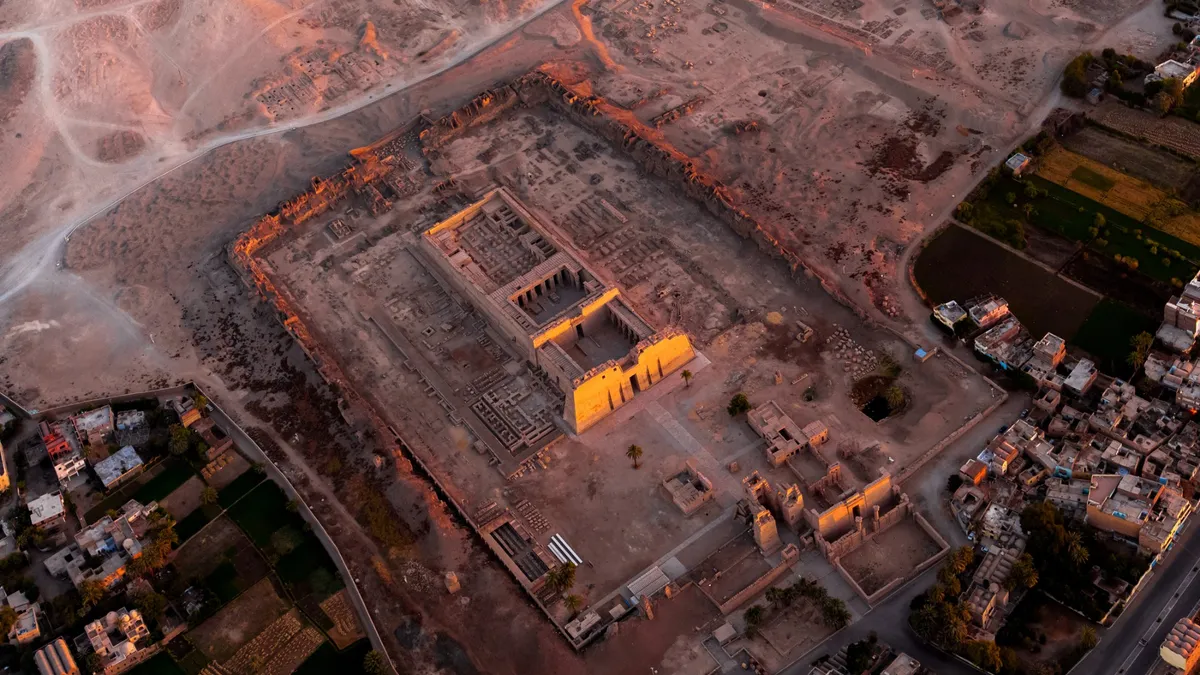
Location: West Bank of Luxor, Egypt
Start of totality and duration: 1:01 p.m. EEST; 6 minutes, 19 seconds
Chance of clouds: 0%
Getting off the beaten track in August 2027 will be near-impossible, but here's an option — the Mortuary Temple of Ramesses III. Featuring towering stone columns, colorful reliefs (despite being 3,200 years old) and famous carvings, it's bypassed by tour buses heading straight for Hatshepsut.
7. Ramesseum
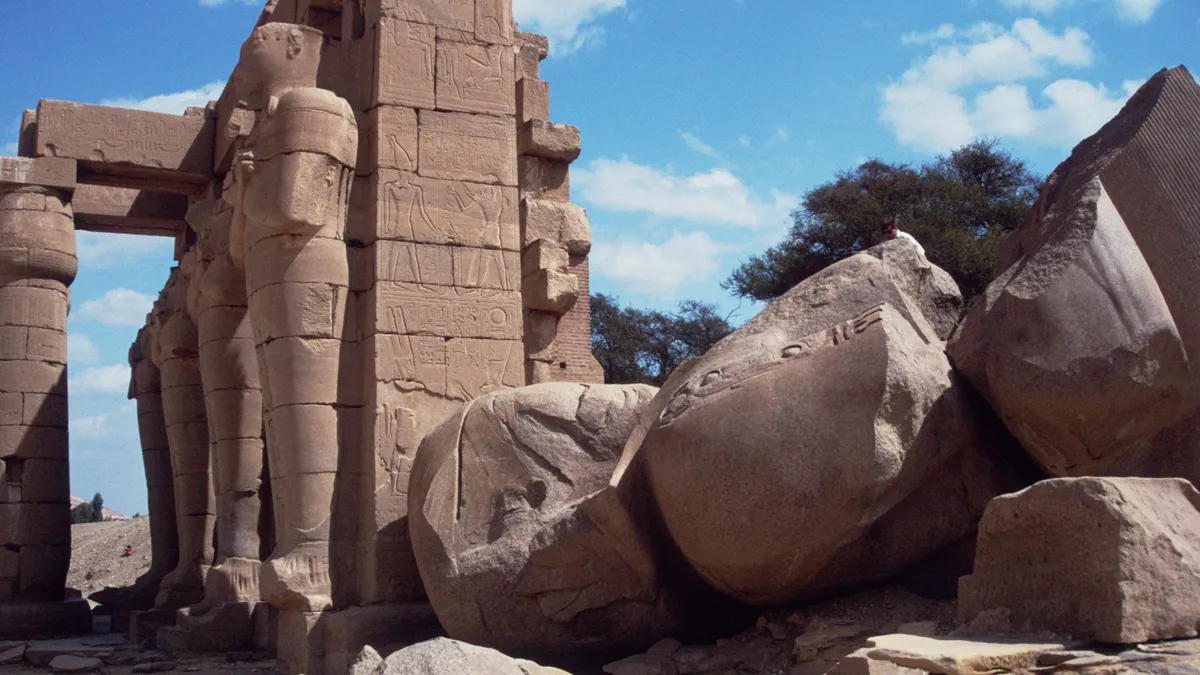
Location: West Bank of Luxor, Egypt
Start of totality and duration: 1:01 p.m. EEST; 6 minutes, 19 seconds
Historical cloud cover: 0%
Another temple that, without Karnak and Luxor nearby, would be rammed with visitors, is the Ramesseum — the mortuary temple of Ramesses II. Featuring the remains of a huge fallen statue that inspired Shelley's poem Ozymandias, it's in an area once used by the artisans who built the royal tombs, and slightly off the tourist route.
8. Temple of Khnum
Location: Esna, Egypt
Start of totality and duration: 1:02 p.m. EEST; 5 minutes, 47 seconds
Historical cloud cover: 0%
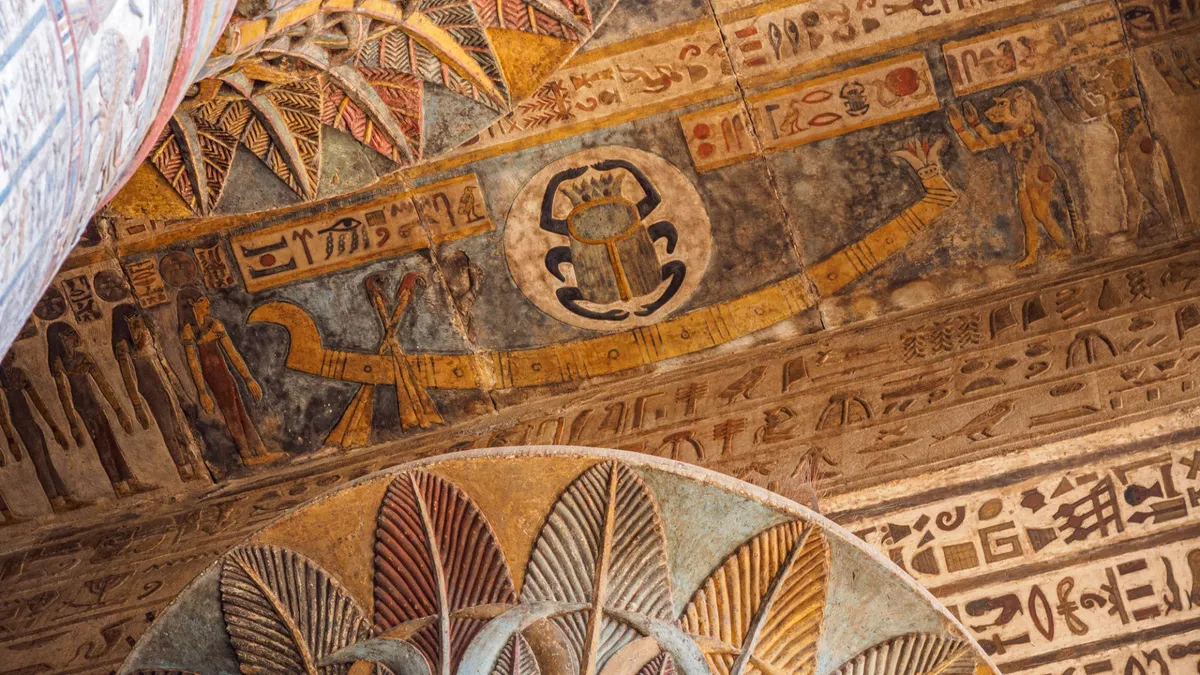
If you want to avoid the scrum of eclipse chasers in Luxor on and around Aug. 2, the Temple of Khnum could be an option. Located in Esna, about 34 miles (55 kilometers) south of Luxor, the so-called 'Rainbow Temple' (for its colorful ceilings) is dedicated to the ram-headed creator god Khnum. Dating from the Greco-Roman era, there's a vast Hypostyle Hall that sits below modern street level, which could be good for some shade.
9. Temple of Dendera
Location: Qena, Egypt
Start of totality and duration: 1:01 p.m. EEST; 6 minutes, 15 seconds
Historical cloud cover: 0%
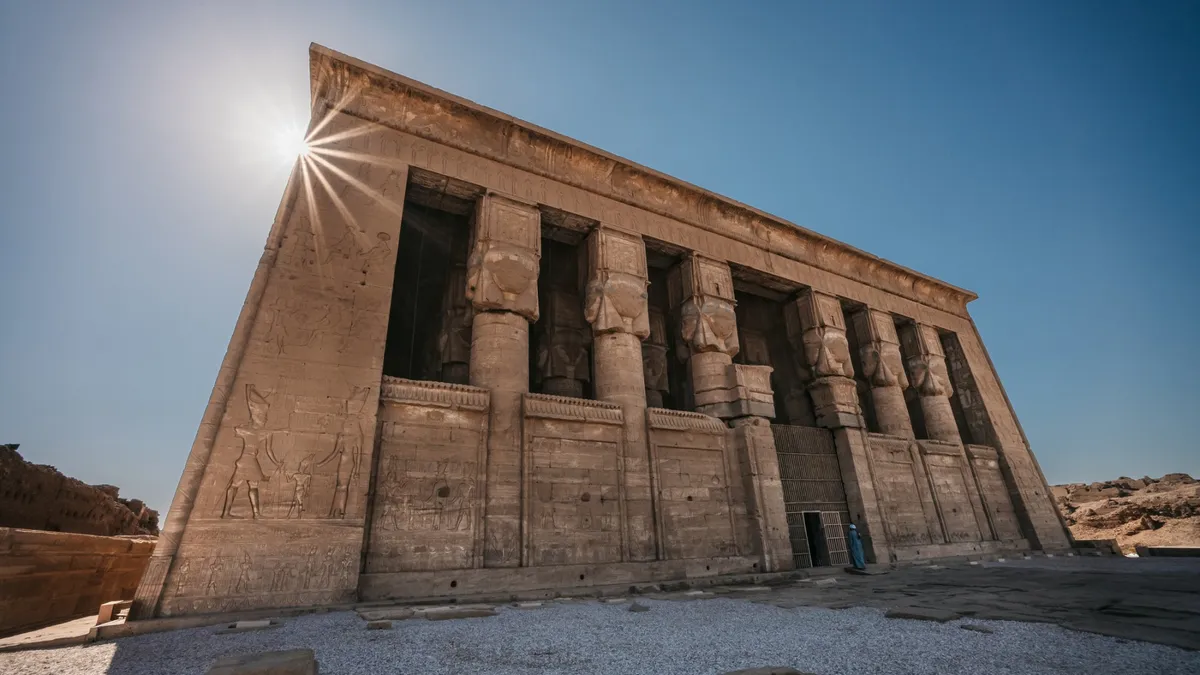
If you want to escape Luxor but (almost) keep its long totality, head to Qena, 40 miles (65 km) north, where one of Egypt's best-preserved and most beautiful temples stands. Dendera was the cult center for Hathor, one of the most important and popular deities in ancient Egypt and known as the 'lady of the sky.' The temple's entrance has six massive columns, each decorated with Hathor's head, and its ceiling features astronomical engravings.
10. Temple of Horus
Location: Edfu, Egypt
Start of totality and duration: 1:04 p.m. EEST; 5 minutes, 20 seconds
Historical cloud cover: 0%
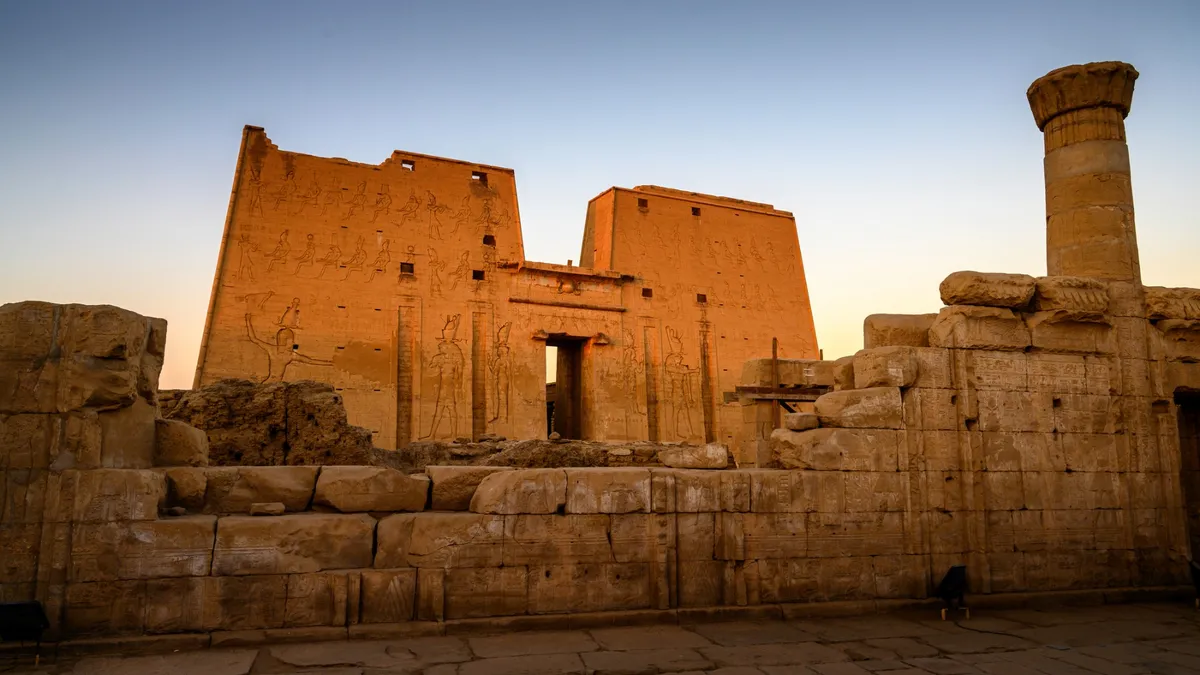
Another great option for those who prioritize ancient Egyptian surroundings over the longest possible totality is the Temple of Horus, one of the most striking and best-preserved temples in ancient Egypt. About 68 miles (110 km) south of Luxor, it's dedicated to the sun and sky god Horus, one of the main gods in ancient Egypt, whose right eye represents the sun and left eye the moon. The temple's stone roofs are intact, so its Hypostyle Halls, inner chambers and central sanctuary provide some shade.