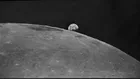





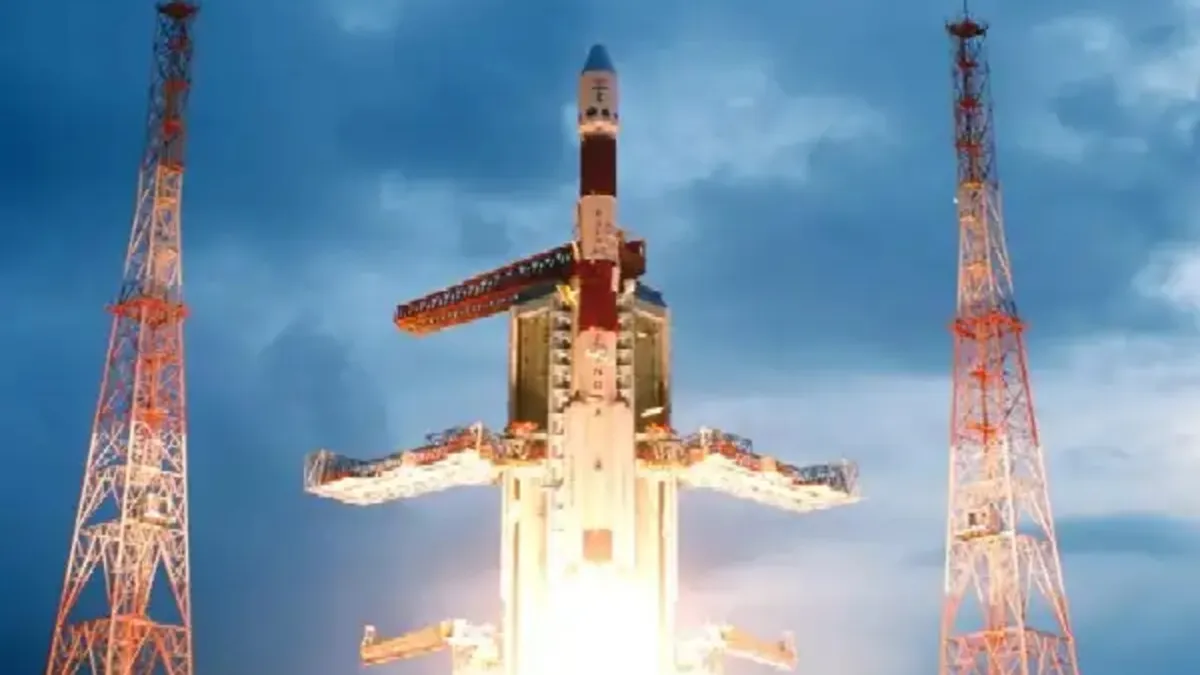
On Oct. 21, 2008, the Indian Space Research Organization launched its first mission to the moon. The mission was named Chandrayaan-1, and it consisted of both an orbiter and an impactor.
Chandrayaan-1 launched from the Satish Dhawan Space Center on an Indian rocket called the Polar Satellite Launch Vehicle, or PSLV-XL. (Launch occurred at 8:52 p.m. EDT, though it was about 6:22 a.m. local time at the launch site on Oct. 22.)
It arrived in lunar orbit about three weeks later and dropped off the Moon Impact Probe, which crashed into the moon on Nov. 14. The rest of the Chandrayaan-1 spacecraft stayed in orbit, where it collected and transmitted data from the moon to Earth for about a year. The mission ended abruptly 14 months ahead of its planned end date when scientists lost contact with the probe.
Why it mattered
The Indian Space Research Organisation, or ISRO, had a lot riding on the success of Chandrayaan-1 moon mission, which marked the first-ever deep space mission by the Indian space agency. It was also the first mission to the moon for India, a country that hopes to launch its own crewed spacecraft and build a space station.
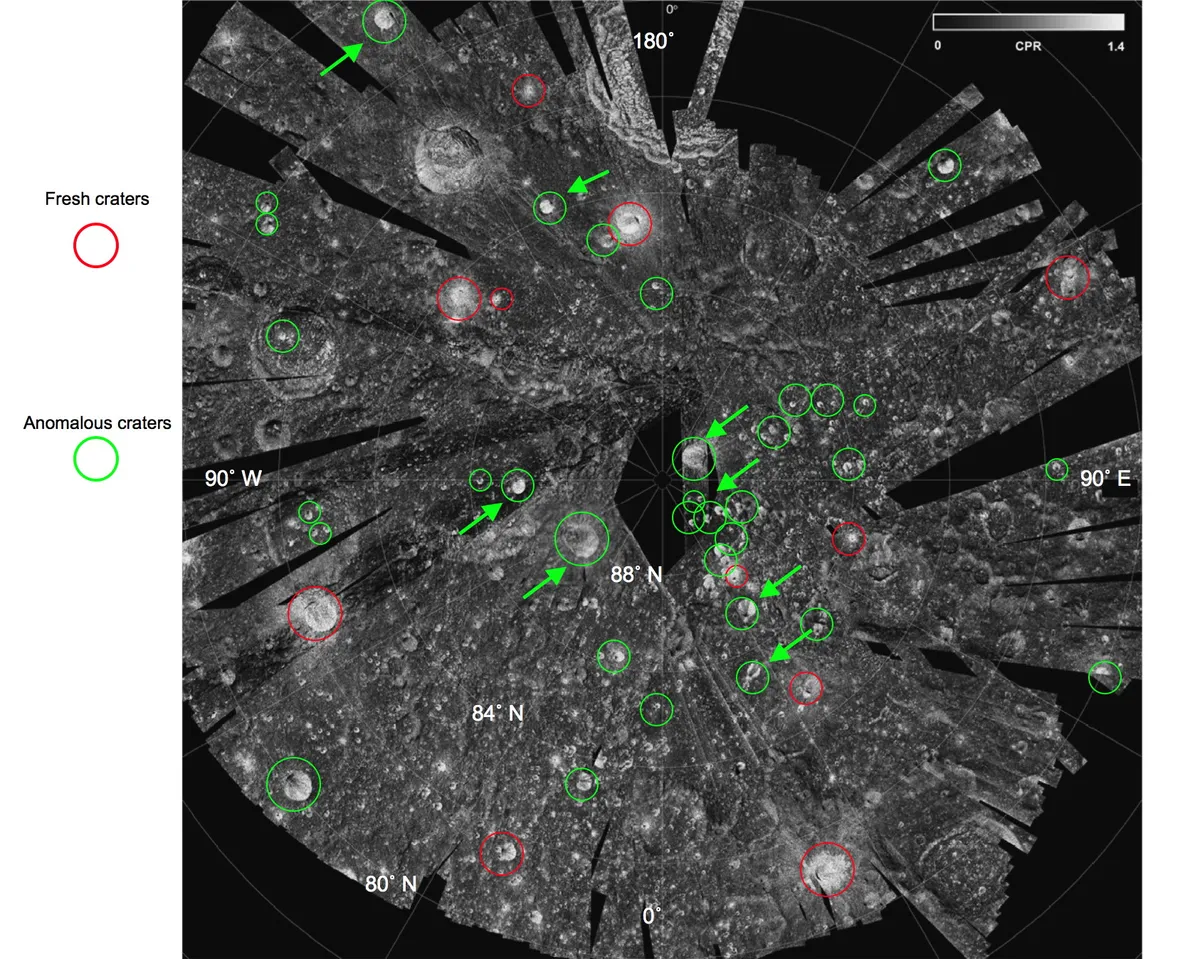
Chandrayaan-1 did more than just demonstrate that India's space program was capable of launching missions to the moon; it also returned some amazing science results, like evidence of water ice on the moon.
"In September 2009, scientists published results of data collected by the American M3 instrument which had detected absorption features on the polar regions of the surface of the Moon usually linked to hydroxyl- and/ or water-bearing molecules," NASA said in a mission overview.
The spacecraft carried 11 instruments to study the moon, five of them built by ISRO. The rest were experiments for the European Space Agnecy and NASA.
"In addition to the five Indian instruments, the spacecraft carried scientific equipment from the United States, the United Kingdom, Germany, Sweden, and Bulgaria," NASA said.
It took until Nov. 8, 2008 for Chandrayaan-1 to enter lunar orbit, where it stayed until contact was lost in August 2009, most likely due to a power supply failure caused by overheating.
"This was short of the spacecraft’s planned two-year lifetime, although ISRO noted that at least 95% of its mission objectives had been accomplished by then," NASA wrote.
India did not stop at the moon with Chandrayaan-1. In 2019, the country launched the Chandrayaan-2 orbiter, which carried the Vikram lander and Pragyan rover. Chandrayaan-2 reached lunar orbit successfully, but the Vikram landing failed.
The Chandrayaan-3 misson followed in 2023, which successfully landed a new Vikram lander and Pragyan rover near the moon's south pole. India plans to launch the Chandryaan-4 mission to return moon samples to Earth in 2028.
Want more space history? Check out our full On This Day In Space Story archive and watch our On This Day In Space videos on YouTube.