





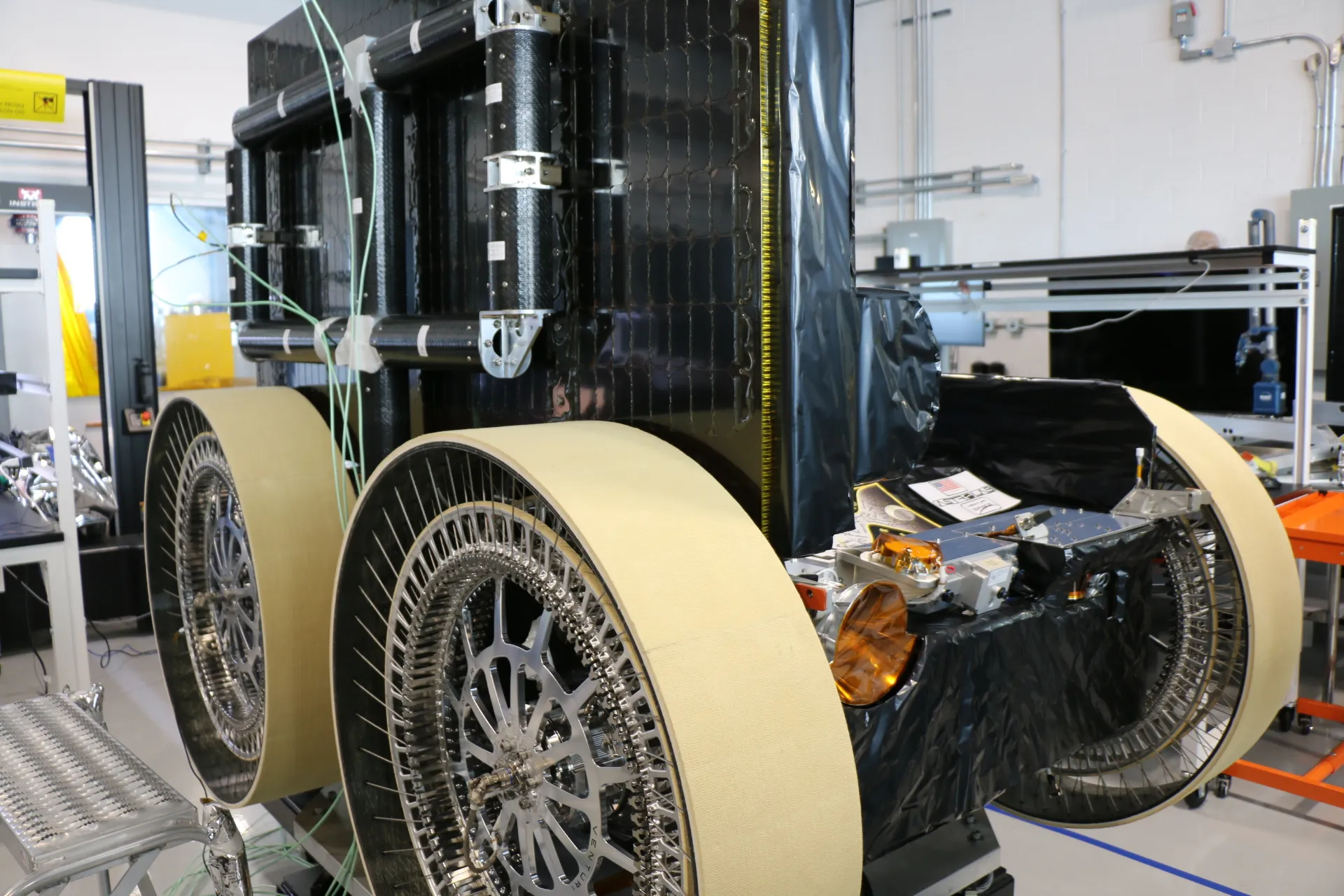
HAWTHORNE, Calif. — A moon buggy carrying a history-making supercomputer is ready to launch to the lunar surface. And it's taking some inspiration from Mars.
Later this year, Astrolab will launch its uncrewed moon rover FLIP to the lunar south pole as part of the Griffin Mission 1, or Griffin-1. The California company is one of two that NASA has selected to develop a drivable rover for the agency's Artemis program. On board FLIP will be Hewlett Packard Enterprise's (HPE) Spaceborne Computer-4, an advanced computer module built to be used in space.
This will be the first time that high-performance computing and artificial intelligence will be tested on the lunar surface. As NASA gets closer to landing humans back on the moon with Artemis, advancements like this aim to support future human habitation as well as economic activity on and around the moon.
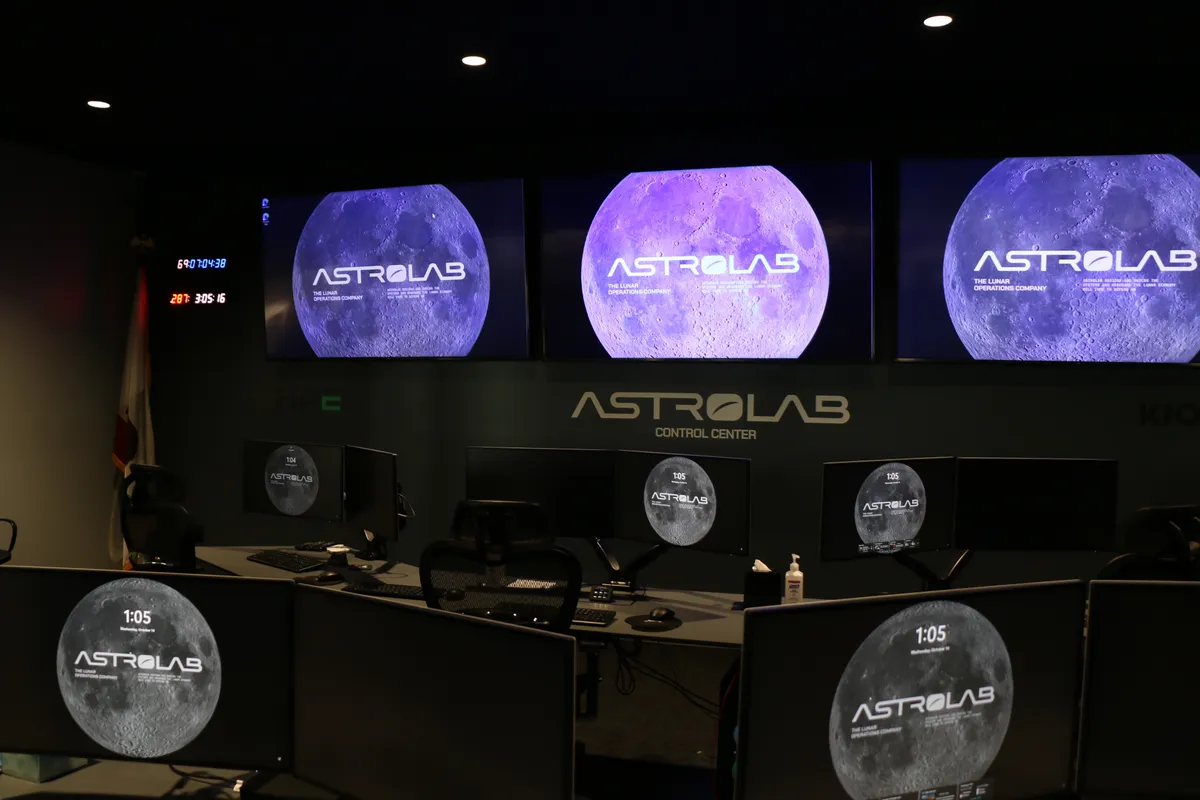
"We're sending the first supercomputer from HPE to the lunar surface later this year, doing the first GPU [graphics processing unit] on the moon [and the] first AI experiments on the moon," Jaret Matthews, founder and CEO of Astrolab, said during an Oct. 14 media event here at Astrolab's headquarters. "They're breaking new ground, and they're ahead of the curve."
The computer is designed to be lightweight, compact, self-contained and fanless. It has a low-power 64-bit CPU (central processing unit) with a GPU. The computer will be attached to FLIP's cooling system and will be powered by a system supported by both batteries and solar cells on the rover. The computer will also be paired with solid state drives from the company KIOXIA that will allow for memory storage.


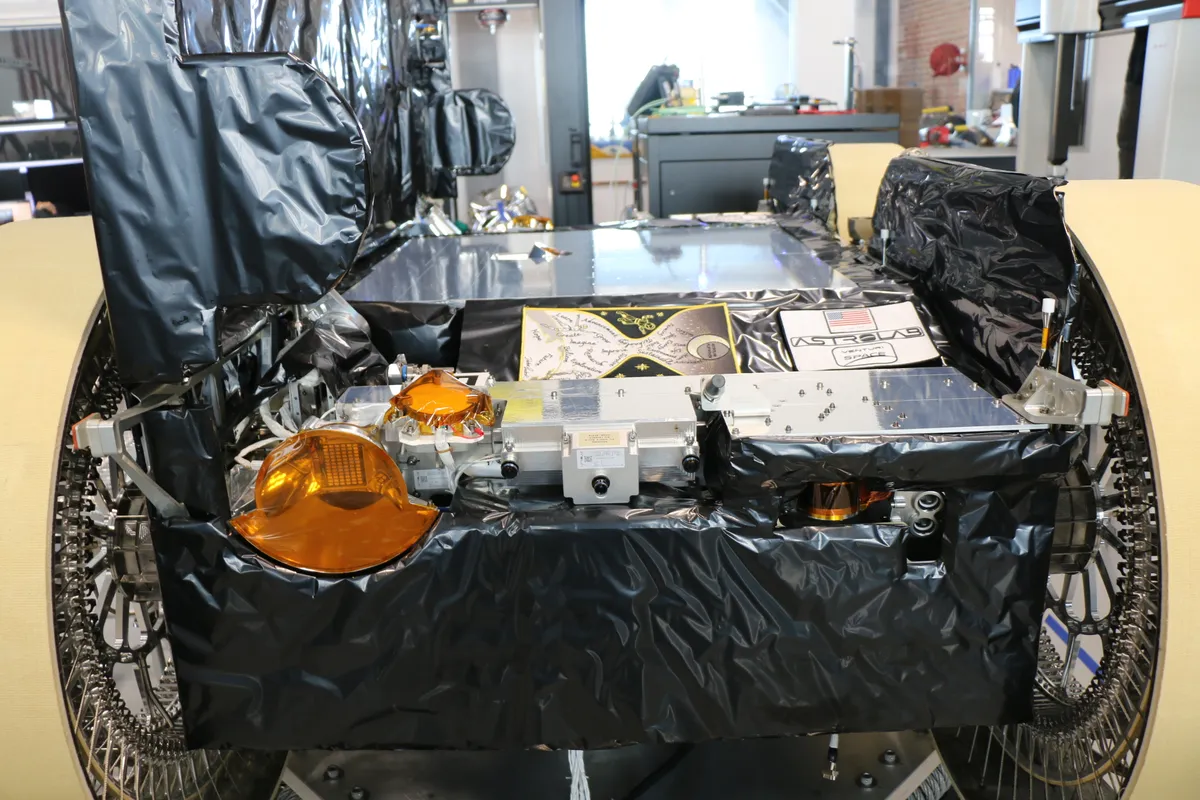
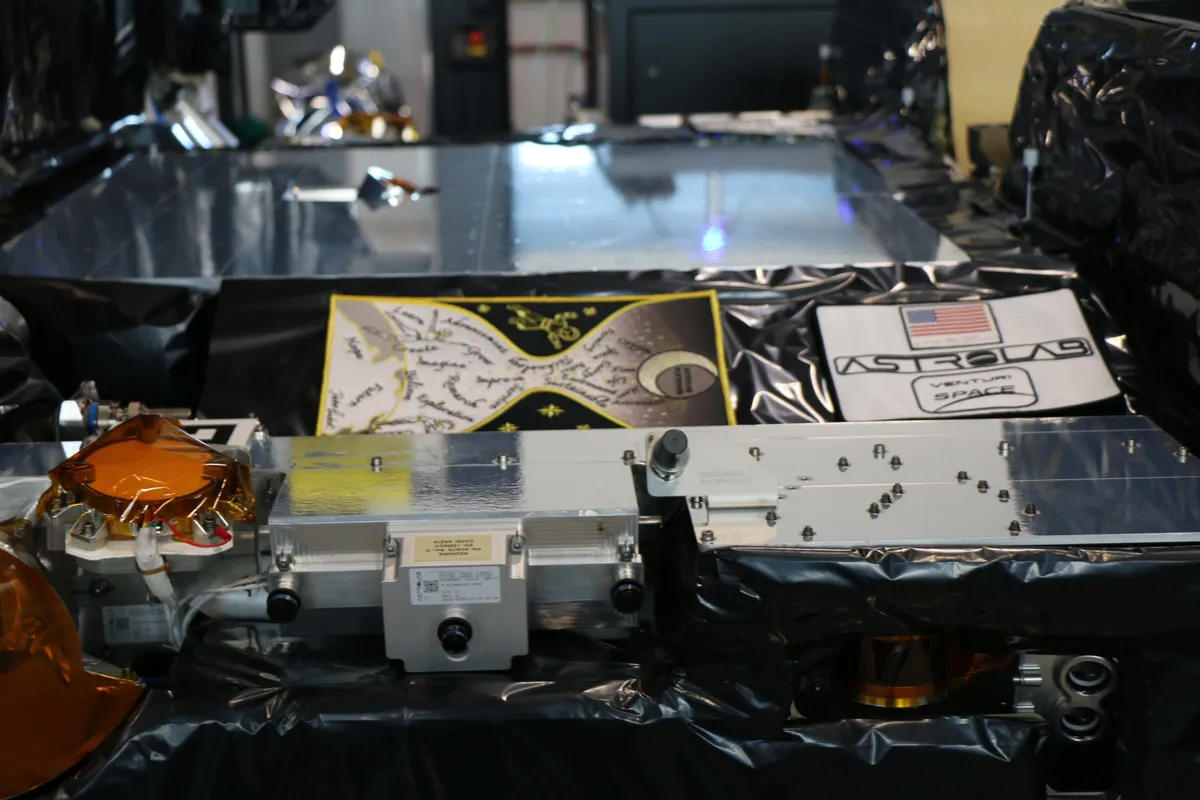


So, what will a supercomputer and AI accomplish on this uncrewed mission? First and foremost, the flightwill test how the computer works in this extreme environment. The computer is built with heat-conductive aluminum and is designed with the specific conditions of the lunar south pole in mind. But while it was designed and tested to be able to withstand the extreme temperatures and conditions on the moon's surface, the upcoming mission seeks to show that this advanced technology can actually work in this environment.
"NASA's given us a real challenge," Matthews told Space.com at the media event. "We have to design for a full year on the lunar surface. So that means surviving multiple lunar nights, upwards of 150 hours of complete darkness where we're not receiving energy or warmth from the sun. And then, also, there's going to be a long period [in] which we're operating semi-autonomously for [when] the astronauts are not there … and so we're having to develop a semi-autonomous platform that will spend many months [and] travel hundreds of kilometers [on the moon]."
But the computer will more than just prove its durability, if all goes to plan. It will also analyze visual data captured on the mission and enable autonomous observations, process navigation, mapping and terrain analysis. The mission also promises to test AI capabilities, though it's unclear what exact applications we'll see with this lunar AI. HPE shared in a statement that "an AI services container will demonstrate reliable deployment of scalable AI service applications on the moon."
It is also to be determined exactly how, once tested, these capabilities might be used with future crewed missions. Astronauts aboard the International Space Station already use computers for communications, science experiments and other daily tasks while living in space, but we can't say yet exactly how future astronauts might use these capabilities, especially with the addition of AI, on the moon.
From Mars to the moon
One interesting aspect of this new development is where it came from. While HPE has provided computing power to NASA for decades, Matthews is also bringing his previous experience working at NASA's Jet Propulsion Laboratory (JPL) into this new venture.
"One of the experiments [that will be] running on the spaceborne computer on the moon is a localization software experiment from JPL. It has been used on Mars, and this will be the first time it's used on the moon," Matthews said.
"The challenge with the moon and Mars is that there's no GPS, so locating yourself and knowing where you are on the surface [can be difficult]," he added. "So we're going to be running what is essentially a machine learning algorithm that JPL developed to take a map that's stored in memory … and compare it to the local terrain we see around us, and then do a match. So essentially, match features of the local terrain to the map that's stored in memory to help find ourselves on the map and keep ourselves away from dangerous craters."
As its name suggests, Griffin-1 will be the first mission for the robotic Griffin moon lander, which was developed by Astrobotic. The Pittsburgh company is flying Griffin-1 for NASA, under the agency's CLPS (Commercial Lunar Payload Services) program. In addition to FLIP, the mission will carry Astrobiotic's CubeRover, a small, uncrewed rover; LandCam-X, an optical navigation system; and Nanofiche GLPH (Galactic Library to Preserve Humanity), a tiny archive of human history, to the moon's surface.
"The moon presents a challenging environment for advanced computing, and we’re pleased to provide HPE with an opportunity to demonstrate its technology on the lunar surface," Matthews added in a statement. "Our FLIP rover is designed to accommodate a variety of payloads, and this mission will demonstrate how commercial lunar mobility platforms can support technology development and scientific research."