


Editor's note: SpaceX's Starship Flight 13 test mission succesfully launched at 6:51 p.m. EDT. READ OUR WRAP and see launch videos and photos. You can see our blow-by-blow coverage here.
SpaceX is just one day away from its first Starship test flight of the summer, and if you're hoping to watch the world's largest rocket lift off, you'll need to know where and when to tune in. But don't worry — we've got you covered.
The next Starship test flight, called Flight 13 (SpaceX doesn't appear to be superstitious), is scheduled to launch from the company's test site in Starbase, Texas near Boca Chica Beach no earlier than Friday, July 24. Liftoff is set for 6:45 p.m. EDT (2245 GMT). The launch was delayed by an abort on July 16, and then by bad weather on July 23.
As its name suggests, the upcoming flight will be the 13th test launch overall of SpaceX's Starship megarocket. It will be the second such flight this year, after the May 22 launch of Starship Flight 12. SpaceX is designing Starship, which stands more than 400 feet (121 meters) tall, to be a fully reusable rocket capable of launching missions to the moon, Mars or beyond.
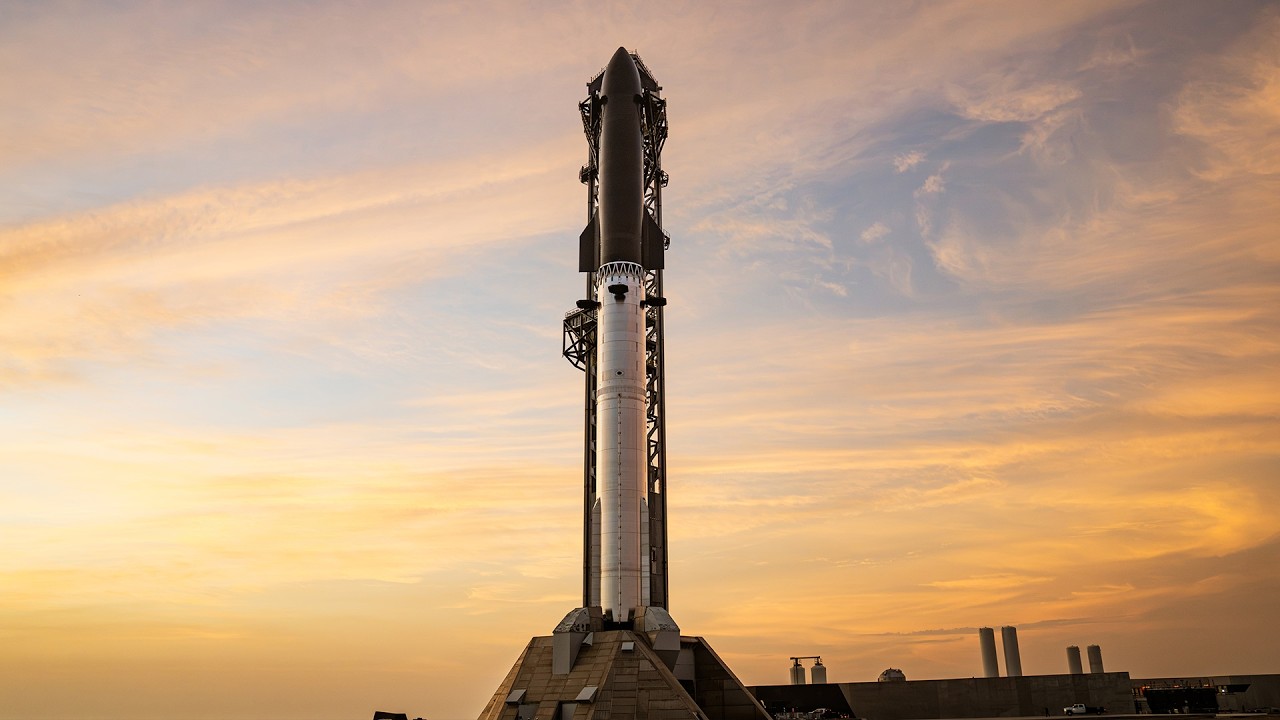
NASA picked Starship to land its Artemis IV astronauts on the moon by 2028, and SpaceX has sold at least one Starship passenger flight to Mars as well. But before SpaceX can carry astronauts to other worlds with Starship, it has to complete a series of suborbital flights and, eventually, reach Earth orbit for in-flight fueling tests, docking demonstrations and more.
SpaceX's Starship Flight 13 is a suborbital test that will be the second flight of SpaceX's new V3 Starship. Below you'll find details on what time Flight 13 will launch, what the mission will do and a full timeline for the mission.
What time is SpaceX's Starship Flight 13 launch?

SpaceX is currently targeting the launch of Starship Flight 13 for no earlier than 6:45 p.m. EDT (2245 GMT) on Friday, July 24. The company originally tried to lift off on Thursday, July 16, but that attempt was aborted at the last second when several engines failed to ignite as planned. After swapping out some engines, SpaceX announced a July 23 launch date for Flight 13, only to postpone the flight just hours before liftoff due to bad weather over the launch site.
So now the launch is set for July 24, but the exact timing of the launch could change.
That's because SpaceX has a 90-minute window in which to launch Flight 13 from Starbase Pad 2. Liftoff could occur anytime between 6:45 p.m. and 8:15 p.m. EDT (2245 to 0015 GMT). SpaceX's launch webcast will begin 30 minutes before liftoff, but it could start a bit earlier. On July 23, for example, the livestream was set to begin at 6:12 p.m. EDT, about 33 minutes before flight.
SpaceX also has at least one more backup, so the launch could slip a bit if needed. In that case, it would likely lift off at the same time — 6:45 p.m. EDT — and have a 90-minute window, as on the coming attempt.
Related: Read our SpaceX Starship and Super Heavy guide for a detailed look
Can I watch SpaceX's Starship Flight 13 launch?
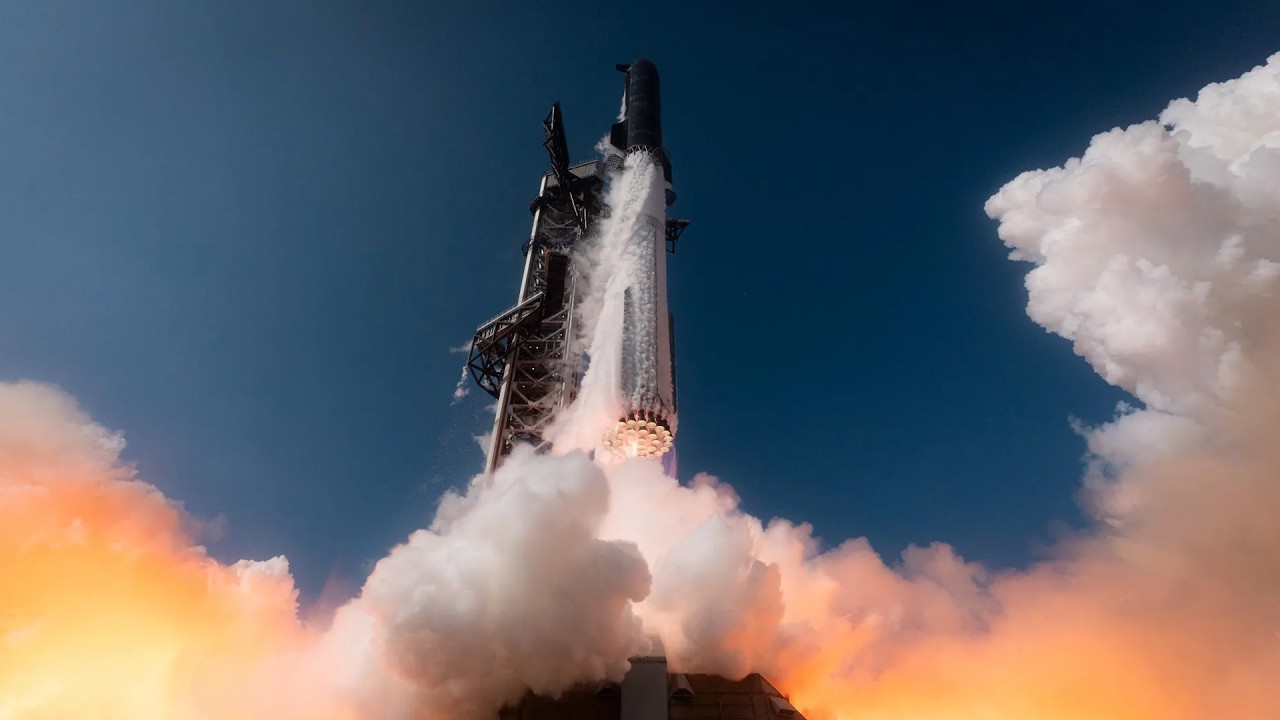
Yes, you'll be able to watch SpaceX's Starship Flight 13 launch online, but you'll have your pick on where to watch.
SpaceX will provide its own livestream of the launch via its X account and the official Flight 13 mission page. If everything is on time, that livestream will begin at about 6:15 p.m. EDT (2215 GMT) — 30 minutes before the planned Flight 13 liftoff.
Space.com will simulcast the SpaceX Flight 13 launch webcast on this page, as well as an our homepage and YouTube channel.
A prelaunch show
Now, if you need to get your Starship Flight 13 fix earlier than SpaceX's stream, a good place to look is the NASASpaceflight show: Its livestream will start several hours before liftoff.
The NASASpaceflight launch webcast will begin on July 24 at 4:00 p.m. EDT (2000 GMT). NASASpaceflight has a wealth of cameras installed around SpaceX's Starbase test facility, and the company will share up-close views and live commentary for many preflight activities.

In-person launch options
While SpaceX does not have an official Starship launch viewing site, there are several places where you can see the launch in person around the Starbase area.
For first-time spectators, I recommend watching Starship launch from near the Cameron County Amphitheater at Isla Blanca Park on South Padre Island, which is just across the bay from Starbase. The rocky beaches around the amphitheater offer a clear line of sight of the Starship launch pad, and there are often spectators on boats out of nearby Port Isabel offering a picturesque view. It's about 5 miles (8 kilometers) from the launch site, and the park has bathrooms.
The traffic getting to South Padre Island (if you're not staying at a hotel on the island) can be heavy on launch days, so another option is watching from the shore in Port Isabel, which is home to Hopper Haus, a SpaceX-themed bar and grill that I can confirm makes awesome burgers.
There is also a shoreline stretch of Highway 48 between Brownsville and Port Isabel, from 6 to 8 miles (10 to 13 km) from the launch site, where you can pull up for the day to watch the launch. It's just the side of the highway, so you won't find amenities like bathrooms there. You can learn more about that at the site SpaceLaunchSchedule.com.
If you're looking for a more rustic experience (and have cash for a $200 ticket, though kids under 17 are $40), you can camp at the Rocket Ranch, which is 3.8 miles (6.1 km) from the Starbase launch site, and camp there for one day and night. It has two viewing locations available, one at an "Outpost" and the other on the campground itself. The Outpost location is the closest and has "unmatched media service," so you can stay connected. Larger four-day camping packages are also available. The ticket includes bus transportation from the ranch campground to a viewing site and back for one launch attempt. I've actually never visited this ranch, but I wanted to include it so you know it's an option.
Be sure to read the full Rocket Ranch FAQ so you know what to expect.
How long is SpaceX's Starship Flight 13?

SpaceX's Starship Flight 13 test flight will last just over 1 hour and 5 minutes and should follow the same mission profile as the company's last test, Flight 12, in May. This will be the second flight of SpaceX's new Starship Version 3, or V3.
During Flight 12, the giant Super Heavy booster stage failed to return to Earth properly for a controlled landing and splashdown in the Gulf of Mexico (which the Trump Administration has renamed the Gulf of America). Instead, the booster crashed into the ocean.
"The booster’s primary test objective will be executing a successful launch, ascent, stage separation, boostback burn, and landing burn at an offshore landing point in the Gulf of America," SpaceX wrote in a mission overview. "There have been several modifications to hardware and software to address issues seen on the previous flight."
Starship Flight 13 will launch from SpaceX's new Pad 2 at Starbase, which the company upgraded with shorter, faster "chopsticks" — capture arms that can catch returning Starship Super Heavy boosters and Ship upper stages during landing, as well as lift vehicles into place on the pad for launch. Check out our full overview on how SpaceX changed Starship for V3 here.
TIME (Hr:Min:Sec) |
EVENT |
|---|---|
T-0:50:00 |
Flight director polls for fueling |
T-0:37:30 |
Ship liquid oxygen loading begins |
T-0:37:00 |
Super Heavy liquid oxygen loading begins |
T-0:35:25 |
Super Heavy liquid methane loading begins |
T-0:34:48 |
Ship liquid methane loading begins |
T-00:21:30 |
Raptor engine chilldown begins on Ship and Super Heavy |
T-00:02:50 |
Super Heavy fueling complete |
T-00:02:10 |
Ship fueling complete |
T-00:0:30 |
Flight Director GO for launch poll |
T-00:00:17 |
Flame deflector activation |
T-00:00:03 |
Booster ignition sequence startup |
T-00:00:00 |
Liftoff ("Excitement Guaranteed," SpaceX says) |
TIME (Hr:Min:Sec) |
FLIGHT EVENT |
|---|---|
T+00:00 |
Liftoff! |
T+00:58 |
Ship/Super Heavy reach "Max Q" |
T+02:18 |
Super Heavy main engine cutoff |
T+02:21 |
Hot-staging separation/Ship Raptor engine ignition |
T+02:25 |
Super Heavy boostback burn startup |
T+03:03 |
Super Heavy boostback burn engine shutdown |
T+06:27 |
Super Heavy landing burn startup |
T+06:53 |
Super Heavy landing burn shutdown (followed by splashdown) |
T+08:05 |
Starship engine cutoff |
T+16:40 |
Payload deploy demo starts |
T+27:29 |
Payload deploy demo complete |
T+38:58 |
Ship engine relight demonstration |
T+47:30 |
Ship reentry |
T+01:02:23 |
Ship transonic |
T+01:03:01 |
Ship is subsonic |
T+01:05:01 |
Landing burn start |
T+01:05:03 |
Landing flip |
T+01:05:12 |
Landing burn three to two engines |
T+01:05:19 |
Landing burn two to one engines |
T+01:05:26 |
"An exciting landing!" SpaceX says. |
SpaceX will not try to reach orbit with Starship Flight 13 or return its Ship back to Earth for a capture at the launch pad. Instead, both vehicles aim to make controlled descent and water landings, before falling over and sliding into the sea.
While the Super Heavy booster will splash down in the Gulf of Mexico off the coast of Boca Chica, the Ship upper stage will follow a suborbital trajectory for a target splashdown in the Indian Ocean off the coast of Western Australia.
During the flight, the Ship vehicle will attempt to deploy 20 Starlink V3 satellites, the company's newer and larger satellite-internet units, but they won't reach orbit. They will follow Starship's suborbital trajectory back down to Earth and burn up in the atmosphere.
Six of the Starlink V3 satellites are equipped with cameras to record live views of Starship and its heat shield and beam them back to Earth for analysis.
"For the first time, Starship will carry V3 Starlink satellites to space, which aim to greatly expand the network's capacity and user speeds. As part of this initial test, Starship is planned to deploy 20 satellites which will extend solar arrays and antennas and will attempt to connect with the larger Starlink constellation via high-capacity lasers," SpaceX wrote in the mission overview. "The Starlink satellites will be on the same suborbital trajectory as Starship and are expected to demise upon reentry approximately 20 minutes after deployment."
What if Starship Flight 13 can't launch?
If SpaceX can't launch Starship Flight 13 on July 24, the company has at least on e more backup opportunities. So, if bad weather or another technical issue delay launch again, SpaceX could try again in the coming days.
According to officials with the town of Starbase, Texas, which is home to SpaceX's Starship launch site, a backup launch date on Saturday, July 25 is available through at least 9 p.m. local time, with beaches closed on that day.
Whichever date SpaceX launches Starship Flight 13, you will be able to follow the mission on Space.com. Be sure to return to Space.com on launch day for complete Starship Flight 13 coverage.
Editor's note: This story was updated at 1:15 p.m. ET on July 17 with the new target launch date of July 20, then again at 12:10 p.m. ET on July 20 with the new launch date of July 23. It was updated on July 23 with the weather delay and new launch date of July 24.
